
You know the round. The front nine feels fine, then the humidity turns your cap into a sponge, sweat starts running into your eyes, and that cheap cotton lid you grabbed for convenience suddenly feels like a mistake. A performance hat is the fix you should've bought first, because on the golf course, comfort, glare control, and sun coverage are not extras, they're part of the job.
Why Your Golf Hat Matters More Than You Think
A bad hat costs you focus. When sweat gets into your eyes, your sunglasses start sliding, and the brim loses its shape after a few holes, you stop thinking about the shot and start thinking about the hat. That belongs in the same category as gloves and shoes, because comfort and function affect scoring more than logo placement ever will.
Golf headwear also does real sun-duty. Golfers' heads and necks take heavy ultraviolet exposure, and hat use is common for that reason. In one survey, 74% of Irish golfers said they wore a hat while golfing, while 85% said they used sunscreen before play, though 44% used sunscreen below SPF 30, which leaves room for careless protection choices (golf science review). Another survey of 347 adult golfers found 69% reported wearing a hat as sun protection, ahead of sunscreen, sunglasses, and shade-seeking (golfers' sun protection survey).
Coverage matters more than the label
A standard golf cap shades the face and eyes, but it still leaves the ears and back of the neck exposed. Comparative coverage research shows silhouette matters more than branding, and fuller shapes protect more skin than a simple cap. That is the part a lot of roundup posts skip.
A hat is not protective just because it looks sporty.
Practical rule: If a hat cannot stay comfortable, cover enough skin, and survive repeated rounds, it is not a performance hat. It is just headwear.
For the basic logic behind why golfers wear hats, this Tattoo Golf article matches what serious players already know. The hat is part of the kit, not an accessory afterthought. Choose well once, and you buy yourself fewer distractions every round.
The Anatomy of a Performance Golf Hat
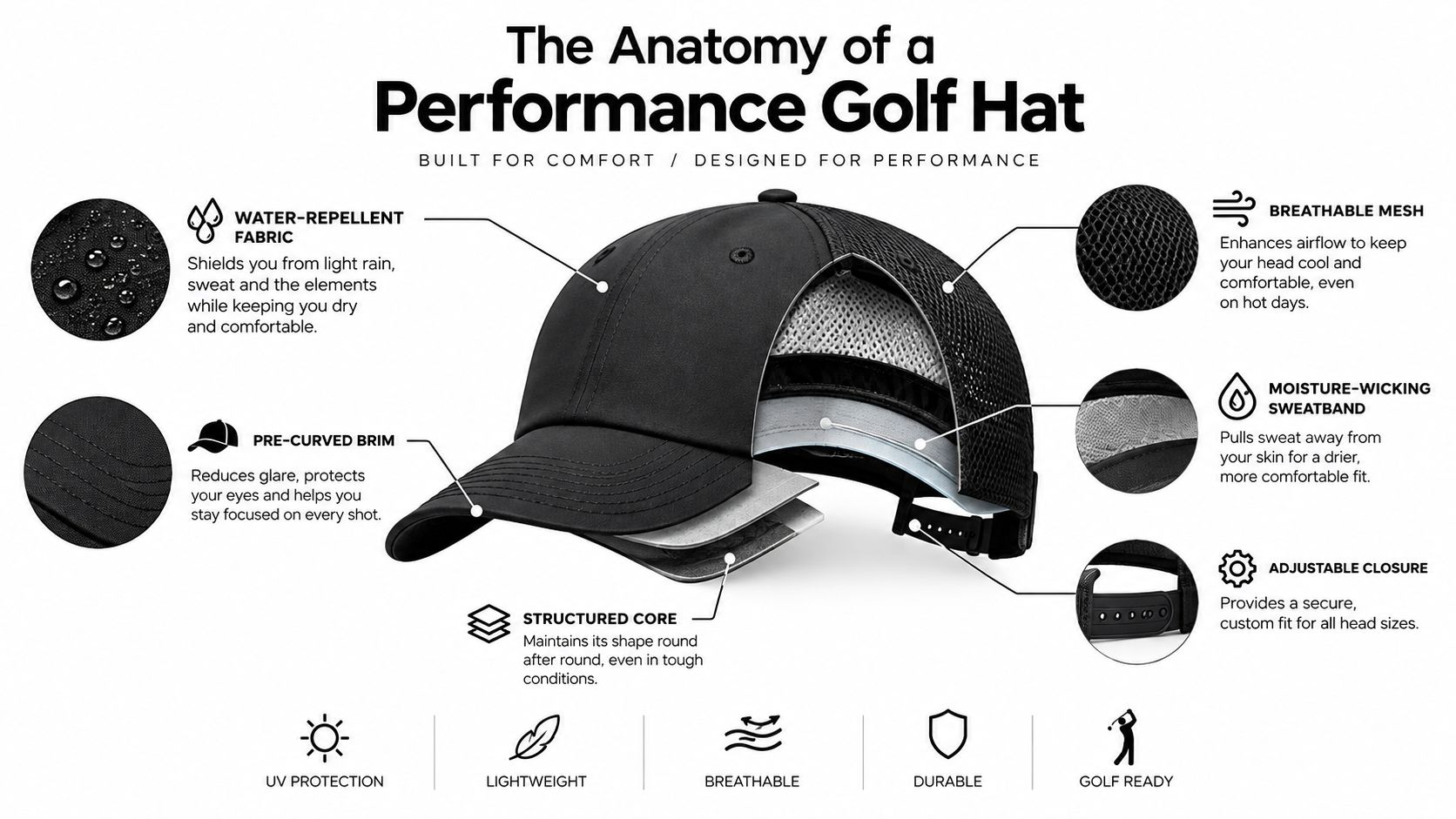
The first thing I look at is the fabric. If a hat feels thick, slow-drying, or heavy before the first tee, it's already failing. A real performance build uses moisture-wicking fabric, breathable zones, and a lightweight shape that dries fast instead of hanging onto sweat like a towel.
Wicking is just controlled movement
Think of wicking like a paper towel pulling water away from a spill. Sweat moves from your skin through the fabric by capillary transport, then spreads across a larger surface so it can evaporate faster. That's why a moisture-managing sweatband matters, it keeps sweat from pooling where it irritates your forehead and clouds your vision.
Technical textile research and cooling reviews support that logic. Cooling the head, face, and neck lowers local skin temperature and improves thermal sensation, and one included cycling study reported a 21-minute, or 51%, increase in time to exhaustion when head cooling was paired with airflow and misting at about 27 to 29 °C and 40 to 60% relative humidity. That doesn't mean a hat replaces hydration. It means a hat should support comfort, not fight the weather.
Comfort features can reduce perceived exertion, but they do not cancel out heat risk, dehydration, or bad course management.
What the product spec should actually say
Read the details like a skeptic. Look for ventilated panels, a lightweight crown, and a sweatband that stays in contact without crushing your head. A structured visor is useful because it holds shape, cuts glare, and keeps your line of sight clean through the swing. If the spec sheet says only “breathable” and nothing else, that's marketing fluff, not engineering.
Getting the Right Fit and Size
A hat that shifts on the backswing or squeezes your temples is wrong, no matter how good it looks in the cart. Fit is boring until it ruins a round, then it becomes the whole problem. My rule is simple, if you notice the hat during play, the fit is off.
Start with the closure
Adjustable closures are the easiest way to lock in a hat without guessing your perfect size. Velcro, ratchet, and snapback systems all solve the same problem, but they don't feel the same. Velcro is quick, ratchets give you more incremental control, and snapbacks are fine if the sizing is already close.
The sweatband should sit in contact with your head, not dig into it. That contact matters because it keeps the hat stable through the swing and helps moisture management work where you need it most. If you size up for “comfort,” you often buy yourself slippage instead.
Measure once, then trust the chart
Use a soft tape measure and wrap it where the hat will sit, not high on the crown and not down on your ears. Compare that number with the brand's size chart before you order. If a brand offers different men's and ladies' cuts, don't assume the labels are cosmetic. Head shape and crown depth affect how the hat sits on your face and whether the brim lines up correctly.
- Check the closure first: Make sure it can hold the hat steady through a full swing.
- Check the sweatband second: It should touch skin without pressure points.
- Check the profile third: The crown shouldn't tip forward or float above your head.
- Check the test: Shake your head, take a practice swing, and see whether the hat moves.
A secure fit feels invisible after the first few holes. You stop thinking about it, which is exactly the goal.
Sun Protection That Actually Works
A golf hat earns its keep only when it covers more than the front of your face. I don't care how sharp it looks or how expensive it was. If the ears, temples, and neck are still taking direct sun, the hat is doing half the job.
Coverage is the first test
Coverage research is blunt about this. A standard golf cap shades the forehead and eyes, but it leaves more skin exposed around the sides and back. That is why brim width, side coverage, and neck protection should drive the purchase decision, not the logo on the front. If you want style without giving up function, Tattoo Golf hats that combine style, sun protection, and comfort fit that brief.
Fabric matters too, but only in the area it covers. Verified UPF 50 material blocks about 98% of incident UV because only about 1/50 passes through the fabric, and that rating only applies to the parts the cloth covers (golf apparel UPF evaluation). So a golf hat should use tested UPF 50+ fabric on the crown and brim. Dark color alone does not prove anything, and “sun-ready” marketing copy does not protect your skin.
Use the hat as part of the full setup
The right hat cuts exposure where golf hats usually fail. It shades the face, helps cover the ears and neck, and gives you extra protection on long rounds when reflected light from turf and sand keeps bouncing back at you. That is the genuine value, not the brochure language.
Buy for coverage you can see and measure. A hat with tested fabric, a brim that does its job, and construction that keeps the sun off more than your forehead is worth far more than a stylish cap that only looks protective.
Matching Your Hat to Conditions and Play Style
The right hat depends on the round you play, not the one you imagine. Hot, humid mornings punish poor airflow. Windy coastal rounds punish sloppy closures. Long tournament days punish heavy construction. If you rotate hats for conditions, you'll feel the difference immediately.
Use the course, not the catalog, as your guide
For hot, humid summer rounds, prioritize a lightweight crown, breathable panels, and a sweatband that can keep working after an hour of sweat. For windy links courses, the closure matters more than the marketing copy, because a hat that lifts or twists becomes a distraction on every swing. For all-day tournaments or back-to-back rounds, weight matters more than most golfers admit, because fatigue starts in the small things.
For resort or casual rounds, style has its place. If the day is relaxed and the dress code is loose, personality prints and bolder silhouettes can earn their keep, as long as the fit and coverage are still solid. Golfers don't all need the same hat because they don't all play the same conditions.
Which Hat Features Matter by Playing Condition
| Condition | Priority Features | Why It Matters |
|---|---|---|
| Heat | Breathable zones, wicking sweatband, lightweight crown | Keeps sweat moving and lowers the sauna feeling |
| Wind | Secure adjustable closure, stable structure | Prevents constant mid-round adjustment |
| Long days | Low-weight build, quick-dry fabric, shape retention | Reduces fatigue and keeps the hat usable late in the round |
| Style-forward rounds | Distinctive design, clean silhouette, comfortable fit | Lets personality show without sacrificing function |
A brim should help with glare without getting in your way at address. Wider coverage can be useful, but only if it doesn't block your vision or snag during the swing. That trade-off is exactly why I like hats that hold shape instead of drooping into a soft, shapeless mess halfway through the front nine.
Why Tattoo Golf Performance Hats Stand Out
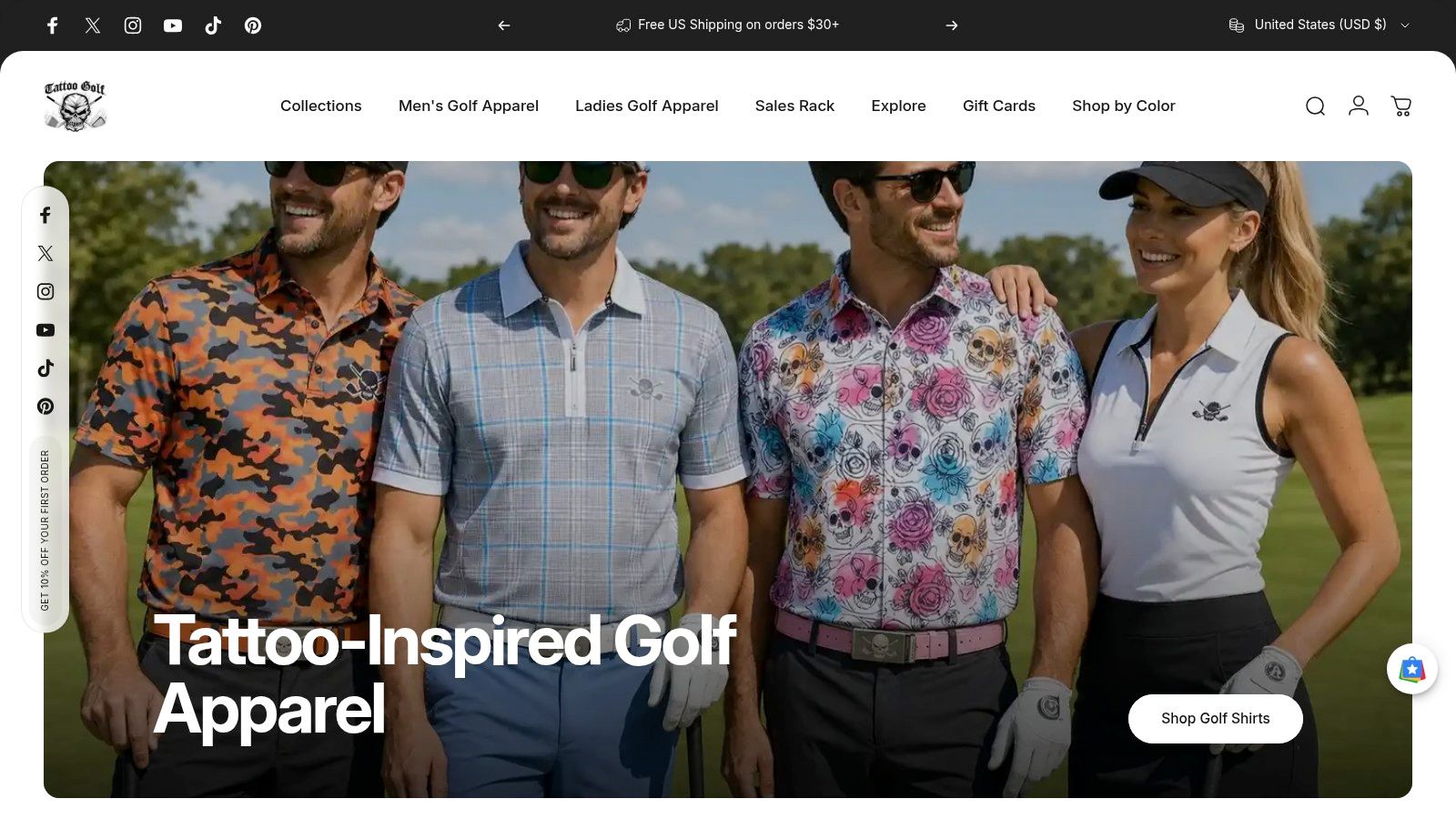
Tattoo Golf has always sold a point of view as much as apparel. Since 1999, it's been aimed at golfers who don't want country-club blandness, and that attitude matters when a hat has to do more than sit on a shelf. A performance hat should work first, then look like something you want to wear.
The right ingredients are already there
Tattoo Golf's performance hats use moisture-wicking fabrics, breathable construction, UPF materials, adjustable closures, and sweat-absorbing sweatbands. That combination lines up with what matters on the course, especially when the round gets hot and sloppy. The hats are also built in classic 6-panel shapes, which gives them a familiar golf profile instead of trying too hard.
A hard buckram visor is a real plus because it helps the brim keep its shape. That means better glare control and more consistent face coverage through the round. An adjustable Velcro back closure also makes sense here, because it keeps the fit quick and secure without turning the hat into a guessing game.
Personality is part of performance
Most generic-catalog hats force you to choose between looking different and playing comfortably. That's a bad trade. Tattoo Golf's skull-and-clubs attitude gives bold golfers a way to wear something with personality while still getting the functional stuff right.
If you already wear coordinated polos, shorts, or accessories, the hat fits into that broader look without feeling tacked on. Tattoo-inspired golf hats for players who stand out makes the same basic case from a style angle, but the important part is simpler, the hat has to perform before it can make a statement.
Caring for Your Hat So It Lasts
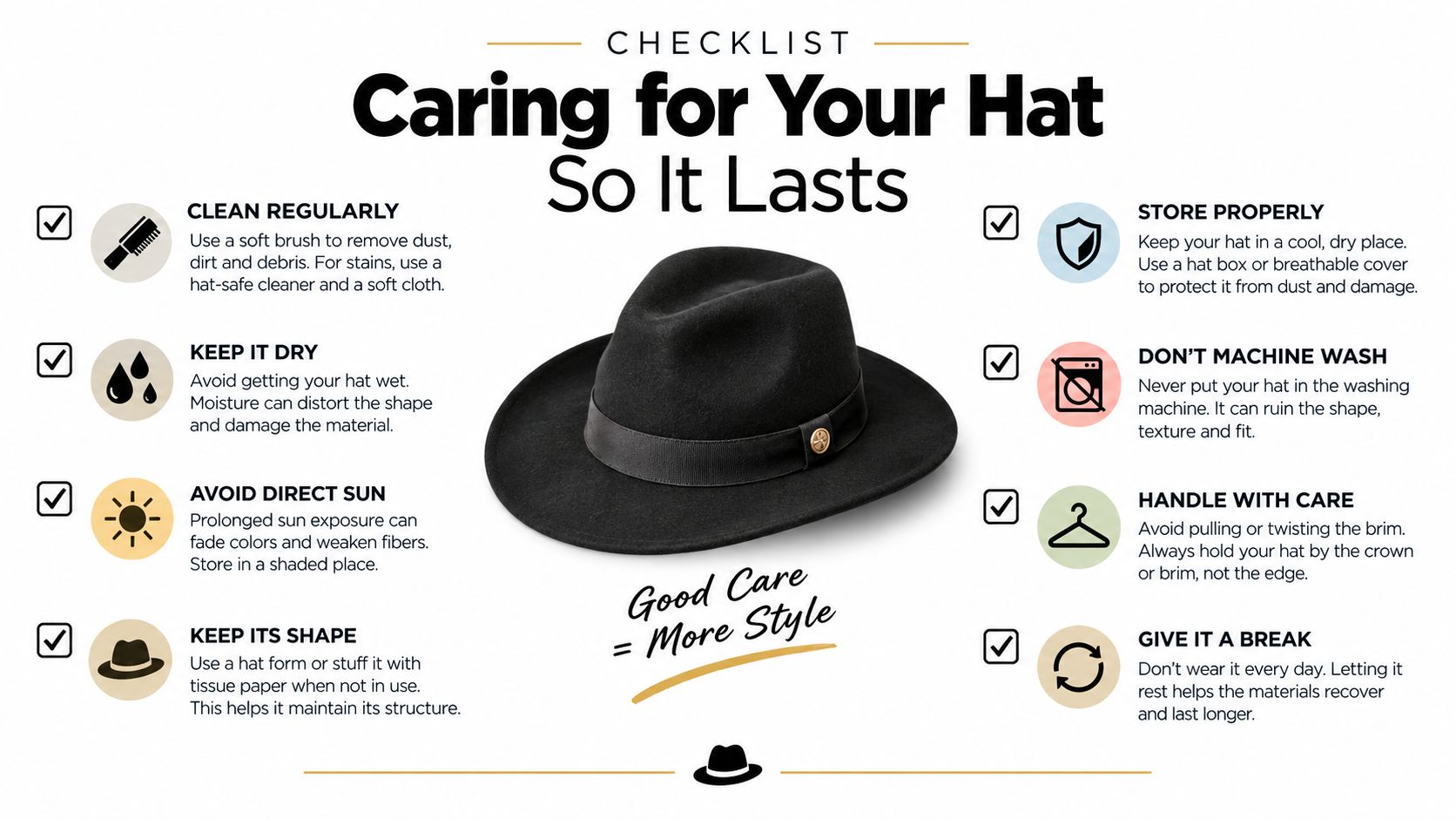
A hat that sags, fades, or sheds after a few wash cycles was never cheap, it was just underpriced. Durability is the hidden half of “best.” I want a hat that survives sweat, storage, and repeated rounds without turning into soft junk.
Wash it like athletic gear, not laundry filler
Use gentle washing and low abrasion. Harsh scrubbing can damage the fabric face, loosen stitching, and shorten the life of the sweatband. Air-dry the hat so the visor keeps its shape, and don't jam it into high heat just to speed things up.
Spot-clean the sweatband after especially hot rounds. That's the part that takes the most abuse, and it's usually what makes a hat smell or look tired first. Store the hat crown-up or in a way that doesn't crush the brim, because shape retention is part of performance, not a vanity detail.
Don't let recycled-content marketing do the thinking for you
Sustainability claims deserve scrutiny. A 2025 laboratory investigation of 51 garments found recycled polyester released about 54.8% more microfibers during washing than virgin polyester, though the sample was limited and shouldn't be treated. Separate textile research also found compact woven structures and highly twisted continuous-filament yarns shed fewer fibers than looser knits or staple-fiber builds.
That means the important questions are practical: Which hat lasts longest? Which sheds least? Which dries fastest? Which can be cleaned without beating up the structure? Those are the questions that matter after the hype fades.
Judge the hat by how it wears over repeated rounds, not by recycled-content percentages alone.
If you care about lower-impact ownership, think repair and care as much as purchase label. A replaceable sweatband, a durable weave, and a washing routine that limits abrasion are smarter than assuming “recycled” automatically equals “better.”
Final Thoughts on Choosing Your Best Performance Hat
The buying checklist is simple. Look for verified wicking and quick-dry fabric, breathable construction with real ventilation, a closure that locks in without squeezing, a visor that holds its shape, and tested sun protection instead of vague color-based claims. Then make sure you actually like the design, because the best hat is the one you'll wear every round.
Tattoo Golf's whole lane is built around refusing to play it safe on style while still respecting performance. That's the right mindset for headwear too, because there's no prize for looking generic if the hat doesn't hold up in heat, wind, and long days. Buy the hat that earns its place in your bag, not the one that just fills a cart checkout.
If you want performance hats with attitude, start with the collection at Tattoo Golf. You'll find gear built for golfers who want comfort, coverage, and personality in the same round.
Share:
What Are Cool-Stretch Golf Shirts?
3 comentarios
Adding to the mockup tip above – if you want to preview the artwork before the embroidery proof, this one does quick logo mockups at print size: nanobanana2lite.tools
Adding to the mockup tip above – if you want to preview the artwork before the embroidery proof, this one does quick logo mockups at print size:
https://nanobanana2lite.tools/
Great roundup – the breathability point matches what I have seen out on the course. One tip for anyone ordering custom team hats: the artwork proof is where most reorders go wrong, so it really helps to mock the logo up at the intended size before you send it in. I usually rough out the graphic and a couple of placements with an AI image generator (https://nanobanana2lite.tools/ worked well for quick mockups) so the embroidery preview matches what I actually want.