
A matching men's golf outfit should begin with course legality and unrestricted movement, not appearance alone. The jointly administered USGA and R&A Equipment Rules took effect in their first edition on January 1, 2019, and under Rule 4.3, garments can't include features designed to assist alignment or otherwise help a player make a stroke, while compression clothing is permitted and movement-inhibiting tech can be treated as prohibited unusual equipment. You're probably standing in front of the closet with a bold polo in one hand and a stack of neutral shorts in the other, trying to make the whole thing look intentional without getting sideways looks at the first tee. That's the right problem to solve, because the best matching outfit is the one that holds up in heat, wind, and club policy.
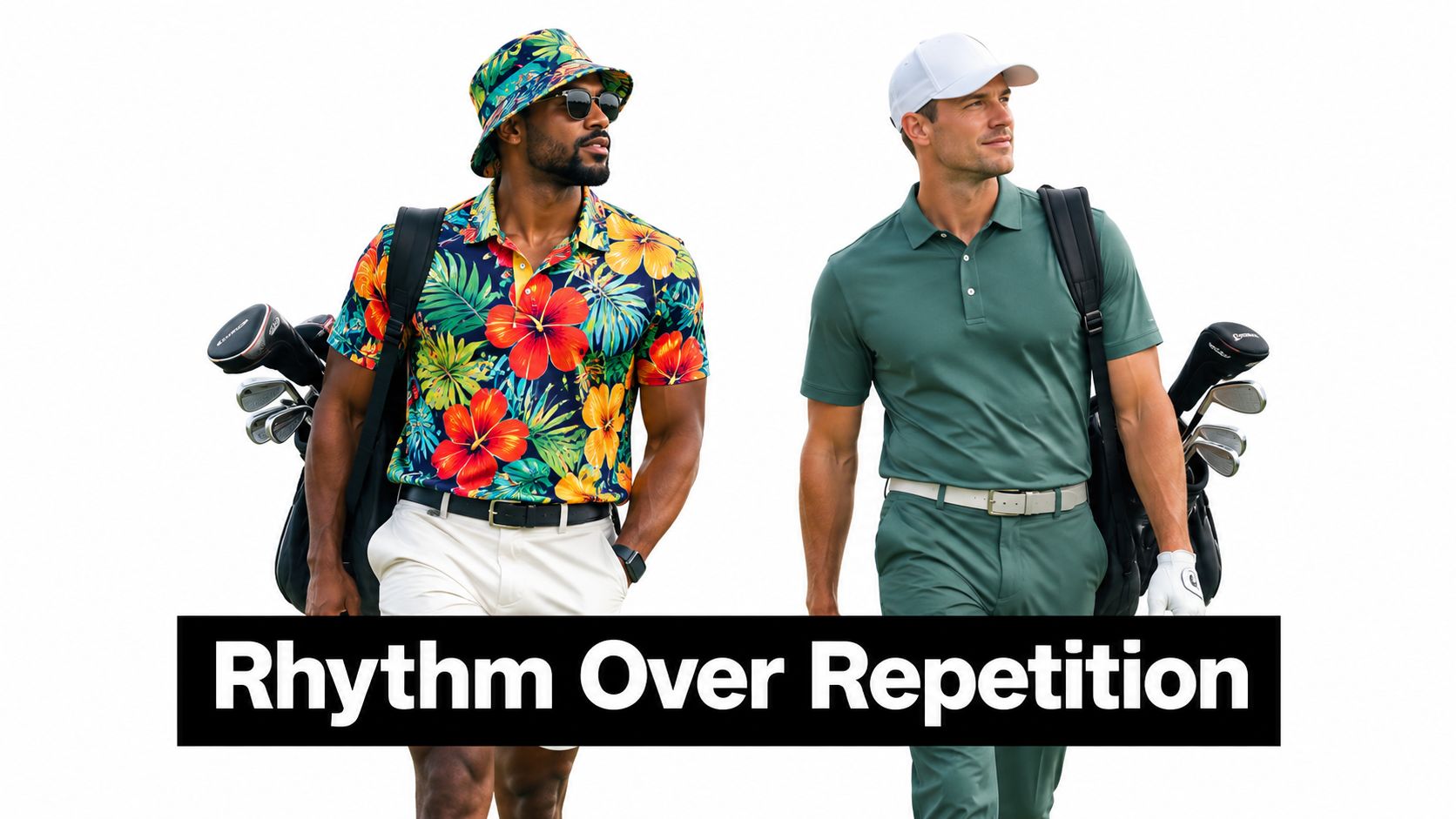
Why Matching Is About Rhythm, Not Repetition
Two golfers can walk onto a tee box looking fine on their own, then completely lose the plot together. One shows up in a neon skull-print polo, the other in solid navy with a tropical hat that looks borrowed from another trip. Individually, both outfits can work. Together, they read like a costume committee that never shared notes.
The eye wants repetition, not duplicates
A matching look works best when the eye catches rhythm. Repeat one dominant color, one accent color, and one motif at different scales, and the outfit feels deliberate without turning into twinsy head-to-toe matching. That's the difference between looking coordinated and looking like you bought the exact same set because the hanger said so.
The rules matter before the style does. The modern global reference for equipment and apparel standards began with the USGA and R&A Equipment Rules on January 1, 2019, and the same framework warns against clothing features that assist alignment or stroke execution while allowing compression clothing for temperature regulation and sun protection (USGA Equipment Rules PDF). That's the practical filter: if a piece looks sharp but compromises turn, shoulder lift, or hip rotation, it doesn't belong in the system.
Practical rule: if the outfit looks better standing still than it does during a full swing, it's the wrong outfit.
Build the look like a system
Think in layers of visual importance. A skull motif on the polo, a smaller echo of that motif on the hat, and a neutral belt tying it together will usually look more composed than identical prints on every piece. This is the same reason strong golf outfits often feel quieter from a distance and more interesting up close.
The swing test is the final check. A shirt that binds across the back or a waistband that fights torso rotation will ruin the round faster than a color mismatch ever could. Matching is a systems problem, not a fashion problem, and once you treat it that way, the outfit gets easier to build under pressure.
Build the Outfit Around Performance First
Start with the polo, because if the shirt fails on hole five, the rest of the look doesn't matter. The best foundation is a performance top that moves moisture, breathes, and stretches with the turn. After that, the bottoms, belt, hat, and layer should support the shirt instead of trying to save it.
What the fabric has to do
Look for high air permeability, moisture transport, and 4-way stretch. Those are the traits that keep a shirt from feeling clingy when sweat builds and prevent the bottoms from fighting your hips through the swing. Comparative textile work found that polyester samples showed the highest air permeability in one study, while modal-based blends were recommended for golf garments because of favorable moisture and thermal-comfort properties.
That's why a technical polo should almost always go with lightweight stretch bottoms instead of rigid cotton or denim-like fabric. The mechanical issue is simple, fabric at the shoulders, waist, or hips can resist rotation and create bunching, while multidirectional stretch reduces drag.
| Fiber Type | Air Permeability | Moisture Management | Best Use Case |
|---|---|---|---|
| Polyester | High in comparative textile testing | Strong when engineered for wicking | Hot rounds, repeated swing cycles |
| Modal-based blend | Not singled out for peak air flow, but favorable comfort properties | Strong moisture and thermal comfort | Golf garments where comfort matters over a long round |
| Rigid cotton-like fabric | Lower practical swing comfort | Holds moisture longer | Avoid as the core of a golf outfit |
Fit should move before it flatters
A polo should skim, not cling. It should let your shoulders rise without riding up, and your hem should stay composed when you bend for a chip. The waistband on shorts or pants shouldn't dig in when you're set over the ball, because that pressure shows up fast once you start rotating.
The outfit has to survive the backswing first. If it doesn't, color coordination is just decoration.
For a deeper look at how the pieces work together, the breakdown in this guide to great golf apparel is useful context before you buy.
Coordinate Colors Without Looking Like a Uniform
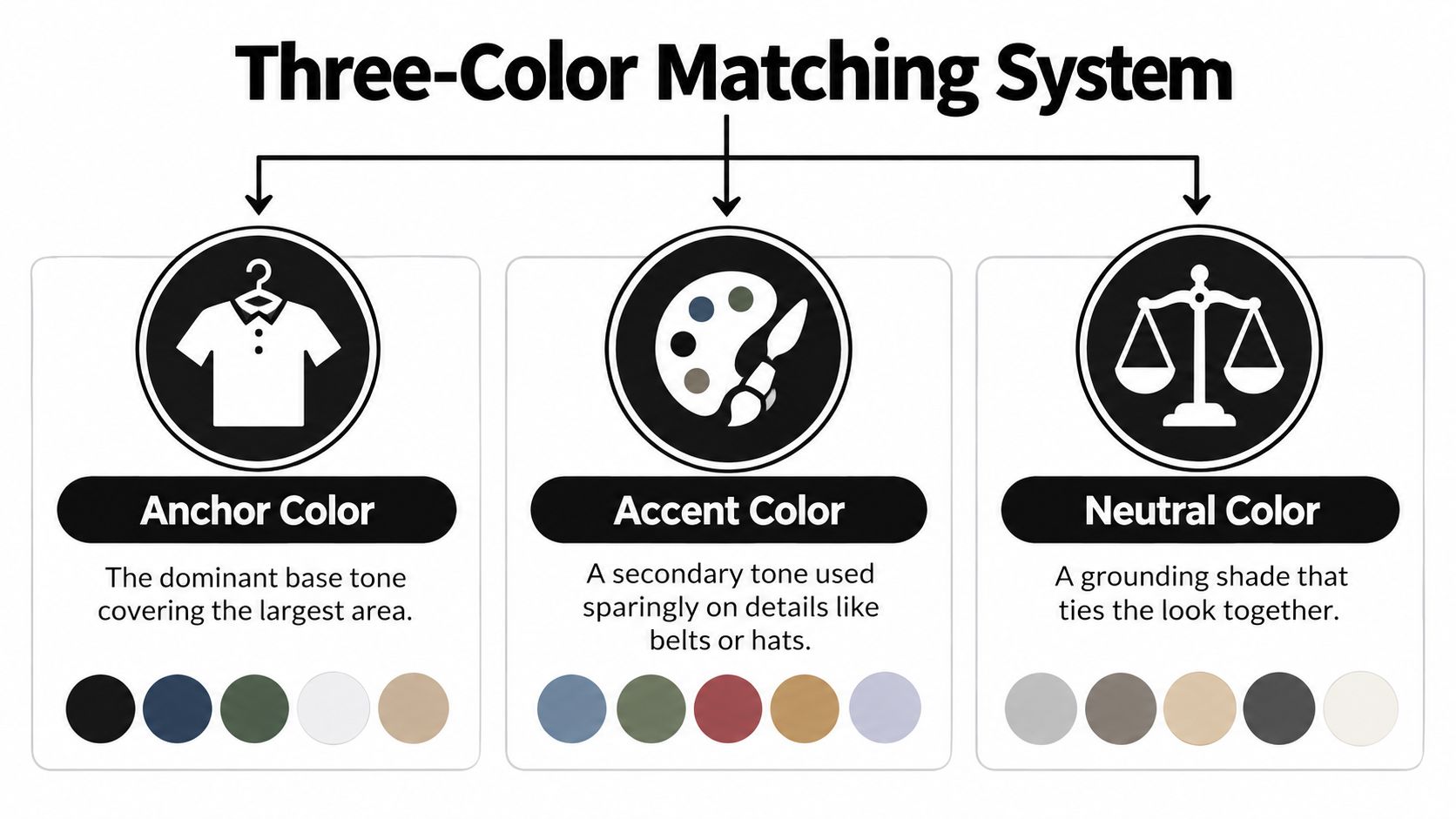
A sharp matching outfit doesn't need identical prints from top to bottom. It needs a dominant color, an accent color, and a neutral foundation that keep the whole thing from looking noisy. Once you use that three-part logic, the look starts to behave across hats, belts, shorts, and outerwear instead of falling apart the second the weather changes.
Use one accent, then repeat it intelligently
If the polo carries ocean blue, let that blue return in the hat, belt, or a small print detail. If the bottoms are solid navy, let the shirt supply the movement and the accessories stay quieter. Repetition works when it feels intentional, not when every piece screams the same message at full volume.
The biggest mistake is over-matching. Exact duplicates can make even a strong print look like a uniform set from a novelty event. A high-impact polo usually works best with solid bottoms, while printed shorts need a quieter top. That balance gives the eye somewhere to land.
Let tone do some of the work
Warm tones like orange and red bring energy, cool tones like teal and blue feel calmer, and black, charcoal, or navy can unify the outfit without competing graphics. The same rule helps with climate layering, because an accent color can repeat across a quarter-zip, hat, or shell even when the inner layers shift for weather.
A tonal look is often the most flexible. It's easier to add a shell or mid-layer without breaking the outfit if the palette already sits within the same family. That's why matching by rhythm beats matching by duplication.
For practical pairing ideas, the shirt, pants, and hat matching guide is a helpful reference point before you lock in a palette.
Match Boldness to Course Dress Code
Bold prints don't have to fail the dress code, but they do need the right venue. A course with a strict policy can tolerate personality, just not chaos. The trick is to scale the outfit's intensity to the setting before you get to the first tee.
Three boldness levels that actually work
| Boldness Tier | Outfit Formula | Best For |
|---|---|---|
| One hero print | Printed polo, solid bottoms, restrained accessories | Moderate clubs and casual resort rounds |
| Coordinated print | Patterned top with quiet supporting pieces | Relaxed private clubs and charity events |
| Full themed matching | Matching print across multiple pieces | Casual rounds and group outings |
The rule of thumb is simple. One loud piece per outfit is usually safe, two can work if the rest is calm, and a fully themed set belongs where the venue welcomes it. If the policy is vague, check the course website, then call the pro shop before you pack.
Keep a neutral layer ready
A neutral outer layer saves bad weather and uncertain etiquette at the same time. If the dress code feels tighter than expected, a solid quarter-zip or shell can tone down a bold shirt without making you start over. That flexibility matters on private clubs, member guests, and unfamiliar resort courses.
The modern golf style scene has room for graphic prints, skull motifs, and vivid colors, but the outfit has to be configurable. A bold look that can be dialed back with one layer is much more useful than a loud set that only works in one setting.
Three Round-Ready Outfit Formulas
The fastest way to build a matching system is to dress for the round you play. Hot humidity, a cold wind, and wet turf all change what “coordinated” should mean. These formulas keep the look together without making the clothes do the wrong job.
Hot and humid resort round
A moisture-wicking Aloha Hawaiian polo in ocean blue, solid navy performance shorts, a matching palm-tree hat, and sunglasses built for UV protection create a look that stays breezy and readable in bright sun. The key is that the shorts stay quiet so the shirt can carry the personality.
This is the kind of outfit that works because the color story stays consistent while the fabrics stay light. The hat repeats the theme without copying the shirt exactly, and the solid bottom gives the whole fit some structure. If you've ever seen a loud polo paired with loud patterned shorts, you already know how fast that can go wrong.
Cool and windy morning round
A tonal black Dancing Skulls quarter-zip over a skull-and-clubs embroidered polo, charcoal trousers, and a lightweight shell in a matching accent color handles the morning better than one heavy layer. The quarter-zip gives warmth without blocking rotation, and the shell can go on or off when the wind shifts.
Wet-weather scramble
A high-visibility camo rain jacket over a solid moisture-management base layer, quick-dry cargo shorts, and waterproof golf shoes with spikeless traction keeps the outfit functional when the course gets sloppy. Here the match comes from controlled repetition, not identical prints. If the jacket is loud, the base layer and shoes need to stay disciplined.
One practical note matters across all three formulas. The most matched outfit may not use identical colors throughout, because a repeated accent in the hat, belt, or outer layer often looks more intentional than a clone of the same print. Tattoo Golf's outfit combinations are built around that idea, with coordinated shirt-and-bottom pairings, belts, and accessories sold as sets.
Protect Your Skin Without Sacrificing Style
Golf is long, outdoor, and often played under strong sun, so UV protection belongs in the outfit, not in a separate bag pocket. A recent evaluation of 671 golf-apparel items found that adequate protection for vulnerable body sites was generally low, and UPF labeling appeared on only 7.1% to 16.7% of products (golf apparel UV evaluation). That's a big reminder that “performance” doesn't automatically mean sun-safe.
Treat UPF like a spec, not a style note
Choose garments explicitly labeled with UPF, preferably UPF 30 or higher, and don't assume quick-dry claims cover UV protection. UPF 50+ clothing transmits less than 2% of UV radiation, but exposed hands, neck, face, and lower arms still need sunscreen because clothing can't cover everything consistently (sun protection guidance).
A structured performance hat helps with the scalp and face, and longer shorts or trousers add useful coverage when the sun is harsh. Darker colors and tighter weaves block more UV, though they can absorb more heat. Breathable construction and moisture-wicking fibers help offset that trade-off.
A coordinated outfit isn't complete if it looks sharp but leaves the neck, forearms, and face exposed.
Let coverage reinforce the style
The cleanest way to do this is to treat sun gear as part of the visual plan. A dark signature print on the torso, lighter breathable accessories, and a hat that echoes the shirt can keep the outfit cohesive while still making sun protection part of the design. That's the smarter way to play a full round in bright conditions.
Golf also sits in a high-exposure category for outdoor sport, so this isn't a minor detail. If you're building a matching system that's supposed to work on the course, it has to work in the sun too.
Shop, Size, and Care for Long-Lasting Match
Buy the outfit in the right order, or you'll end up forcing pieces to work together after the fact. Start with the polo, choose bottoms that support the accent color, then add the belt and hat to repeat that accent without overdoing it. Verify the UPF label on each item if sun protection matters for the round.
Fit and care decide how long the outfit stays useful
Golf fit should stay close-but-not-compressive. Excess fabric can catch during rotation, and overly tight fabric can limit shoulder elevation and hip turn. If a piece only fits when you're standing straight in a fitting room, it probably won't feel right when you're bent over a shot.
Care matters just as much as sizing. Wash in cold water, avoid fabric softeners that can clog moisture-wicking fibers, tumble dry low or line dry, and never iron directly on printed graphics. If a garment claims to be quick-dry but doesn't show moisture-wicking fiber content, treat that as marketing language rather than a technical feature.
For product-care specifics, the Tattoo Golf clothing care guide is worth checking before you throw bold prints into a hot wash.
Simple shopping checklist
- Start with the anchor piece: pick the polo first, because it sets the dominant color and motif.
- Lock the bottoms second: choose shorts or trousers that support the outfit without competing with it.
- Repeat the accent once: use the belt or hat to echo one color from the shirt.
- Verify the specs: check fit, stretch, and any listed UPF rating before you commit.
That's the cleanest way to build a matching system that survives more than one round. If you want coordinated polos, shorts, pants, hats, belts, and outerwear that are already designed to work together, take a look at Tattoo Golf and build a set that fits your course, your weather, and your style.
Share:
4 Way Stretch Shorts: A Golfer's Freedom Guide