
Black isn't automatically the smartest golf color. It absorbs more solar energy than light fabric, can feel punishing in exposed midday sun, and a bold graphic still won't rescue you from a strict club dress code. But choose the right fabric, fit, and supporting pieces, and a black golf shirt becomes one of the most useful foundations in your bag.
That matters because the golf audience is broader than the old country-club stereotype. In 2024, 28.1 million Americans played golf on a course, including 3.3 million first-time golfers, while 7.9 million women played on-course golf, a 41% increase from 2019. Junior participation rose 49% over the same period, according to the participation figures reported by the Butler Eagle's coverage of golf outings. One adaptable shirt makes sense for recreational rounds, leagues, charity events, competitive play, and the social stop afterward.
Why the Black Polo Is the Smartest Thing in Your Golf Bag
The black polo earns its place through flexibility, not because it's universally safe. It gives you a clean base for patterned shorts, bright belts, coordinated hats, colored trousers, and printed outerwear. Change one accessory and the outfit feels different without changing shirts.
The candid fitting-room rule: Buy black as a foundation, not as a shortcut. The color does the styling work only after the fabric handles the course.
Black also suits a wider range of golfers and settings than the traditional men's wardrobe suggests. Women's and junior participation has expanded, and different players bring different preferences, body types, and levels of formality. A strong black shirt should therefore be available in inclusive fits and paired with options that work for women, men, couples, and groups, rather than being treated as a men's staple alone.
Use black to simplify the rest of the bag
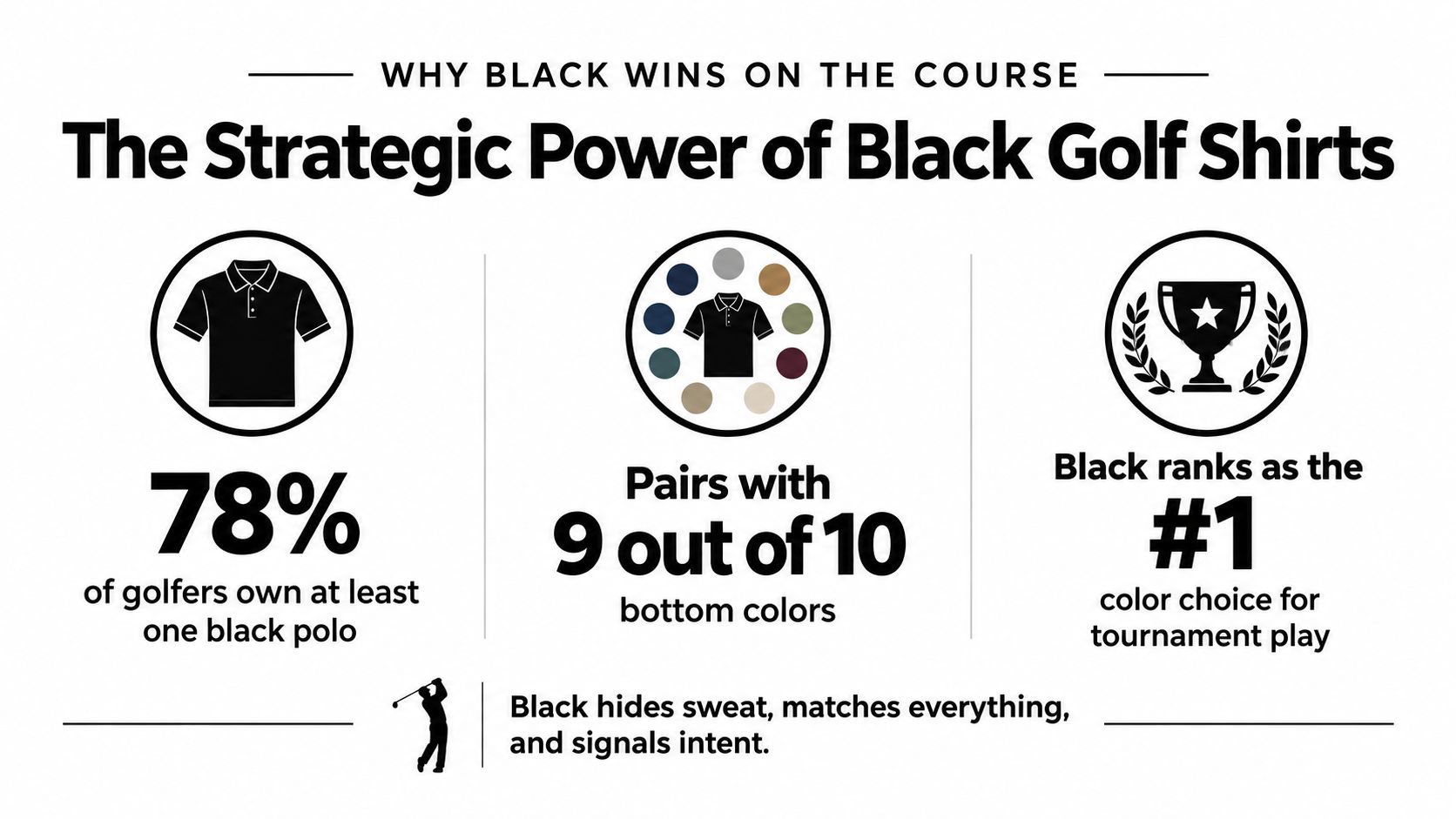
A black shirt works with neutral shorts, colored pants, printed belts, and high-contrast hats. It can move from a practice session to a league event or casual dinner without demanding a complete outfit change. That's especially useful when you travel, play in a group, or need one reliable option for a mixed schedule.
The smartest approach is to start with the shirt, then choose one visual statement. A skull-and-clubs hat, bright ratchet belt, camo short, or printed glove can supply the personality. Adding all four at once usually turns an intentional outfit into visual noise.
For golfers who want to pair clothing decisions with better on-course preparation, a launch monitor blog for golfers offers a useful resource for thinking about practice, equipment, and performance alongside appearance. The shirt still has to perform, but the outfit should support the way you play.
Black is also an efficient bridge between individual and coordinated dressing. Couples can wear matching polos without looking identical from head to toe, while groups can use black shirts as the common element and vary shorts, belts, or hats. That's the strategic advantage. You buy one dependable foundation, then create different looks around it.
Fabric and Fit Specs That Make Black Actually Perform
A black golf shirt that looks sharp on a product page can become hot, clingy, and restrictive by the back nine. Read the specifications before you read the print. Fabric engineering comes first, graphics second.
A useful starting point is a polyester-spandex performance knit with mechanical or four-way stretch. Polyester can provide strong air permeability in tested yarn systems, while blends and construction change how quickly moisture moves and how the fabric feels against the skin, as shown in research on air, moisture, and thermal comfort in woven fabrics. Don't stop at the word “performance.” Look for the actual fiber blend, fabric weight, mesh placement, and finish.
Read the product page like a fitter
- Stretch: You need room for trunk rotation, shoulder elevation, and a full follow-through. A shirt that pulls across the upper back is the wrong shirt, even if the chest fit looks polished.
- Moisture management: Sweat should move away from the skin and the fabric should dry quickly. Tattoo Golf's guide to what moisture-wicking fabric means is useful background when a product page uses vague performance language.
- UPF rating: Choose a verified rating rather than assuming black fabric provides complete protection. A dense knit with an actual UPF rating is a more reliable specification.
- Seams and collar: Flat-lock seams reduce rubbing, a tagless collar removes a common irritation point, and a collar with enough structure keeps the shirt presentable after repeated movement.
- Odor and travel performance: An anti-odor finish can help after a long day, while wrinkle resistance matters when the shirt comes straight from a travel bag.
The fit should skim your torso without clinging to damp skin. Armholes need to allow movement without exposing excess fabric, and the hem should stay secure when you bend or rotate. For many players, a slightly longer back hem is useful, but don't assume every course allows an untucked shirt.
Weight is a trade-off, not a trophy
Heavier fabric can feel substantial and resist cling, but it may retain more heat if the construction lacks airflow. Lightweight fabric can feel cooler, yet an overly thin knit may show moisture quickly and lose its shape. Look for ventilation panels or strategically placed mesh rather than judging the shirt by weight alone.
A black polo earns a spot in your rotation when it combines stretch, moisture transport, quick drying, breathable construction, and a fit that stays quiet during the swing. If the product page only promises a stylish print, keep shopping.
Reading the Heat, the Sun, and the Tee Time
Dark fabric has a real thermal drawback. Research on clothing color finds that dark textiles absorb more visible light and convert more of that energy into heat than light textiles. One analysis cited in the available research found that dark clothing reduced the body's heat-dissipation capacity by 4.52% under 200 watts per square meter of sunlight, with the reduction rising to 14.17% at 400 watts per square meter.
That doesn't make black unwearable in warm weather. It means you should choose it deliberately.
Use this tee-time rule
Wear a lightweight black performance shirt for early or late tee times, overcast conditions, shaded courses, and rounds with reliable airflow. For an exposed midday round in a hot climate, choose a lighter shirt or bring a breathable outer layer that can change the balance when the sun is strongest.
The key distinction is between sun protection and cooling. A UPF rating describes ultraviolet transmission, not how cool the garment will feel. A review of ultraviolet-protective clothing reports that UPF 15 blocks approximately 93.3% of ultraviolet transmission, UPF 30 blocks 96.7%, and UPF 50+ blocks 98%. Dark dyes often reduce UV transmission more effectively than pale dyes, but dye intensity, fabric density, weave, fiber type, finish, fit, and wetness all matter.
Sun rule: Choose black for coverage and styling, but choose fabric construction for comfort. A black shirt isn't automatically cool because it has a high UPF rating.
Keep the rest of the kit breathable. Pair the polo with moisture-wicking shorts, a ventilated hat, sunglasses, and sunscreen on uncovered skin. Avoid a tight fit that traps damp fabric against your torso. If the course has little shade and the forecast points to aggressive sun, a lighter color is the sensible call, not a failure of style.
Black still works in hot climates when the garment is lightweight, airy, and correctly fitted. It works better when the tee time and course layout cooperate. Make the decision before you leave home, not after the first few holes.
Building the Outfit Around One Black Shirt
The simplest styling formula is one black polo, one statement piece, and quiet supporting accessories. That statement piece might be a printed short, a colored belt, a high-impact hat, or a coordinated partner's outfit. Everything else should help the shirt look intentional.
For a clean monochrome build, pair the polo with black shorts or trousers and a black belt. Add texture through the belt finish, shoe material, or hat rather than introducing another loud color. This works for tournament-style dressing, travel, and post-round settings because the silhouette carries the outfit.
The second build is coordinated rather than identical. A couple can wear black polos from the same collection, then separate the looks with different bottoms. One golfer might choose black shorts with a white belt, while the other wears a patterned short with a black belt. Matching the top creates cohesion without making the outfit look like a uniform.
Three dependable outfit builds
| Outfit Build | Top | Bottom | Belt and Accessory | Best For |
|---|---|---|---|---|
| Monochrome black | Black performance polo | Black shorts or trousers | Black ratchet belt, tonal hat | Tournaments, travel, polished clubhouse settings |
| Coordinated couple | Matching black polos | One neutral bottom, one patterned or colored bottom | Shared hat color or coordinated belts | Couples' rounds, group photos, charity events |
| Mixed bold | Black polo with restrained branding | Printed shorts or colored trousers | One bright belt or statement hat | Public courses, scrambles, casual rounds |
The third build is where a black shirt earns its reputation for versatility. Start with a neutral polo, then add one strong element. Tattoo Golf's guide to building a complete golf outfit from shirt to hat follows the same practical logic: the outfit needs coordination from the top down, not a random collection of individually interesting pieces.
Control the contrast
If the shorts carry a large print, keep the belt and hat simple. If the hat is the loudest element, choose solid shorts and let the black shirt provide the visual reset. A colored belt can be effective, but it should connect to something else, such as a stripe, print detail, or shoe accent.
For women, the same formula works with skorts, fitted shorts, performance trousers, or a fitted polo silhouette. For men, it works with flat-front shorts, tapered trousers, or a more relaxed athletic cut. The recipe doesn't change with the wearer: black polo, one statement piece, coordinated belt or hat, restrained shoes.
Dress Codes and the Compliance Layer
A black polo is often polished enough for golf, but black isn't a substitute for checking the rules. Requirements vary between private clubs, public courses, resorts, leagues, charity outings, and tournaments. The National Golf Foundation reports that more than 55% of responding head professionals and general managers consider a dress code necessary or important most or all of the time, while a separate 2025 survey of 3,250 golfers found nearly 72% considered dress codes important or very important. See the National Golf Foundation's discussion of golf dress codes for context.
Build a compliance layer
Start with the least controversial version of the outfit: a collared silhouette, clean tailoring, appropriate golf shoes, and a graphic that stays tonal or restrained. Then increase the personality of the print as the venue allows.
- Private club: Choose a clean collar, fitted trousers or shorts, and a subtle graphic. Confirm rules about logo size, untucked hems, shorts length, and hats.
- Public course: A bold print usually has more room, but check for course-specific restrictions and keep the fit tidy.
- Charity outing: Ask the organizers, because event rules can override the course's usual standards.
- Resort play: Pack the polished version first, then add a brighter accessory if the resort permits it.
- Couples' match: Coordinate colors and silhouettes, but keep each golfer's graphic intensity appropriate to the venue.
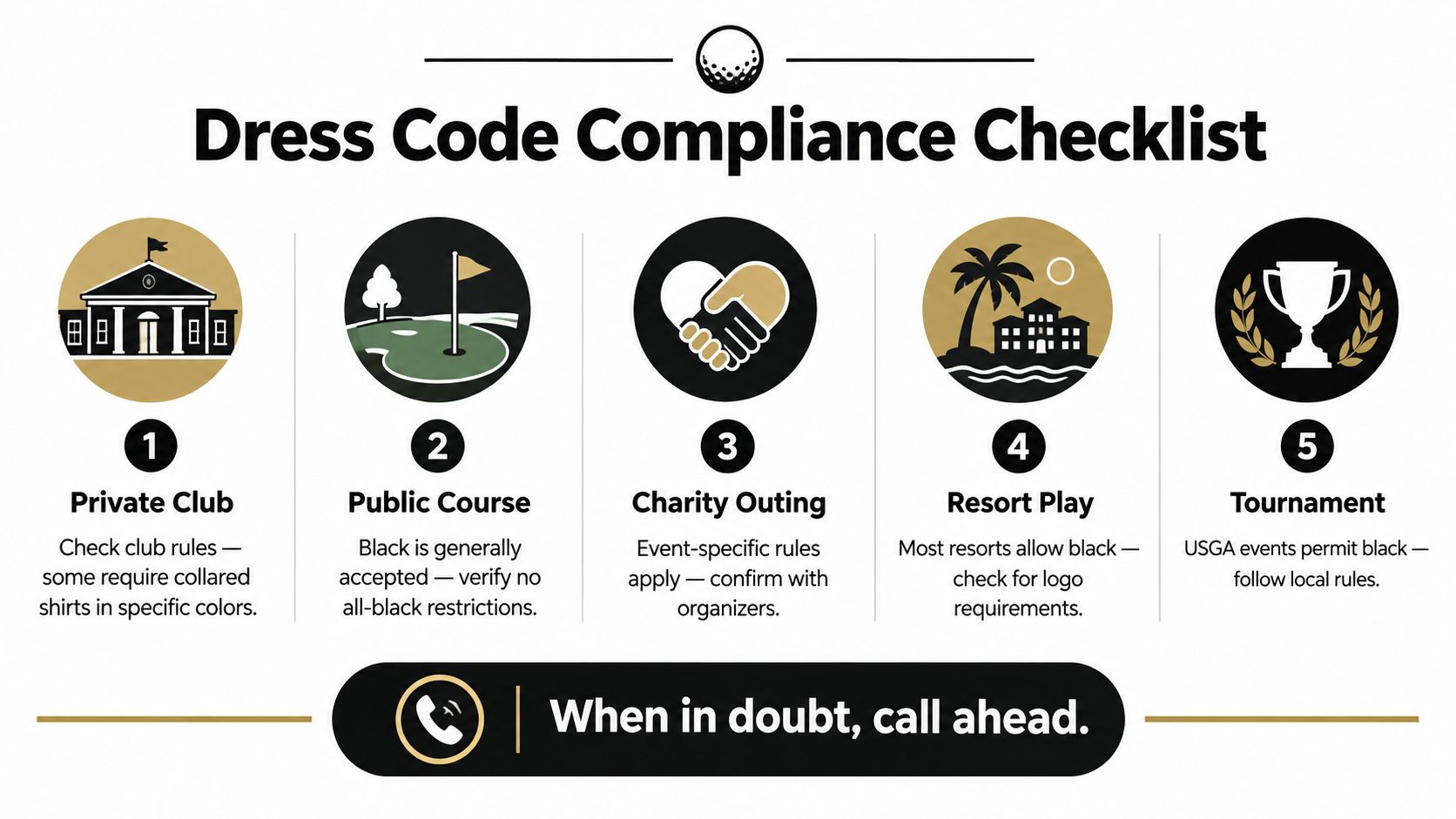
The friction points are predictable. Some clubs care whether the shirt stays tucked, others regulate visible logos, and some venues have rules about hats in indoor spaces. Shorts can also create problems when the hem is too casual or too short for the local standard.
Tattoo Golf's golf dress code guide is a useful reference before you build a rebellious outfit around a black shirt. The practical answer is simple: wear the conservative base to get through the gate, then express yourself through a tonal skull graphic, belt, hat, or outer layer when the setting permits it.
Two Outfits From the Catalog Worth Buying First
If you want to test the black-shirt framework with real coordinated pieces, start with one clean kit and one deliberately playful kit. The point isn't to own every matching item. It's to see how the same foundation changes when the supporting pieces change.
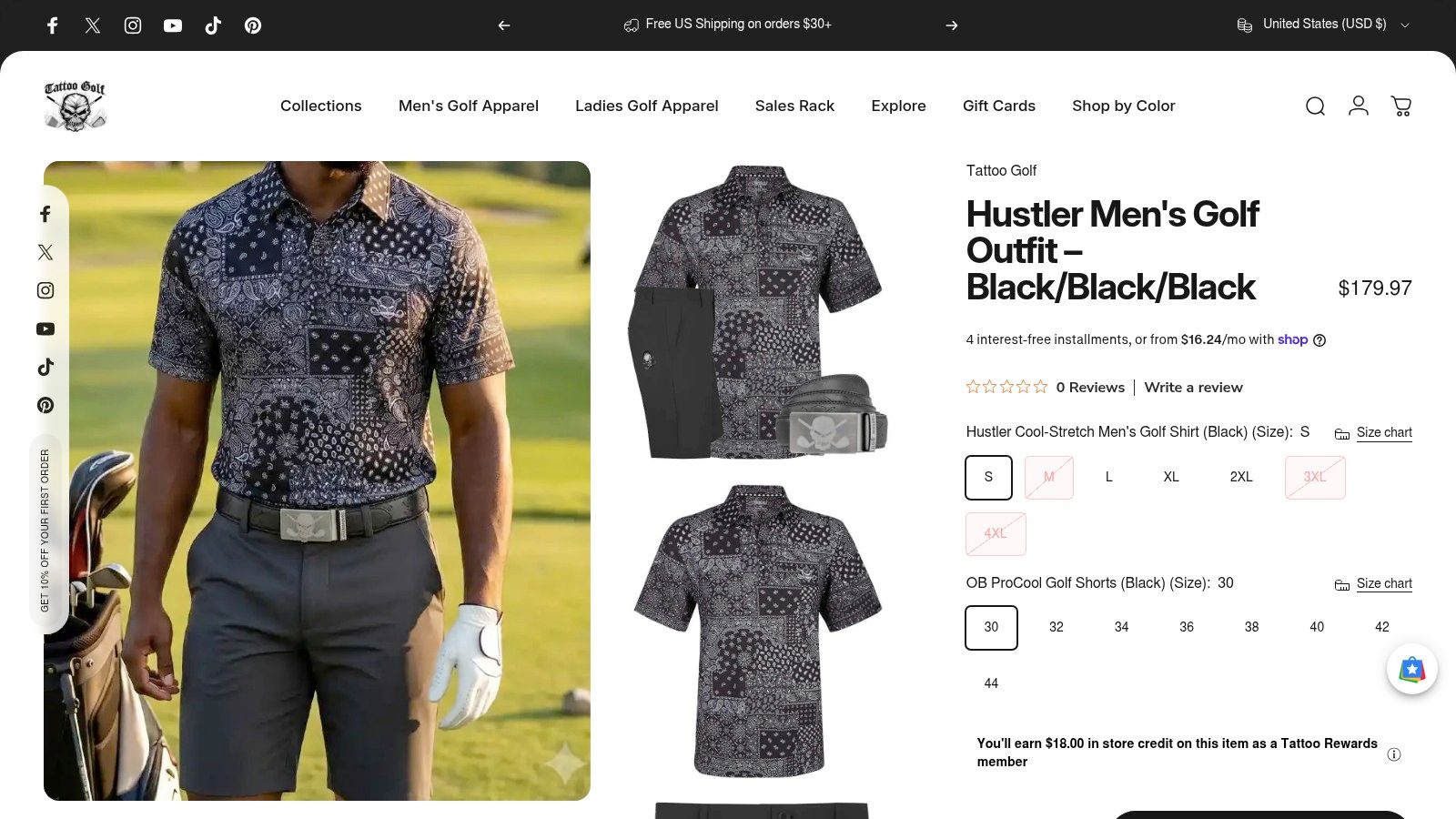
The Hustler all-black kit
The Hustler Cool Stretch Men's Golf Shirt, Shorts, and Ratchet Belt in black, black, black is the straightforward monochrome choice. The matching shirt, shorts, and belt create one uninterrupted visual line, which makes the kit feel sharper than three unrelated black pieces.
Wear it for a polished public-course round, a travel day that ends at the clubhouse, or any setting where you want the outfit to look deliberate without relying on a large print. The cool-stretch positioning supports movement, while the matching ratchet belt finishes the waist without adding a competing color.
The value of this kit is repeatability. You can keep the all-black base intact, then change the hat, shoes, or outer layer to alter the mood. A bold hat pushes it toward Tattoo Golf's rebellious side. A restrained cap keeps it closer to classic course dressing.
The Glazed & Confused mixed-bold outfit
The Glazed & Confused donut-print outfit takes the opposite approach. The print supplies the personality, while the black elements keep the combination from becoming chaotic. Use the black shirt as the visual anchor, then let the donut-inspired shorts or coordinated piece carry the novelty.
This is the better choice for a scramble, casual public-course round, group event, or a golfer who wants the outfit to start conversations. Keep the belt and hat controlled if the print is prominent. The black base should remain visible as the reset button.
Choose the Hustler kit when you want one dependable monochrome uniform. Choose Glazed & Confused when you want a black foundation that can support a louder print. Both approaches follow the same fitting principle: the shirt should move comfortably, the bottom should allow rotation and walking, and the accessories should complete the look rather than compete with it.
Care, Travel, and the Round-Ahead Checklist
Performance black shirts stay useful when you treat them like technical gear, not ordinary cotton. Turn printed garments inside out before washing, use a gentle cycle, and follow the product's care label. Avoid high heat when the label warns against it, because excessive heat can stress stretch fibers, finishes, and printed details.
Hang the polo promptly after washing. Don't leave it compressed in a damp hamper or sealed inside a golf bag. If the fabric needs a refresh before travel, steam it lightly or hang it in a bathroom while you prepare, rather than attacking technical fabric with unnecessary high heat.
Pack it so it arrives ready
Fold the shirt along its natural seams, place it near the top of the bag, and keep belts or hard accessories from pressing directly into the collar. For a coordinated outfit, pack the belt with the shorts and polo so you don't arrive with a shirt but no finishing piece.
A travel-ready black polo should leave the bag ready for a quick change. That's where wrinkle resistance earns its place. You want to spend pre-round time checking weather and course rules, not trying to repair a crushed collar.
Run this checklist before the first tee
- Fabric: Confirm stretch, moisture transport, quick drying, and a verified UPF rating.
- Weather: Choose black for suitable light and airflow conditions, or switch to a lighter piece for exposed heat.
- Fit: Rotate your shoulders, raise your arms, and bend at the waist before leaving home. The shirt should stay comfortable and presentable.
- Dress code: Check collar, hem, logo, hat, shorts, and graphic requirements for the venue or event.
- Statement piece: Select one print, belt, hat, or coordinated accessory. Don't make every item fight for attention.
- After the round: Air the garment, follow the wash instructions, and store it dry rather than leaving it in the bag.
The repeatable decision is clear. Start with a breathable, flexible black shirt that offers verified sun protection. Adjust for tee time and heat, add a compliance layer for stricter venues, then use one statement accessory to give the outfit its identity. That's how black golf shirts become a versatile golf outfit instead of a hot, generic polo.
Tattoo Golf offers black performance shirts, coordinated shorts and belts, matching options, and bolder printed pieces for golfers who want technical comfort without defaulting to country-club styling. Visit Tattoo Golf to choose your black foundation and build the rest of the outfit around your next round.
Share:
How to Choose Between a Golf Cap, Bucket Hat, and Visor