
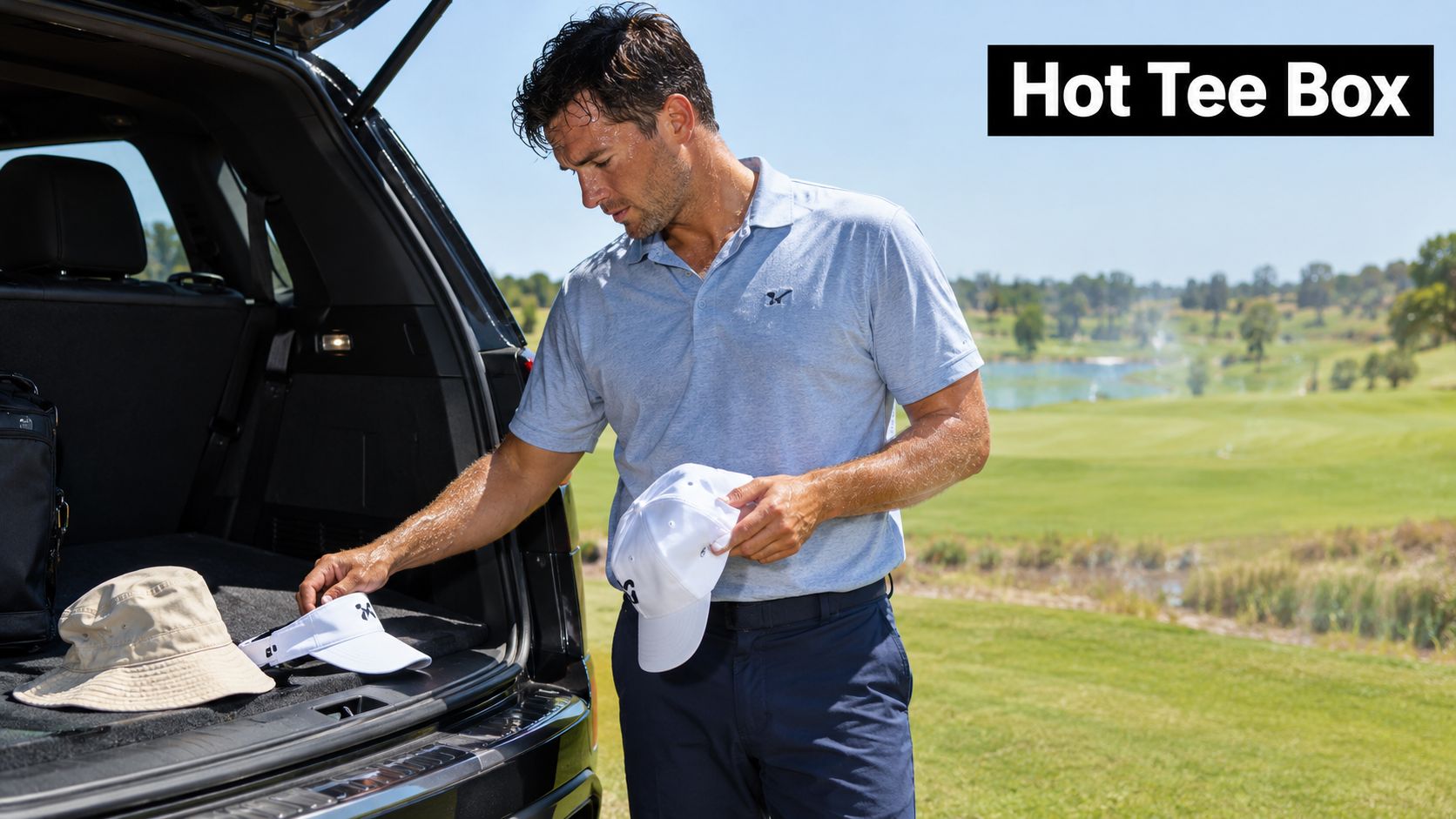
You're standing by the trunk on a brutally hot Saturday morning, holding a cap in one hand, a bucket hat in the other, and wondering whether the visor will keep you cooler. The forecast says sun, the tee sheet is packed, and you already know the wrong choice will feel annoying by the fourth hole.
The answer isn't "bucket hat for sun, visor for cooling, cap for everything else." Choose by the body parts you need to shade first, then decide how much airflow your head needs to stay comfortable. A hat is doing two jobs at once, protecting exposed skin and helping you manage heat, sweat, glare, and movement through the round.
The Three-Hat Problem on a Hot Tee Box
Most golfers eventually collect all three styles. The trouble starts when the weather turns oppressive and every option solves a different problem. A structured cap covers the crown and sends shade forward over the eyes. A soft-brim bucket hat extends shade around the head and sides of the face. An open-crown visor blocks sunlight from the eyes and upper face while leaving the top of the head exposed.
Start with two questions:
- What needs shade? Think about your scalp, hairline, ears, neck, cheeks, nose, and eyes. Those areas don't receive the same protection from each hat.
- How much heat must escape? If your head overheats quickly, crown coverage can feel restrictive. If sun exposure is your bigger concern, maximum airflow may be a poor trade.
- Will the hat stay put? A hat that shifts during setup, catches wind, or presses against your forehead becomes a distraction, no matter how good it looks.
Your swing matters too. The brim should shade your eyes without blocking your view of the ball or interfering with head movement. For broader advice on protecting your eyes during outdoor play.
Starting rule: Decide which exposed skin you're unwilling to leave uncovered. Then choose the hat that protects it without making the round miserable.
A cap is the sensible middle ground. A bucket hat is the coverage play. A visor is the ventilation play. That framing makes the decision far more useful than choosing by trend or logo placement.
What Each Hat Actually Covers and Cools
Golfers receive meaningful ultraviolet exposure on the head, shoulders, back of the neck, and forearms. One review reports that golfers receive an average UV dose 1.7 times higher than indoor workers, while a Valencia dosimetry study measured mean daily exposure of 2.07 standard erythema doses at the head, compared with 1.62 SED at the wrist. Those figures make crown and side coverage practical concerns, not decorative details. The Golf Science Journal review provides the supporting evidence.
A visor shades the eyes and upper face, but the scalp, hairline, and crown remain open. You get the clearest airflow path and the least trapped heat, but you must handle exposed skin with sunscreen or separate protection.
A standard cap covers the crown and creates a forward shade zone. It handles everyday golf well, especially in changing conditions, but its bill leaves the ears, cheeks, chin, and neck comparatively exposed. A bucket hat creates more continuous shade around the head. Its value rises with brim width, although a very broad brim can become distracting if it bumps against your shoulders or affects peripheral vision.
| Hat style | Crown covered | Brim profile | Airflow | Best for |
|---|---|---|---|---|
| Structured cap | Yes | Forward bill | Moderate, depending on fabric and vents | Balanced daily play |
| Bucket hat | Yes | Continuous brim around the crown | Moderate to limited unless ventilated | Broad sun coverage |
| Visor | No | Forward bill | Maximum at the crown | Hot play and open airflow |
A neutral evidence review says a brim of at least 7.5 cm is needed for reasonable protection of the nose and cheeks, while smaller brims offer negligible protection beyond the forehead. The same review notes that peaked baseball caps do little for the ears, cheeks, chin, and neck. The archived heat advice on hats supports choosing by the skin a brim reaches.
A bucket hat can be the strongest option when broad shade matters, but it isn't automatically comfortable. Crown fabric can hold heat close to the head, so look for mesh sections, breathable material, and a relaxed fit. For a closer look at the design trade-offs, this golf bucket hat guide is a useful reference.
The Cooling Tech Inside a Hot-Weather Golf Hat
A hat's category tells you its shape. The materials and construction tell you whether it will still feel usable after hours of walking, sweating, and standing in full sun.
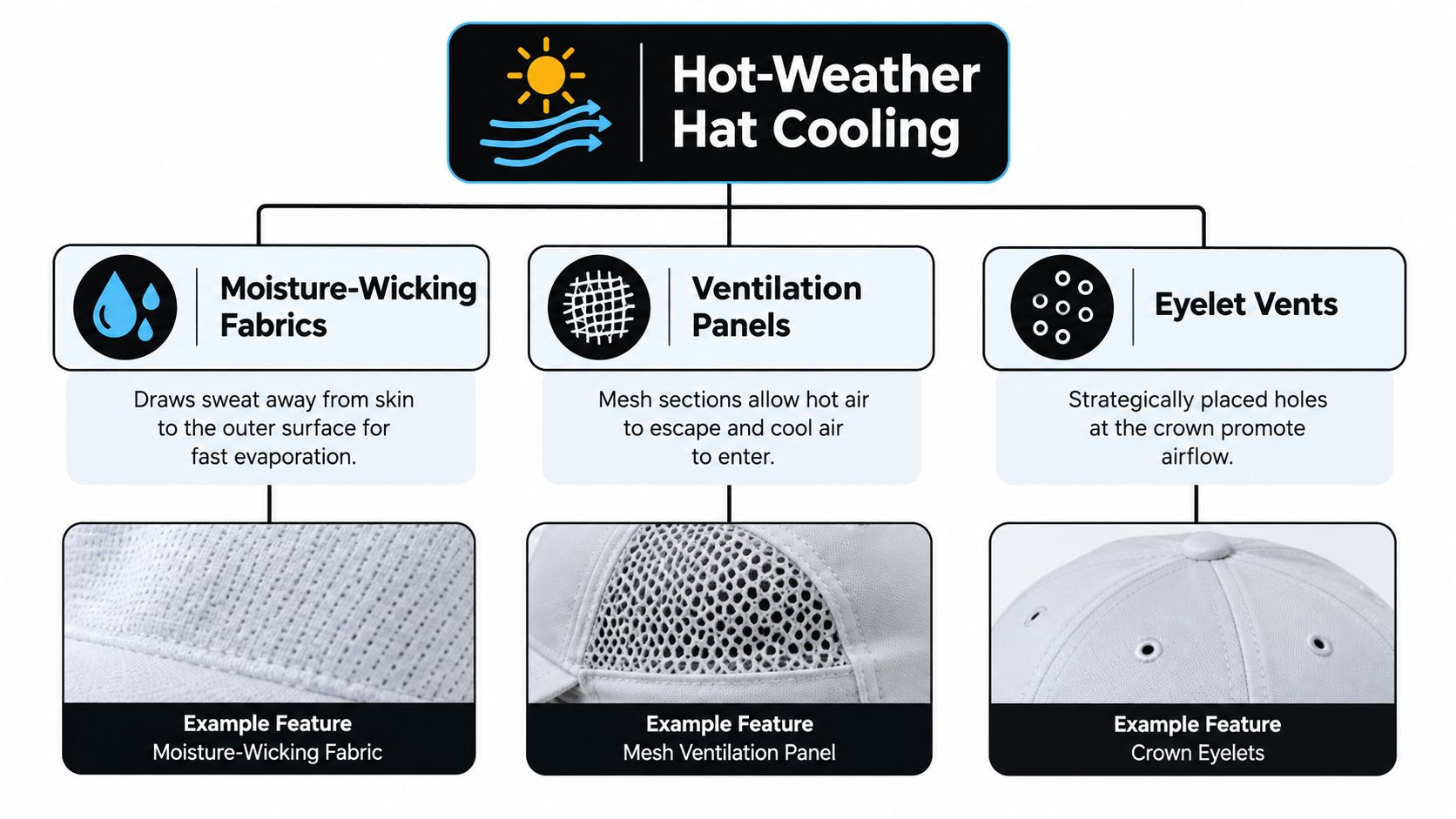
Moisture-wicking fabric moves perspiration away from the skin and toward the outer surface, where it can evaporate more readily. It doesn't make sweat disappear, but it keeps the inner surface from staying wet against your forehead. Quick-dry construction helps the material recover faster after heavy sweating or a rinse.
Ventilation panels create larger airflow zones, often through mesh or perforated sections. Eyelet vents use smaller openings in the crown to encourage air movement without making the hat feel as open as a visor. Both features can help, but more airflow can mean less solid fabric over the crown, so check how the ventilation is positioned.
Read the performance details correctly
UPF measures fabric performance, not total head protection. A UPF 50+ fabric permits no more than 1/50 of UV through, meaning it blocks at least 98% of UV through that fabric, as explained in this golf hat buying guide. It doesn't shade ears, neck, cheeks, or scalp areas that the fabric never covers.
That distinction matters with every style. A cap with a high UPF front panel still leaves its sides and back limited by the bill. A visor with a high UPF brim can protect the face while leaving the crown fully exposed. A bucket hat can use that same rated fabric across a larger shaded area, provided the brim is wide enough and the fit keeps it positioned correctly.
The sweatband is just as important as the outer shell. A soft, absorbent band keeps perspiration from running into your eyes and reduces the clammy feeling that makes golfers constantly adjust their hats. Look for a band that feels secure without digging into the forehead.
The cooling stack you want is straightforward:
- Moisture management: Sweat moves away from the skin.
- Air exchange: Mesh panels or eyelets release warmth.
- Sun-rated fabric: Covered areas receive tested fabric protection.
- Quick drying: The hat doesn't stay damp through the back nine.
- Stable sweatband: Perspiration stays out of your eyes.
For a deeper look at hot-weather construction, compare those features with this guide to choosing the right golf hat for hot weather.
Matching the Hat to the Golfer
The best choice changes with your scalp, sweat pattern, skin sensitivity, and tolerance for anything moving near your face. Don't choose the hat that looks right on a product page. Choose the one that solves the problem you have on the course.
If your hair is thinning
Choose a bucket hat when scalp coverage matters most. A cap can work if you pair it with sunscreen on the exposed hairline and sides, but a visor leaves the entire crown open. For long, bright rounds, the wider continuous brim earns its place.
If you sweat heavily
Start with a visor, especially if your crown overheats quickly. The open top releases heat better than any covered style. Pick a visor with a secure sweatband and apply sunscreen to the scalp, hairline, ears, and neck before teeing off.
If your skin is fair or photosensitive
Choose a bucket hat with the broadest practical brim. The evidence review cited earlier identifies 7.5 cm as the useful minimum for reasonable protection of the nose and cheeks, but the brim must still allow clear vision and a normal swing. Cover remaining exposed areas with broad-spectrum sunscreen.
If you care about swing mechanics
Choose a low- or mid-profile cap with a stable bill. It gives predictable forward shade without surrounding your peripheral vision with a soft brim. A visor can also work if the exposed crown isn't a concern, but avoid any design that shifts when you rotate through impact.
If style is part of the round
Choose based on the message you want the hat to send. A structured cap looks conventional and keeps the front panel prominent. A bucket hat feels more relaxed and expressive. A visor carries the clearest connection to traditional golf culture, helped by its association with Arnold Palmer and other professionals.
If you're also comparing broader equipment choices, Live Tourney's golf equipment advice offers useful context for thinking about gear by playing problem rather than appearance alone.
Why the Coolest Hat Is Not Always the Safest
The visor usually feels coolest. That doesn't make it the safest choice for every golfer.
Its open crown lets heat escape and gives sweat more room to evaporate. It also leaves the scalp, parting, hairline, and top of the ears exposed. For a golfer with thinning hair, very short hair, or frequent long rounds, that trade-off can turn a comfortable hat into incomplete protection.
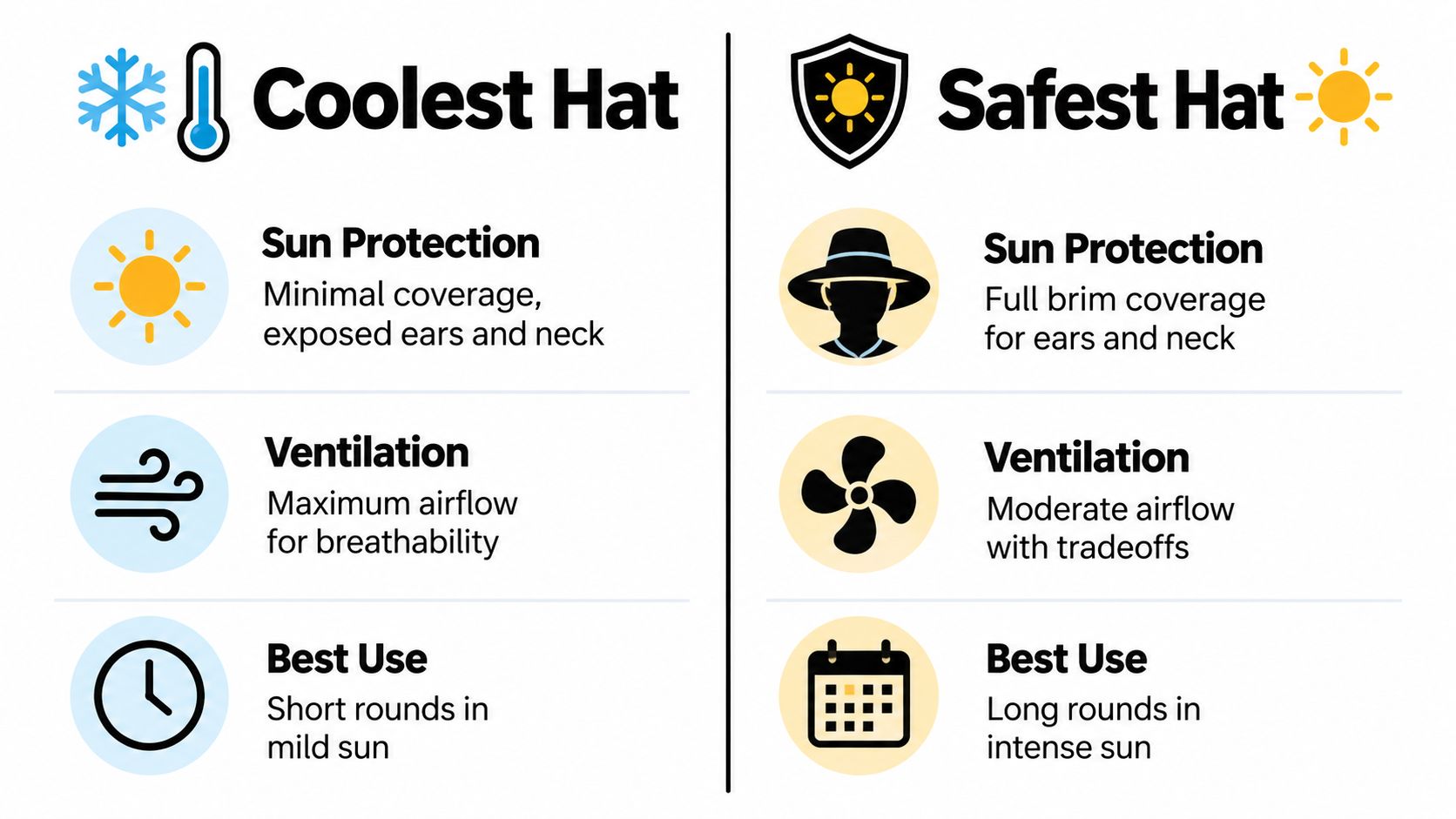
The cap sits in the middle. It covers the crown and forehead, but the ears and neck remain exposed. That makes it useful for everyday play, not a complete substitute for sunscreen or broader coverage.
The bucket hat reverses the priority. It adds fabric around the head and sides of the face, which can feel warmer, but it reduces direct exposure over more of the areas golfers commonly leave uncovered. A breathable shell, mesh vents, and a non-constrictive fit help manage the cost of that added coverage.
| Priority | Better starting choice | Main compromise |
|---|---|---|
| Maximum crown airflow | Visor | Exposed scalp and hairline |
| Balanced daily coverage | Cap | Exposed ears and neck |
| Broadest practical shade | Bucket hat | More retained heat |
The hat that feels coolest is not automatically the hat that protects the skin you most need to protect.
Don't treat a UPF label as a magic shield. It describes how much UV passes through the tested material. It doesn't protect skin outside that material, and it doesn't remove the need for sunscreen on uncovered scalp, ears, neck, face, or hairline.
Choose by exposed skin first. Then manage heat with fabric, vents, fit, and sweatband design.
Fit, Sizing, and Care That Actually Matter
A technically excellent hat becomes useless if it pinches your forehead, slides backward, or wobbles through the swing. Aim for a snug but non-compressive fit. It should stay level while you walk and rotate, without leaving a pressure mark after the front nine.
Adjustable closures are practical because they let you fine-tune tension as your head warms up or your hair changes. Hook-and-loop closures adjust quickly, fabric straps look cleaner, and snapbacks offer a firm range of adjustment. For a fitted hat, measure around the head above the eyebrows and ears, then compare that measurement with the maker's size chart.
Check the parts you actually feel
- Sweatband: It should touch the forehead evenly and feel soft, not abrasive.
- Crown depth: The hat should sit securely without pressing down on the ears.
- Brim stiffness: The bill should hold its shape and shade the eyes without blocking your view.
- Closure: It must remain secure during a full swing and while riding in a cart.
- Seams: Rough internal seams become obvious once sweat and friction build.
Break in a stiff new hat gradually. Wear it for a short practice session, adjust the closure, and reshape the crown by hand if it arrives compressed. Don't bend a structured brim aggressively, because a forced curve can distort the front edge and change your sightline.
Care determines how long the performance features last. Follow the manufacturer's instructions, wash gently with cold water when permitted, avoid high heat, and air-dry rather than using a dryer. Store the hat upright or flat enough that the brim doesn't spend weeks crushed under equipment.
A clean hat also feels better. Sweat, sunscreen, and salt eventually affect the band and fabric, so rinse residue promptly instead of letting it bake into the material after every round.
How Tattoo Golf Hats Fit the Framework
The Rope & Cord Adjustable Golf Hat in Bone shows where a structured cap earns its keep. Its front panel gives you the familiar course-ready silhouette, while the breathable, moisture-wicking fabric addresses sweat management. The adjustable fit makes it easier to secure without over-tightening, and the rope detail pushes it beyond a generic cap without changing its basic job.
The '99 Cool-Tech Performance Golf Hat in Dark Grey takes the same cap format in a more performance-focused direction. Its six-panel construction, hard buckram visor, Velcro closure, and breathable Cool-Tech fabric line up with the priorities that matter during longer play: stable shape, adjustable tension, forward shade, and material designed for active use.
These are cap solutions, so they don't replace a bucket hat when your priority is continuous shade around the ears and neck. They also won't provide the open-crown airflow of a visor. For golfers who want a cap's balance with a more expressive identity, Tattoo Golf's tattoo-inspired golf hats for players who stand out show how performance details and personal style can occupy the same piece of headwear.
A Simple Rule for Next Time You Pack the Bag
Use this order:
- Shade the skin you can't afford to expose. Choose a bucket hat for broad coverage, a cap for balanced crown coverage, or a visor when crown airflow matters most.
- Manage heat second. Look for breathable fabric, vents, moisture control, and a comfortable sweatband rather than assuming the least-covered style is always the right answer.
- Choose the silhouette that fits the round. Your hat should stay stable, preserve your visual field, and suit the way you play.
If your chosen hat leaves the scalp, ears, neck, hairline, or face exposed, apply broad-spectrum sunscreen there. A visor may be perfect for a humid afternoon, while a bucket hat may be the smarter call for a long, high-UV round. The right answer is the one that protects the parts of your head you need covered without making you spend the day fighting your hat.
Tattoo Golf offers expressive golf caps, visors, bucket hats, and performance apparel for players who want course-ready comfort without a conventional country-club look. Visit Tattoo Golf to compare headwear styles and choose the one that matches your sun, sweat, and style priorities.
Share:
Bold Women’s Golf Shirts: How to Find Your Style