
You've found the right camo polo, matched it with shorts or pants, and the pattern looks sharp in the mirror. Then you raise your arms as if you're addressing a golf ball and notice the shoulders pulling, the sleeves stopping short, or the waistband pressing into your midsection. That outfit may photograph well, but it won't earn its place in your golf rotation.
Camo golf outfits demand more than a quick glance at a familiar size label. Tattoo Golf's bold prints and technical stretch fabrics can make a garment feel different from a standard department-store polo, especially when the cut is athletic or the pattern creates a closer visual silhouette. Your measurements, the garment's fit profile, and the way you move through a swing all matter.
Why Proper Camo Golf Outfits Fit Matters
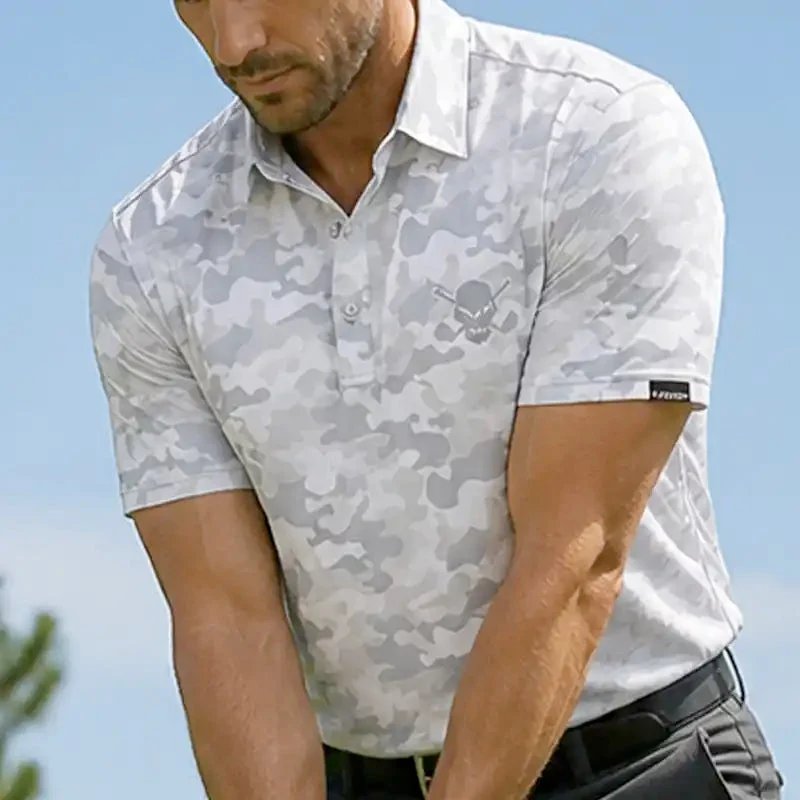
A golfer can spot a poor fit before the first tee. The shirt looks aggressive, the pattern is exactly right, and the cap completes the look. But once the shoulders pinch during the takeaway, the visual appeal becomes irrelevant. A polo that restricts rotation can change how freely you swing, while excess fabric around the waist can catch against a club or shift under a vest.
Fit also controls how a bold print reads. A full camo panel stretched across the chest can look far louder than intended when the garment is too small. The opposite problem creates folds that break up the pattern and make the outfit look untidy. Subtle tonal camo and textured jacquard designs usually tolerate movement better, but neither can rescue the wrong size.
The swing test
Before deciding that a polo fits, test the positions you'll use on the course:
- Address position: Bend naturally and check that the hem doesn't ride sharply upward.
- Takeaway: Move both arms across your body. The upper back should flex without pulling.
- Top of the backswing: Raise your lead arm and look for sleeve tension around the shoulder.
- Finish: Rotate fully. The shirt should stay anchored rather than twisting around your torso.
A useful fit doesn't feel loose everywhere. It gives your shoulders room, keeps the torso controlled, and avoids fabric pooling under the arms. That balance becomes especially important with Tattoo Golf's expressive prints, where a clean outline keeps the design intentional.
For accessories, coordinate the cap rather than forcing every piece into an identical print. A structured or performance golf cap can provide a cleaner finish, and buyers comparing options may find the selection of camo golf hats useful when building a consistent team or group look. Tattoo Golf's own camo golf shirt guidance can also help you judge how the pattern fits into a complete outfit.
How to Take Accurate Body Measurements
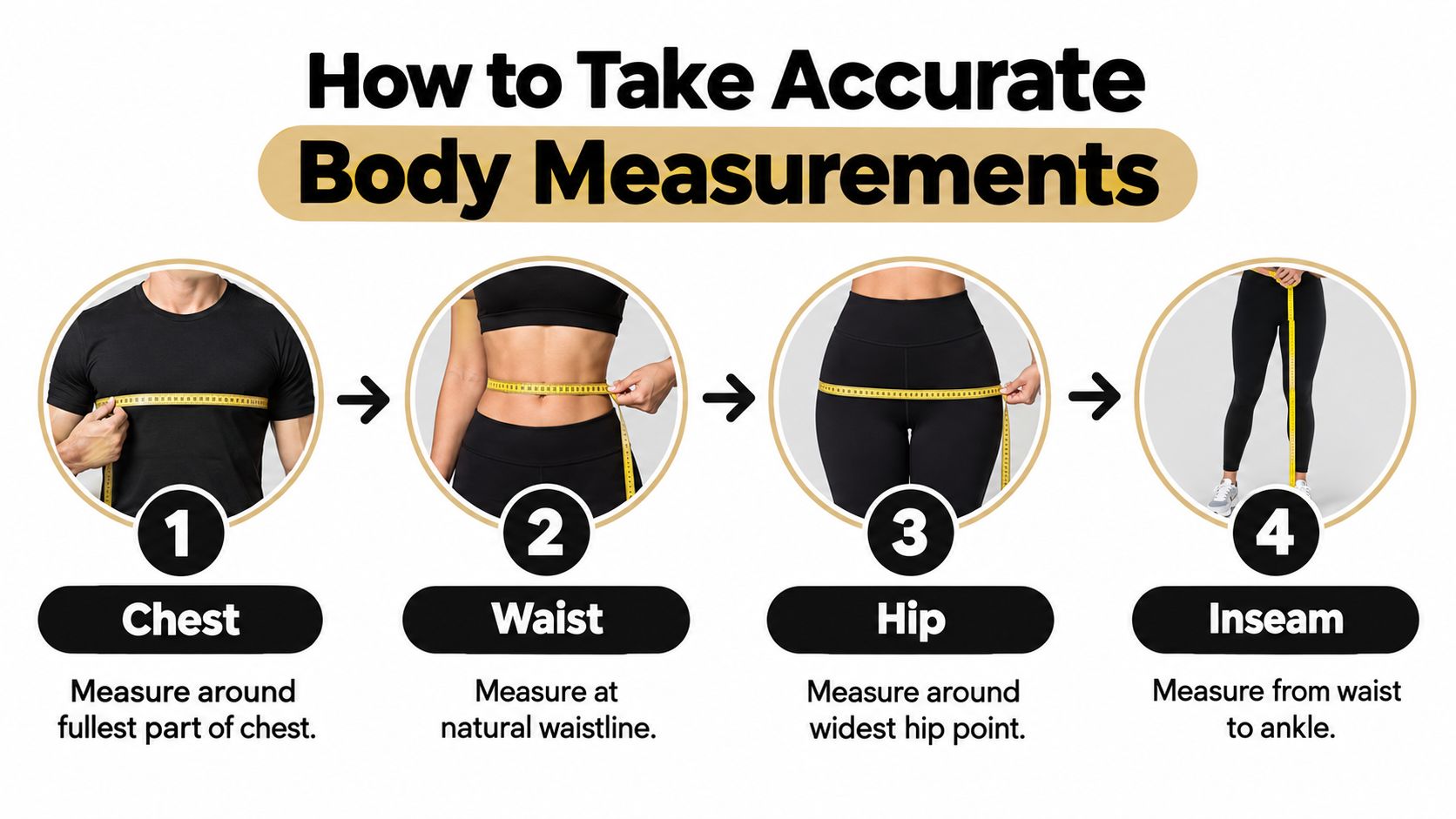
A size chart only works when the measurements behind it are reliable. Use a flexible tape measure, wear only light undergarments, stand naturally, and ask someone to help with the back and inseam measurements if possible. Don't measure immediately after pulling your stomach in or expanding your chest. You need the body you'll dress for a round.
Take the core measurements
- Chest: Wrap the tape around the fullest part of your chest, keeping it level across your shoulder blades. Let your arms hang naturally and leave enough room for one comfortable breath. Pulling the tape tight produces a measurement that may translate into a restrictive polo.
- Natural waist: Find the point where your torso bends most easily, rather than automatically measuring at the waistband of your favorite trousers. Keep the tape parallel to the floor and relaxed against the body. This number is particularly useful for pants and shorts.
- Hips: Measure around the widest point of your seat and hips. Stand with your feet in a normal stance, not spread wide to reduce the reading. A correct hip measurement helps prevent pulling across the back pockets or upper thighs.
- Inseam: Measure from the top of the inner leg to the point where you want the trouser hem to finish. A well-fitting pair of golf pants should allow a stance and crouch without dragging at the heel. If you're measuring alone, compare the result with a pair of trousers that already works.
Add the overlooked length checks
For sleeve length, start at the center back of your neck, run the tape across the shoulder, and continue down the outside of the arm to the wrist. Keep the arm relaxed with a slight bend. This measurement gives a better indication of coverage than measuring only from the shoulder seam, particularly when a garment uses a raglan or extended shoulder construction.
Record the results in both inches and centimeters, then measure again. The purpose isn't precision for its own sake. It's to avoid ordering a shirt based on a label that doesn't reflect your chest, torso, or arm proportions.
Decoding the Tattoo Golf Size Chart
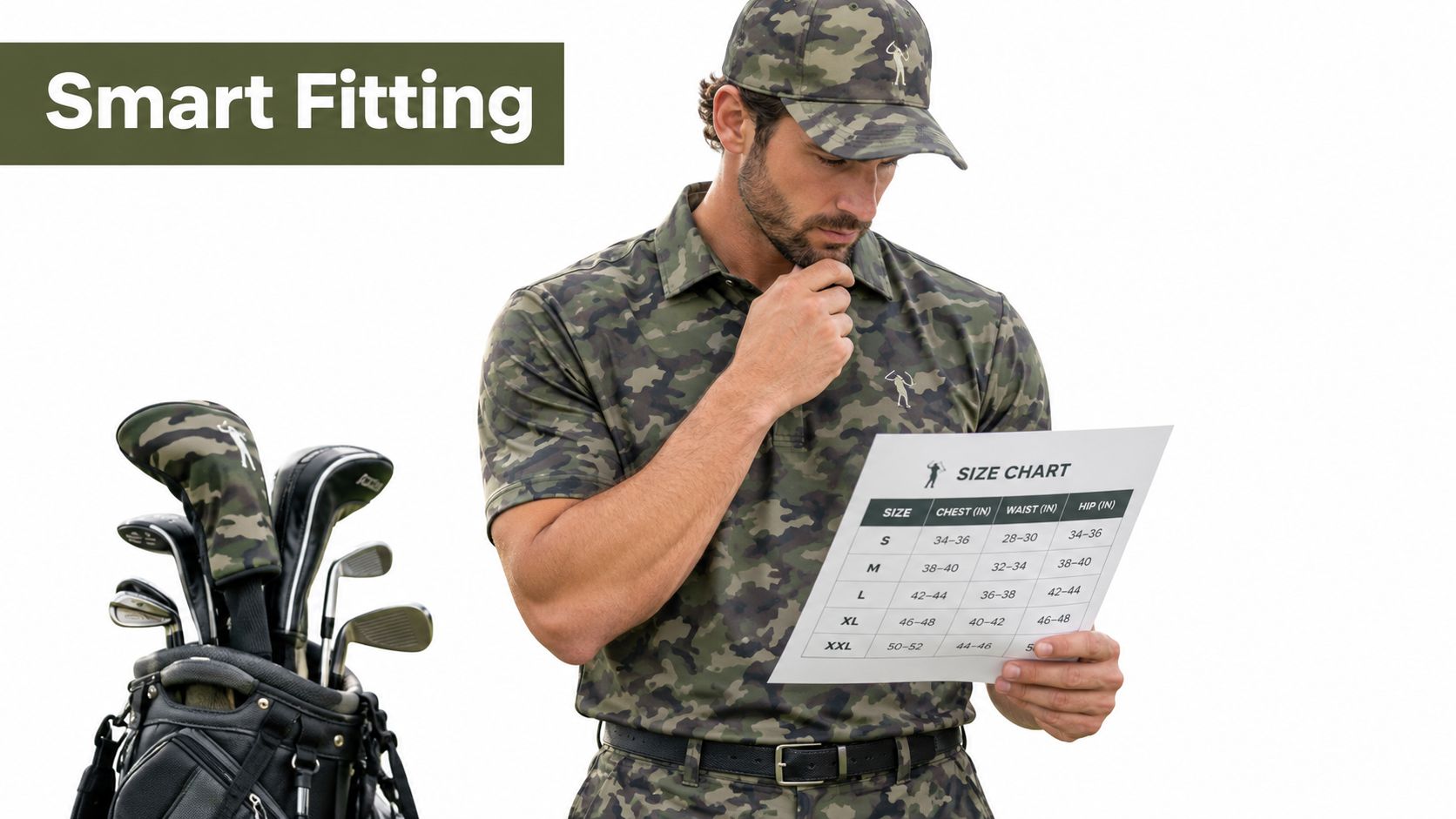
Tattoo Golf's chart should be treated as a garment-selection tool, not a suggestion to buy the size you normally wear elsewhere. Start with the measurement that controls the garment. For a polo, that's usually the chest and shoulder area. For pants or shorts, prioritize the waist and hip measurements, then check the inseam or intended leg length.
The chart uses standard lettered sizing across the range from S through 4XL, but the label alone doesn't tell you how the garment will sit. A player with a broad chest and narrower waist may fit the chart at one size through the torso while preferring a different fit profile for the lower body. A player with a longer torso may need to prioritize shirt length over a familiar chest label.
Men's measurements
Read each row as a body range, not as the garment's finished dimensions. If your chest falls comfortably inside one row and your waist falls near the next, decide based on movement and layering. A close-fitting Cool-Stretch polo can accommodate some variation because the fabric has four-way stretch, but the fabric shouldn't be used to justify a shirt that pulls across the buttons or collar.
Check these points before ordering:
| Measurement | What to inspect | Why it matters |
|---|---|---|
| Chest | Fullest chest measurement | Controls shoulder and upper-torso freedom |
| Waist | Natural waist measurement | Prevents a tight lower hem or excess volume |
| Sleeve | Neck-to-wrist length | Helps avoid short sleeves during the swing |
| Inseam | Inner-leg length | Keeps pants functional at address |
For a more fitted appearance, the garment should follow the torso without outlining every movement. A regular cut generally gives the safest balance for an all-day round, while a relaxed option is more forgiving over a base layer or light outerwear.
Women's measurements
Women's sizing requires the same discipline, with added attention to bust, natural waist, and hip proportion. Don't assume that a men's equivalent letter will produce the same shoulder angle, torso length, or waist placement. The curve of the garment matters as much as the printed size.
If the bust measurement is the deciding point but the waist is smaller, look for a cut that leaves room through the upper body without becoming excessively loose at the hem. If the hip measurement leads you into a larger size for pants, assess whether the waistband and rise will remain comfortable in a golf stance. Tattoo Golf's performance golf shirts with personality show why the technical cut and visual design need to be judged together.
Choosing Your Ideal Golf Fit Profile
The same camo outfit can look sharp on one golfer and awkward on another because the silhouette changes how the print sits over the body. Choose the fit profile before you choose the color or motif. Stretch fabric improves movement, but it doesn't eliminate the need to select the right shape.
Slim fit
Slim fit works best for a leaner frame or a golfer who wants a close, modern outline. A camo polo in this cut should sit near the chest and waist without pulling at the buttons or restricting the backswing. It pairs cleanly with tapered pants, but the combination can become too tight if your chest or midsection sits near the upper end of the size range.
Choose slim when the garment will be worn directly against the skin or a thin base layer. Size up if the shoulder seam sits inward, the sleeve binds when you raise your arm, or the hem rides up during rotation.
Regular fit
Regular fit is the most dependable choice for varied course conditions. It leaves useful room through the torso while retaining enough structure to keep a high-impact camo print from looking shapeless. This profile suits golfers who walk, swing actively, and may add a quarter-zip or vest later.
A regular camo polo also gives you more flexibility across settings. Pair it with neutral shorts for the course, then use the same shirt with dark trousers or denim away from the club. The restrained supporting pieces keep the print in control.
Relaxed fit
Relaxed fit prioritizes movement and comfort. It suits broader builds, golfers who dislike torso compression, and anyone who wants an easier silhouette for long rounds or casual wear. The risk is excess fabric. If the shoulder drops too far or the hem balloons around the waist, a bold pattern can look careless rather than deliberate.
Movement rule: If you can't complete a full practice swing without adjusting the garment, the fit profile is wrong, regardless of the size label.
Tattoo Golf's Cool-Stretch construction changes how these profiles feel because four-way stretch allows the fabric to move with the body. That flexibility may let some golfers choose a closer fit, but sizing down should never create shoulder tension, a distorted print, or pressure at the waist.
Global Size Conversions Made Simple
International shopping becomes easier when you separate conversion from fit selection. US, UK, and EU labels can point you toward a starting size, but they don't replace the brand's own chest, waist, hip, and length measurements. A converted label is only useful if the underlying body dimensions match.
Use this process:
- Start with your measurements: Record chest, waist, hips, sleeve length, and inseam.
- Read Tattoo Golf's chart: Identify the lettered size that corresponds to the controlling measurement.
- Use regional labels as a cross-check: Compare the equivalent US, UK, or EU designation only after the measurement match.
- Resolve conflicts by garment type: Let chest and shoulder control a polo, and waist, hip, and inseam control pants or shorts.
A practical conversion reference
| Tattoo Golf label | US starting point | UK starting point | EU starting point |
|---|---|---|---|
| XS | XS | XS | XS |
| S | S | S | S |
| M | M | M | M |
| L | L | L | L |
| XL | XL | XL | XL |
| 2XL | 2XL | 2XL | 2XL |
| 3XL | 3XL | 3XL | 3XL |
This table is deliberately a starting reference rather than a substitute for the official chart. Letter systems often look familiar across markets while the actual garment proportions differ. A shopper in London or Paris should still compare the product's stated measurements with a garment already worn successfully.
The conversion issue becomes more noticeable with coordinated outfits. A shirt may fit correctly through the chest while matching pants need a different labeled size because waist and hip proportions don't follow the same pattern. Buy the pieces according to their controlling measurements, not as an automatic matching set.
For caps and belts, use the product's adjustable range or stated circumference rather than trying to convert apparel letters. Accessories sit differently from clothing, and a perfect shirt size doesn't predict a comfortable hat or belt.
The Ultimate Fitting Decision Workflow
The safest purchase follows a sequence. Skip one step and you'll start relying on assumptions, especially if your usual size varies between brands or garment types.
Begin with your real measurements
Measure chest, natural waist, hips, inseam, and sleeve length while wearing light clothing. Write the numbers down immediately. Don't trust memory, and don't use an old measurement if your fit has changed.
Match each garment to its controlling measurement
For a camo polo, compare chest first, then shoulder comfort, sleeve length, and torso length. For pants or shorts, compare waist and hips before checking inseam. Don't let a familiar shirt size determine your trouser choice.
The cut matters as much as the chart. A slim polo may need more room through the chest, while relaxed pants may require a closer waist fit to avoid shifting during a swing. Treat every product page as its own decision.
Check the fabric and intended layers
Technical polyester or nylon with about 5 to 10% spandex or elastane is a practical specification for golf apparel because it combines quick drying with stretch and recovery. For polos, a fabric weight of 160 to 210 gsm is also presented as a useful balance between opacity, airflow, and durability in warm conditions, from the same source.
That specification doesn't mean you should size down automatically. A stretchy shirt still needs enough room for the shoulder blades to move, particularly if you plan to layer it under outerwear.
Perform a final movement check
Before adding the item to your cart, answer four questions:
- Can you raise both arms without the hem jumping sharply?
- Does the pattern remain smooth across the chest?
- Can you bend into address without waistband pressure?
- Will the garment work with the layers and shoes you already own?
Cart rule: Choose the smallest size that clears every movement test without pulling, twisting, or compressing the areas that drive your swing.
Navigating Returns and Exchanges with Confidence
Online sizing always carries some uncertainty, especially when a brand's cut differs from the shirts already hanging in your closet. That uncertainty becomes manageable when you inspect the return rules before removing tags, washing the garment, or taking it onto the course.
Tattoo Golf publishes its requirements and process on its returns and exchanges page. Read that information before ordering, then keep the packaging and tags intact until you've tested the fit indoors. A few minutes of careful checking can preserve your exchange options if the shoulders feel tight or the waist sits too loosely.
Test the garment without compromising it
Wear the polo over the same light layer you expect to use on the course. Stand naturally, raise your arms, rotate through a slow backswing, and bend into address. For pants, check the waistband while standing and crouching, then walk several steps to see whether the fabric shifts.
Don't judge fit from one mirror pose. Bold camo can disguise folds when you're standing still, but movement exposes the underlying problem. Pay attention to pressure points rather than just asking whether the garment looks fitted.
Decide whether the problem is size or profile
A shirt that's tight at the chest but loose at the waist may need a different cut, not just a larger size. A larger size can solve the chest problem while leaving too much fabric through the midsection. Pants with enough room at the hips may need a different silhouette if the waistband gaps.
Write down the exact issue before contacting customer support. “Too small” is less useful than “the shoulder pulls during rotation, but the waist is comfortable.” That description helps you choose between a size exchange and a different fit profile.
Returns are a safety net, not a reason to order carelessly. Measure first, preserve the garment's condition, and use the published policy as the final authority on eligibility, timing, and procedure.
Frequently Asked Questions About Golf Sizing
Will performance fabric shrink after washing?
Technical golf fabric is designed to retain its shape, but careless washing can still affect feel and fit. Follow the product's care instructions, avoid treating stretch apparel like heavy cotton, and don't judge the final size before laundering according to those directions.
What should I do between two sizes?
Use the garment's controlling measurement and your preferred movement level. Choose the larger size if the smaller option pulls across the chest, shoulders, hips, or waist. Choose the smaller one only when it still allows a full swing and the cut remains comfortable.
I prefer a baggier look. Should I size up?
Not automatically. A relaxed fit gives you room without necessarily creating oversized shoulders or a distorted hem. If you size up in a slim or regular garment, you may gain torso volume while losing sleeve and shoulder balance.
Can I wear full-print camo at a strict club?
Check the club's dress code before buying. If the rules are conservative, choose tonal camo, textured jacquard, or a camo accessory with a solid polo. A restrained pattern usually looks more course-appropriate than a head-to-toe print.
Quick purchase checklist
- Measure first: Record chest, waist, hips, inseam, and sleeve length.
- Read the product chart: Use the garment's controlling measurement.
- Choose the profile: Decide between slim, regular, and relaxed before selecting a size.
- Test movement: Raise your arms, rotate, bend, and walk.
- Protect the exchange option: Keep tags and packaging until the fit is confirmed.
Tattoo Golf offers camo polos, shorts, pants, hats, belts, outerwear, and coordinated performance pieces built around stretch and moisture management. Visit Tattoo Golf with your measurements ready, compare the chart for each garment, and choose the camo outfit that gives your swing room without losing its edge.
Share:
Matching Couples Golf Shirts That Actually Fit and Perform
Men’s Golf Shorts with a 9-inch Inseam