

You're on the sixteenth hole of a humid summer round. The shirt felt comfortable on the first tee, but now it's glued to your lower back, damp fabric tugs across your shoulders, and every swing feels slightly restricted. You adjust your grip, rush the takeaway, and spend the next few holes managing your clothes instead of your game.
That's the test for moisture-wicking golf shirts. A shirt that feels dry for the opening holes isn't automatically a good shirt. The performance you notice late in a round depends on three separate decisions: fiber chemistry, fabric structure, and post-wash durability. Treat “moisture-wicking” as a starting label, not a verdict.
Why the Right Golf Shirt Matters on Hole 16
By the sixteenth hole, a shirt's weaknesses are easy to feel. Cotton may feel excellent from the drawer, but on a hot course it absorbs sweat and stays damp against the skin. The back panel grows heavier, the torso clings, and the fabric shifts as you rotate through the ball.
Those distractions affect your swing routine. You tug the hem down, pull the collar from your neck, or shorten your shoulder turn because the shirt catches across your chest. Each adjustment takes attention away from the shot, especially late in a round when patience is already being tested.
Practical rule: Judge a golf shirt after sustained movement, not by how soft it feels in the pro shop.
Start with fiber chemistry. Polyester, cotton, nylon, and blends manage moisture differently because they hold different amounts of water. Low-regain fibers generally retain less liquid internally, while higher-regain fibers can feel comfortable yet take longer to dry. The fiber label sets the material's baseline, but it does not predict the finished shirt by itself.
Next, inspect fabric structure. Two polyester shirts can perform very differently when their knit density, yarn design, mesh zones, or layer construction differ. Knit structure and capillary behavior determine how liquid travels through the fabric, so a fiber label alone is incomplete. Textile research on moisture-wicking fabrics explains why fiber and structure must be judged together.
Then check post-wash durability. Detergent, softener, heat, and friction can alter permeability and moisture transfer. A shirt that handles sweat well on its first round may lose that performance as channels become coated or its finish breaks down. Follow the care label, avoid treating a softener-heavy wash as harmless, and buy for hole 16 as well as the many washes before it.
How Moisture-Wicking Fabric Actually Works
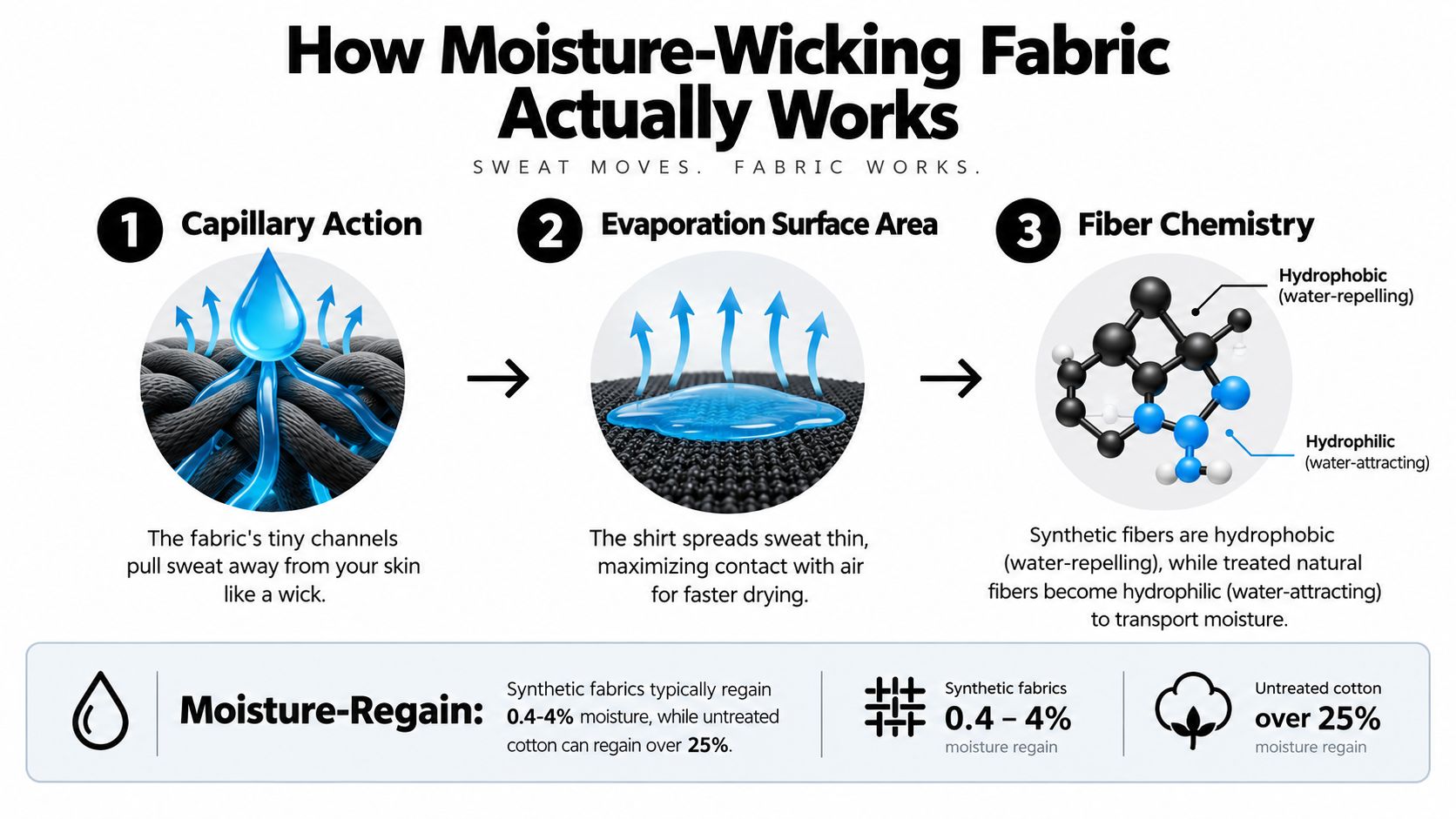
By hole 16, a shirt that only feels dry at the first tee has already failed. Effective moisture management depends on three separate decisions: capillary action, evaporation surface area, and fiber chemistry. Capillary action uses tiny pathways between yarns and through the knit to pull liquid away from your skin. Instead of leaving sweat in one saturated patch, a well-built fabric spreads it across a wider area.
That spread gives air more contact with moisture. Wicking and drying are different jobs. Wicking moves liquid away from your body, while evaporation removes it from the shirt. A good golf polo handles both, directing sweat toward an outer surface where airflow can finish the process.
Fiber chemistry sets the baseline
Moisture regain measures how much water a fiber holds under standard conditions. Polyester retains the least among the common benchmarks, followed by nylon, while cotton retains more. A 50/50 cotton-polyester blend sits between those materials. These textile benchmarks and their implications for sweat handling are documented in textile research.
That does not make polyester completely moisture-proof or cotton unusable. Polyester generally holds less water inside the fiber, so it works well as a base for moving sweat across the fabric. Cotton can absorb and buffer moisture, but during a long, hot round it tends to stay wet longer and feel heavier against the skin.
Yarns can also combine different water behaviors. Hydrophobic fibers resist water within the fiber, while hydrophilic treatments or components attract liquid and help distribute it. Judge the complete yarn-and-knit system, not a single marketing label. The shirt must move sweat outward and expose enough surface for evaporation.
Structure determines the final result
Fiber content does not predict the finished polo. Two shirts made from polyester can wick very differently because knit density, yarn design, mesh zones, and layer construction change the routes available to liquid. Fabric architecture controls how quickly sweat spreads and whether air can reach it.
Stretch does not automatically ruin wicking. A polo can use elastane for backswing mobility while polyester face yarns carry moisture away. Problems start when extra stretch, high density, or heavy finishing closes the fabric and restricts airflow.
Your practical test is straightforward: sweat should leave the skin, spread across the shirt, and evaporate without the fabric becoming heavy or clingy. If a brand publishes moisture-management results, look for several measures rather than one impressive figure. The Moisture Management Test can report wetting time, absorption rate, maximum wetted radius, spreading speed, one-way transport index, and overall moisture-management capacity. This multi-metric approach is outlined in sportswear moisture-management research.
Buy in this order: fiber chemistry first, fabric structure second, and post-wash durability third. That sequence separates genuine hole-16 performance from a polo that only feels technical on the hanger.
Comparing the Fabrics Used in Modern Golf Polos
On a humid summer round, fabric choice becomes obvious by hole 16. The right polo moves sweat away, stays comfortable through the swing, and keeps its shape after repeated washing. I would choose a lightweight engineered hybrid for oppressive heat, a classic jersey for value, interlock when presentation matters, and piqué for traditional texture.
Fiber chemistry is only the first decision. Knit density, yarn design, mesh zones, stretch content, and finishing determine how the finished polo handles moisture. Post-wash durability is the third test. A shirt that performs well once but loses recovery or develops a heavy hand after washing is a poor buy.
| Fabric Type | Wicking | Feel | Stretch | Breathability | Durability | Price Tier |
|---|---|---|---|---|---|---|
| Cool-Stretch hybrid | Fast when the face yarn and knit are engineered well | Smooth, controlled, sometimes slick | Excellent | High to moderate, depending on density | Variable, especially in lower-quality blends | Premium |
| Classic polyester jersey | Good | Lightweight, can feel slick | Moderate to good | Good | Good, but cheap versions may pill | Budget to mid-range |
| Interlock knit | Good | Dense, smooth, polished | Moderate to good | Moderate | Good, though lightweight versions may lose collar shape | Mid-range |
| Stretch piqué | Moderate | Textured, traditional | Moderate | Good | Good when the collar and knit are robust | Mid-range to premium |
Cool-Stretch hybrids
These combine a polyester performance face with stretch yarns and, in some designs, cooling-oriented yarns or zones. They are my first choice for hot, humid rounds. A smooth face can move moisture quickly, while four-way stretch keeps the shirt from resisting the backswing.
Quality varies sharply. A cheap hybrid may feel clingy, lose recovery, or show wear around the collar and shoulder bag line. Treat “cooling” as a marketing label until you check the fiber composition, knit density, seam construction, and care instructions.
Classic polyester jersey
Jersey is the workhorse. It is usually affordable, light, easy to pack, and capable of moving sweat effectively when the knit provides adequate capillary pathways. It suits golfers who want a straightforward technical polo without a dense, polished hand.
Budget versions reveal the compromises. Some feel overly slick, show damp areas quickly, or pill where the collar rubs against skin and bag straps. Inspect the collar, shoulder seams, and fabric recovery before assuming every polyester jersey performs alike.
For a broader explanation of how fiber choice affects apparel performance, this guide to choosing fabric for apparel is a useful reference.
Interlock and stretch piqué
Interlock has a denser double-knit feel. It looks cleaner and often hangs better under a quarter-zip or jacket, but its smooth polish can reduce airflow compared with open jersey. Lightweight interlock may also develop collar curling when the ribbing lacks recovery.
Stretch piqué keeps the familiar golf-polo texture and can disguise dampness better through its raised surface. It breathes comfortably, but it dries more slowly than a smoother engineered knit. Choose it for versatility and appearance, not maximum hot-weather drying speed. Check the care label and wash recovery before paying a premium.
Fit, Stretch, and Construction Details That Change the Game
A technically capable fabric still fails if the cut restricts your swing. The right golf polo should disappear when you rotate, hinge, and extend. If you notice the shirt during the backswing, the problem may be the pattern rather than the material.
Start with the fit profile
Classic fit gives room through the torso and usually works well for players who tuck their shirts or layer over a base layer. Athletic fit adds space through the shoulders and chest while keeping the waist cleaner. It's the safest starting point for most golfers because it balances mobility with a course-ready silhouette. Relaxed fit maximizes airflow and comfort, but excess fabric can bunch under a belt or billow at the lower back.
Check the sleeve pitch, shoulder seam, and torso length while standing in a golf posture. A shoulder seam that sits too far down can feel loose but drag during rotation. A seam placed too far inward can pinch the upper arm. The hem should stay secure without creating a tight band across your hips.
Stretch should solve a problem
Four-way stretch matters most when the shirt has to accommodate rotation in multiple directions. It can help aggressive swingers, players with broad shoulders, and anyone who dislikes feeling fabric pull across the chest. It isn't a license to add stretch everywhere. Excess elastane can make a shirt feel warm, shiny, or less stable over time.
Look for stretch in the fabric and movement-friendly patterning, not just a large stretch claim on the hangtag. Raglan sleeves, underarm gussets, and articulated shoulder panels can provide more practical mobility than a high stretch percentage in a poorly cut torso.
The performance polo shirt guide offers another useful way to assess stretch, fit, and course-ready construction.
Inspect the details players notice late
Flatlock seams reduce raised edges under the arms. A gusseted hem can keep the shirt sitting cleanly when you bend over a putt. Collar ribbing should recover after washing rather than curling outward, and placket buttons should feel firmly attached instead of fragile.
Look for these warning signs in the fitting room:
- Button pull: If the placket strains when you reach across your body, the chest pattern is too restrictive.
- Lower-back billowing: Excess fabric can catch on a belt and distract you during setup.
- Shoulder drag: A seam that pulls during rotation signals poor sleeve placement.
- Underarm friction: Rough seams become obvious on a walking round.
- Short torso: A hem that rides up can violate dress-code expectations and expose your lower back.
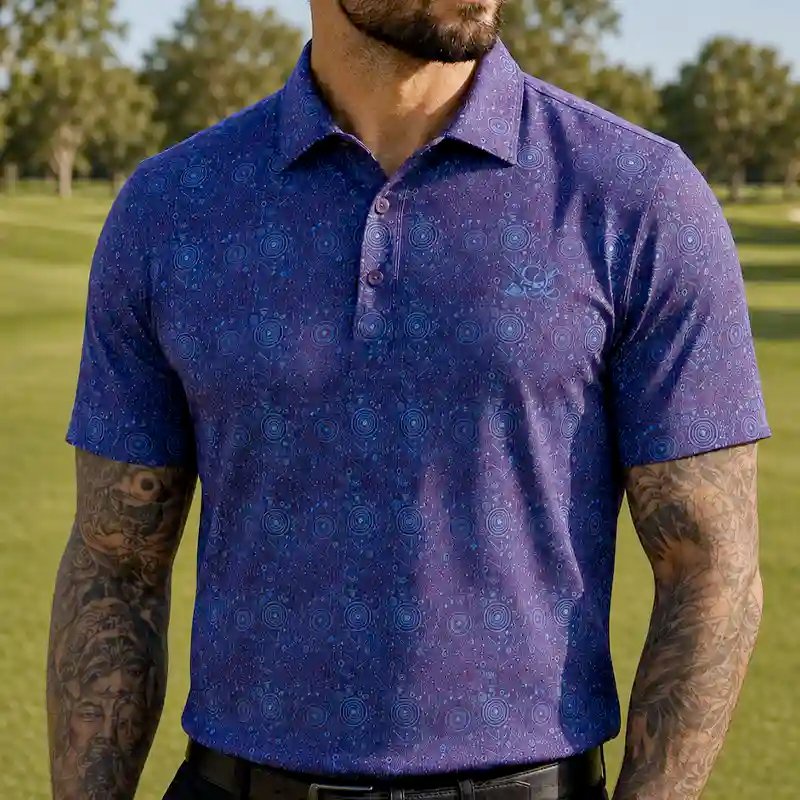
For a women's sleeveless option, Sleeveless Cool-Stretch Women's Golf Shirt (Black/Pink) uses a feminine cut, room through the shoulders, four-way stretch, a quarter-zip hybrid placket, tagless collar, and flat-lock seams. Its listed fabric is a 6oz blend of 92% polyester and 8% spandex, with moisture-wicking, quick-dry, UPF 50+ protection, and a sleeveless construction aimed at warm rounds.
Matching Shirts to Weather and Playing Conditions
A shirt that handles peak summer humidity can feel unpleasant on a cool, windy morning. Match the construction to the conditions instead of expecting one polo to cover every round.
| Weather Scenario | Fabric Weight (gsm) | Best Knit Type | Key Features |
|---|---|---|---|
| Peak summer heat and humidity | 130–150 | Open polyester jersey or lightweight hybrid | Airflow, rapid spread, quick drying |
| Mild to warm three-season play | 170–190 | Mid-weight piqué or interlock | Balanced coverage, structure, versatile hand-feel |
| Cool shoulder-season round under 60°F | Heavier brushed or thermal-lined fabric | Brushed performance knit | Warmth, stretch, moisture transfer |
| Travel and changing conditions | Lightweight to mid-weight | Wrinkle-resistant jersey or hybrid | Packability, odor control, quick drying |
For humid summer play, choose the lightest fabric that still hangs cleanly and meets your course's dress code. Open knits and engineered mesh panels can improve airflow, but a very open structure may show sweat or feel less polished. A mid-weight piqué is the safer compromise when you need one shirt for the driving range, clubhouse, and dinner afterward.
Sun exposure changes the decision
UPF labeling matters when you spend hours outside. A shirt rated UPF 50+ offers a stronger stated protection level than one rated UPF 30+, but coverage still matters. Long sleeves can make sense in warm weather when the fabric is lightweight, breathable, and quick-drying. You trade exposed skin for more fabric, so the shirt must move moisture efficiently.
Color also affects how a shirt feels in direct sun. Dark prints and saturated panels can feel warmer on exposed tee boxes than lighter colors. That doesn't make bold designs a bad choice, but it may make a light, moisture-wicking base layer or breathable sleeve useful underneath.
Travel creates a different priority. Wrinkle resistance, odor-control finishes, and fast drying matter when a polo needs to move from a suitcase to a round without a full laundry setup. For more hot-weather outfit guidance, this guide to the best golf shirts for hot weather provides a practical comparison point.
Care, Wash Durability, and How Long Performance Really Lasts
A moisture-wicking shirt can feel excellent on the first tee and disappoint by hole 16 after months of careless washing. Fiber chemistry matters, but fabric structure and post-wash durability decide whether that performance survives repeated rounds. Detergent residue, softener, heat, and abrasion can change how moisture moves through the knit even when the fibers still look intact.
A Texas publication evaluating five pajama brands found that laundering reduced moisture vapor transmission. Detergent and softener reduced fabric permeability further, affecting moisture control and wearer comfort, as documented in the Iowa State Digital Press laundering study.
Use a low-damage wash routine
- Wash cold: Cold water puts less stress on fibers, color, and stretch recovery.
- Skip fabric softener: Softener can coat yarns and obstruct the channels that move liquid.
- Turn printed shirts inside out: This reduces abrasion against graphics and limits surface friction.
- Tumble low or hang dry: High heat can weaken performance finishes and reduce elastane recovery.
- Avoid overloaded loads: Crowded washing increases rubbing around collars, underarms, and areas that contact a golf bag.
Wash care is part of the buying decision. A polo that needs special handling but loses its finish quickly is a poor value for regular play.
Durability testing often examines performance across 30 or more washes. Use that as a practical question for any shirt: how will the fabric behave after repeated care, not only during its first wear? The laundering research cited above covers the post-wash effects and durability context.
Read the fabric, not the marketing name
Names such as Dri-FIT or Coolmax may identify a brand technology, treatment, or product family. They do not replace the fiber content, knit structure, or care label. A polished finish cannot compensate for a restrictive cut or a fabric that holds moisture against your torso.
Check the collar, underarms, and shoulder area that rubs against a bag for pilling. Pilling does not immediately make a shirt unwearable, but it indicates repeated abrasion and may accompany a rougher hand-feel and declining appearance.
A simple rinse test reveals changes in performance. Wet a clean area and watch whether water spreads across the surface or remains in beads. If the fabric no longer spreads liquid as it did when new, its moisture behavior has changed even if the color and shape remain acceptable.
For printed performance apparel, review Tattoo Golf's clothing care information before laundering.
How to Pick the Right Moisture-Wicking Shirt for You
Start with the conditions you play in, not the conditions shown in a product photo. A golfer facing humid summer afternoons needs a different shirt from someone who mostly plays cool morning rounds.
Use a situation-first filter
Hot and humid players should start with a lightweight polyester hybrid or open jersey. Prioritize rapid spreading, airflow, and a cut that leaves room across the shoulders. A smooth face can feel less absorbent against the skin, but that's often the point. You want sweat moved outward, not stored against your torso.
Four-season players should choose a mid-weight interlock or stretch piqué for general use, then add a brushed or thermal-lined option for colder rounds. This approach gives you a polished shirt for mild conditions without forcing a summer knit to carry the entire year.
High-intensity swingers should insist on genuine mobility. Four-way stretch, raglan sleeves, underarm gussets, and a stable shoulder pattern matter more than a dramatic stretch claim. If the shirt pulls at the buttons or restricts the chest in a simulated golf posture, leave it behind.
Frequent travelers should favor wrinkle-resistant construction, quick drying, and odor-control features. A shirt that can be washed, dried, and packed without becoming a damp bundle earns its space in the travel bag.
Verify the label before buying
Use the product page and garment label to answer four questions:
- What is the fiber content? Polyester is a strong moisture-management base, while nylon and blends can change the hand-feel and drying behavior.
- What is the knit structure? Look for details such as jersey, interlock, piqué, mesh zones, or bilayer construction.
- What mobility features are built in? Confirm four-way stretch, sleeve design, gussets, and shoulder articulation.
- How should it be washed? If the care routine conflicts with how you do laundry, choose another shirt.
A bold print doesn't automatically compromise performance. Tattoo Golf's catalog includes performance polos and women's options using polyester-spandex Cool-Stretch constructions, moisture-wicking and quick-dry features, stretch, and course-oriented details. Verify the exact fiber content, stated sun protection, stitch construction, and care instructions for the individual garment rather than assuming every graphic polo performs identically.
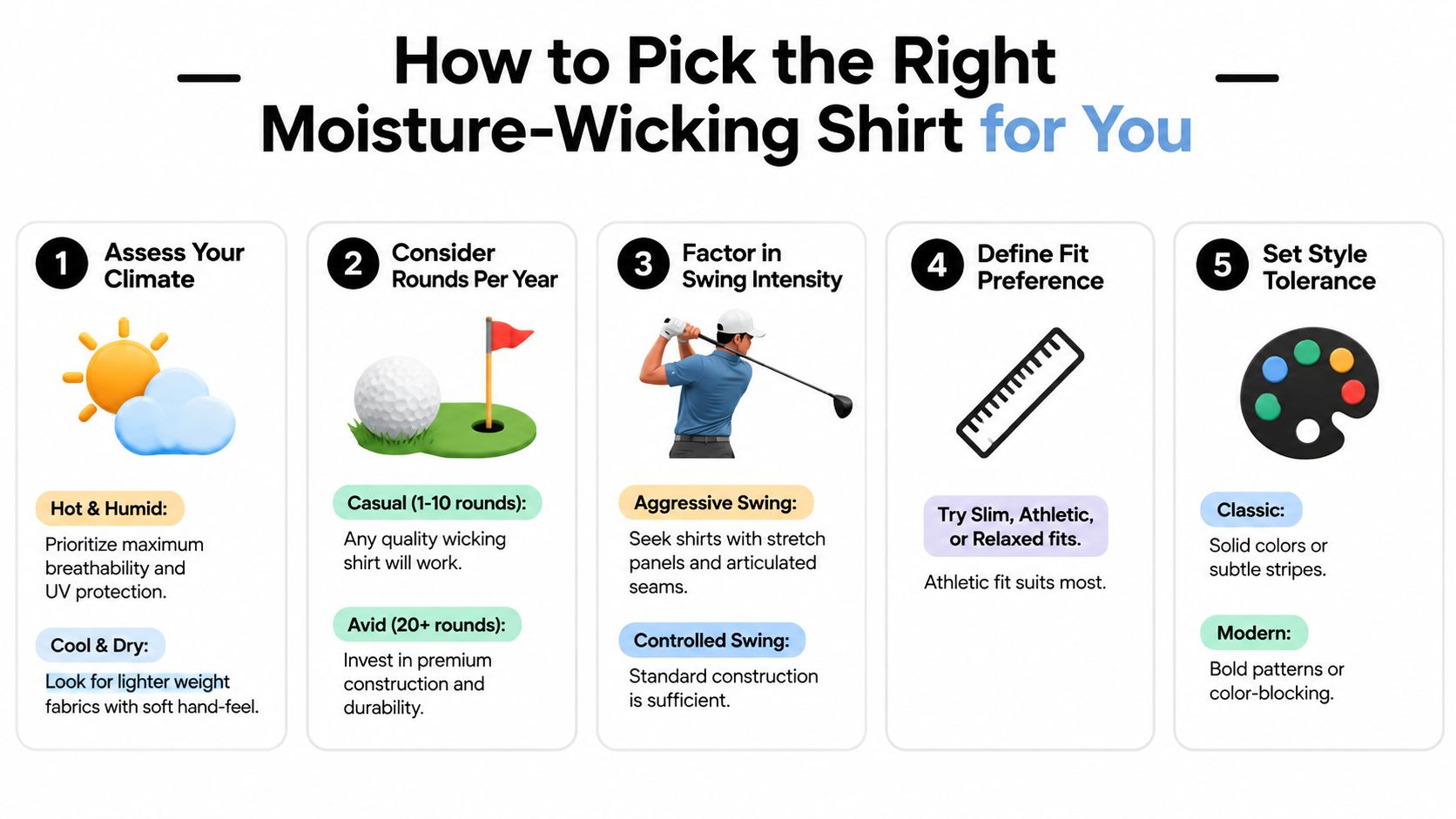
Before you buy, answer three questions: What climate dominates your rounds? How much movement and swing intensity does your shirt need to handle? How much style are you willing to trade for a traditional look? Those answers will narrow the field faster than a generic “moisture-wicking” badge.
Tattoo Golf offers men's and women's golf apparel built around moisture-wicking, quick-dry, stretch performance and bold prints that stay course-ready. If you want a polo that treats comfort and personality as part of the same decision, visit Tattoo Golf and choose your next round-day shirt by fabric, construction, and style.



Share:
Best Hawaiian Golf Shirts for Men: Real Performance Picks
Best Men’s Golf Shorts for Hot-Weather Golf