

You're on the first tee, your hands are a little damp, and the club starts to want a mind of its own. That moment is why golfers reach for a glove before they think about brand names or style. A good glove is a small piece of gear, but it changes how the club sits in your hands, how much pressure you need, and how long your skin holds up over a full round.
Golf Gloves Explained: Materials, Fit and Performance starts with one simple idea, the glove is a performance interface, not an accessory. It helps your hands stay connected to the grip when sweat, humidity, cold, or repetitive friction would otherwise get in the way. Once you understand what it's doing, the buying decision gets a lot easier.
Why Golfers Wear a Glove
A glove does three practical jobs before style ever enters the picture. It steadies the grip when hands get damp, it protects the skin from repeated rubbing, and it keeps the feel of the club more consistent from shot to shot.
Four jobs in one piece of gear
Grip security comes first. Even a small change in moisture can make the club feel like it wants to turn in the hands, especially at address and through impact. The glove gives the top hand a steadier surface, so the grip does not invite constant little corrections.
It also helps with blister and callus prevention. Golf repeats the same pressure points over and over, especially at the heel pad, thumb joint, and finger seams. If the fit is off, or the glove stays wet, those contact points turn into friction points quickly.
The next job is consistency of feel. That matters more than it sounds. A player who keeps re-gripping between shots is usually reacting to small changes in trust, not just chasing comfort. A glove helps the hand settle, spreads pressure more evenly, and keeps the grip feeling familiar from the first tee to the last putt.
Practical rule: if your top hand keeps squeezing harder as the round goes on, the glove is doing one of its main jobs well when it fits correctly.
Cold weather adds a fourth job, a thermal buffer. Skin stiffens when temperatures drop, and a glove helps the hand stay usable. In heat, the right glove helps manage moisture so the hand does not feel slick and reactive. That is why the leather-versus-synthetic choice is really a climate-and-wear decision. Leather often suits dry conditions and a clean, precise feel, while synthetics can handle more moisture and heavier use. As the material changes across rounds, fit changes too, which is why wear patterns matter when it is time to replace a glove.
A glove is a sensory tool that stabilizes the pressure your hands place on the club before that pressure affects tempo and contact.
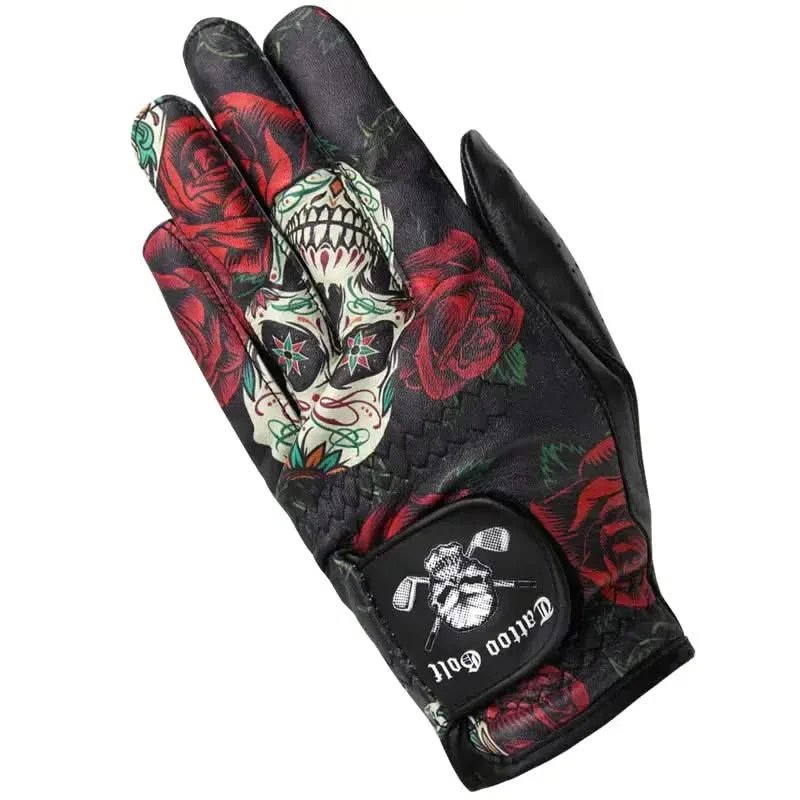
If you want a style example that still follows the same performance logic, this Sugar Skull cabretta leather men's golf glove shows how a premium leather glove can pair strong feel with a more distinctive look.
Which Hand Should Wear the Glove
The rule is straightforward, the glove goes on the hand furthest from the target at address. For a right-handed golfer, that's the left hand. For a left-handed golfer, that's the right hand. The reason is simple, that top hand does most of the controlling, and it experiences more friction and strain through the swing.
A quick way to remember it
Think of your top hand as the hand that leads the club through the start of the takeaway and helps hold the angle through impact. That hand needs the most help staying secure. The trail hand contributes too, but the lead-hand side is where most golfers feel slipping first.
A common mistake is assuming both hands should be treated the same. They don't behave the same biomechanically, and buying two gloves to rotate is not the same thing as switching hands. Rotation keeps one glove dry while the other rests, which is smart. Changing which hand you glove changes the way the grip feels in the swing.
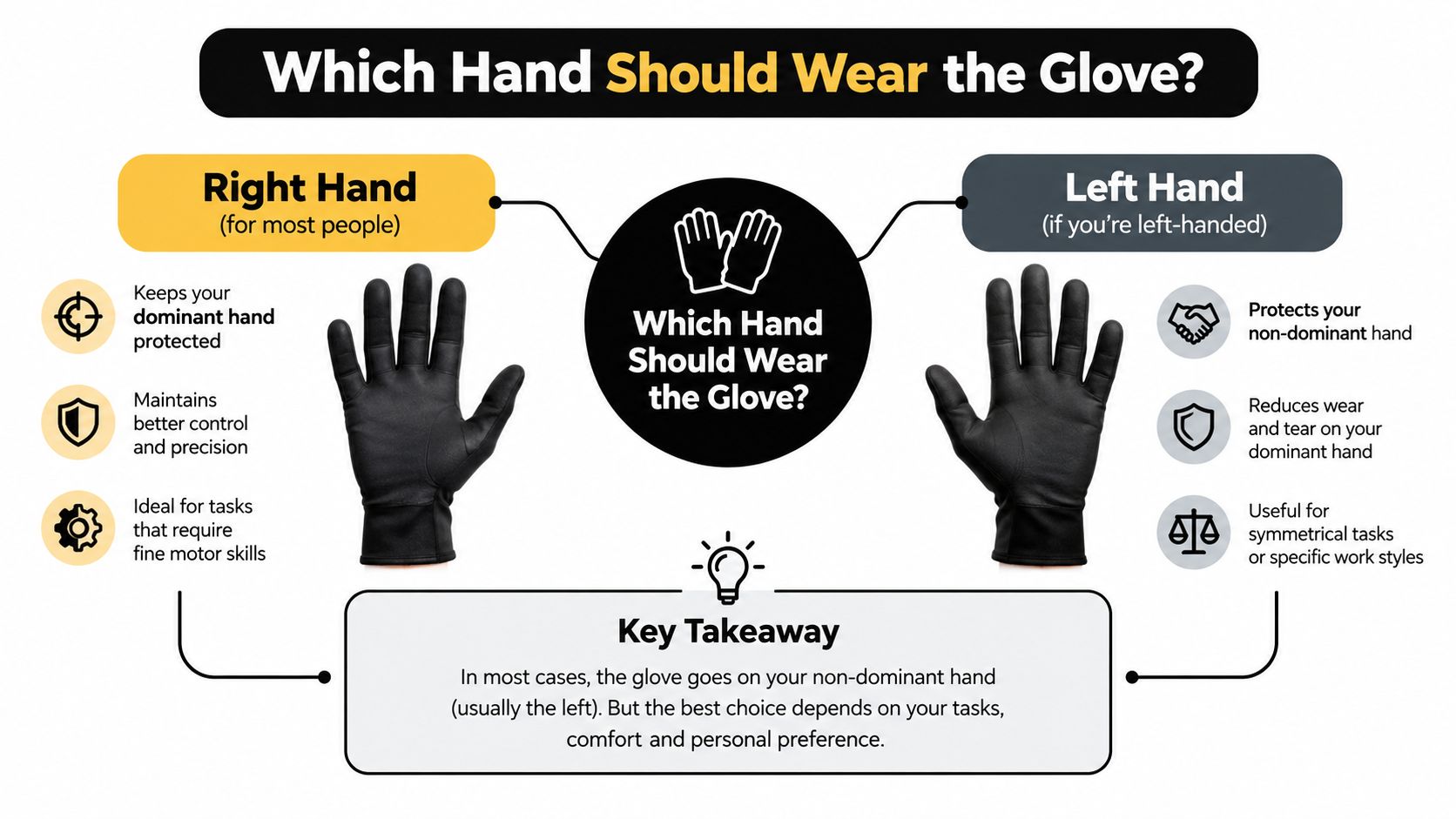
There are exceptions, and they matter. Ambidextrous golfers may test either hand, especially if they've learned their grip around an unusual dominant-hand pattern. Juniors often need more frequent re-checks because their hands are still growing. Golfers with injuries, skin sensitivity, or arthritis on the lead hand may also choose to adapt the usual rule.
A glove solves a problem, it doesn't create a rule you have to obey blindly.
If you're shopping for a left-handed setup, this white cabretta leather men's golf glove for left-handed golfers is a clear example of how hand orientation gets built into the product. The point isn't the name on the package. It's making sure the glove matches the hand that needs the protection and control.
Glove Materials Compared From the Inside Out
Material choice gets talked about as a feel debate, but that's too narrow. The better question is climate and wear. In dry conditions, cabretta leather gives the best grip-to-feel ratio, which is why it's still the benchmark material for premium gloves. In humid or wet conditions, synthetic and hybrid constructions can make more sense because they usually keep their shape longer and handle moisture better. A 2025 market breakdown still showed leather at 54.6% share in the category, which helps explain why the conversation keeps circling back to leather, even as other constructions gain ground. Straits Research golf glove market report
How the three main builds behave
Cabretta is the material most players call “soft,” but the more useful description is that it gives the clearest feedback. It's thin, tactile, and close to the club. The tradeoff is wear, especially when sweat, rain, or repeated play start to break it down. That's why it fits golfers who care most about precise club feel in drier weather.
Synthetic gloves are built for the opposite problem. They're typically more durable, less fussy in wet conditions, and easier to keep usable when the weather turns. They won't always feel as intimate at address, but for players who practice often, play often, or live where humidity is common, that tradeoff can be worthwhile. The category's commercial growth reflects that golfers replace gloves regularly and are willing to pay a bit more for better performance over time, as shown in the market data tracking more units sold and a modest rise in average selling price. Ken Research golf gloves market report
Hybrids sit in the middle. They usually pair a leather palm with synthetic backing or panels, which aims to preserve touch where the hand contacts the grip while improving comfort and breathability elsewhere. That makes them appealing when you want a middle path rather than a pure feel-first or durability-first choice.
A moisture-focused fabric guide from Tattoo Golf also points to the same basic logic, sweat management matters because the material against the skin changes how long the glove stays usable in round conditions. Tattoo Golf moisture-wicking fabric guide
| Glove Material Comparison | Feel | Durability | Best Climate | Best For |
|---|---|---|---|---|
| Cabretta leather | Highest feedback and club connection | Lowest when heavily exposed to moisture | Cool, dry, or controlled conditions | Players who prioritize touch |
| Synthetic | Less natural at first, more stable in use | Stronger over repeated wet or humid rounds | Humid, rainy, or variable weather | Frequent players who want longevity |
| Hybrid | Balanced feel and structure | Middle ground | Mixed conditions | Golfers who want one glove to cover more rounds |
The cleanest way to think about it is this. Cabretta for feel in dry air, synthetic for wet or frequent play, hybrid for compromise. That's a much better filter than asking which material is “better” in the abstract.
How a Glove Should Fit From Palm to Fingertip
Fit is where most glove problems start. A glove can be the right material and still perform badly if it's a half size off. The fit check should be simple, palm, fingers, tab, and thumb.
The four checkpoints that matter
Start with the palm. It should be snug, with no loose material sitting across the heel pad. If you close your hand and can see space between the palm and the grip, the glove is too roomy. That extra fabric doesn't just feel sloppy, it can also make the glove wear out faster where the hand rubs.
Then check the fingers. They should reach close to the tips without crowding the seam. Finger length tends to scale with hand length, so a quick measurement can point you to the right starting size before you ever try one on. If you see bunching at the base of the ring finger, that's a warning sign that the overall shape is off.
Fit cue: if the glove looks smooth on the hand but wrinkles as soon as you make a fist, it's not a “break-in” issue, it's a sizing issue.
The closure tab should land flush on the back of the hand without overhang or strain. If the tab pops past the hook side too far, or barely makes contact, the fit is wrong. The thumb should also flex naturally. If the thumb pulls the palm tight when you grip the club, the glove is fighting your hand instead of following it.
Leather and synthetic don't age the same way after purchase. Leather usually relaxes a little after a hole or two, while synthetics tend to stay closer to their out-of-package shape. That means a leather glove can start slightly snug and still settle into a strong fit, but a synthetic glove should already feel right when you put it on.
The easiest test is still the simplest one. Put it on, make a fist, and look for bunching. If the glove stays smooth and the fingertips reach cleanly, you're close.
If you prefer a traditional fit profile, browse Tattoo Golf's men's golf accessories collection to compare cabretta options by hand orientation and design.
When Going Without a Glove Is the Right Call
A glove is useful, but it isn't mandatory for every shot. Some golfers swing better without one in specific situations because the bare hand reads the club more directly. That's especially true when the shot is about touch rather than full-speed control.
Situations where barehanded can help
Short wedge shots and delicate pitches are the most obvious examples. Some players like the cleaner contact feel when they can sense the handle directly. On putts, a bare hand can also feel steadier for golfers who want a softer, more temperature-neutral connection through the stroke.
Hot and humid rounds are another case where the usual instinct can fail. If a glove gets soaked and turns slick, it can create less control than a dry, bare hand. That doesn't mean everyone should ditch the glove in the heat, it means a wet glove is only helping if it's still functioning as a grip aid.
Players with heavy glove wear sometimes notice something else. The moment the glove comes off, grip pressure drops. For those golfers, especially if they swing hard or burn through gloves quickly, going gloveless on certain shots can reduce tension. That can produce a cleaner release and less hand strain.
The counterpoint still matters. Blisters, cold hands, and poor wet-weather traction all still favor a glove. So the smart answer isn't “always wear one” or “never wear one.” It's knowing which shots ask for feedback and which ones ask for security.
Use the glove where friction is the problem. Take it off where feel is the problem.
That's the whole decision in plain language. A golfer who understands that can stop treating the glove like a permanent uniform and start using it like a shot-making tool.
Care, Storage and Knowing When to Replace
A glove lasts longer when you treat moisture as the main enemy. During the round, the best habit is simple, take it off after each shot, wipe the palm with a damp towel, and clip it back onto the bag instead of stuffing it in a pocket. Pocket storage traps sweat, and trapped sweat softens the material and changes the fit.
Dry it before you ask it to perform again
After the round, lay the glove flat with the fingers spread in a ventilated spot. Don't tumble-dry it, and don't leave it pressed against a hot cart roof or sitting in direct sun. If you rotate two gloves during a round, each one gets more time to dry and recover its shape.
Storage matters too. Keep the glove at room temperature, away from direct sun, and use a glove shaper or even a folded towel inside it if you want to keep the leather from cupping. If you're already taking care of golf apparel generally, Tattoo Golf's care information for its clothing follows the same basic logic, protect the fabric or leather from heat, trapped moisture, and avoidable distortion.
A glove tells you when it's done. Look for a thumb seam starting to lift, a glossy palm where the grain has worn smooth, or stretch at the closure tab that wasn't there before. If the inside lining starts showing through in a wear spot, the glove has already crossed the line from protective to compromised.
Replacement signs to trust
- Thumb seam lift: once the seam starts opening, the thumb won't track cleanly under pressure.
- Palm sheen: a polished, slick patch means the surface has worn down.
- Tab stretch: if the closure no longer lands firmly, the fit is drifting.
- Lining exposure: visible interior material means the outer layer has given up.
The best replacement rule isn't a round count. It's whether the glove still gives you the same fit you trusted on day one.
For golfers who rotate pairs, keeping a second option ready can help preserve fit and extend wear. Tattoo Golf's white cabretta leather men's golf glove is a straightforward backup or everyday choice if you want a cleaner, classic look.
A Quick Buying Checklist Before You Tee It Up
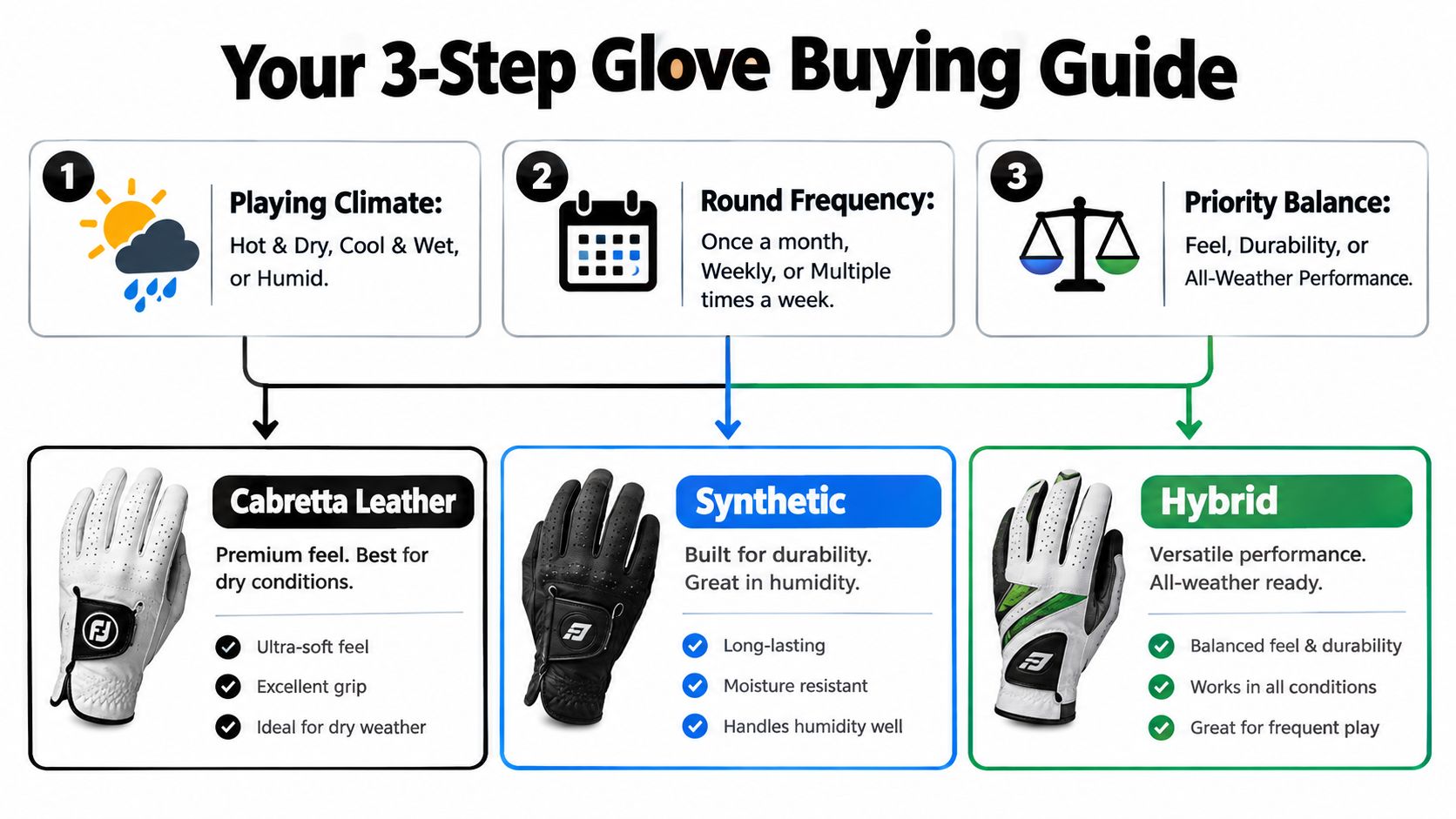
Start with climate, not style. If you play in cool, dry conditions and you don't burn through gloves quickly, cabretta leather is the most natural fit because it gives you the cleanest feedback. If your rounds happen in humid, rainy, or highly variable weather, synthetic is usually the safer performance choice because it handles moisture and repeated use better. If you want one glove to bridge both worlds, hybrid is the compromise that makes the most sense.
Three inputs that should decide the purchase
Your next filter is round frequency. A golfer who plays once in a while can prioritize feel more heavily, while someone out there multiple times a week usually notices wear and moisture failure sooner. Frequency changes the value equation because a glove that feels great once but collapses quickly isn't really a good fit for regular play.
The third input is your priority balance. If feel matters most, lean leather. If longevity matters most, lean synthetic. If you're trying to cover a broader set of conditions without changing gloves constantly, a hybrid is the middle lane.
A fast in-store or at-home test helps separate good fits from bad ones:
- Palm pinch test: pinch the palm lightly, and if there's obvious slack, the glove is too large.
- Seam test: check for any awkward color transfer or stress at the finger seams after you make a fist.
- Tab test: the closure should land just past the Velcro edge without overreach.
The glove should disappear when you close your hand. If you keep noticing it, something's wrong with the material or the fit.
Tattoo Golf carries cabretta glove options that map onto these same profiles, including a pure-feel style and a more all-round fit built around the same basic performance logic. If you want to match your glove to your climate, your wear pattern, and your hand shape, visit Tattoo Golf and use the same checklist you'd use at the shop: climate first, fit second, performance third.


Share:
How to Choose the Right Golf Hat for Hot Weather
Can You Wear a Hawaiian Shirt to Play Golf? a Style Guide