
You know the move. You pull on a loud polo before a round, catch your reflection in the bathroom mirror, and for half a second you wonder if you're about to look sharp or just loud. That hesitation usually isn't about the print itself. It's about whether the shirt hangs right, breathes right, and still looks like a real shirt after sweat, sun, and a walk through the clubhouse.
Wild Golf Shirts For Men work when they feel intentional, not like a costume you borrowed from a theme round. The good ones earn their keep on the tee box, in the car after the round, and at dinner without making you look like you got dressed in the dark. The bad ones give away the game fast, usually because the fabric is flimsy, the collar collapses, or the print is trying too hard to compensate.
Why Wild Golf Shirts Feel Risky on the First Tee
The first tee is where a lot of guys second-guess themselves. You've got your driver in hand, the group is waiting, and that bold shirt suddenly feels louder than your swing. That's the fear behind wild golf shirts for men, not the print alone, but the possibility that the whole outfit reads as a joke.
Golf has always had a dress-code undercurrent, so the social pressure is real. If you want a clean breakdown of what's usually fair game on course, this golf dress code guide is a practical starting point. But the bigger issue is simpler, wild shirts only work when they still behave like golf shirts.
The problem is usually fit and fabric
A loud pattern on a shirt that clings, twists, or sags looks worse than a tame shirt that fits well. If the shoulder seam sits too far in, the chest pulls across the backswing. If the fabric is thin or limp, the print starts looking cheap the moment you sweat.
That's why I don't judge bold polos by the graphics first. I judge the collar, the drape, and whether the shirt still feels composed when you move. A wild print can look confident, but only if the garment underneath it is doing real work.
Practical rule: If the shirt looks better standing still than moving, skip it.
The right mindset is to treat bold color and pattern as a confidence buy with performance upside. You're not buying chaos. You're buying a shirt that can carry personality without collapsing under course conditions. When that balance is right, the print stops being risky and starts being the point.
The Fabrics Behind Every Wild Golf Shirt
Fabric decides whether a wild shirt looks crisp or sloppy. Polyester is the workhorse here, because it's light, fast-drying, and good at keeping printed graphics sharp. Cotton feels nice at first, like a favorite tee, but once sweat hits it, the whole shirt can go soft and heavy.
What the common fabrics actually feel like
Cotton-poly blends sit in the middle. They can feel more relaxed than pure performance fabric, but they still behave better in humidity than straight cotton. Performance knits and microfiber blends are where the sharper bold polos usually live, because they hold color, drape cleanly, and stay more consistent through a round.
Spandex or elastane adds the swing-friendly stretch that matters more than most guys admit. A little of it goes a long way, especially when the shirt needs to move with you instead of fighting your shoulders on the takeaway. The best stretch fabrics keep their shape after you've worn and washed them a few times.
For a plain-language breakdown of moisture-wicking construction, this moisture-wicking fabric guide is worth a look. The main idea is simple, the shirt needs to move sweat away from the skin instead of trapping it.
Here's the short version I trust:
| Fabric | Feel | Breathability | Print Hold | Stretch |
|---|---|---|---|---|
| Polyester | Light, smooth, technical | Good | Strong | Moderate |
| Cotton | Soft, familiar | Fair | Weak when wet | Low |
| Cotton-poly blend | Easy, casual | Moderate | Moderate | Low to moderate |
| Performance knit or microfiber blend | Clean, structured, course-ready | Good to very good | Strong | Good |
| Polyester-spandex blend | Substantial but movable | Good | Strong | Strong |
A shirt like Party Animal Cool-Stretch Men's Golf Polo – Monkey shows why this matters. It's a 92% polyester / 8% spandex build with a substantial hand-feel, so the fabric has enough body to keep a bold red-and-white print from looking flimsy, while still moving well and drying fast. That's the kind of construction that lets a wild print look deliberate instead of costume-like.
The print is only half the story. The fabric weight and structure decide whether that print looks premium, or like it was slapped on a cheap base and hoped for the best. When the fabric has enough backbone, the shirt earns its visual volume.
The Four Performance Features That Matter at 95 Degrees
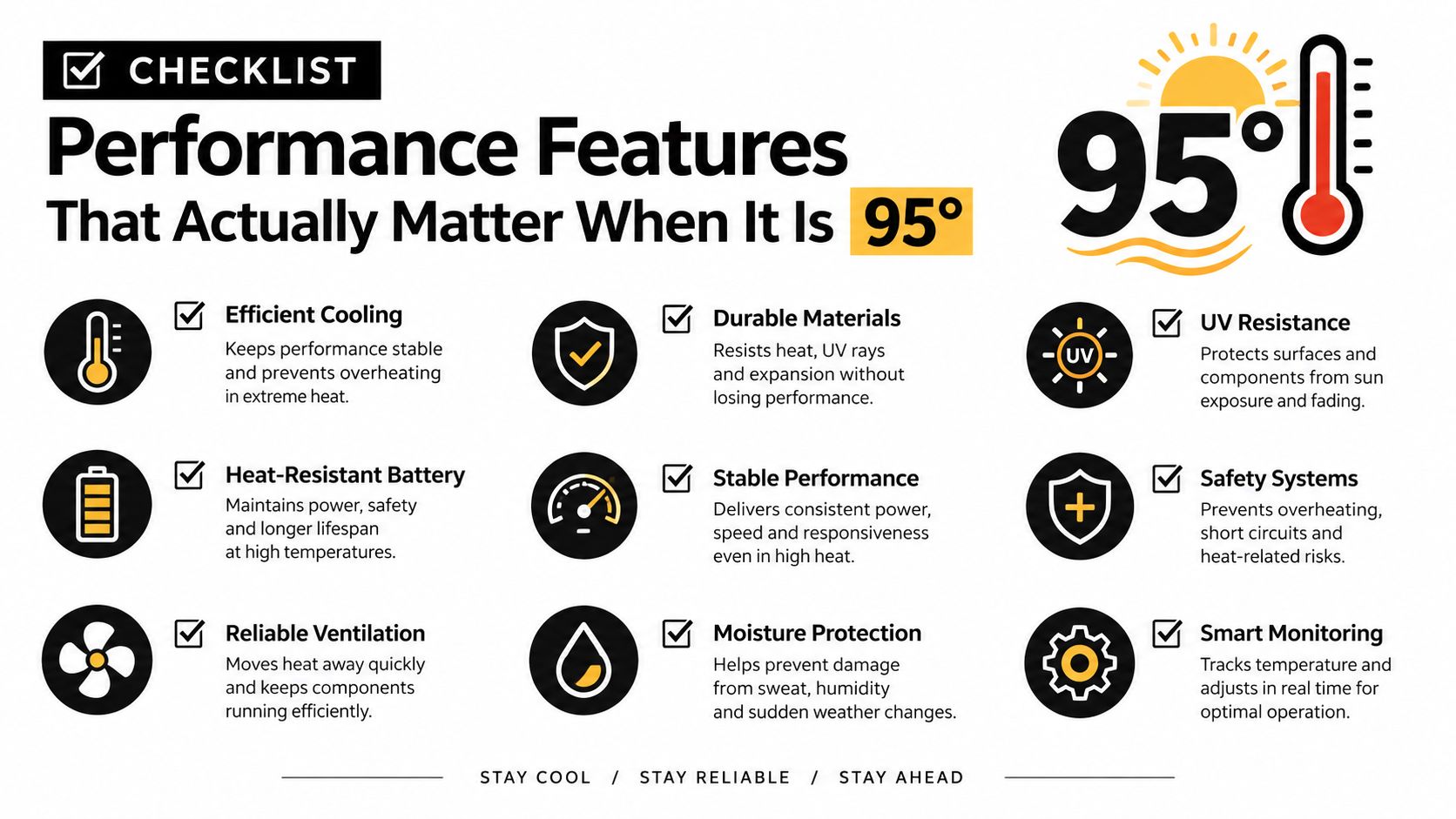
At 95 degrees, a loud print still has to behave like a golf shirt, not a costume. The features that matter are the ones that keep the fabric off your skin, keep the swing free, and keep the shirt from looking wrecked before lunch.
Moisture-wicking is the first filter. Sweat needs to spread through the fabric and evaporate instead of sitting in one soaked patch on your back and chest. For a full hot-weather wardrobe breakdown, this guide to the best golf shirts for hot weather covers the fabric choices in more detail.
Stretch, sun protection, and breathability
Four-way stretch matters where the swing loads the shirt, across the shoulders and upper back. If a polo stretches in the chest but grabs at the shoulder blades, it will feel wrong on the course fast. Good golf fabric moves with rotation, not just with standing still.
Sun protection matters too, but only if the fabric still has enough body to hold up under heat and light. A thin weave can claim protection and still look weak once it starts clinging. Breathability comes from the knit and construction as much as from the fiber itself, so the tag is only part of the story.
Anti-odor finishes help on hot days, especially if you are playing, riding home, and then heading straight into a clubhouse or restaurant. They do not make a shirt invincible. They do slow down the stale, sweaty smell that makes a good polo feel unwearable after one round.
A shirt that handles heat well solves three jobs at once, sweat control, motion, and post-round wearability.
The features worth paying for are wicking, stretch, sun coverage, and breathability. Skip the fluff that sounds technical but does not change how the shirt feels by the back nine. If the shirt stays dry, moves cleanly, and keeps its shape, it is doing the job.
Wild Prints Versus Muted Polos on Real Course Conditions
Wild prints win attention, but muted polos win by disappearing. That's fine if you only care about the tee box, but most golfers live in the world, where the shirt has to survive heat, a full swing, a clubhouse dinner, and maybe a photo or two. The question isn't which one looks cooler in a product shot, it's which one behaves better when the round gets messy.
Side by side in actual use
| Condition | Wild Print Polos | Muted Performance Polos |
|---|---|---|
| 90-degree heat | Look energetic, but heavy prints can feel hotter if the fabric is dense | Usually look lighter and less visually intense |
| Full-swing mechanics | Good if the fabric stretches in the shoulders and back | Usually easier to wear if the knit is simpler |
| Clubhouse dress codes | Riskier if the pattern is too loud or novelty-driven | Safer, especially at traditional clubs |
| Post-round meals | More fun in casual settings, stronger personality | Easier to blend into almost any venue |
The shirt weight matters here. A bold print on a fabric that feels too heavy can cross from “statement” into “why is this clingy.” A cleaner knit often reads better in motion, even if it doesn't pop as hard in photos. That's why sleeve mobility and sweat visibility matter just as much as color.
Dark prints hide moisture better. Light prints can show salt lines fast, especially if you're walking and not riding. If you're heading to a traditional club, the pattern needs to be sharp enough to look intentional, not like you raided the clearance rack for something weird.
The safest middle ground is a shirt with tonal patterning, a subdued back panel, or a print that has structure instead of chaos. You still get personality, but the shirt keeps enough restraint to pass in a more serious setting. That's the play if you want one shirt that can handle heat and still get through the door.
Wearing a Bold Golf Shirt Beyond the 19th Hole
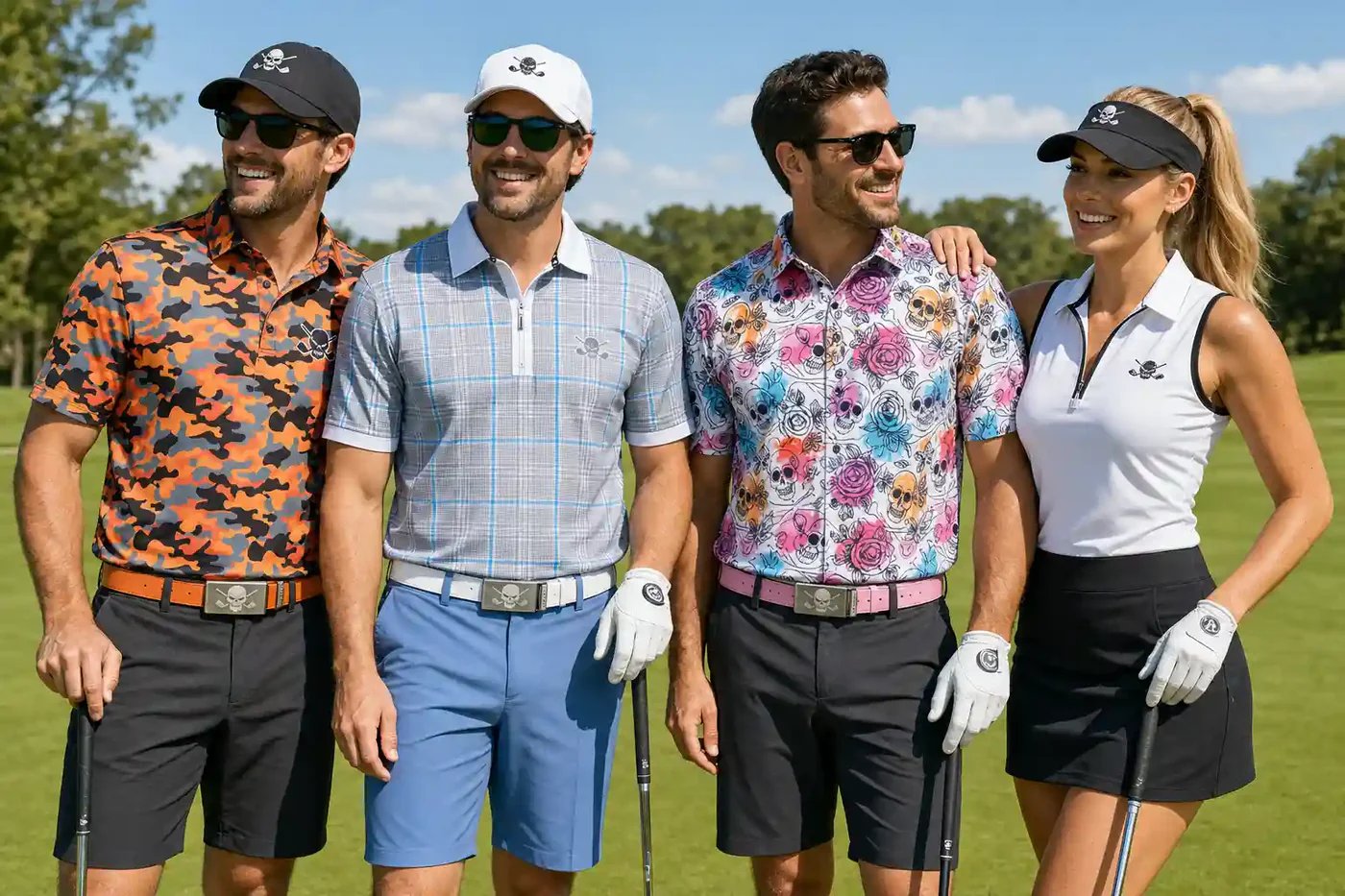
A wild shirt is only worth buying if it still works after the round. If you can't wear it to lunch, on a flight, or into a casual office without looking like you're headed back to the range, it's not versatile enough. The shirt should carry the attitude, everything else should stay calm.
Three moves that keep it sharp
Tuck it when the hem is clean and the placket is structured. Untuck it when the cut is meant to sit casually and the length doesn't bunch at the hip. That one choice changes whether the shirt feels polished or lazy.
Pair the print with neutral bottoms. Chinos, dark denim, and flat-front shorts let the shirt do the talking without creating visual noise. If you add loud pants to a loud shirt, you're no longer dressing, you're performing.
Swap golf shoes for clean leather sneakers or loafers when you leave the course. That single change makes the whole look feel more deliberate. If you're traveling, an unstructured blazer over a bold polo can work too, because the jacket pulls the look back toward real clothes instead of sportswear.
The prints that fail off-course are easy to spot. Oversized logos, novelty jokes, and color clashes that fight every standard menswear item in your closet usually die after one wear. A good wild shirt should feel like a strong personality piece, not a gag.
How to Buy a Wild Golf Shirt You Will Wear
You can judge a wild golf shirt in under a minute if you know where to look. Start at the shoulders, not the chest. Shoulder seam placement tells you more about swing comfort because the shirt has to move with you, not just sit right on a hanger.
The 60-second filter
- Check the shoulders first. If the seam is off, the swing will feel off.
- Feel the collar. A self-fabric collar usually holds shape better than a flimsy one after repeated washes.
- Look at the placket. A four-button placket gives you more styling flexibility than a shorter one.
- Read the fabric ratio. Polyester-spandex blends in the 85/15 to 92/8 range usually give you stretch without turning the shirt into a limp layer.
- Scan the care tag. Cold wash, no fabric softener, and hang dry if you want the elastane to recover.
A lot of 100% cotton polos look strong on a hanger and then fold under sweat, wrinkles, and repeated washing. Those are style-only buys, and that is fine if you want a shirt for one specific setting. If you want a wild shirt you'll keep reaching for, it needs structure, recovery, and easy care.
A collar that needs a steamer and a print that needs a disclaimer are both signs to walk away.
Would I wear this shirt twice in one week without making excuses for it? If the answer is no, leave it on the rack.
The Short List of What a Great Wild Golf Shirt Must Do
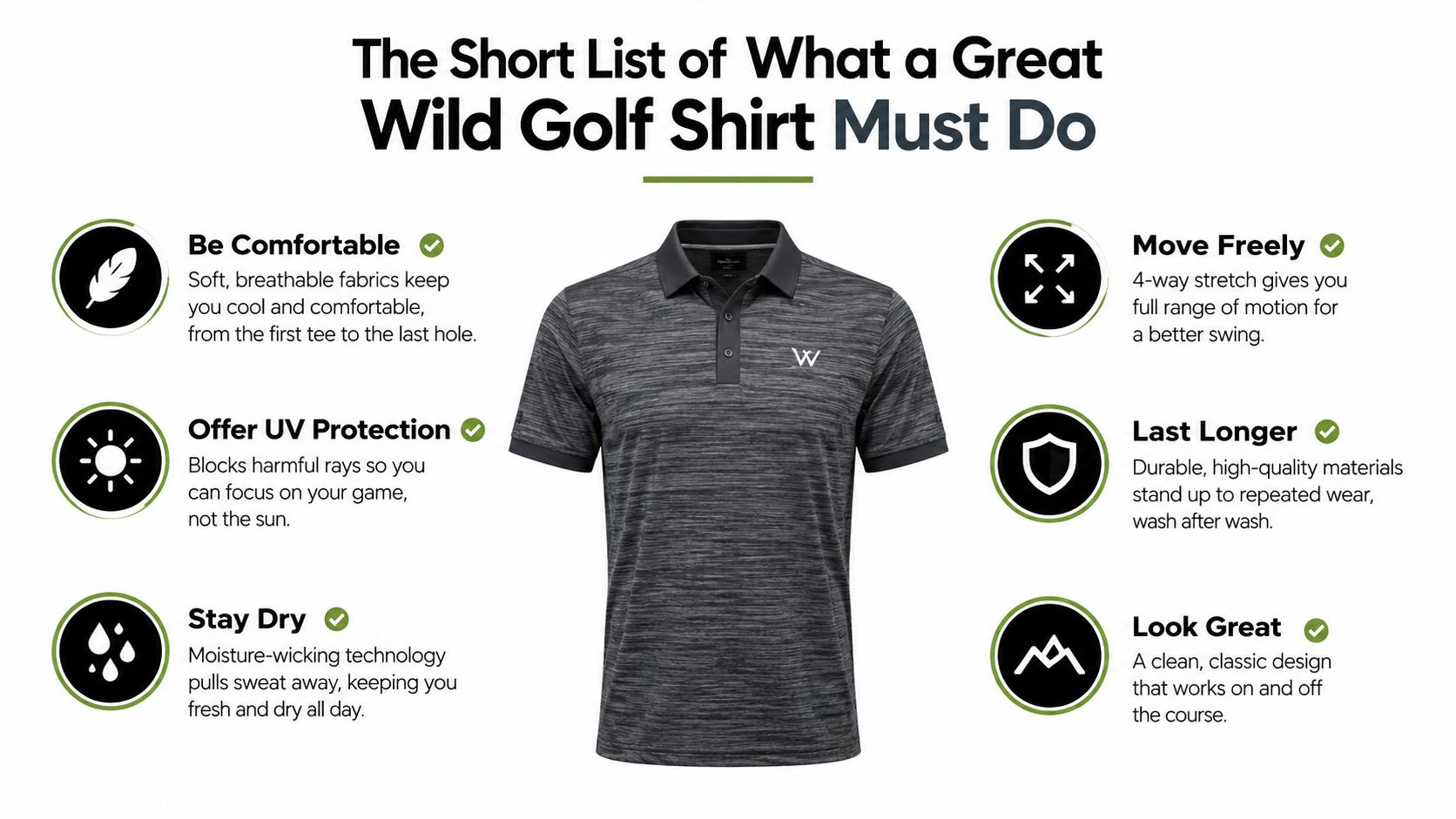
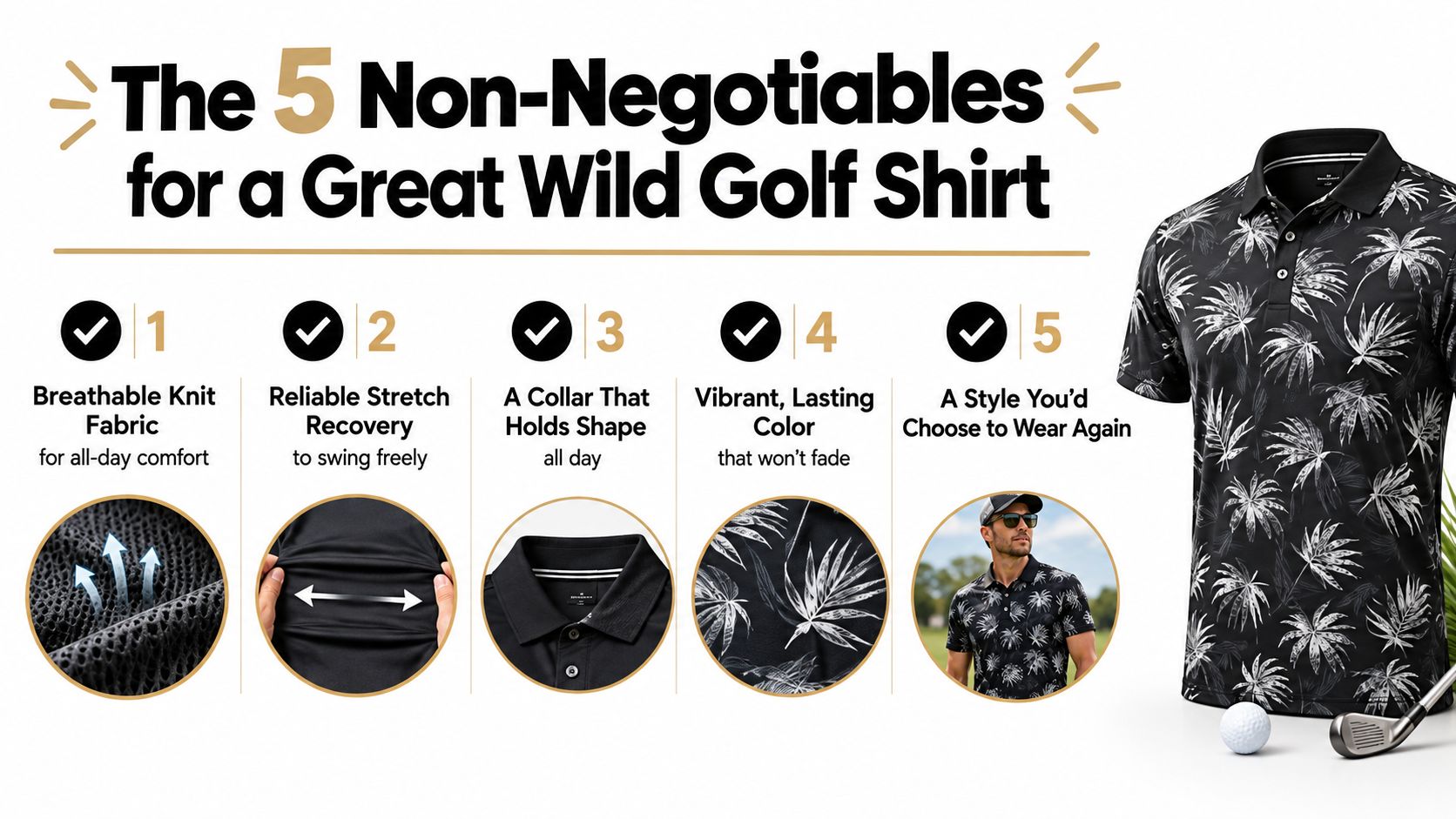
A great wild golf shirt doesn't need to be quiet. It needs to be competent. If it can't breathe, stretch, recover, hold its collar, and still look decent after a sweaty round, the print is doing all the work and the shirt is failing.
The five checkpoints
- Breathable knit fabric. If air can't move, you'll feel it fast.
- Reliable stretch recovery. A shirt should snap back after rotation, not sag by the back nine.
- A collar that holds shape. Collars tell the truth after washing.
- Color or ink that resists fading. Bold shirts lose the whole point when the print dulls out.
- A silhouette you'd wear again. If you need an excuse to pull it from the closet, pass.
That's the wearability test. Not whether the shirt is loud enough, but whether it still looks sharp when the heat, motion, and social stuff pile on. If it clears those five checks, the pattern stops being a gamble and starts being a weapon.
Tattoo Golf builds wild golf shirts around that exact idea, personality first, but only if the garment can handle actual golf. The line mixes performance fabrics, stretch, and bold graphics so the shirt can leave the course without needing an apology. That's the standard.
If you want a shirt that plays as hard as it looks, start with a printed performance polo and judge it by fit, fabric, and finish, not by the first impression alone. Tattoo Golf makes bold pieces that are built for the course but don't fall apart the second you leave it, so if you're ready to wear something with more attitude, visit Tattoo Golf and pick the one you'd wear twice.
Share:
Women's Performance Polo: Fabric, Fit, and How to Choose
Tattoo-Inspired Golf Polo's: Style Meets Performance