

Most advice on hot-weather golf shorts is lazy: choose something lightweight, preferably khaki, and hope the humidity behaves. That misses the point. A short can feel light in your hand and still trap sweat, restrict your rotation, or leave you exposed to the sun. The best men's golf shorts for hot-weather golf combine engineered thermoregulation with a fit and design that can handle a full round without forcing you into bland country-club camouflage.
You need fabric that moves moisture away from skin, dries quickly, allows air exchange, and stretches through the swing. You also need a waistband that stays put, seams that don't rub, enough coverage for practical golf, and a visual identity stronger than beige. Here's how to choose performance shorts that stay composed in serious heat while letting your style take the shot.
The Science of Staying Cool on the Course
A lightweight short isn't automatically a cool short. In hot, humid conditions, your body relies heavily on sweat evaporation to lose heat. If fabric holds moisture against your skin or blocks vapor from escaping, you can feel damp and overheated even when the garment looks thin.
A 2014 heat-stress study tested 10 healthy men after 45 minutes of exercise in an environment above 33°C with 60% relative humidity. The synthetic shirt, made from 81% polyester and 19% elastane, produced a significantly lower rectal temperature during the final 15 minutes than a 100% cotton shirt, while retaining less sweat. The study summary and product context for synthetic moisture-managing golf apparel support a practical conclusion for golf shorts: synthetic blends aren't merely a style preference when the course turns into a heat chamber.
What the fabric has to accomplish
A 2022 review of sports clothing and thermoregulation identifies sweat wicking and evaporation as primary heat-loss mechanisms during exercise in hot conditions. Its relevance to golf is obvious. Walking, bending, rotating, and waiting between shots create repeated opportunities for fabric to either move moisture outward or keep it trapped inside the clothing microclimate. The sports-clothing thermoregulation review also explains why “quick dry” should mean more than a vague label.
Look for a lightweight polyester-spandex construction with:
- Moisture management: Sweat should move away from the skin rather than pool inside the shorts.
- Fast evaporation: Wicking fabric that dries slowly can still become heavy and clammy.
- Four-way stretch: The material should accommodate hip rotation, lunging, bending, and a deep knee flex without pulling at the waistband.
- Flat-lock seams: These reduce friction where the shorts contact your skin during a long walking round.
- A stable waistband: Stretch should improve comfort, not allow the shorts to sag or twist during the swing.
Practical rule: “Moisture-wicking” describes movement of sweat. It doesn't guarantee rapid drying, air permeability, or comfort in humid heat.
Read the technical specs like a buyer, not a slogan
Breathability has measurable benchmarks. Evaporative resistance, or RET, below 6 is generally considered highly breathable, 6 to 13 indicates good comfort for active use, and above 20 suggests poor breathability. Moisture-vapor transmission rate, or MVTR, is commonly assessed with ASTM E96, while ISO 11092 uses a sweating-guarded hot-plate method that more closely simulates skin heat and moisture release. These benchmarks are detailed in the technical review of RET, MVTR, ASTM E96, and ISO 11092.
Don't treat “breathable” and “quick dry” as interchangeable. A useful product specification should tell you how the fabric handles vapor, moisture, and airflow. If a brand doesn't publish lab data, inspect the construction instead, favoring open but opaque weaves, lightweight blends, and a finish designed for moisture movement.
Fabric choice can change heat response materially. In a dynamic hot-plate sportswear study, polyester recorded the highest heat-loss rate during the activity phase at 388 W/m², while merino wool recorded 212 W/m². The sportswear thermoregulation data gives polyester a strong technical case for warm-weather golf shorts, especially when paired with elastane for movement.
If you finish a round feeling cooked, don't reach only for fresh aloe for heat relief afterward. Fix the clothing decision first. For a deeper explanation of how sweat transport works, review this guide to moisture-wicking fabric.
Mastering the Polo and Shorts Combination
Bold shorts don't need a timid outfit. They need control. The easiest way to look deliberate instead of chaotic is to let one garment carry the visual noise while the other supplies a calm color anchor.
Start with the shorts. Identify their dominant color, then choose a polo that either repeats that color or sits opposite it on the color wheel. Blue shorts work with white, navy, or black polos. Black and charcoal prints work with black, white, or grey. The principle is simple: repeat one color, contrast the rest.
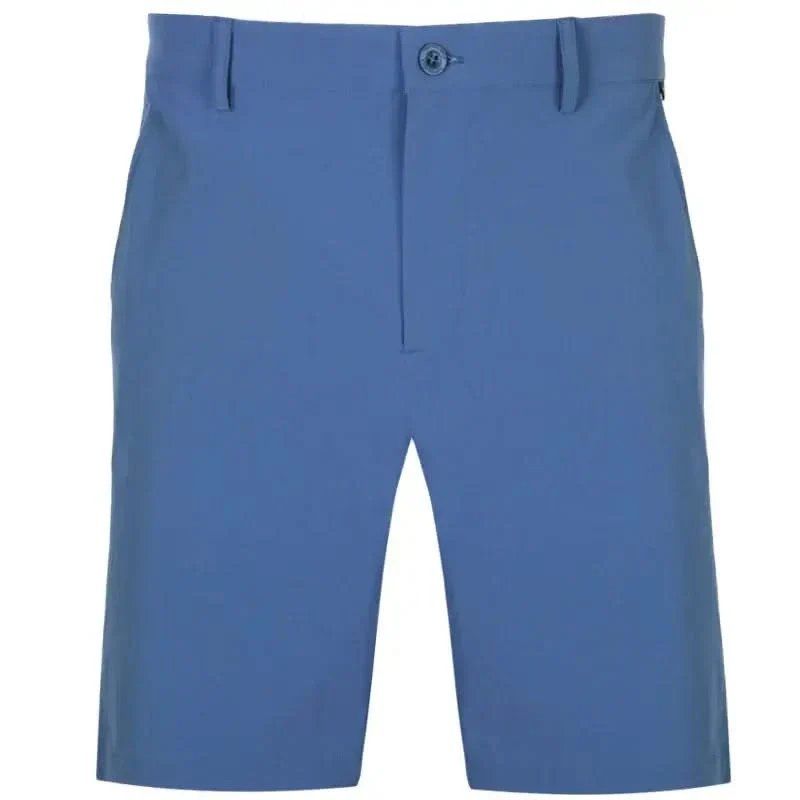
Use pattern with intention
The Tattoo Golf Hustler and Dancing Skulls collections are statement pieces, so don't compete with them using another loud print unless you're deliberately building a maximalist look. A solid polo gives the shorts room to speak and keeps the outfit sharp from the first tee through the clubhouse.
Use these formulas:
- Loud shorts, solid polo: Pair a strong print with a white, black, navy, or grey polo. This is the safest route and still has plenty of attitude.
- Tonal shorts, contrast polo: A subtle black and charcoal pattern can support a bright polo without looking busy. Keep the shoes and belt quiet so the color feels intentional.
- Pattern-on-pattern: Match scale before color. A small geometric polo can work with a larger short print, but both pieces should share at least one color. If the patterns have competing scales and unrelated colors, the outfit loses structure.
- Monochrome statement: Use black shorts, a black polo, and a contrasting belt or shoe. The result is rebellious without relying on fluorescent color.
Fit matters as much as color. A modern straight cut gives the leg a clean line without clinging through the thigh, while an inseam around 9 inches creates a practical above-the-knee profile with enough coverage for golf movement. Shorts that are too slim can pull across the hips during rotation. Shorts that are too long can look heavy and interfere with the clean visual balance of a polo.
Build the look around movement
A polo should drape cleanly over the waistband, not balloon at the torso or fight the shorts' silhouette. Tuck it when the waistband and belt deserve attention. Leave it untucked when the polo has a structured hem and the shorts carry enough visual detail on their own.
Style rule: One loud element creates a look. Two can create a point of view. Three usually creates a negotiation.
Comfort applies off the course, too. If you're assembling clothing for travel, recovery, or a long appointment after golf, use the same principles of nonrestrictive fit and breathable materials. For more polo-specific combinations, use Tattoo Golf's guide to polo shirts.
Dressing for Every Golf Occasion
The best shorts earn their place by surviving more than one setting. Consider a golfer named Marcus moving through three golf days. His clothing changes by context, but the technical foundation stays consistent: stretch, moisture control, secure storage, and a fit that doesn't look sloppy after hours outside.
Scenario one, the private club
Marcus has an early tee time at a private club with a conservative dress code. He chooses a tonal short print instead of a neon pattern, then pairs it with a crisp white polo, a restrained leather belt, and clean white spikeless shoes. The outfit respects the setting because the silhouette is polished and the pattern reads quietly from a distance.
Before playing, he checks the club's rules rather than assuming every pair of golf shorts qualifies. Tattoo Golf's golf dress code guide is useful for understanding the details that can vary between venues.
For this setting, Dancing Skulls Cool-Stretch Men's Golf Shorts (Black/Charcoal fits the visual brief. Its tonal-skull pattern stays subtle from a distance and detailed up close, while the listed construction includes Cool-Stretch fabric, UPF 50+, four-way stretch, moisture-wicking and quick-dry performance, flat-lock seams, and a modern straight fit with an approximately 9-inch inseam.
Scenario two, the resort round
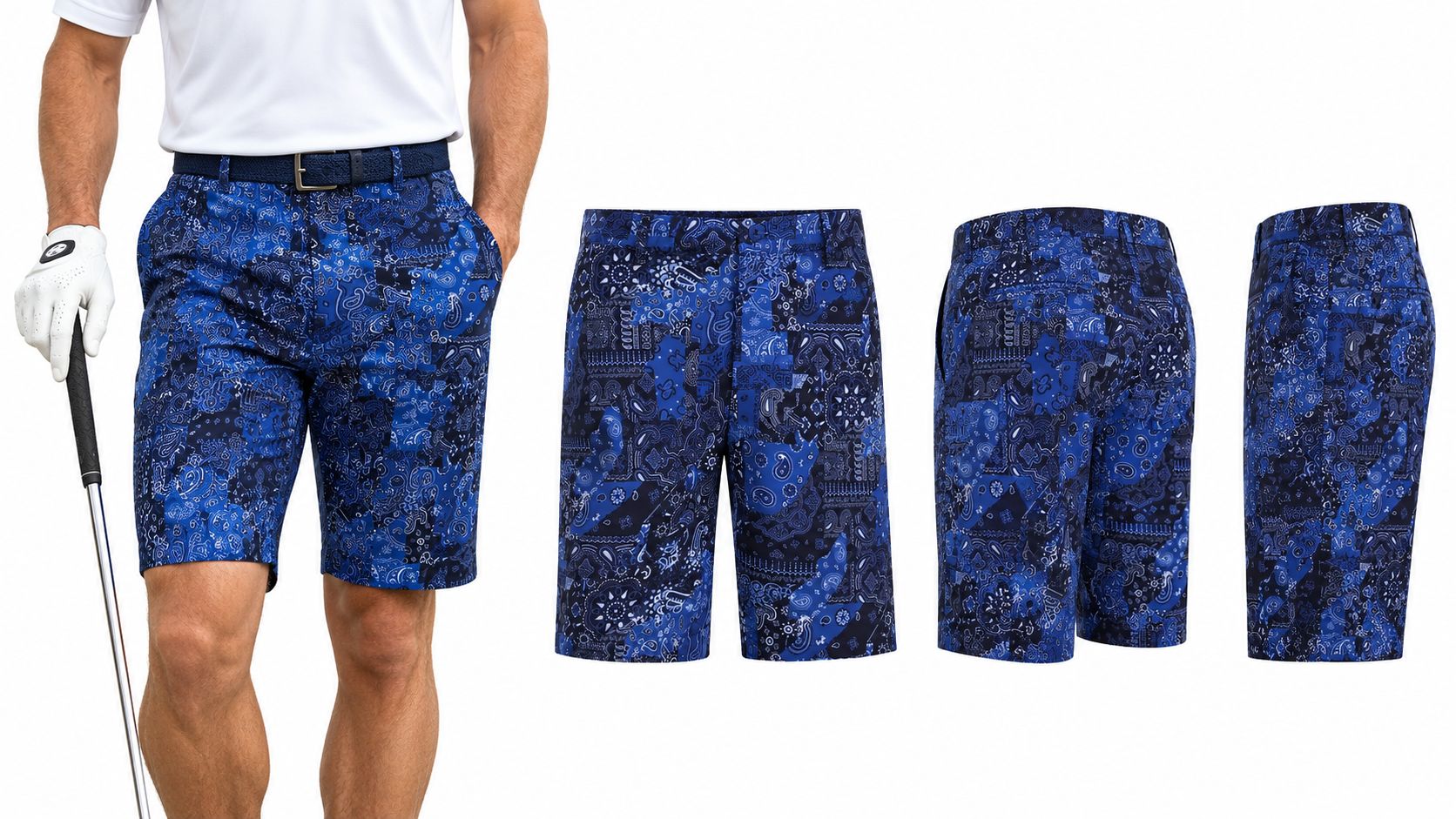
The next day, Marcus plays at a resort where the atmosphere is looser and the wardrobe can be louder. He switches to blue statement shorts with a white polo, a performance hat, and sneaker-inspired spikeless shoes. The white polo keeps the outfit fresh in the sun, while the shorts provide the personality that plain resort neutrals can't.
Scenario three, the clubhouse transition
For a weekend round followed by dinner, Marcus plans the second half before he leaves home. He carries a lightweight overshirt, swaps his golf cap for a cleaner casual hat, and keeps the same shorts and polo. A belt with a finished buckle and shoes without visible mud do most of the work.
The key is restraint after the round. Don't add another graphic layer on top of a graphic short. Choose a solid overshirt, clean footwear, and one accessory with personality. That makes the outfit look styled rather than merely unchanged.
Footwear and Accessory Pairings That Elevate Your Look
Footwear determines whether bold shorts look athletic, deliberately rebellious, or something else entirely. Traditional spikeless golf shoes with low-profile uppers create a classic foundation. They work especially well with tonal prints, tucked polos, and leather belts because their structure echoes the clean lines of classic shorts.
Sneaker-inspired spikeless shoes take the opposite approach. Their softer profiles suit bright prints, untucked polos, and resort styling. Choose them when you want the outfit to feel modern and relaxed, but avoid overly bulky soles that visually shorten the leg and compete with a mid-length short.
A simple comparison helps:
| Choice | Visual effect | Best pairing |
|---|---|---|
| Traditional spikeless shoe | Polished and structured | Tonal prints, tucked polos, leather belts |
| Sneaker-inspired spikeless shoe | Sporty and casual | Bright shorts, untucked polos, resort rounds |
| Minimal neutral shoe | Quiet foundation | High-impact prints |
| Bold-color shoe | Deliberate accent | Solid shorts or a polo that repeats the shoe color |
The belt should connect the shoe to the shorts without becoming a separate headline. A genuine-leather ratchet belt in a matching black or brown colorway gives you a secure fit and a cleaner finish than a loose canvas belt. If the shorts already feature skulls, tropical motifs, or high-contrast graphics, keep the belt buckle simple.
Finish the heat-management kit
A breathable performance hat earns its place in extreme heat. Look for lightweight panels, ventilation, and a sweatband that doesn't stay saturated. A hat can also balance an aggressive print: choose a solid cap when the shorts are loud, or use a subtle motif when the rest of the outfit is restrained.
Sunglasses should protect your eyes without sliding during the swing. Select lenses that sit securely at the bridge and temples, then use this Style Site Optical UV guide to review practical considerations for UV protection. Keep the frame proportionate to your face and the outfit. Oversized frames can work with a resort look, while a slimmer sport frame better suits a traditional club setting.
Protecting Your Investment with Proper Care
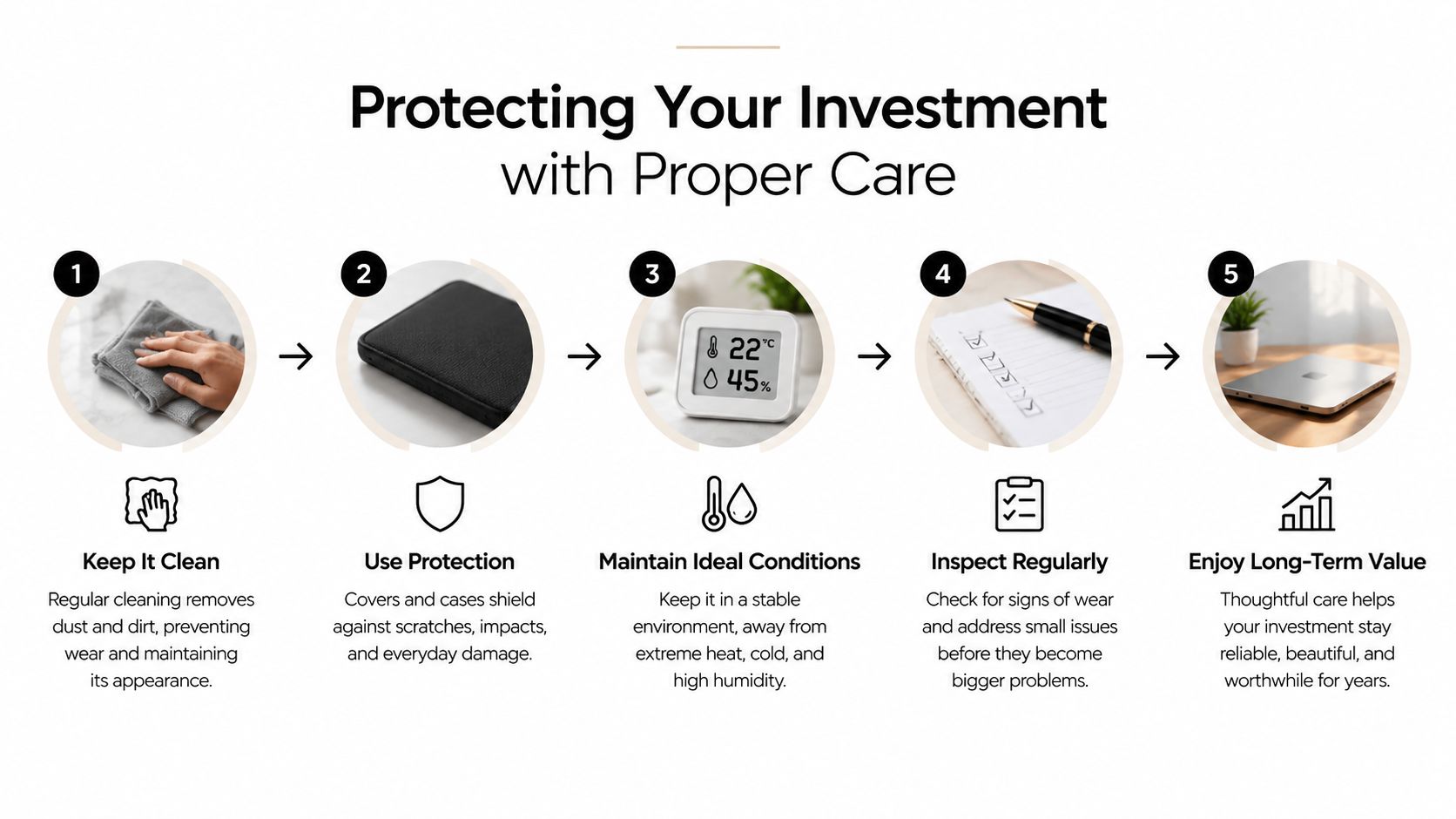
Performance shorts don't need complicated maintenance, but they do need consistent maintenance. Heat, detergent buildup, abrasion, and careless ironing can weaken stretch fibers, fade prints, and leave a moisture-management finish less effective over time.
Start with the care label, then use this routine:
- Prepare the garment: Empty every pocket, close the zip fly, and fasten buttons before washing. Turn printed shorts inside out to reduce friction against the drum and other garments.
- Wash cold: Use a cold machine cycle with similar colors and a mild detergent. Avoid bleach, fabric softener, and harsh stain removers unless the care label specifically permits them.
- Treat sweat marks early: Rinse the waistband and inner seams after a hot round instead of letting salt and body oils sit in the fabric. Apply a small amount of mild detergent to the mark, work it gently with your fingers, and wash promptly.
- Dry with restraint: Air-drying is the gentlest option. If you use a dryer, choose low heat. High heat can stress elastane and affect the recovery that gives four-way stretch its useful shape.
- Store without compression: Hang the shorts from the waistband or fold them loosely in a drawer. Don't leave damp shorts crumpled in a golf bag.
Protect bold prints during travel
The best travel method is simple. Wash the shorts before packing, let them dry completely, then fold them along the natural crease lines. Place them near the top of the bag rather than under heavy shoes or accessories. For wrinkle-resistant performance fabric, a brief hang in a steamy bathroom often does enough to relax light creasing without an iron.
If ironing is necessary, use warm rather than high heat and place the iron on the reverse side. Never iron directly over a print, trim, or decorative finish. The listed care instructions for Tattoo Golf Cool-Stretch shorts call for machine washing cold with like colors, tumble drying low or hanging dry, no bleach, and warm ironing only when needed, with prints and trim protected.
Coordinating His-and-Hers Looks and Final Takeaways
Matching golf outfits fail when they look copied. The stronger approach is coordination through color, motif, and performance fabric, while each person keeps a silhouette suited to their own movement and taste.
Start with one shared anchor. That might be black and charcoal, a blue-and-white palette, or a skull motif that appears on one garment while the other uses a related solid. A man can wear statement shorts with a white polo while his partner wears a performance polo in the same blue family. The outfits read as connected without turning the fairway into a uniform inspection.
Build complementary, not identical, combinations
Use these pairings as a starting point:
- Shared color: Match one dominant shade and let the rest differ. Blue shorts with a white polo can coordinate with a blue ladies' top and neutral bottom.
- Shared motif: Put the bolder graphic on one person and use a tonal or solid version on the other. This keeps the visual hierarchy clear.
- Shared finish: Coordinate stretch, moisture management, and quick-dry construction even when the prints differ. Comfort should be mutual, especially during a walking round.
- Shared accent: Repeat a belt, shoe, hat, or sock color rather than duplicating every garment.
For group golf, the same system works with more discipline. Choose a base color, assign one accent, and allow each player to decide how loudly to wear the theme. A team can look unified in black, white, and charcoal while still giving the most rebellious player room for a graphic short or patterned polo.
The technical priorities remain firm. Polyester-based performance blends make sense for hot conditions because research links fabric choice, sweat movement, evaporation, and heat loss. RET and MVTR help you evaluate breathability more intelligently, while UPF deserves separate attention because cooling claims don't automatically prove sun protection. Independent golf-apparel research found UPF labeling was uncommon, ranging from 7.1% to 16.7% of items, and reported low protection of vulnerable body sites. Read the research on UPF labeling and protection in golf apparel before assuming any warm-weather short shields you adequately.
Cooling also has limits. Very open construction can reduce opacity and protection, particularly in light colors, so inspect the weave, coverage, fabric weight, and recovery together. The technical discussion of material choices for golf shorts reinforces the point: the coolest-feeling fabric isn't useful if it turns sheer, sags, or loses its shape during the round.
Final wardrobe test: If a pair handles sweat, rotation, sun, pockets, and the clubhouse without looking anonymous, it belongs in your summer rotation.
You don't need boring khaki to play comfortably in brutal heat. Choose verified moisture management, fast evaporation, useful stretch, sensible coverage, and a color story with enough nerve to look like you chose it on purpose.
Tattoo Golf offers men's and ladies' shorts, polos, hats, belts, and coordinated performance apparel built around stretch, moisture control, quick-dry comfort, and bold graphics. Visit Tattoo Golf to build a hot-weather golf kit that performs through the round and refuses to disappear into the khaki crowd.

Share:
Moisture-Wicking Golf Shirts: Benefits and Buying Guide
Best Golf Pants for Comfort, Stretch and Performance Guide