
You've just finished eighteen holes in a shirt that looked sharp on the first tee and feels like a damp towel by the 18th green. Your group is heading straight to the clubhouse, but changing would mean missing the best part of the post-round conversation. That's exactly where a good cocktail-print golf shirt earns its place. It needs to move through a backswing, survive heat and walking, then still look intentional when the scorecards come out and the drinks arrive.
From the 18th Green Straight to the 19th Hole
The final putt drops. Your shoes are dusty, your group is arguing about a questionable ruling on the back nine, and somebody is already talking about food. You walk toward the clubhouse in the same polo you wore on the first tee because it still feels dry, the collar hasn't collapsed, and the print gives people something to talk about before anyone asks who kept score.
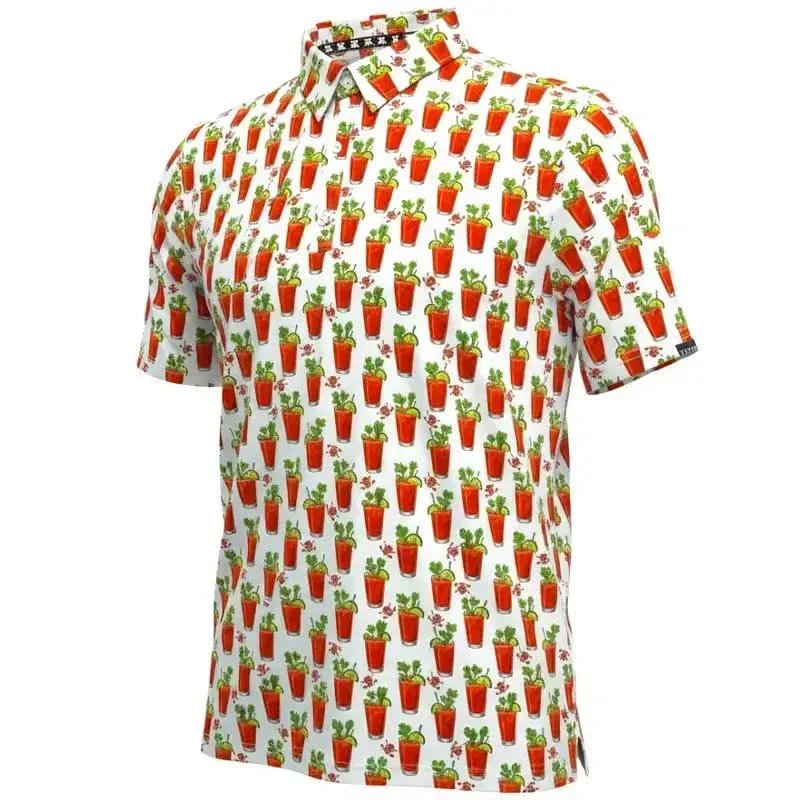
That full-day usefulness is the point of cocktail print golf shirts for the course and the 19th hole. A shirt covered in glasses, bottles, citrus, or bar-inspired artwork can be playful without being disposable. During the round, it should behave like performance apparel. After the round, it should behave like a social shirt, not like gym wear that happened to survive the walk from the parking lot.
The golfer wearing it has changed
The audience matters. The USGA's 2024 golf participation snapshot counted 28.1 million Americans who played on a golf course, including 3.3 million first-time golfers. Women made up 26% of the golfer population, and people of color represented 23%, both recorded as the highest shares in that snapshot. The average golfer was 43.5 years old, and the typical golfer played about 20 rounds annually, according to the same source.
Those figures describe a broad recreational audience, not a narrow uniform of serious tournament players. The same USGA data recorded 77.2 million posted scores by 3.35 million golfers in 2024, with 94.5% coming from recreational play. That's the natural home for a shirt with personality. It belongs at the Saturday foursome, the charity scramble, the resort round, and the relaxed group that cares about the match but also cares about the patio afterward.
A cocktail print works because it signals the right kind of confidence. You know the game, but you're not pretending every round is a qualifying event. If your next stop includes a meal, a winery visit, or a long clubhouse conversation, a resource such as the Doobie Brothers winery can fit the same golf-and-social rhythm. The shirt bridges those settings without asking you to pack a second outfit.
For more context on building a shirt that works across the entire day, see golf apparel that performs from the first tee to the 19th hole. The standard is simple. A bold graphic gets attention, but the construction decides whether you want to keep wearing it.
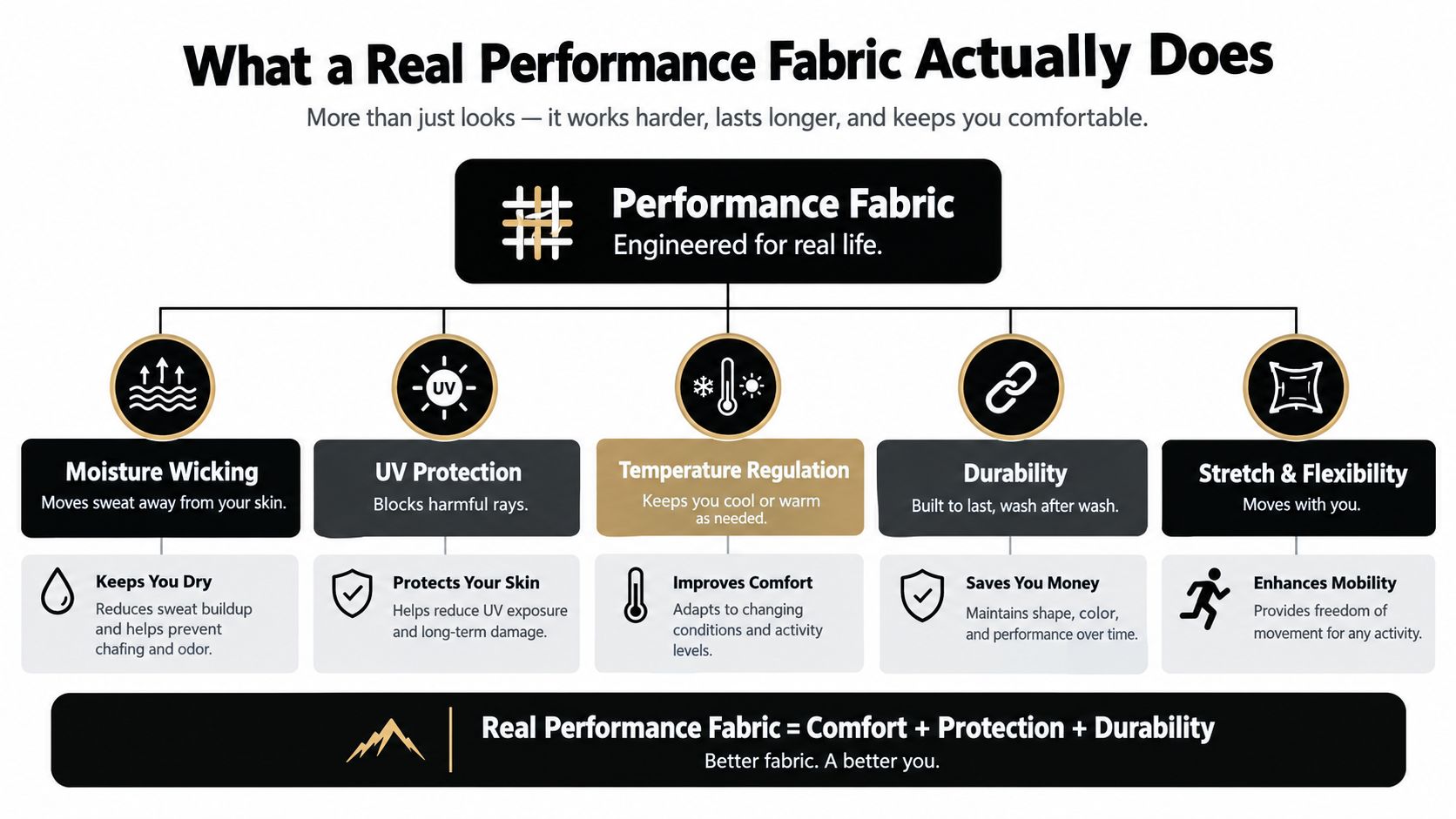
What a Real Performance Fabric Actually Does
A cocktail graphic can sell the first impression. Fabric and construction decide whether the shirt survives the round. Ignore vague labels and read the product details in a fixed order.
Start with the fiber blend
A polyester-spandex blend is usually the practical foundation for a golf polo. Polyester handles moisture transport and tends to resist wrinkles, while spandex supplies recovery when you rotate through a backswing, reach into a golf bag, or bend over a tricky lie. A 92% polyester and 8% spandex construction is a familiar example of that balance in performance polos, but the label alone doesn't guarantee comfort. Knit structure, weight, finishing, and cut still matter.
Look for four-way stretch, not just “stretch.” Two-way stretch may pull comfortably across the chest while restricting movement vertically. Four-way stretch should move with your torso and shoulders, then return to shape instead of leaving the shirt stretched across the back nine.
Judge the knit, not just the weight
A lightweight knit can improve airflow and reduce the heavy, clingy feeling that shows up when humidity rises. A fabric around 8 ounces, where specified, can offer more body and drape without feeling stiff, but weight needs context. A dense fabric may block more wind or light, yet trap more heat. A thin fabric may breathe well but reveal sweat or lose structure.
Flat-lock seams matter because they reduce bulky ridges where the shirt rubs against your shoulders, sides, or upper back. That difference appears during repeated swings, especially when a shoulder seam sits under a bag strap. A tagless collar removes another small irritation, while a structured collar keeps the shirt looking presentable after you've spent hours moving, sweating, and leaning into a cart.
Check the travel details
Wrinkle resistance is more useful than it sounds. A cocktail-print polo often travels to a golf weekend, and a shirt that comes out of a duffel looking reasonable has an advantage over one that needs an iron before breakfast. Easy-care instructions, stable color, and reliable stretch recovery keep the print looking deliberate instead of tired.
Shopping rule: Read the fiber blend, stretch direction, seam finish, collar construction, and care label before judging the artwork.
The performance golf shirt construction guide is useful context, but apply the same scrutiny to every brand. A loud print can hide mediocre construction because the eye goes to the graphics first. Your shoulders and lower back will notice the difference long before your playing partners do.
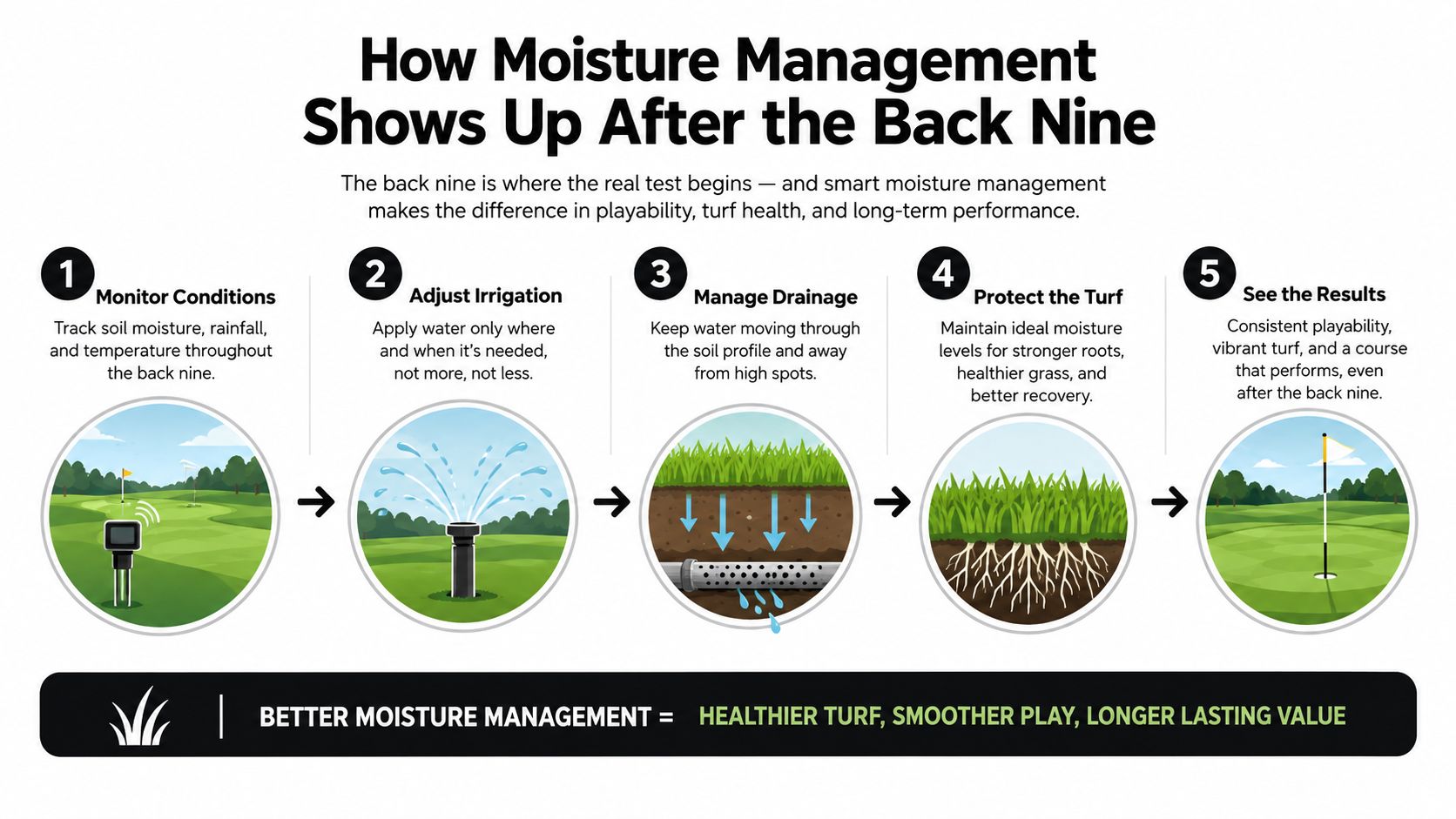
How Moisture Management Shows Up After the Back Nine
“Moisture-wicking” is too broad to guide a purchase by itself. A serious evaluation asks what the fabric does with sweat, how quickly it spreads, and whether the shirt dries before dampness turns into cling.
Read the moisture behavior in order
The Moisture Management Tester evaluates wetting time, wetted radius, spreading speed, absorption rate on both fabric surfaces, one-way liquid transport, and Overall Moisture Management Capacity. Those measurements matter because they describe a chain of events rather than a marketing slogan.
- Wetting time shows how quickly liquid begins interacting with the fabric.
- Spreading speed and radius show whether sweat distributes across a larger surface area.
- One-way transport indicates whether moisture moves away from the skin instead of remaining against it.
- Drying behavior determines whether the shirt feels better after the next tee box or increasingly clammy.
Rapid spreading can help evaporation because a wider exposed area gives moisture more opportunity to leave the fabric. One-way transport is equally important. A shirt that absorbs sweat but keeps it pressed against your torso may feel wet even if the label says “wicking.”
Airflow changes when you swing
Air permeability deserves a separate check. Fabric can feel breathable while standing still and become less breathable when it stretches over the shoulders, chest, or abdomen. The moisture-management research linked above compared elastic polyester sportswear and found that stronger air permeability, drying behavior, and liquid management can support evaporative cooling during high sweat rates.
That's why stretch recovery isn't only about freedom of movement. If the knit stays pulled across your back after repeated swings, it can affect airflow and comfort. A useful product test should assess the shirt both relaxed and stretched, not only on a hanger.
Test the shirt like a golfer
Initial comfort proves very little. Wear the polo through repeated swing-and-walk intervals. Check whether the underarms, lower back, and collar stay comfortable after the shirt has absorbed sweat. Then sit down for a drink and see whether the fabric still looks clean enough for the clubhouse.
The best field benchmark is consistent dryness across the round, not a pleasant first tee impression.
For a cocktail print, moisture management also protects the look. Saturated fabric can make colors appear uneven, flatten the drape, and turn a confident graphic into a clingy outline. The print gets the conversation started, but drying performance keeps you in the conversation after the back nine.
Sun Protection That Goes Beyond the Print
A dark, busy cocktail print looks protective. That impression isn't proof. Visual coverage and measured UV protection are separate questions, and golfers should stop treating dense artwork as a substitute for a certified rating.
Understand what UPF measures
UPF, or Ultraviolet Protection Factor, comes from spectrophotometric measurement of erythemally weighted ultraviolet transmission. A higher result means less biologically effective UV reaches the skin. Under the EN 13758 framework, a UPF above 40 is classified as excellent protection, while values below 15 are insufficient, according to the apparel research summarized in the brief's source material.
The relevant testing systems include AATCC TM183 in the United States, EN 13758 in Europe, and AS 4399 in Australia and New Zealand. These standards give a shopper something measurable to inspect. “Sun-friendly,” “protective print,” and “dark fabric” don't do the same job.
Construction creates a trade-off
Polyester and wool commonly provide UPF 30 or higher, while cotton, linen, and viscose frequently provide poorer protection, as reported in the cited apparel testing research. That doesn't mean every polyester cocktail polo has excellent protection. Fabric density, pigment, mass, stretch, and moisture all affect the result.
A denser knit and darker pigment may reduce UV transmission, but they can also restrict air and water-vapor movement. Stretch can lower measured UPF, and wet fabric can behave differently from dry fabric. A manufacturer that makes a UPF claim should test the finished shirt, including the fabric in intended worn conditions.
Don't let the pattern fool you
Recent peer-reviewed research examining 671 golf-apparel items found UPF labeling on only 7.1% to 16.7% of products, while coverage of areas such as the neck, arms, and hands was generally limited, according to the published study record. That makes the practical answer obvious. Look for a certified UPF claim, then add a sun hat, sunscreen, or sleeves where exposure remains high.
A cocktail print can be loud, fun, and memorable. It can't certify itself by looking busy. If the product page doesn't name a tested UPF rating and the applicable standard, treat the shirt as style and comfort apparel, not verified sun protection.
Country Club Codes Versus Cocktail Confidence
A cocktail polo doesn't belong everywhere. Some private clubs expect a structured collar, restrained graphics, and a tucked-in silhouette. Public courses, resort layouts, charity events, and post-round patios usually give you more room to show personality.
The smart move isn't to dull the shirt. It's to match the build to the setting.
Course-to-Clubhouse Fit at a Glance
| Feature | Country Club Build | Cocktail Print Build |
|---|---|---|
| Collar | Structured, stable, often spread or traditional | Structured enough for play, with a print that carries the personality |
| Placket | Three-button design with a tidy front | Three-button or modern placket, depending on the course |
| Palette | Solid colors, restrained contrast, conservative accents | Cocktail colors, bottles, glasses, citrus, or skull-and-club artwork |
| Fit | Clean through the torso, easy to tuck | Athletic or classic fit with room for a full swing |
| Fabric | Breathable performance knit with quiet texture | Moisture-managing stretch knit that still looks social after play |
| Best setting | Formal club, member event, competitive round | Public track, resort course, scramble, clubhouse, patio |
A country-club-compliant shirt wins on discretion. It lets the collar and fit do the work. A cocktail-print shirt wins on recognition. It starts conversations, gives a group an easy theme, and looks natural when the round turns into lunch or drinks.
The transition also changes the styling requirements. On the course, check sleeve mobility, collar stability, and whether the print distracts you when you address the ball. At the 19th hole, check whether the shirt can stand without a quarter-zip, golf vest, or change of shoes.
Read the room: A bold print is a strong choice for a relaxed round, but club policy outranks personal taste.
If the course is strict, choose a smaller motif, darker base, or cleaner collar. If the event is a scramble, let the shirt do more. For the social side of the outfit, shows the same drink-inspired attitude in a format better suited to casual settings than a club with a formal dress code. The principle is simple. Wear the loudest version where the occasion can carry it.
Timing the Sale Without Settling for Last Year's Print
Sale shopping works best when you understand the difference between a promotion and clearance. A promotion gives you a reason to buy a current design at a better price. Clearance means the brand is making room, and your preferred size or color may disappear without returning.
Printed golf polos often move through predictable retail windows. End-of-season clearance is the deepest-risk period. The price may be attractive, but popular sizes, coordinated pieces, and fresh colorways can vanish first. If you already know you want a cocktail theme for next season, waiting until the final markdown can leave you with a shirt that fits poorly or a print you never wanted.
Three windows worth watching
- Mid-season promotions: These are useful when you want a current print and still need a full size range. Buy the shirt you'll wear rather than waiting for a theoretical lower price.
- End-of-season clearance: This suits flexible shoppers who can accept limited sizing or an older color palette. It's a poor strategy for matching outfits or building a coordinated group look.
- Late-fall holiday campaigns: These can be practical for gifts, golf trips, and multi-piece orders. They're also a good time to compare shipping offers and rewards benefits rather than looking only at the sticker price.
Collections such as Tattoo Golf's Cocktail, Aloha, Party Animal, Camo, Lucky 13, and Dancing Skulls are built around recognizable themes and coordinated styling. Limited-run designs create a real trade-off. A deeper discount may arrive, but the exact shirt you want may not still be available.
Buy the outfit, not just the markdown
Think about the round you're dressing for. If you need a polo, shorts, hat, and a matching option for a partner, a sale that supports one combined order can be more useful than a lower price on a single leftover shirt. Fast free shipping in the USA is available from Tattoo Golf on orders over $30, according to the publisher information, so the threshold can affect how you group a purchase.
The sensible rule is to buy at the first meaningful discount when the print, fit, and size are right. Clearance is a gamble. A current sale is a decision.
The Cocktail Collection Checklist Before You Buy
Keep this list open while shopping. A cocktail-print polo has to pass both halves of the day, and a great graphic can't rescue a shirt that overheats, restricts your swing, or violates the course dress code.
Fabric and construction
Start with the physical details, not the product name.
- Fiber blend: Look for a polyester base with enough elastane or spandex to support rotation and recovery.
- Stretch direction: Four-way stretch is more useful than a vague “flexible” claim.
- Knit behavior: Choose a fabric that feels light enough for heat but stable enough to avoid cling.
- Seams: Flat-lock construction can reduce rubbing under a golf-bag strap.
- Collar: A tagless, structured collar should remain comfortable and presentable after repeated movement.
- Care: Wrinkle resistance and easy washing matter when the shirt travels in a golf bag or weekend duffel.
Performance checks
Treat performance language as a prompt for questions.
- Moisture management: Look for evidence beyond “wicking,” including drying behavior and liquid transport.
- Air permeability: Consider how the fabric behaves when stretched across the shoulders and torso.
- UPF certification: Buy the claim only when the finished garment has a tested rating and named standard.
- Colorfastness: Cocktail graphics need stable color after sweat, washing, and sun exposure.
- Fit: You should be able to make a full swing without the back riding up or the collar pulling forward.
Occasion and timing
Check the course's rules before choosing the loudest artwork. A structured collar and cleaner print can keep the shirt acceptable at a more traditional club, while a full cocktail motif belongs naturally at a public course, resort, scramble, or clubhouse patio.
Tattoo Golf's Cocktail Collection fits the personality-first end of golf apparel, with cocktail-themed graphics designed for course play and post-round settings. The brand's broader range includes men's and ladies' polos, coordinated options, signature skull-and-clubs artwork, and rewards features, so a sale can be a sensible time to assemble a complete look instead of buying a generic shirt that only works for the tee box.
Final test: If you'd wear the polo for eighteen holes but wouldn't want to sit in it afterward, it isn't a course-to-clubhouse shirt yet.
The right cocktail print should feel like golf apparel first and a conversation starter second. Check the performance details, verify the sun-protection claim, read the dress code, and shop before your preferred size becomes clearance inventory.
Tattoo Golf offers bold Cocktail Collection polos with performance-focused stretch and moisture management, plus coordinated golf apparel for the course and the 19th hole. Visit Tattoo Golf to find a cocktail print that matches your round, your group, and the way you spend the afternoon.
Share:
Black Golf Shirts: How to Build a Versatile Golf Outfit