
You're halfway through a range bucket when the club starts shifting in your hand. You squeeze harder, wipe your palm on your shorts, and wonder whether a glove would help or just add another thing to buy. The answer starts with what's happening between your skin and the grip, not with what everyone else is wearing.
What a Golf Glove Does for You
A golf glove is mainly a grip and friction aid. It puts a protective, grippy layer between your hand and the club, helping you hold on without relying entirely on bare skin. Comfort, moisture management, and a familiar feel are useful benefits, but none makes a glove a substitute for sound technique.
If you're asking why wear golf gloves, think about the problem you want to solve. A slipping driver, a sore palm, and cold fingers call for different features, even though they can all lead you toward wearing a glove.
Golf glove functions and who gains most
| Function | What the glove does | Who gains most |
|---|---|---|
| Grip stability | Adds friction between palm and grip to help limit sliding during the swing | Players with fast swings or smooth, slick grips |
| Blister prevention | Cushions the palm and finger bases where the club grip rubs | Frequent players and golfers having long range sessions |
| Sweat control | Absorbs some moisture to help preserve a secure connection | Golfers with sweaty hands in hot or humid conditions |
| Weather protection | Weather-specific gloves help manage wet conditions or keep hands warmer | Players in wet or cold rounds |
| Consistency | Provides a familiar contact surface from round to round | Players seeking repeatable grip feel |
These benefits matter most on the lead hand, the hand highest on the club. It maintains an important connection throughout the swing. A glove that shifts around that hand defeats much of its purpose, even if the material feels tacky when you first try it on.
An aid, not a requirement
An ordinary golf glove isn't automatically a rain glove, and absorbing sweat doesn't mean it stays useful once soaked. Choose the glove for the conditions rather than expecting every model to handle every problem.
Practical rule: Judge a glove by whether your hand stays comfortable and the club stays secure, not by whether wearing one makes you look more experienced.
No golf rule requires you to wear a glove. It's your choice, and playing barehanded is a reasonable option when your connection stays dependable.
Try a simple check during your next practice session: notice whether the club shifts during the backswing and inspect the palm and finger bases afterward. Slippage or irritated skin gives you a concrete reason to try a glove. If neither occurs, you don't need to invent a problem to justify one.
How a Glove Keeps the Club from Slipping
A wet bar of soap slips out of your hand under pressure that would hold a dry bar firmly. The soap did not get heavier; the contact changed. That is the job a golf glove does: it puts a more dependable layer between your skin and the handle.
During the swing, the load on your hands shifts as the club changes direction at the top. If your fingers loosen or the handle moves a fraction, the natural response is a sudden squeeze, and that late squeeze often produces the mishit. Steady pressure that keeps the handle in place while the club accelerates beats a hard grip applied too late.
What the laboratory measured
In a controlled laboratory study of golf-glove use, 15 golfers each completed eight driver swings and eight 7-iron swings with a glove and repeated the tests without one; driver clubhead speed, ball speed, and absolute carry distance were significantly higher with the glove, at p < 0.05.
The same experiment found no significant performance differences with the 7-iron and no significant differences in measured muscle activity between conditions. That distinction matters: the result supports a driver-specific benefit in the golfers tested, and it says nothing about better results with every club in the bag.
A reasonable explanation is that a more stable hand-to-grip connection helps most at driver speed, where the forces on the handle peak. The performance numbers alone do not prove reduced slippage caused the improvement, and unchanged muscle activity does not show that a glove lets your muscles work less.
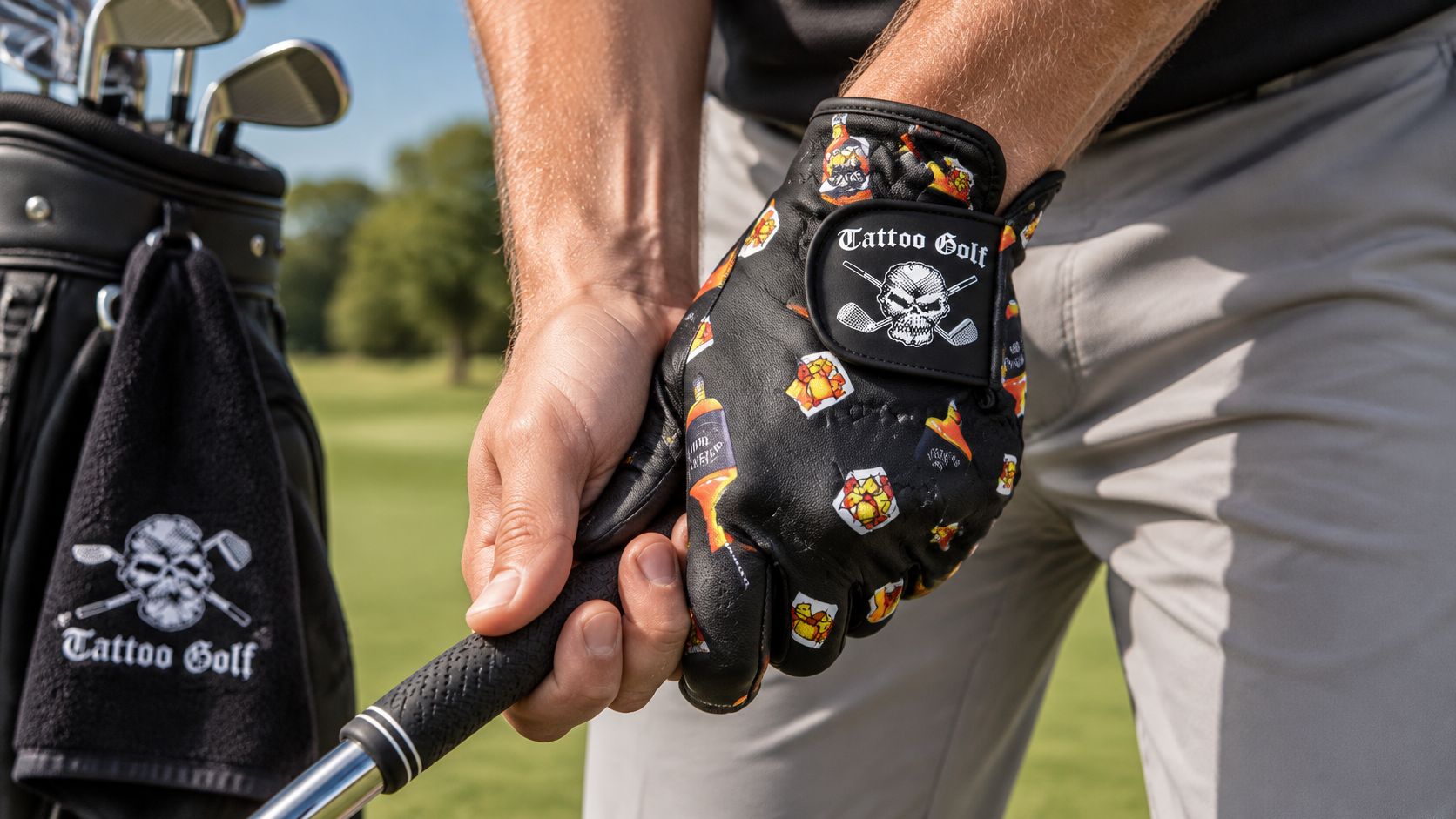
The Whiskey Cabretta Leather Men's Golf Glove sits in Tattoo Golf's accessories lineup alongside gear like towels and belts. A leather palm is a construction detail, and no material specification is proof that a given golfer will gain carry.
Separate evidence from promises
Glove marketing tends to promise better grip, more control, and longer shots in the same breath. The measured evidence covers a smaller claim: a real performance difference appeared with the driver in this test, under controlled conditions. Grip stability is a plausible mechanism and fits the mechanics above, yet it stays an explanation rather than a measured outcome.
A glove may help you deliver the swing you already have. It doesn't guarantee a faster swing, a square clubface, or a longer drive.
For a practical comparison, alternate a short set of gloved driver shots with a short set barehanded. Use the same club, target, and normal swing effort; note strike quality, visible carry, and whether you felt the handle move.
Repeat the comparison rather than judging from your best shot. A range test will not produce laboratory-level proof, though it can reveal which setup feels dependable enough to trust on the course.
Blisters, Calluses and Sweaty Hands
Say you start practicing regularly after a quiet stretch away from golf. Early in the session, the base of your lead-hand fingers feels warm. You keep hitting because it's only a little sore, then discover tender skin when you get home.
That hot spot is a reason to pause. Repeated rubbing can irritate and separate layers of skin, and moisture can make skin more vulnerable. Common trouble spots include the finger bases, the pads of the index and middle fingers, and the heel of the palm.
Interrupt the rubbing early
Calluses and blisters aren't an inevitable sequence. A callus is thickened skin; a blister is a different response to friction, and either can become uncomfortable. Cracked calluses, persistent redness, and tender patches deserve attention before another long practice session.
A well-fitting glove puts a barrier between skin and grip, moving some rubbing onto the glove material. It can also take up sweat, although a saturated glove needs drying or changing rather than more swings.
For broader skin-care guidance, Evermost LLC explains ways to reduce friction and protect your hands. For understanding clothing terminology, this guide to what moisture-wicking fabric does helps distinguish moving moisture from only absorbing it.
Habits that protect your hands
- Rotate gloves: Keep a spare available so you aren't starting another session with a damp glove.
- Dry flat: Let the glove air-dry away from direct heat. Don't leave it crumpled in a closed pocket.
- Inspect the contact surface: Replace a glove when the palm wears through or damaged material bunches against your skin.
- Check hot spots: Stop and inspect new soreness rather than waiting until the skin opens.
Don't pull a glove over an open blister and assume you've fixed the problem. Protect the affected skin and reduce the activity that keeps rubbing it.
Grip pressure deserves attention too. If you're squeezing hard enough to make your forearms rigid, adding leather won't correct the underlying habit. Aim for secure rather than crushing, and check that the club isn't moving because of worn grips or a poorly positioned handle.
Heat, Cold and Rain
Humidity and sweat rate affect grip more than temperature alone. A glove earns its place when it preserves a stable hand-to-grip connection. Warmth, skin coverage, and comfort matter too, but each benefit depends on the glove material and the conditions you face.
When to wear a glove by weather condition
| Condition | Glove recommendation | Reason |
|---|---|---|
| Hot and humid | Wear a glove and keep a dry replacement available | Sweat can make the hand-to-grip connection slippery |
| Hot and dry | Wear a glove if friction or exposed skin bothers you | It provides a rubbing barrier and covers part of the hand |
| Mild and dry | Optional | Most useful when you need extra security on full driver swings |
| Cold | Wear a suitable glove, possibly on both hands | Cold hands can feel stiff and lose sensitivity |
| Rain or wet grips | Use rain gloves or a dry glove with a protected spare | Saturated ordinary leather can become unreliable |
Match the glove to the problem
In hot, humid weather, change gloves before the palm is soaked. Take the glove off between shots when practical, and keep a towel accessible for your hands and club grips. A dry glove loses its advantage quickly if you press it onto a wet handle.
In hot, dry conditions, sweat may evaporate readily, but rubbing can still irritate your skin. A glove covers part of the hand. Unless the maker states a tested ultraviolet-protection rating, treat exposed skin as unprotected and manage sun exposure separately.
Mild, dry weather is a useful setting for comparing gloved and barehanded feel. You may prefer a glove for full swings and remove it for putting or delicate chips. One choice does not have to cover every shot.
For cold rounds, use golf gloves intended for warmth if ordinary leather feels thin or stiff. Wearing gloves on both hands can be sensible, provided you can still grip and release the club comfortably. Plan the rest of your layers with this guide to cold-weather golf clothing.
For steady rain, ordinary leather suits dry-to-damp contact, purpose-built rain gloves are designed for sustained wet use, and a dry leather spare works only as a temporary bridge.
Wet-weather priority: Keep the handle dry whenever possible. Changing gloves without drying the grip leaves half the problem untouched.
Before a round with persistent showers:
- Seal spare gloves in a plastic or waterproof bag.
- Protect a dry towel under your umbrella.
- Open bags with dry hands and close them immediately.
- Wipe the grip before each full swing.
- Switch to wet-use equipment once leather stays saturated.
If the handle and your gloves are all wet, adding another ordinary leather glove changes little. Dry the contact points or use gear made for wet play.
Which Hand Wears the Glove and Why
Wear the glove on your lead hand. For a right-handed golfer, that is the left hand; for a left-handed golfer, it is the right. The lead hand sits highest on the grip, so it carries most of the job of holding the club steady.
Grip stability is one of the things a glove is measured to influence, and the lead hand is where a slip costs you most. If the top hand shifts even slightly during the swing, the clubface can arrive at the ball pointed somewhere you did not intend. The trail hand still shapes the shot, and keeping it bare preserves direct skin contact for shorter swings where feel matters more than friction.
Match the glove to the hand that wears it
- Right-handed swing: Buy a glove sized for your left hand.
- Left-handed swing: Buy a glove sized for your right hand.
- Before checkout: Confirm whether the listing describes the glove hand or the golfer's handedness.
A right-handed beginner who orders a right-hand glove by mistake usually finds nothing wrong with the product itself. It leaves the lead hand uncovered, which is the hand the glove was built to help.
A practical habit with a long history
A Sports Illustrated account of golf-glove history describes gloves appearing in the late nineteenth century partly to help with slick leather grips, with regular adoption arriving much later.
The history explains why the habit exists. Gloves solved a grip problem first and became tradition second, so lead-hand placement is a sensible starting point rather than an obligation. Your own hands and playing conditions get the final say.
Signs a Glove Is Wrong
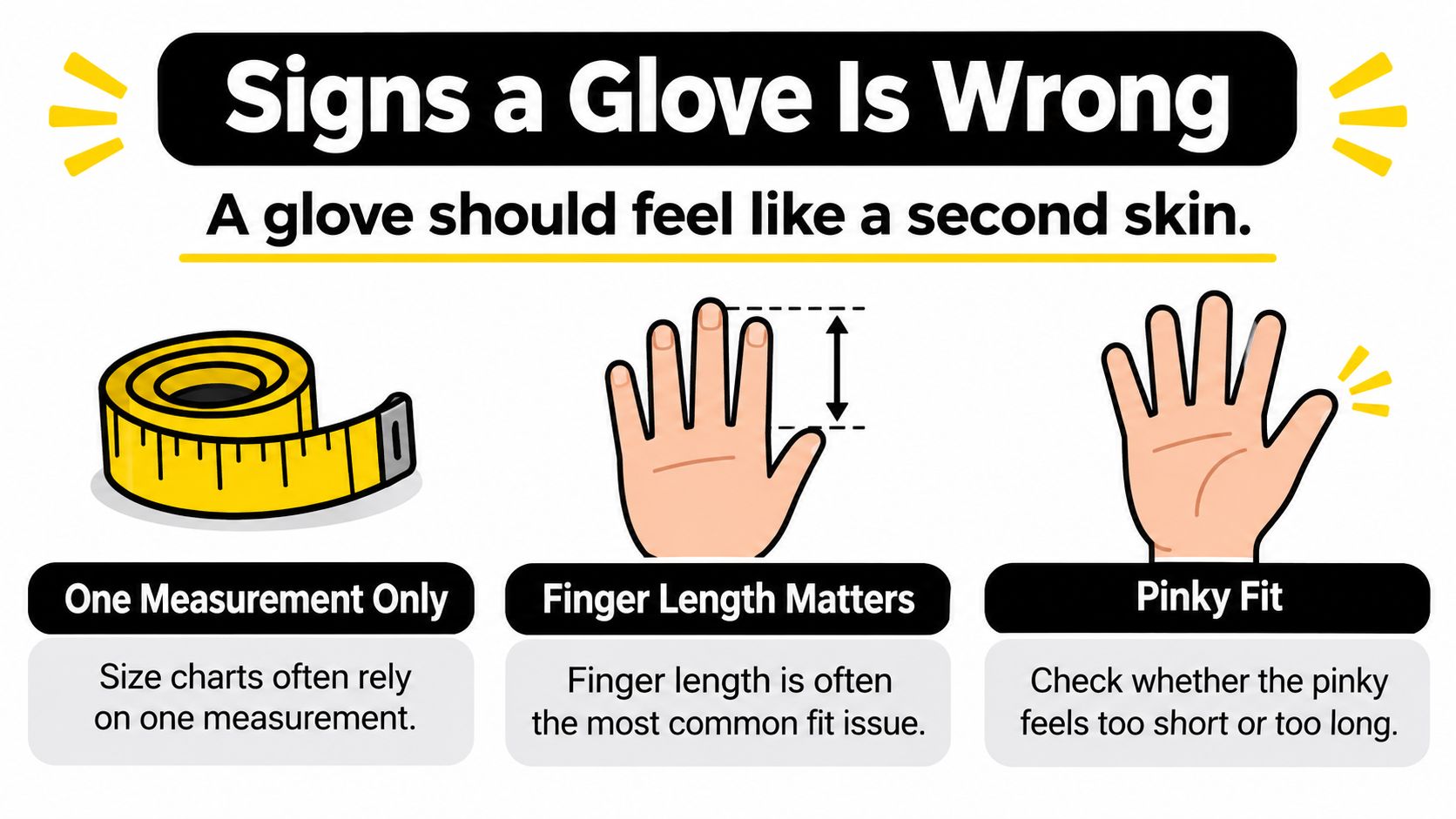
A glove should feel like a second skin, but that phrase needs a practical definition. The material should follow your hand without loose folds, painful fingertip pressure, or resistance when you close your fingers around the club.
A sports-glove fit study found a significant relationship between finger length and hand grip force. That's a useful reason not to treat palm size alone as a complete fit test.
Diagnose proportions, not just size
Women, golfers with broad palms and short fingers, and anyone between conventional sizes may need a different cut rather than a simple size change. In particular, inspect the pinky instead of assuming that a comfortable middle finger means every finger fits.
Glove fit symptoms, causes and fixes
| Symptom | Likely cause | Fix |
|---|---|---|
| Tight across the palm, loose at the fingertips | Palm section too narrow or fingers too long | Try a broader palm with shorter fingers, often a cadet cut |
| Pinky material bunched or folded | Glove finger too long for your pinky | Try a short-finger cut and compare brands |
| Fingertips tight, palm loose | Glove fingers too short relative to palm width | Try a longer-finger, narrower-palm cut |
| Glove slides when gripping | Too much room across the palm | Try a smaller size and recheck the closure |
| Closure tab pulls at the wrist | Tab overtightened or glove incorrectly sized | Loosen the tab, then reassess overall fit |
| Palm or index finger wears through first | Abrasion at heavily used contact points | Replace thinning material and inspect grip placement |
Wear alone doesn't diagnose a sizing error. Palm and index-finger damage can reflect ordinary use, but an unusually concentrated tear should prompt you to check for folds, rough grips, or repeated handle movement.
Measure, then hold a club
Use a flexible tape to measure palm circumference around the knuckles, excluding the thumb, and compare it with the maker's chart. Follow that chart's finger-length instructions too, because brands don't necessarily measure or cut gloves identically.
Then test the glove in a playing position:
- Finger ends: Your fingertips should reach comfortably without stretching the material hard against your nails.
- Pinky comfort: Check for both empty material and pulling between the fingers.
- Closure position: The tab should fasten securely without being used to drag an oversized glove tight.
- Palm movement: Grip a club and make a controlled practice swing. Watch for material rolling or sliding.
- Wear pattern: Recheck after use for concentrated thinning where a fold or seam presses against your hand.
Start with the palm measurement, then confirm finger length before buying another glove in the same size. Material and graphics come after fit: soft leather can't rescue the wrong proportions, and an attractive design won't stop loose fabric from bunching.
Decide Whether to Wear a Glove for Your Next Round
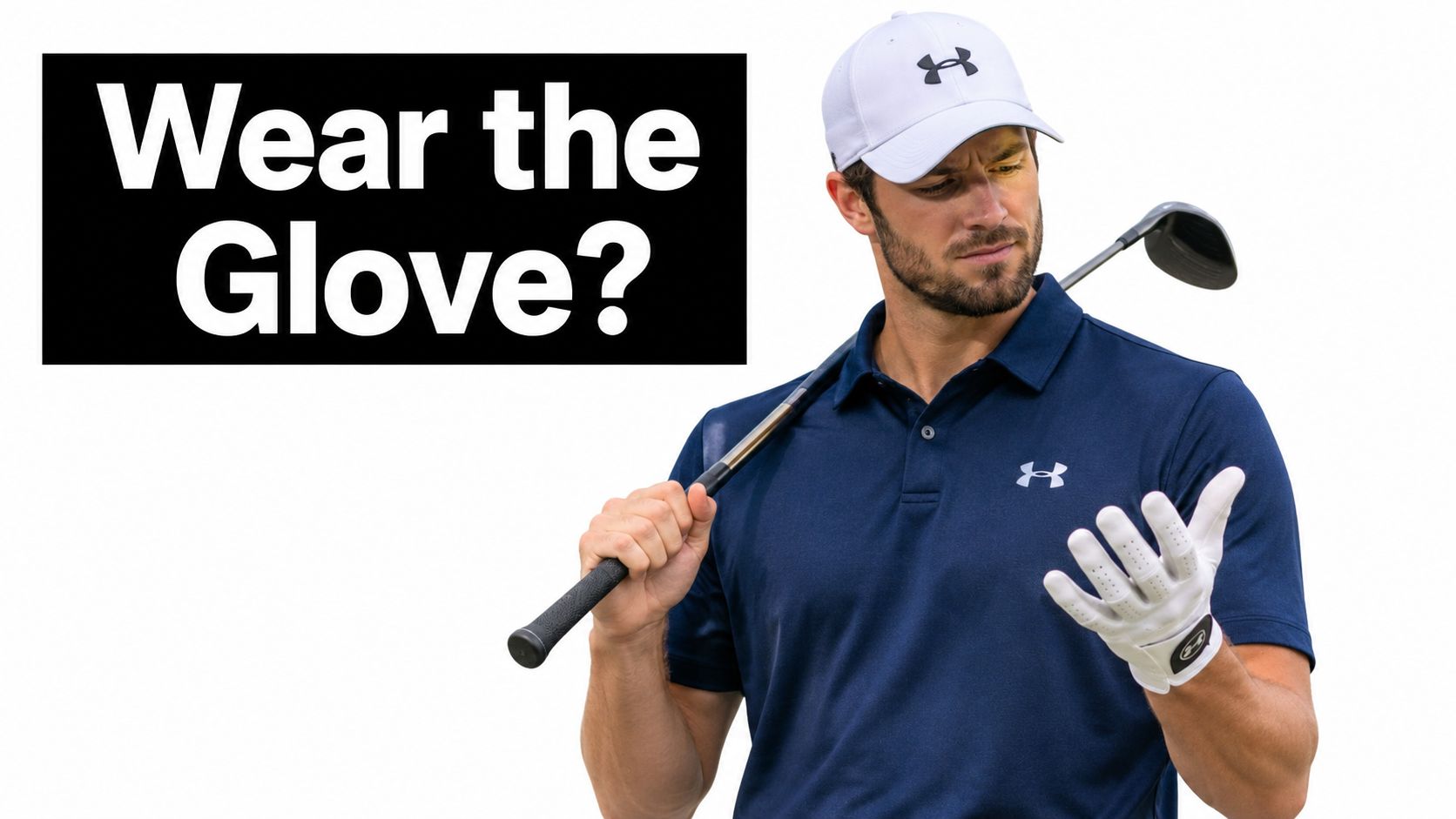
A glove earns its place in your bag only when it solves a problem you have. Grip stability and skin protection are the benefits you can feel and check. Claims beyond that, like a freer or faster swing, depend on your hands, your weather, and your fit, so judge them on the course rather than on the package.
- Wear one if: your hands sweat, the forecast calls for challenging weather, the driver shifts in your hands, or practice leaves your lead hand sore.
- Consider skipping it if: your hands stay comfortable, the club remains secure, and you prefer direct skin contact with the grip.
- Use a mixed approach if: you like extra security for full swings but prefer barehanded touch around the green.
Whichever route you choose, use enough pressure to control the club without unnecessary tension. If it still slips, stop and address the cause rather than trying to swing through it.
Make the next round a useful test
Try a properly fitted glove across a few rounds with different conditions. Pay attention to handle movement, hand comfort, and whether you keep adjusting the glove, rather than crediting it for every good shot.
Check the palm, fingertips, and closure before you commit to buying multiples. For your bag setup, this golf accessories guide can help you consider the supporting essentials, including towels.
Add one mid-round check at the turn. A palm that has gone slick, a tab you keep refastening, or fabric that bunches when you regrip tells you the glove or the conditions have changed, and a fresh glove or a bare hand may suit the back nine better. If your checklist points toward wearing a glove, start a short trial on your next round and judge it by two concrete outcomes: a secure club and comfortable skin.
Tattoo Golf offers golf gloves, towels, and tattoo-inspired apparel for players who want practical equipment with a distinctive look. Visit Tattoo Golf to explore the options, and choose a glove by fit and playing conditions before you choose its graphics.


Share:
Best Golf Pants for Men with Bold Style: Buyer's Guide