

A cold tee time exposes every weakness in your golf wardrobe. You arrive wearing a thick sweatshirt, feel warm beside the car, then discover on the first tee that the fabric catches across your shoulders and your hands have gone numb before you've struck a clean shot. By the turn, the sun may be out, the wind may have eased, and the same bulky clothing now leaves you overheated.
Good golf cold weather clothing isn't about wearing the most material possible. It's about building a responsive system that manages moisture, preserves rotation, protects you from wind and rain, and lets you remove warmth as your effort level changes. The right clothing supports your golf swing instead of becoming another problem to solve.
The Foundation of Cold-Weather Golf Apparel
A cold round can expose a clothing problem before your first full swing. A thick jacket may keep you warm beside the car, then catch across your shoulders at address. A thin shirt may feel acceptable while walking, but leave you chilled during a wait on the tee. The right setup must respond to both movement and inactivity.
The reliable answer is a three-layer system. A moisture-managing base layer controls sweat, an insulating mid-layer retains warmth, and a windproof or weather-resistant outer layer limits exposure without adding unnecessary bulk.
Start with the layer closest to your skin
Your base layer should sit close to the body without compressing your breathing or restricting your torso. Its job is to move perspiration away from your skin before wind can cool it. A long-sleeve synthetic performance top or merino wool layer generally serves this purpose better than a loose cotton shirt during active play.
The mid-layer supplies insulation while preserving rotation. A thin quarter-zip fleece, thermal pullover, or breathable knit should hold warm air without making your upper body rigid. Check the shoulder line at address and through the backswing. If the fabric pulls across your upper back, the garment is too tight, too bulky, or poorly cut for golf.
The outer layer handles wind and precipitation. Use a lightweight shell when those conditions are present rather than automatically wearing one on every cold day. A wind-resistant jacket can improve comfort in moderate cold, while a waterproof shell is more useful when rain threatens. Choose a design that can be removed and stored as the day changes.
Prepare your body as carefully as your clothing. Before the first tee, use a short dynamic warm-up that moves the shoulders, hips, and torso through golf-specific ranges. Start with controlled practice swings, then build toward full motion. This raises body temperature without forcing you to make your first hard swing while stiff. Test the complete setup with your gloves and clubs, checking that sleeves do not catch and pockets do not interfere with your stance.
Practical rule: Add warmth in thin, removable pieces rather than relying on one thick garment.
Common misconfigurations explain why golfers remain cold despite wearing several layers. A cotton base layer retains moisture, a bulky fleece restricts rotation, and a loose shell lets cold air enter at the cuffs and hem. Fit matters as much as insulation. Clothing should feel secure at address, move freely through impact, and remain comfortable when you bend to read a putt.
Cold-weather apparel is also becoming a meaningful part of the wider golf clothing market. Intel Market Research places golf clothing at roughly USD 857 million in 2024, projecting USD 1.229 billion by 2034, and identifies sweaters, vests, fleeces, and weather-resistant outerwear as support for year-round play (Intel Market Research). The practical lesson is simple: build clothing that adapts to changing conditions instead of adding bulk indiscriminately.
Choosing the Right Fabrics for Every Layer
Fabric selection determines whether a layering system feels comfortable or becomes clammy and restrictive. Two outfits can contain the same number of layers and perform completely differently because one manages moisture and movement while the other traps sweat and adds weight.
Cotton is the usual failure point. It feels comfortable when dry, but it absorbs moisture and dries slowly. During a cold round, a damp cotton shirt can leave you cold between shots even if the air temperature hasn't changed. Synthetic fibers such as polyester and nylon generally dry faster, while merino wool offers warmth and moisture management without feeling as bulky as many heavy knits.
Match material to the job
A base layer needs a close fit, stretch, and reliable moisture transfer. Merino wool can regulate temperature well, while synthetic performance fabrics often provide quick drying and easy care. The best choice depends on personal sensitivity, fit, and how much you sweat, but neither should feel wet against your skin after a few holes.
A mid-layer needs warmth with ventilation. Fleece can trap heat effectively, but a dense or oversized fleece may limit shoulder movement. Breathable thermal knits and lightweight insulated panels are better when you need warmth without sacrificing rotation. A quarter-zip also gives you a simple way to release heat during a long walk.
A shell should block wind and precipitation while allowing enough flex to swing. Look for stretch panels, articulated sleeves, and a cut that doesn't bunch around the waist when you address the ball. Waterproof protection is valuable in persistent rain, but a fully sealed shell can feel too warm if it doesn't breathe.
| Fabric Type | Moisture Wicking | Thermal Retention | Breathability | Best Use |
|---|---|---|---|---|
| Cotton | Low once wet | Low when damp | Moderate when dry | Casual wear, not the foundation of a cold round |
| Polyester performance knit | High | Moderate | High when well constructed | Base layers and lightweight mid-layers |
| Merino wool | High | High | High | Base layers and colder, drier conditions |
| Fleece | Moderate | High | Moderate to high, depending on density | Insulating mid-layer |
| Stretch nylon shell | Low on its own | Low without insulation | Moderate to high with a breathable membrane | Wind and rain protection |
For a clearer explanation of how moisture-moving fibers work, Tattoo Golf's guide to what moisture-wicking fabric means is a useful reference before you compare labels. A fabric name alone doesn't guarantee performance. Check the garment's construction, seam placement, stretch recovery, ventilation, and whether the fabric still feels flexible when worn over another layer.
Premium materials cost more because they often solve several problems at once. One 2025 market estimate found that premium products represented about 45.32% of the golf apparel market, which suggests golfers are prepared to pay for features such as moisture management and thermal regulation (SNS Insider's golf apparel market report). That doesn't mean the most expensive garment is automatically the right one. Spend first on pieces that sit closest to your skin and on outerwear that you'll use in difficult conditions.
For broader cold-weather packing principles, Pandemonium Millinery's packing tips for cold commutes offer a helpful reminder: removable, coordinated pieces are more useful than one oversized item you can't adapt.
Building Your Cold-Weather Golf Wardrobe
Start with the round you are playing. A cool, dry morning may call for a fitted base layer and a breathable quarter-zip. Add a vest if the wind starts pulling heat from your core, or keep a light shell ready if rain can roll in. On most cold rounds, two to three layers is enough, as long as each piece has a clear job.
A golfer who arrives early, stands around at the range, and then tees off still half-cold often makes the same mistake: he grabs one heavy jacket and keeps it on for too long. That choice protects him from the wind for a few holes, then starts fighting his swing. A better setup is a snug long-sleeve base, a thin insulating mid-layer, and a light windproof shell that comes off once body heat builds.
Build around movement
Every layer has to pass a swing test. Put the garment on, hold a club, make a slow backswing, and check whether your shoulders stay free and your elbows can work without binding. Then bend into a putting posture. If the hem rides up, the sleeves pull, or the collar crowds your chin, the piece may be warm enough but it is not helping your golf.
Lower-body comfort matters just as much. Thermal stretch trousers or a thin base layer under normal golf pants should let your hips turn and your knees flex. Heavy fabric can bunch behind the knees and tighten at the waistband when you hinge, and that stiffness shows up in the swing. Cold-weather clothing has to insulate without blocking your pivot.
The Men's Clubhouse Golf Jacket in Black fits the kind of outer layer to look for, a wind-resistant shell with a water-repellent finish and 4-way stretch that supports rotation while still giving practical protection. It works best over lighter pieces, not as a do-everything jacket that stays bulky when the temperature changes.
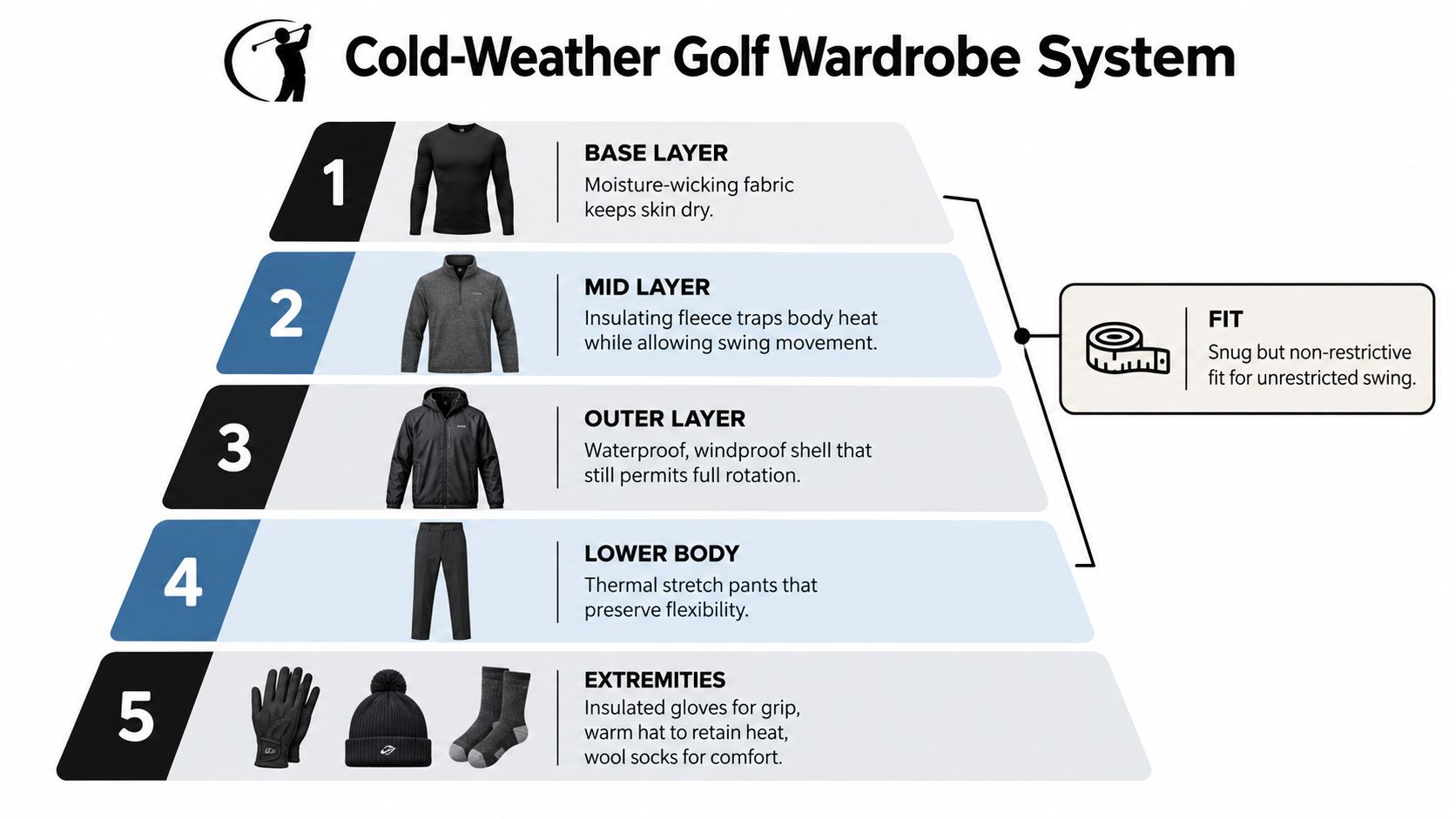
A useful wardrobe audit looks at the pieces you will reach for:
- Base layer: A fitted long-sleeve synthetic or merino top that stays dry against your skin.
- Mid-layer: A breathable quarter-zip, fleece, or thermal pullover that adds warmth without stiffness.
- Outer layer: A packable windproof or weather-resistant jacket with stretch through the shoulders.
- Lower body: Flexible trousers or thermal tights that do not bunch under your normal golf pants.
- Extremities: Warm gloves, a close-fitting hat, comfortable socks, and weather-ready footwear.
Pre-round habits matter too. If you can warm up your body before the first tee, you need less bulk on the course. A short range session, a few dynamic stretches, and a jacket you can remove once you start moving make the whole system work better.
Fit still ties everything together. The article on building a golf wardrobe with bold essentials is a useful way to think in coordinated pieces instead of isolated purchases. The goal is simple. Each item should work on its own, and the full kit should move with you when the weather turns.
Essential Accessories for Cold Rounds
A good jacket can't compensate for cold hands, damp socks, or a hat that lets wind reach your ears. Extremities lose comfort quickly, and discomfort in those areas affects concentration, grip pressure, and the willingness to commit to a shot.
Start with your hands. Use a warm golf glove when temperatures are low enough to affect feel, and keep a second pair available if the first becomes damp. Cart mitts are useful between shots because they let you warm both hands without forcing you to play every shot in bulky gloves. A hand warmer in a pocket can restore comfort, but don't place one where it interferes with your grip or causes your hands to sweat.
Protect the points that cool first
A close-fitting beanie or fleece hat should cover the ears without sliding during your swing. Avoid a loose hat that blocks your peripheral vision or presses uncomfortably beneath a jacket hood. If you wear a cap, add a warmer layer underneath rather than relying on the cap alone in a strong wind.
For socks, merino wool is a dependable choice because it provides warmth while managing moisture. Thick socks aren't automatically better. If they make your shoes tight, they can reduce comfort and leave your feet feeling colder. Pair warm socks with waterproof shoes that have enough room for natural movement.
Expert cold-round checklists commonly include thermal gloves or cart mitts, a warm hat, merino socks, waterproof footwear, and hand warmers because these items preserve dexterity during the early holes and between shots.
Cold-weather accessories should keep you warm without making you grip the club harder.
Use accessories strategically rather than wearing everything from the car park. Keep mitts on while waiting, remove them before the shot, and dry gloves whenever possible. If your hands are cold, spend a few minutes moving your fingers and wrists before you pick a club. For golfers comparing heated options.
A practical golf accessories guide can also help you check the small items that disappear from your preparation, including hats, gloves, and other pieces that support a complete round rather than a single tee shot.
Equipment and Ball Adjustments for Cold Conditions
Cold weather changes more than how you feel. Golf balls become harder in low temperatures and can travel shorter distances, especially when they've been stored outside or left exposed between shots. You don't need to chase every lost yardage with a dramatic swing. Start by accepting that winter distances may differ from your warm-weather notes.

Keep a ball in an inside pocket or another protected place before play, then rotate it with a second ball if conditions are especially cold. Don't heat a ball aggressively or expose it to a direct high-temperature source. The aim is to avoid starting with a ball that's chilled through, not to create an artificial advantage.
Make the clubface predictable
Moisture affects the interaction between the clubface and ball. Wipe the ball before each shot, keep a towel accessible, and dry grips whenever they collect dew or rain. A wet grip can encourage excess pressure, while a damp clubface can make distance and spin less predictable.
Use your warm-weather yardage book as a starting point, not an instruction. If a familiar approach normally requires one club, consider whether the cold, wind, elevation, and lie justify taking more club. Choose a controlled swing over a hurried attempt to manufacture distance.
Cold, wet turf deserves patience too. Take relief from standing water when the rules allow it, avoid forcing a low-percentage shot from saturated rough, and select a club that makes clean contact more likely. The experienced winter player manages contact first and distance second.
Course Strategy and Shot Selection in Cold Weather
Wind and moisture require different responses. Wind changes the flight and direction of the ball, while wet conditions influence contact, rollout, and footing. Keep the ball lower when wind is strong, choose a club that reaches the target with a smooth tempo, and avoid trying to overpower the shot through several layers.
Your warm-up should prepare the body and the swing. Walk briskly, make shoulder circles, rehearse slow torso rotations, and begin with short swings before moving to full shots. Keep moving between shots so your body doesn't cool completely, but don't rush your pre-shot routine.
A steady rhythm protects both your swing and your decision-making when the weather becomes uncomfortable.
Plan conservative targets around hazards and soft landing areas. Cold clothing can subtly shorten your turn, so check that your stance, posture, and finish still look familiar. If a jacket starts restricting your movement, remove a layer rather than compensating with a harder swing.
Wash technical garments according to their care labels, close zippers before laundering, and avoid storing damp outerwear in a golf bag. Dry shells, gloves, and shoes fully before putting them away. Good storage preserves stretch, water resistance, and shape for the next season.
Tattoo Golf offers cold-weather golf clothing including men's and women's long-sleeve undershirts, jackets, windbreaker quarter-zips, vests, and beanies for building a flexible round-ready system. Visit Tattoo Golf to explore performance layers and accessories that let you stay comfortable without losing your personal style on the course.


Share:
Are Bold Golf Shirts Allowed at Country Clubs? Rules