

You're standing at the car with your bag half packed, the tee time is close, and the question is simple: what genuinely needs to come with you for one round of golf? The answer isn't the same for every player. Some gear is essential, some is just smart, and some only matters once you know your game well enough to use it.
Golf has always been a regulated game, which is why the essentials start with the rules, not the shopping cart. The modern round is built around 18 holes, a conforming ball, a limit of 14 clubs, and tees used only for the first stroke of a hole, with tees capped at 4 inches (101.6 mm) and gloves allowed if they're plain and help grip the club (USGA equipment rules PDF). That's why the core kit isn't complicated, it's just disciplined.
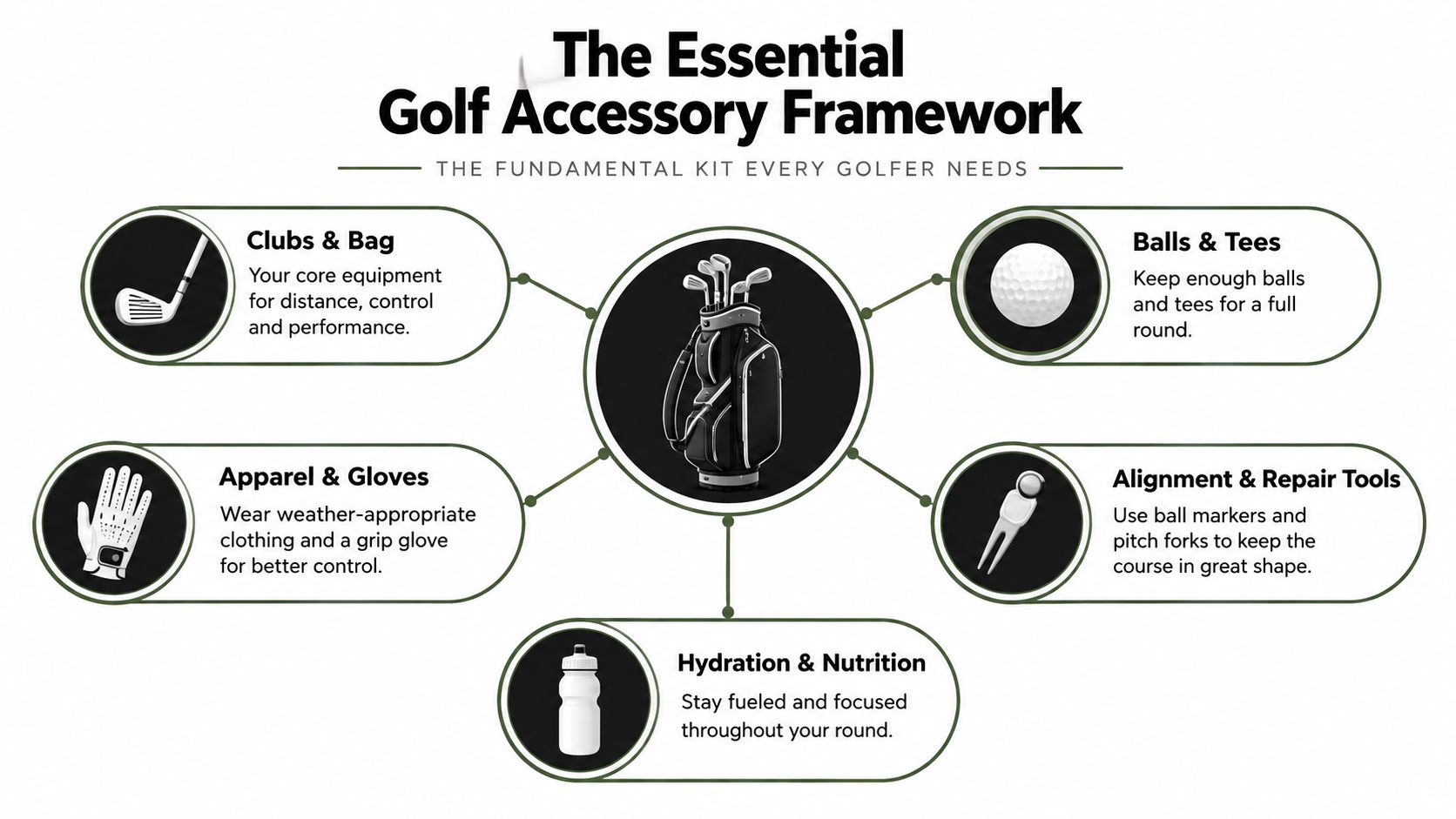
The Essential Golf Accessory Framework
A golfer who packs well starts with the items that keep the round legal, playable, and efficient. Clubs, balls, tees, and a glove form the base layer, because those are the pieces you touch before most shots and the ones that matter most once the round starts to test you.
Start with the bag, then build outward
The bag is only the container. The actual job is deciding what deserves space in it. Those limits are why a well-packed bag stays short, you are choosing which 14 clubs earn a slot, not which gadgets happen to fit.
A practical starter kit looks like this because it survives a round, not because it looks polished:
- Clubs and bag: carry the set you trust, not every club you own.
- Balls and tees: bring enough to finish the round without borrowing.
- Apparel and glove: dress for the weather, then add a plain grip glove if conditions call for it.
- Alignment and repair tools: a ball marker and divot tool keep you moving and keep the green in shape.
- Hydration and nutrition: water matters more once the round stretches out.
Practical rule: if you are choosing between a novelty accessory and a plain one you will actually use, pick the plain one.
Treat tees as regulated equipment, not decoration. Keep them plain, under 4 inches, and free of alignment aids. The USGA equipment rules PDF covers the formal standards, and that is enough to keep the tee side of the bag clean and compliant.
The glove and cap are where style can still serve function. A plain glove gives you grip when the air turns damp, and a cap keeps glare down without adding clutter. For players who care about shape as much as shade, Tattoo Golf's cap guide is a useful reference point, but the true test is whether the cap stays put and stays comfortable through the back nine.
The Evolution of the Golf Accessories Market
Golf accessories now reflect how different players play. A market estimate places worldwide golf accessories at about USD 3.15 billion in 2025, rising to USD 4.32 billion by 2032. A separate forecast in the same report series puts the category at USD 398.5 million in 2025, growing to USD 693.7 million by 2035. The gap likely reflects scope: the larger figure covers hard goods and rangefinders, while the narrower one counts soft accessories such as tees, markers, and towels.
Accessories now split into two camps
Classic utility still anchors the bag. Gloves, tees, towels, markers, divot tools, and replacement balls solve immediate problems and earn their space through repeated use. Performance and convenience gear forms the second group, including rangefinders, GPS devices, carry aids, and smart accessories.
One report says about 44% of players use technologically integrated accessories, while 22% of products launched in 2024 used eco-friendly materials. Those figures show how buying priorities are broadening, but they do not make every new device a sensible purchase.
The useful question is which problem the accessory solves. Walkers benefit from lighter carry setups and better storage. Competitive players may value distance tools that reduce club-selection uncertainty. Players concerned about waste can choose products made with recycled or other lower-impact materials. Beginners usually need dependable utility before adding technology, while experienced players can justify upgrades that support a specific routine.
The practical read is that accessory budgets now go to problem-solving gear: lighter carry setups for walkers, distance tools for competitors, and recycled materials for players who care about waste. Style can follow, but performance and repeat use should decide what stays in the bag.
Mandatory Gear Versus High-Value Upgrades
The smartest accessory buying happens when you separate what's required from what's helpful. A compliant round doesn't demand a lot of extras. It does demand a conforming ball, clubs within the 14-club limit, and a tee that stays within the rules. Everything else is about utility, comfort, or confidence.
What belongs in the first tier
The first tier is the stuff that keeps you legal and moving. Under the Rules of Golf, a compliant tee must raise the ball without exceeding 4 inches in length, and it can't be designed to indicate line of play or assist the stroke. Tethered tees are only allowed in difficult turf conditions if they don't help with alignment (R&A equipment rules). That means novelty tees that promise setup help are usually solving a problem the rules already closed.
Balls, tees, a glove, and a marker belong in this first tier. So do a towel and a divot tool if you care about pace and etiquette, which you should. These items don't make you a better striker by themselves, but they keep small mistakes from snowballing into a messy round. A dry grip, a clean clubface, and a properly marked ball save more strokes than most golfers admit.
What belongs in the upgrade tier
Rangefinders, GPS watches, training aids, and specialized towels sit in the second tier. They can help, but only if you will use them. A rangefinder without slope can be perfectly fine in many formats, but it's still an extra step, an extra battery, and another thing to charge or carry. A GPS watch can be useful, but it's not essential for a first handful of rounds.
A good accessory earns its spot by reducing friction. If it adds more routine than value, leave it out.
For players who want a branded, course-ready option with accessories, Tattoo Golf's accessories for men fit into that utility-first mindset without changing the basic hierarchy. The point stays the same, buy the piece that solves a real on-course problem.
Tailoring Your Kit to Skill Level and Conditions
A beginner's bag and a competitive player's bag should reflect different demands. New golfers benefit from fewer distractions, while experienced players need quick access to gear that supports repeatable decisions. Build around how you play and the conditions you expect, rather than copying another golfer's setup.
Beginner, casual, and competitive are different bags
For a first round, pack only what prevents avoidable problems: balls, tees, a glove, a towel, a ball marker, and a divot tool. That compact setup leaves room to focus on pace, shot selection, and basic course etiquette. Casual golfers may add a rangefinder or GPS device once yardage becomes part of their routine, rather than relying on guesswork.
Competitive players usually refine the details that affect consistency. A backup glove protects the round if the first one gets wet or worn, while separate towel sections can keep grips and clubfaces in usable condition. Distance tools should be easy to reach and quick to operate. Clutter slows decisions, so remove accessories that rarely leave the pocket or bag.
Conditions change the list
Rain and humidity call for grip protection. Carry an all-weather glove and two towels, one for the grip and one for the clubface. In heat, hydration supports concentration as well as comfort. A bottle sized for the round is more useful than another gadget. Firm or sensitive turf also increases the value of a proper divot tool and a plain marker, since repairing the surface is part of being a considerate guest.
Use the conditions to trim the bag, not expand it. Wet weather calls for gear that stays grippy. Hot weather calls for gear that keeps you focused.
If you want a single reference for men's accessories across skill levels, Tattoo Golf's men's accessories guide covers the same practical choices in more depth. The right kit changes with the player, the forecast, and the course, not with a generic checklist.
Choosing the Perfect Golf Gifts for Groomsmen
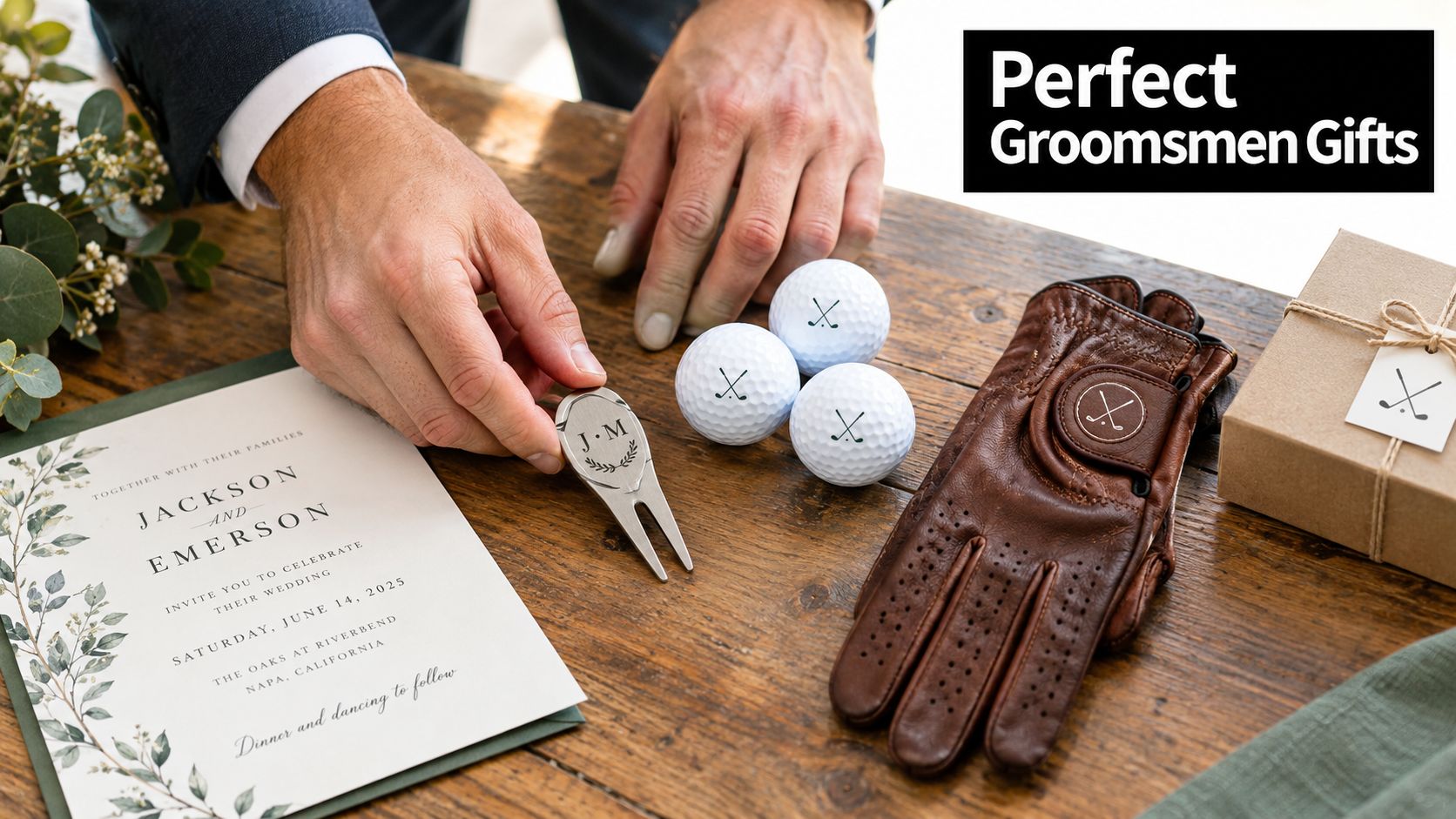
A golf gift for a goursman works best when it feels useful on the course and fitting for the occasion. The common mistake is buying something decorative that won't ever leave the drawer. The better route is to pick an accessory that can be used on a round, then personalize it enough to feel like a wedding gift instead of a pro-shop purchase.
Match the gift to the player, not just the event
A divot tool, ball marker, glove, hat, or polished accessory set can work well because it belongs in the bag. If the group plays often, matching pieces make sense. If the group is mixed, keep the gift flexible so nobody ends up with something that doesn't fit their style or setup. Personalization helps, but only when it doesn't push the item into novelty territory.
The strongest groomsmen gifts usually do two things at once. They're functional on the course, and they feel deliberate off it. That's why a personalized marker or a clean, understated accessory often lands better than something oversized or overly themed. If you need examples of presentation-friendly ideas beyond golf.
Keep the set coherent
Matching doesn't have to mean identical. A group can stay coordinated through color, finish, or material. Metal markers, leather details, and simple embroidery tend to age better than flashy one-off pieces. In golf, that restraint usually reads as sharper.
One more thing matters here. Gifts for golfers work better when they're immediately usable. If the item goes straight from the box to the bag, you've done it right. If it needs explanation, you probably overthought it.
Bulk Buying and Wholesale Strategies for Groups
When you're buying for a team, league, or wedding party, consistency matters as much as price. One person's random purchase might work for a single round, but groups need repeated looks, repeatable sizing, and fewer surprises when the delivery shows up. That's where bulk buying starts to make sense.
Uniformity beats scattershot shopping
Golf groups look better when the accessories line up. Same color family, same logo treatment, same finish on markers or belts, same feel across the board. That isn't about being flashy. It's about avoiding the mismatch that happens when everyone buys separately and hopes it all coordinates later. For apparel-heavy orders, a wholesale path can simplify that problem, which is why a dedicated page like Tattoo Golf's wholesale golf polos can be a practical starting point for group outfitting.
The main advantage of bulk buying is control. You can coordinate sizes, lock in one style, and keep the group from splitting into three different looks. You also reduce the number of decisions each person has to make, which matters when you're organizing a tournament team or a wedding party with mixed tastes.
Think in use cases, not just unit cost
A group of players doesn't need the same accessory mix as a single golfer. Some groups need hats and shirts. Some need markers and tees. Some need a giftable accessory that all lands in the same lane. Buying in quantity makes the most sense when the item will be used often, worn in public, or handed out at one event.
The smart move is to order the things that won't become obsolete quickly. A plain, well-made accessory survives more rounds than a trend piece. If the group is large, the value isn't just in the per-item price. It's in not having to fix a mismatched order later.
Packaging and Presentation Tips for Golf Gifts
A golf gift feels more complete when it's packed like one. Tossing a marker or glove into a generic bag is fine if you're in a hurry, but presentation changes the first impression. It tells the recipient that the gift was planned, not grabbed.
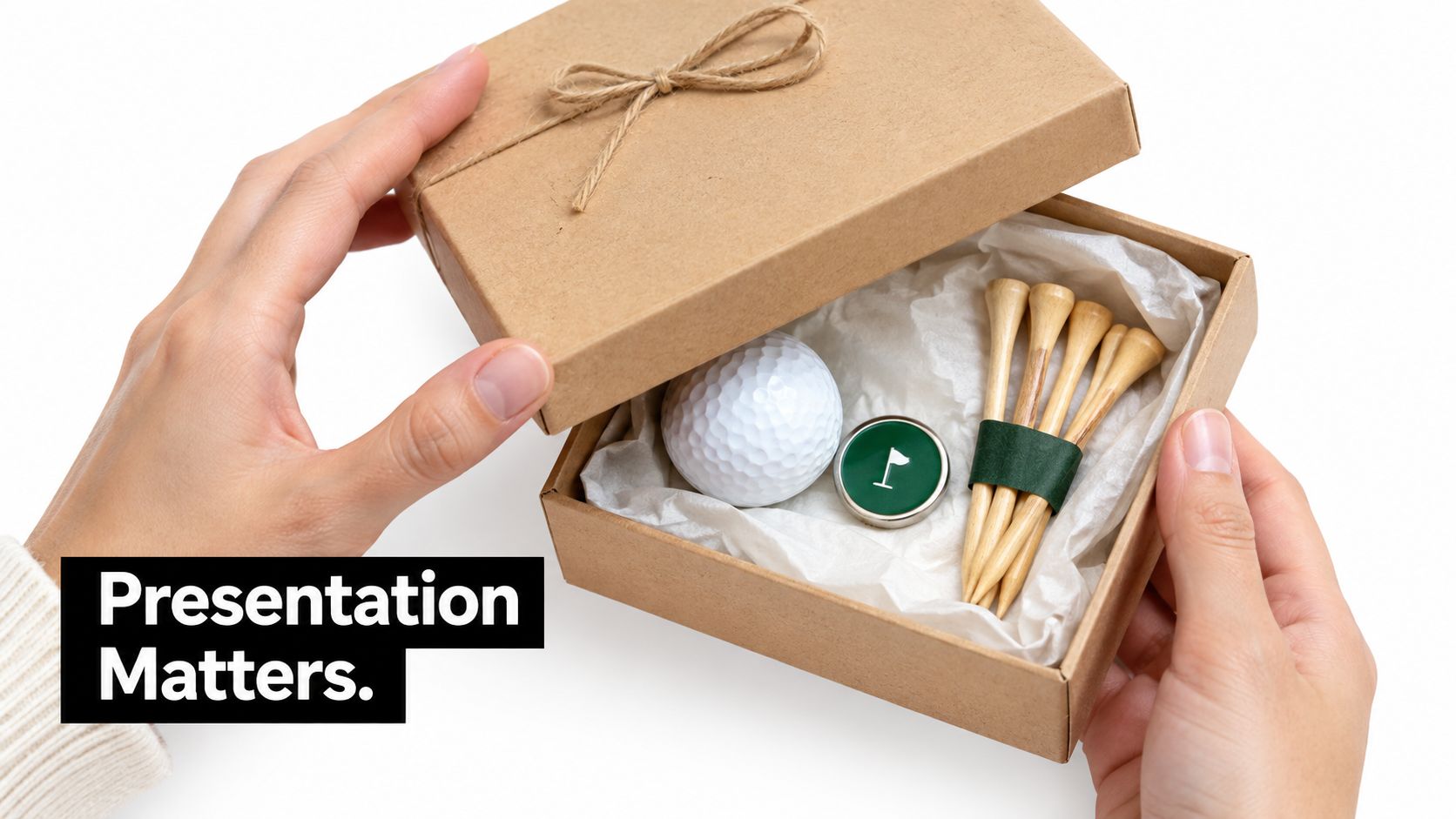
Build the box around a simple order
Start with the item the person will use most often, then layer the smaller pieces around it. A ball marker, tees, and a glove fit well together because they take up little space and photograph nicely. If you're adding a towel, hat, or small apparel item, fold it cleanly so the box doesn't look stuffed.
Keep the packaging aligned with the golfer's style. Clean and minimal works better for a practical player. Brighter wrapping can work for a more expressive player, especially if the actual accessories carry a bold look. The point is to make the unboxing feel intentional without burying the gift under too much filler.
Let the accessory stay visible
Don't overwrap useful items. Golf gifts should look easy to grab and use. A clear arrangement inside the box lets the recipient see the marker, tees, or ball immediately, which makes the gift feel more complete from the start. That's especially helpful if you're giving the same kind of accessory to multiple people and want each box to feel matched.
A good package says the same thing a good round does, nothing wasted. Keep the materials clean, the arrangement simple, and the contents practical. That's enough.
Final Thoughts on Building Your Golf Accessory Kit
The right golf accessory kit starts with the rules, not the shopping list. Balls, tees, a glove, and a legal club setup come first because they're tied directly to play. From there, the smart money goes to the items that help your game survive real conditions, a clean towel, a marker, a divot tool, and weather-proof comfort pieces that you'll use on every round.
The mistake most golfers make is buying accessories as if every round were identical. It isn't. A beginner needs less clutter and fewer decisions. A more serious player needs faster access, better grip control, and tools that match the day. That's why the best kit is usually the one that trims away the noise.
Style still matters. Golfers care about how they look because golf is a visible game, and accessories are part of that expression. But style should sit on top of function, not replace it. A bold hat or a themed marker is fine if it still does the job when the round gets hot, wet, or long.
Use the hierarchy as a filter. If an item helps you tee off, keep score, stay dry, or avoid slowing the group, it belongs somewhere in the bag. If it only looks clever, think twice. That's the difference between a bag that's packed for a photo and one that's packed for a round.
If you want golf gear that mixes performance with personality, Tattoo Golf makes apparel and accessories built for players who want a little more attitude in the bag. Visit Tattoo Golf to see hats, gloves, polos, and course-ready accessories that fit this exact mindset.


Share:
Golf Cold Weather Clothing: Layering for Cold Rounds