

The most popular golf-short advice starts with inseam length. That's backwards. A hem that looks right won't save a waistband that shifts during rotation, a rise that pinches at address, or fabric that fights you when you bend over a putt. Fit and movement come first. Style decides whether the result looks intentional.
How to choose golf shorts that fit and move with you comes down to reading the garment as part of your swing, not as a static item on a hanger. You need a stable waist, a clean line near the knee, fabric that stretches in every direction, and enough personality to avoid looking like you borrowed a uniform from the clubhouse lost-and-found.
Why Golf Shorts Must Perform as Hard as You Do
The old idea that golf clothing should feel stiff, formal, and slightly uncomfortable has run its course. A golf swing asks your hips, legs, and torso to rotate, bend, brace, and recover. Shorts that restrict those movements aren't traditional. They're badly designed for the game.
Modern golf shorts have moved from structured woven styles toward performance-first construction, with four-way stretch, moisture management, quick drying, breathability, and crease resistance now treated as core features across major golf buying guides.
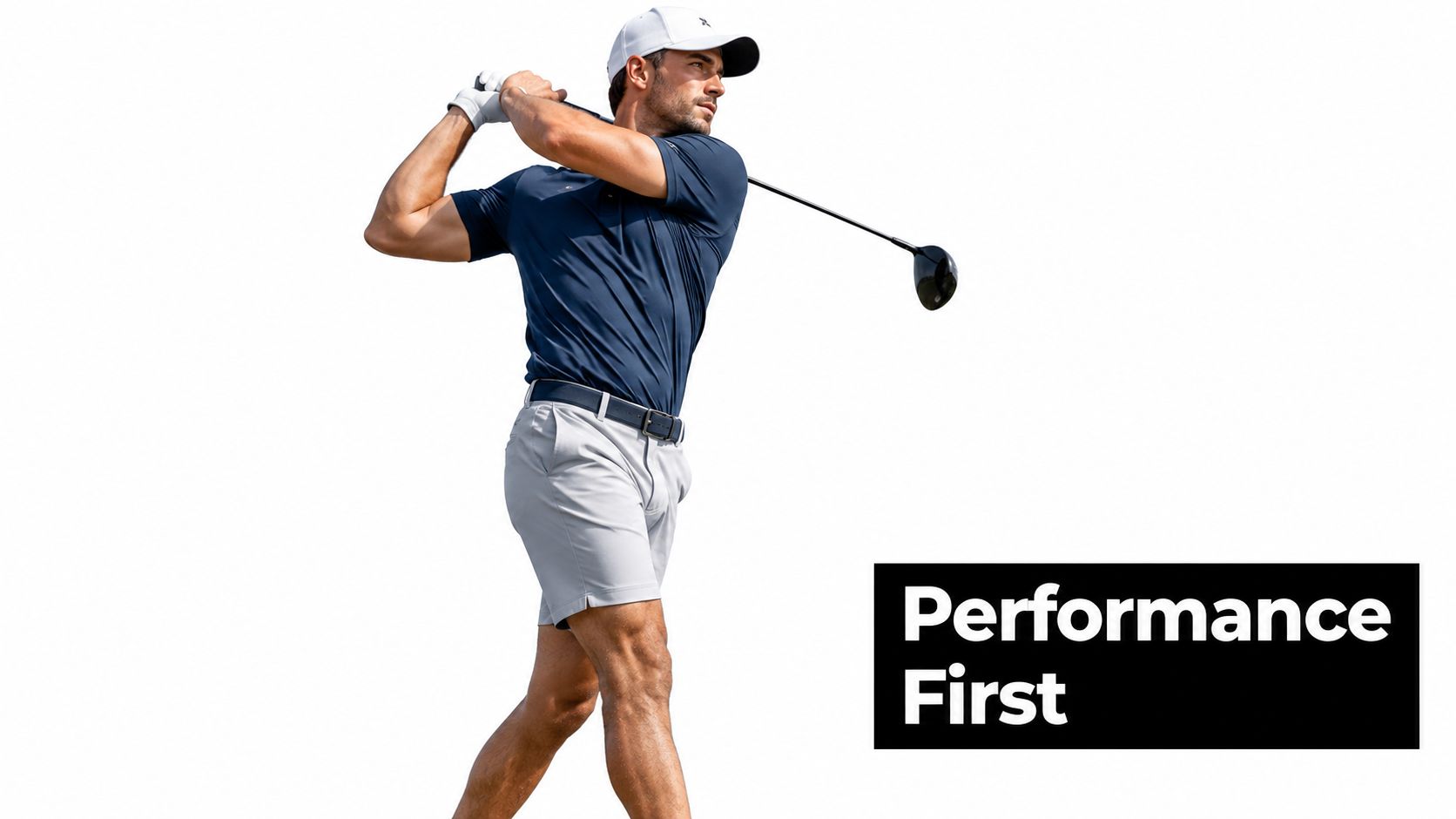
A better definition of proper fit
A pair fits when it stays out of your way. The waistband should sit securely without digging into your sides. The seat shouldn't pull when you squat. The thighs need room to move, but excess fabric creates drag and makes the silhouette look sloppy. The hem should finish just above the knee.
Length still matters, but it's only one part of the decision. Two pairs with the same inseam can feel completely different because their rise, waistband, leg opening, and fabric recovery aren't the same. That's why a simple “choose this length” rule fails so many golfers.
My fitting rule: If you adjust your shorts before every shot, the problem isn't your swing. The shorts are wrong.
Your clothes should show up with a point of view
Performance doesn't require anonymous styling. A dark short can look sharp with a bright polo. A bold print can bring energy to an otherwise clean outfit. Your clothing should support how you play and how you want to be seen, whether that means understated control or a little more noise on the first tee.
The best golf shorts combine freedom of movement with deliberate shape. They let you walk, rotate, squat, and finish your swing without making you look like you've abandoned structure altogether. That balance is where modern golf apparel earns its place.
Understanding Stretch and Movement in Golf Shorts
Stretch isn't a decorative feature. It determines whether your shorts cooperate when your body changes direction. Golf demands movement along several planes, so the first question to ask is whether the fabric offers two-way or four-way stretch.
Two-way stretch flexes along one direction. Four-way stretch extends lengthwise and crosswise, which makes it better suited to hip rotation, squatting, bending, and walking.
Test the fabric before trusting the label
Use a simple evaluation process:
- Pull across the thigh. The fabric should give without feeling thin or fragile.
- Pull lengthwise. A short that stretches only across your legs may still bind when you crouch.
- Rotate at the hips. Step into your golf stance and turn as if you're making a backswing.
- Check recovery. The material should return to its original shape instead of staying stretched around the seat or thighs.
- Look at the waistband. Stretch through the body won't help if the waistband remains rigid and cuts into you.
Spandex or elastane in the blend usually signals added flexibility, but the label alone isn't enough. A close-fitting short can still feel restrictive if the rise is wrong or the waistband lacks give. Buy the size that fits cleanly at rest, then expect the stretch to support your movement rather than compensate for poor sizing.
For a practical breakdown of why this matters over a full round, read Tattoo Golf's guide to stretch golf shorts.
Use recovery as your quality check
High elongation without recovery creates bagging. Industry textile guidance uses at least 15% to 20% stretch in both warp and weft directions, paired with 95% or better stretch recovery within 30 minutes after tension release, as a performance benchmark for golf-wear fabrics
You don't need laboratory equipment to apply the principle. Sit, stand, squat, and inspect the fabric. If the seat or thighs stay visibly distorted, the shorts may feel flexible at first but won't maintain a sharp fit through repeated wear.
Fabric Choices That Keep You Cool and Dry
Cotton can feel comfortable at the start of a round, but sweat changes the equation. Traditional cotton shorts tend to hold moisture close to the body, while modern synthetic blends move moisture toward the surface so it can evaporate more readily. That difference becomes obvious during a hot walk, a humid afternoon, or any round where the weather refuses to cooperate.
Polyester-spandex blends have become a common performance choice because they combine stretch, moisture management, quick drying, lightweight construction, and shape retention. Nylon blends can also perform well, particularly when you want a light hand feel and fast drying. The point isn't to chase the newest fabric name. It's to choose a construction that handles heat without becoming heavy or clingy.
What moisture-wicking actually does
Moisture-wicking fabric pulls sweat away from the skin and spreads it across the outer surface, where air can help it evaporate. It doesn't stop you from sweating. It makes the sweat less disruptive.
This explanation of moisture-wicking fabric is useful because it separates the mechanism from the marketing language. Look for a fabric that feels light, dries quickly, and doesn't cling around the seat or upper legs after activity.
| Fabric priority | What it contributes | What to watch for |
|---|---|---|
| Four-way stretch | Easier rotation, bending, and walking | Stretch without recovery |
| Moisture management | Less wetness against the skin | Fabric that feels coated or clammy |
| Quick drying | Faster comfort after sweat or light moisture | Thin fabric with weak structure |
| Crease resistance | A cleaner look through travel and play | Excess stiffness |
| Breathability | Better airflow in heat | Loose weave that lacks durability |
Choose performance without losing structure
A short that dries quickly but collapses around your legs isn't a complete solution. The best fabric choices keep enough structure to maintain a polished silhouette while still moving naturally. Lightweight materials, breathable construction, and crease resistance help the garment transition from the first tee to the clubhouse without looking beaten up.
Cotton still has a place in casual wear. For serious time on the course, though, moisture control and stretch are no longer niche upgrades. They're the baseline features that make golf shorts practical in changing weather and over long periods of movement.
Style Meets Performance and the Tattoo Golf Approach
Performance gear doesn't need to look cautious. The strongest golf outfits make technical choices visible through color, graphics, and attitude instead of hiding them behind another anonymous khaki short.
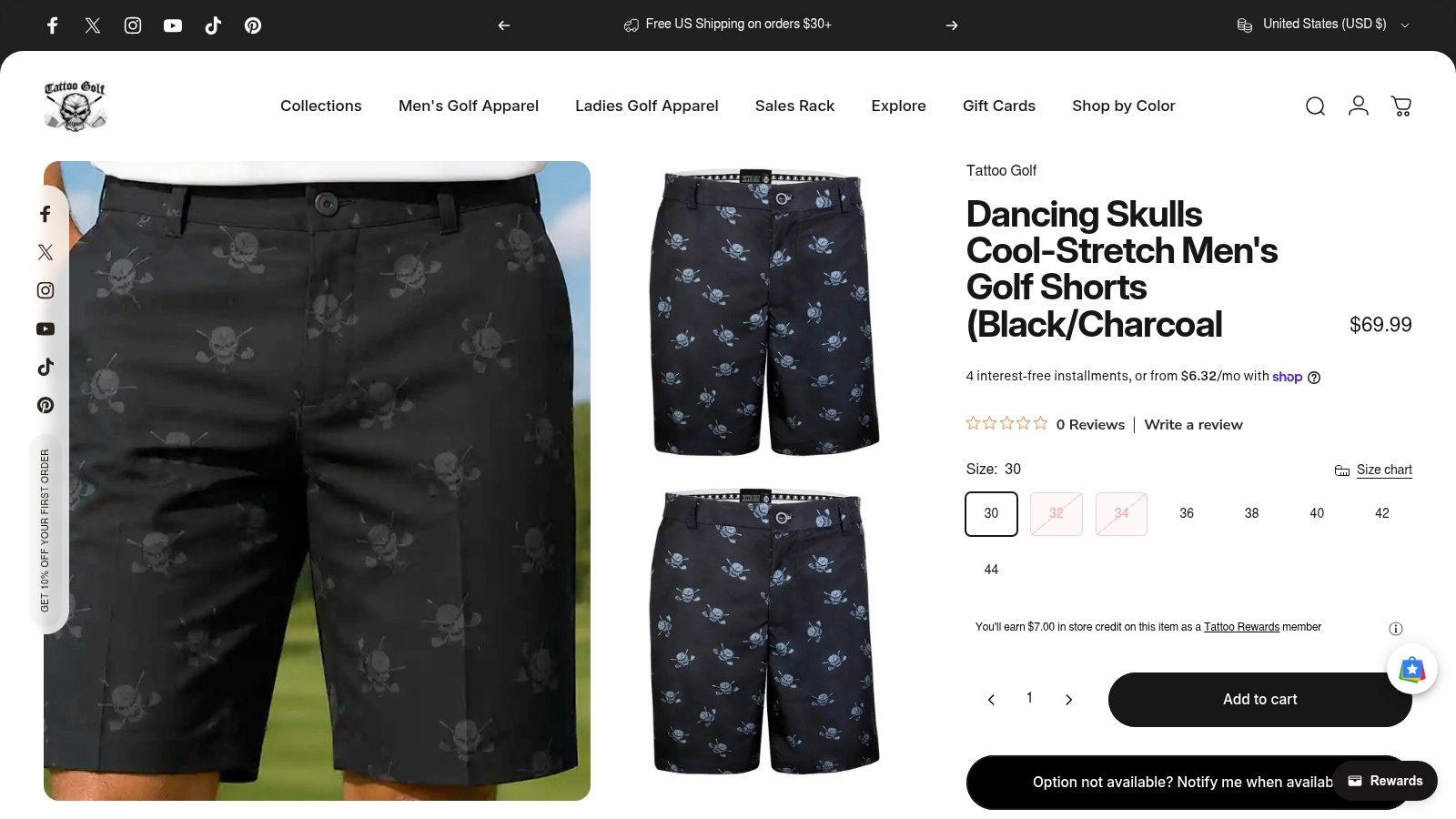
Tattoo Golf's Dancing Skulls Cool-Stretch Men's Golf Shorts show how a bold visual identity can share space with stretch construction and on-course practicality. The product presentation gives the pattern a clear point of view while keeping the garment positioned for golf movement. That combination matters because style isn't an afterthought. It affects whether you feel like yourself when you step onto the tee.
Technical details should support the statement
Features such as four-way stretch, moisture control, quick drying, breathable construction, and practical pocket placement solve real course problems. Bold graphics solve a different problem. They keep your outfit from disappearing into the same safe palette worn by every other golfer in the group.
The OB ProCool Golf Shorts occupy the performance-led side of that equation. A short like this makes sense for golfers who want a cleaner foundation, then prefer to bring personality through a polo, hat, belt, or coordinated accessory. The Dancing Skulls design takes the opposite route by making the shorts the visual anchor.
Both approaches work because the underlying rule stays the same:
- Choose the garment that leads. If the shorts carry a strong print, keep the polo controlled.
- Choose the garment that anchors. If the shorts are dark and restrained, let the top or accessories add energy.
- Protect the silhouette. A loud pattern still needs a clean waist, balanced rise, and controlled leg opening.
Treat the waistband as part of your identity
A waistband that shifts can untuck your polo and force you into constant adjustments. That isn't just irritating. It breaks the connection between how you look and how you play. Performance-oriented shorts with flexible waist construction let you rotate and bend without turning every movement into a wardrobe correction.
Style works best when it reflects intent. You don't need to wear a skull pattern to dress with personality, but you should stop treating course clothing as an obligation to look anonymous. Pick the cut that suits your frame, then choose color and graphics that make the outfit feel like yours.
Matching Your Golf Shorts with On-Course Outfits
Start with the shorts, then decide which piece gets the attention. If the shorts are patterned, pair them with a solid polo that repeats one color from the print. If the shorts are a dark solid, you can push more energy into the polo, belt, hat, or shoes without making the outfit feel chaotic.
Fit and style reinforce each other. A clean silhouette gives a bold pattern control. A relaxed but intentional cut keeps a brighter color from looking overly formal. The outfit should look assembled, not accidental.
Build the outfit in three passes
First, establish contrast. Dark shorts work with lighter polos, while light shorts benefit from a deeper top or stronger accessory. Tonal outfits can work too, but vary texture or shade so the clothing doesn't blur into one flat block.
Second, control pattern. One prominent pattern is usually enough. Dancing Skulls-style shorts need a quieter polo. A graphic polo can lead when the shorts are solid. Mixing patterns is possible, but repeat a color and keep the scales visibly different.
Third, finish the edges. Your belt, shoes, hat, and glove should support the palette rather than compete with it. A black belt and dark shoes can sharpen a vivid short. A neutral belt can calm a loud print. Small choices decide whether the outfit feels deliberate.
Let the polo set the mood
A polo can make the same pair of shorts read classic, aggressive, relaxed, or playful. Use a clean solid polo when you want the shorts to speak. Choose a graphic or stronger-colored polo when the shorts are providing restraint.
Tattoo Golf's guide to polo shirts is a useful reference for building the upper half of the outfit around performance and personality. Keep the shirt comfortable through the shoulders and chest, because a restrictive polo can undermine shorts that fit perfectly.
Style rule: Match one color, not every color. Coordination looks sharper than perfect duplication.
Course etiquette still matters, but it doesn't demand blandness. Keep the clothing neat, make sure the length looks intentional, and choose graphics that fit your setting. The result can be expressive without becoming careless.
Caring for Your Performance Golf Shorts
Technical fabric needs ordinary discipline. Heat, harsh chemicals, and rough washing can weaken stretch, dull prints, and distort the waistband long before the fabric itself looks worn out.
Start with the care label, then follow a conservative routine. Turn printed shorts inside out, close zippers and fasteners, and wash them in cold water with a mild detergent. Skip bleach and fabric softener. Bleach can damage color and fibers, while softener may leave a coating that interferes with moisture movement.
Wash for longevity
A simple care routine protects both the technical side and the visual side:
- Separate rough garments: Keep shorts away from abrasive towels, Velcro, and heavy hardware.
- Use a gentle cycle: Aggressive agitation adds unnecessary stress to stretch fibers and trims.
- Avoid bleach: Preserve the base color and printed details with a milder approach.
- Rinse thoroughly: Residual detergent can affect hand feel and leave fabric less comfortable.
- Turn graphics inward: Reduce friction against the machine and other garments.
The waistband deserves special attention. Repeated hot washing can reduce elasticity and encourage the fabric to lose its original shape. Cold water is the safer default when you want the shorts to remain stable through repeated wear.
Dry with less heat
Hang drying is the gentlest option. If you use a tumble dryer, choose low heat and remove the shorts promptly so they don't sit hot and compressed. High heat can stress elastic components, encourage shrinkage, and affect the finish of bold prints.
Don't iron directly over graphics or trims. If wrinkles appear, use a low-temperature setting from the reverse side, or let the shorts hang in a steamy bathroom while you prepare for the round. Store them folded or on a hanger without crushing the waistband.
Care won't fix a poor garment, but it can preserve a good one. Protect the stretch, keep the prints away from abrasion, and the shorts will maintain the fit that made them worth buying.
Your Game with the Right Shorts
The right shorts don't produce a better swing by themselves. They remove avoidable distractions. A stable waistband lets you settle into address. A flexible seat allows you to squat and read a putt without tugging. A breathable, quick-drying fabric keeps the garment from becoming the thing you notice on a warm day.
That makes choosing golf shorts a performance decision, but it also makes it a style decision. Your clothes establish how you want to show up before you hit a shot. Bland isn't the same as polished, and bold isn't the same as careless.
Use this final fitting test
Before buying or keeping a pair, check the following:
- Waist: It stays secure without pinching or sliding.
- Rise: It feels natural when you address the ball and sit down.
- Thigh: You can rotate and squat without pulling.
- Hem: It finishes just above the knee and suits your proportions.
- Fabric: It offers four-way movement, moisture management, and quick drying.
- Recovery: It returns to shape after tension rather than bagging.
- Style: The color or pattern reflects how you want to look on the course.
The most overlooked decision is the waistband. A secure waistband can also help keep your shirt tucked, which improves both comfort and presentation.
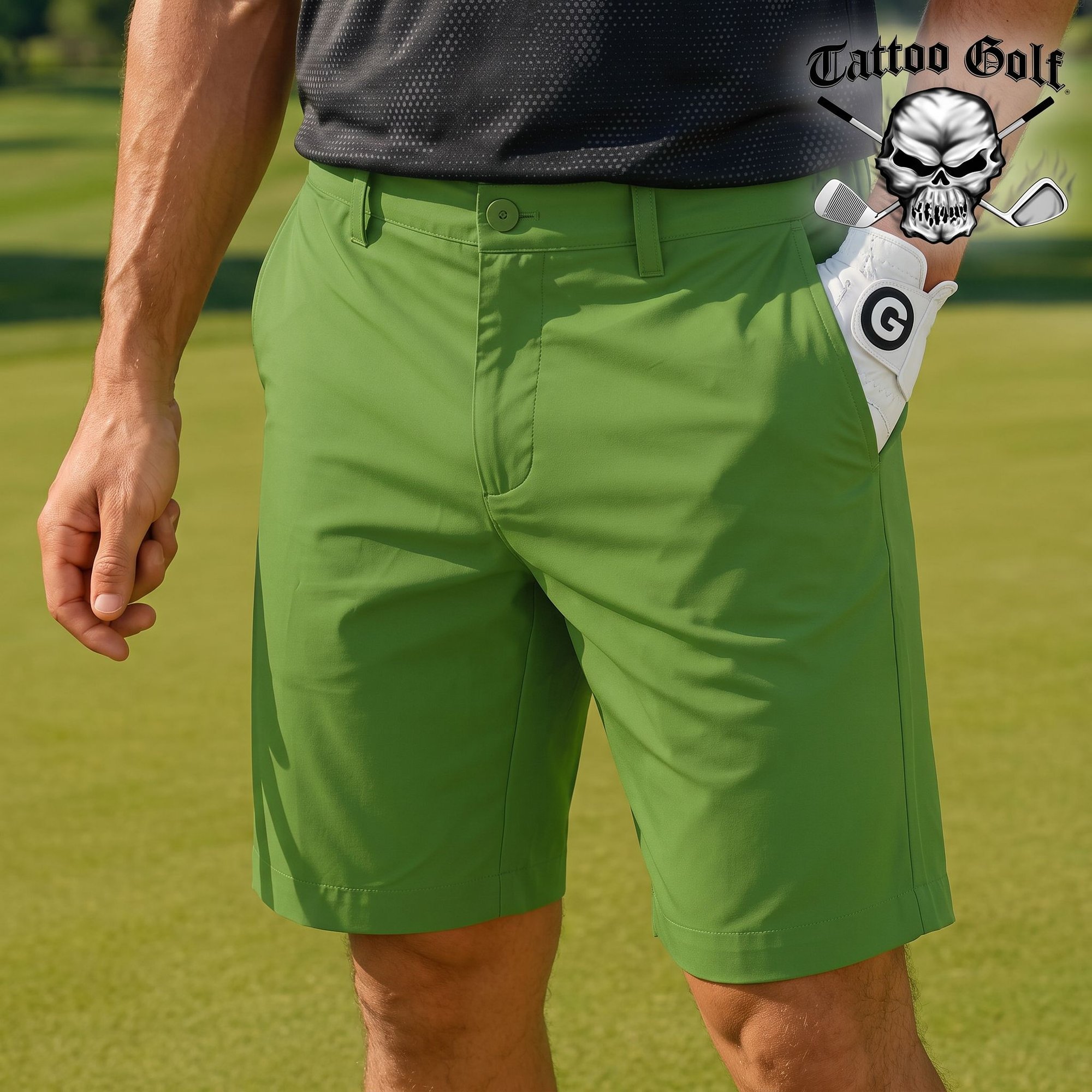
Choose shorts that let you move without surrendering shape. Choose fabric that handles heat without holding onto sweat. Then choose a color, print, or detail that makes the outfit unmistakably yours. The best pair supports your game and gives your style somewhere to land.
Tattoo Golf offers performance golf shorts, including stretch-focused designs and bold prints, alongside polos, hats, belts, and coordinated golf apparel. Visit Tattoo Golf to find a pair that stays mobile through your swing and makes a stronger statement on the course.
Share:
What Golf Accessories Do You Need for a Round? Essentials