
Most golf courses expect women to wear a collared top, well-fitted bottoms of modest length, and golf-style footwear, but each course sets its own dress code, so confirm it before you arrive.
That doesn't mean your outfit has to look old-fashioned. In a 2025 Opinium survey, 82% of women golfers preferred modern golf clothing styles over older golf attire, according to Opinium. The practical challenge is separating personal style from garment requirements: a bold print may be acceptable where a plain athletic tank isn't.
Understanding women's golf clothes rules starts with a reliable baseline, then a quick check of the destination's actual policy.
Typical Women's Golf Dress Code at a Glance
A collared performance polo with fitted shorts, trousers, or a conservative skort is a low-risk starting point. Choose clean golf-style footwear, and you've covered the categories staff are most likely to check.
Use this table to pack, and check any published policy before you travel.
Typical women's golf dress code by garment category
| Category | Commonly accepted | Commonly rejected |
|---|---|---|
| Tops | Collared polo or performance shirt; fitted sleeveless collared shirt; quarter-zip with a collar | Tank tops, halter tops, tops exposing the midriff, collarless racerbacks, bathing tops |
| Bottoms | Straight-cut shorts of modest length; golf skorts; golf skirts of appropriate length; pressed trousers or golf pants | Denim, cut-off shorts, gym or running shorts, short shorts, leggings worn alone, joggers |
| Footwear | Golf shoes with soft spikes or spikeless rubber soles; clean athletic golf shoes | Sandals, flip-flops, beach shoes, and other non-golf footwear where the venue bans them |
| Outerwear and accessories | Collared layers, windbreakers, visors and caps, belts | Offensive graphics, visible undergarments, anything the venue lists as off-limits |
These distinctions still matter to many players. In 2025, 71.9% of 3,250 golfers surveyed by National Club Golfer considered club dress codes important or very important, according to National Club Golfer.
Read each row as a default, not a verdict. A relaxed public facility may permit something a private club refuses, while a competition may impose additional requirements on top of the everyday code. The left column works almost everywhere; the venue's own policy decides the rest. A two-minute check of the course website, or a quick call to the pro shop, settles any doubt before you pack. The course's written policy takes priority over this baseline.
Acceptable Tops, Collars and Sleeves
Start with the collar, rather than the logo or fabric. A regular fold-down collar is the simplest choice for an unfamiliar venue; mock collars and quarter-zip golf tops need to match whatever wording the course uses.
Next, distinguish a sleeveless golf shirt from a tank top. A structured sleeveless shirt with a collar can satisfy a policy that excludes gym-style tanks, but a venue that requires sleeves won't necessarily accept it. Shoulder coverage and armhole construction deserve a look, too, especially if undergarments become visible when you rotate.
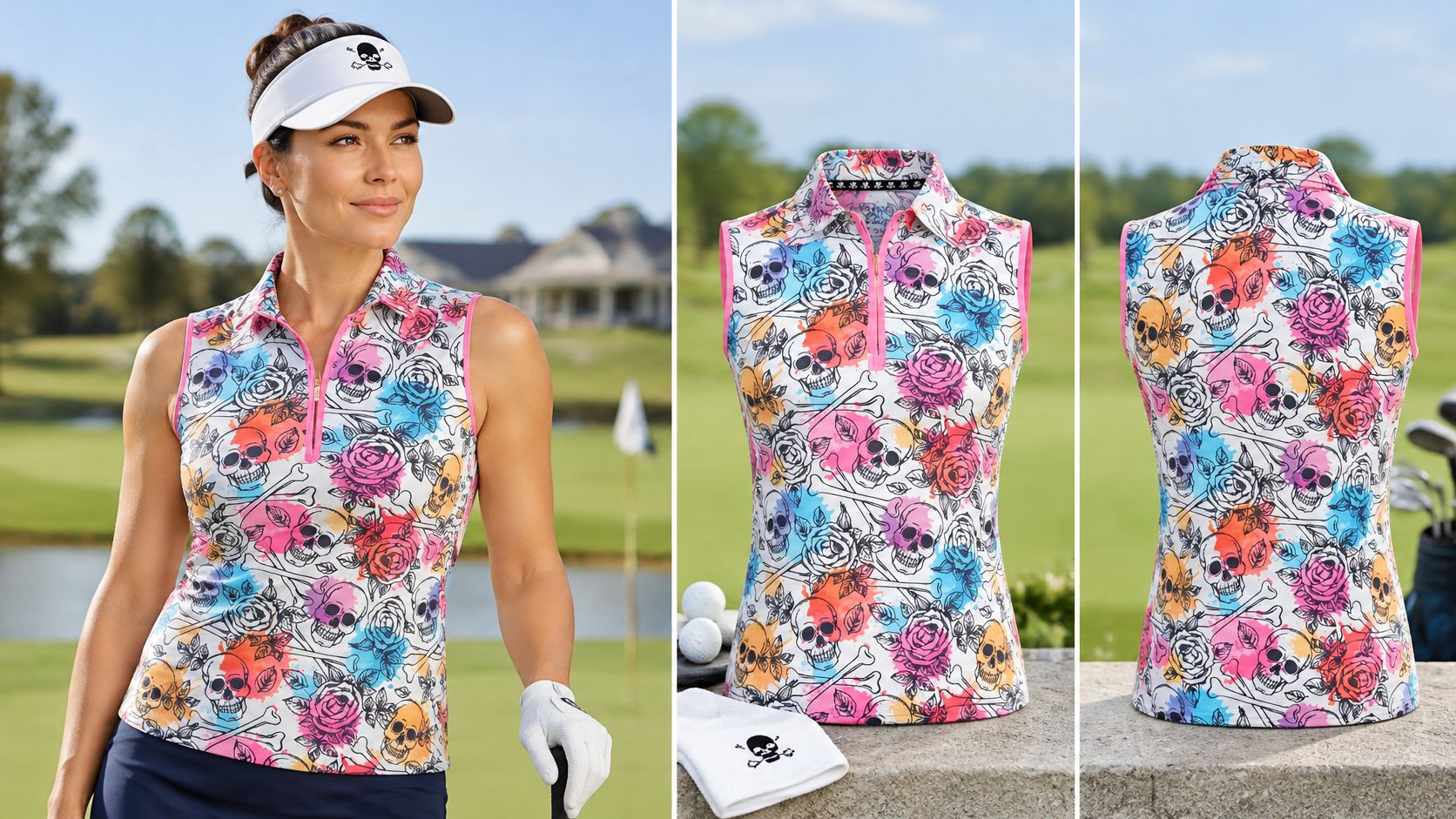
Check coverage before fabric claims
Look at the neckline while leaning forward, not just standing upright. A top that stays closed at rest may gape at address, and a short hem may lift during the follow-through. Plunging necklines, bathing-style tops, and exposed midriffs are common refusal risks.
Try this fitting-room sequence:
- Raise your arms. Check whether the hem lifts away from your waistband.
- Take your address position. Look for neckline gaps and exposed undergarments.
- Rotate through a practice swing. Make sure the shoulders move freely without pulling the shirt upward.
- Check the collar requirement. A zip opening doesn't automatically make a collarless top compliant.
For a closer look at different cuts, our guide to golf shirts for women can help you compare silhouettes.
Separate comfort features from swing assistance
Performance fabric isn't the same thing as prohibited equipment. The USGA Equipment Rules guidance on Rule 4.3 permits ordinary compression clothing, including sports bras and shaping or posture garments, but distinguishes it from features designed to store and release energy, alter movement, or assist alignment.
That means moisture management, stretch, and ordinary support aren't the central concern. Spring-like panels or built-in alignment aids intended to help make a stroke raise a different question.
Practical rule: Choose fabric for comfort, then check the garment's cut against the venue's policy. Neither performance technology nor a golf label guarantees admission.
Shorts, Skorts, Skirts and Length
Test every bottom in motion before you decide it works. Take your address position, turn into a backswing, finish the swing, bend to retrieve a ball, and walk across the room. Watch for a waistband that drops, a hem that climbs, or undershorts that become exposed.
Standing length alone can be misleading. Two garments with similar hems can behave differently because of their rise, stretch, skirt shape, and fit through the hips. A skirt that measures perfectly on a hanger works like a shoe that fits while you are sitting down: the true test is movement. Choose the one that stays in place without repeated adjustment.
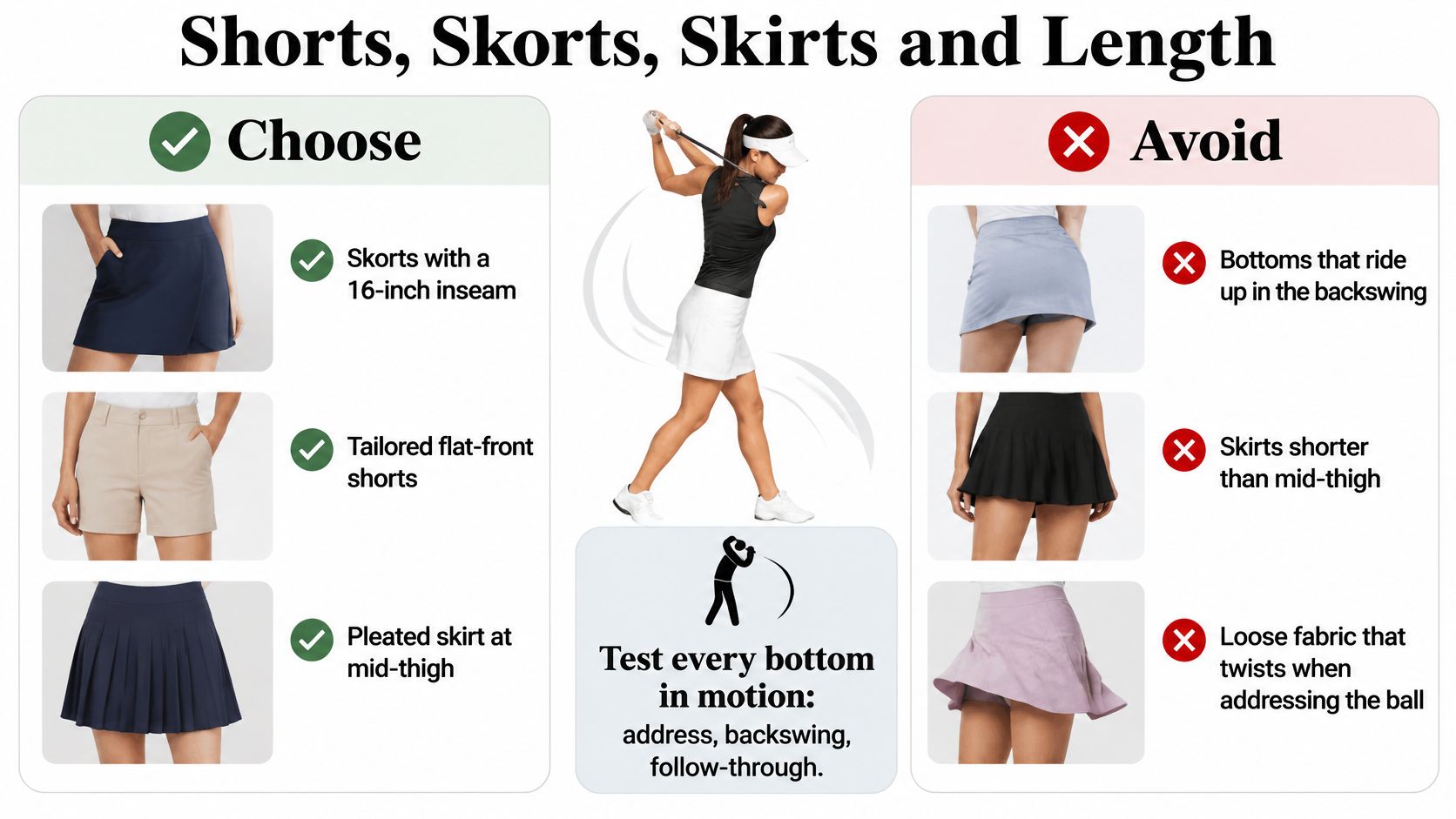
Use the illustration as a styling aid. Any garment measurement shown in a visual still has to match the course's own wording.
Use the competition benchmark carefully
The LPGA's 2026 Qualifying Series regulations call for clean, neat clothing and shoes, an appropriate length for shorts, skirts, and skorts, and no visible undergarments, while prohibiting denim bottoms, cut-off shorts, and gym shorts. They establish no universal inseam that recreational golfers can apply everywhere.
Treat that language as a conservative benchmark. A club can apply its own measured length requirement or interpret acceptable categories differently, and the venue scenarios later in this guide show how similar wording gets applied in practice.
For shopping and packing, separate the decisions:
- Garment category. Well-fitting shorts, golf trousers, skirts, and skorts are safer starting points than gym shorts or denim.
- Coverage during movement. Check both the outer hem and any built-in liner.
- Venue-specific restrictions. Confirm joggers and leggings explicitly rather than assuming technical fabric makes them acceptable.
Leggings worn beneath shorts or a skort can be permitted where leggings alone are not, so ask whether the venue allows the combination before you rely on it.
Our guide to women's golf shorts compares practical bottom options. When trying them on, load the pockets as you would for a round, since a phone or a ball can pull lightweight fabric out of position.
Because every club sets its own length rules, a two-minute check settles the question. Search the course website for its dress code page, then call the pro shop and ask specifically about inseam requirements, joggers, and leggings.
A bottom you can swing, walk, and bend in without adjusting is a better choice than one that looks compliant only in the mirror.
Footwear and Accessories Courses Check
Golf shoes with soft spikes or spikeless rubber soles are the simplest footwear choice for an unfamiliar course. Don't assume that any shoe resembling a trainer qualifies as a golf shoe. If you plan to wear running shoes, ask whether the facility accepts clean athletic footwear or requires golf-specific shoes.
Sandals, flip-flops, and beach shoes carry a greater refusal risk. Check the permitted sole type as well, especially if you're borrowing older golf shoes. Clean the soles before packing so you aren't bringing mud or debris onto the property.
Check small items and indoor requirements
Caps, visors, belts, and gloves are usually straightforward, but graphics and indoor etiquette can create separate issues. A hat may be acceptable outdoors yet need to come off in a dining room. A graphic that meets your usual course's policy might not meet another venue's wording.
Use this short packing check:
- Shoes. Confirm the shoe category and sole type, not just whether trainers look tidy.
- Headwear and graphics. Read restrictions on imagery and ask about indoor hat rules.
- Layers. Choose a windbreaker or quarter-zip that allows a full swing, with a compliant shirt underneath.
- Clubhouse clothing. Ask whether golf shoes are permitted inside and whether dining requires a change.
A jacket shouldn't be your only solution to a non-compliant shirt. You may need to remove it as the weather warms, so make sure the outfit underneath works independently.
Our golf accessories guide can help you organize the smaller pieces of your kit. For a stricter venue, pack spare golf-style shoes and any indoor footwear the club requests. Resolving that question at home is easier than trying to replace shoes immediately before your tee time.
Real Venue Scenarios and What They Decided
These cases are hypothetical worked examples that show how a clear policy changes the outcome, even when both golfers consider themselves dressed for sport.
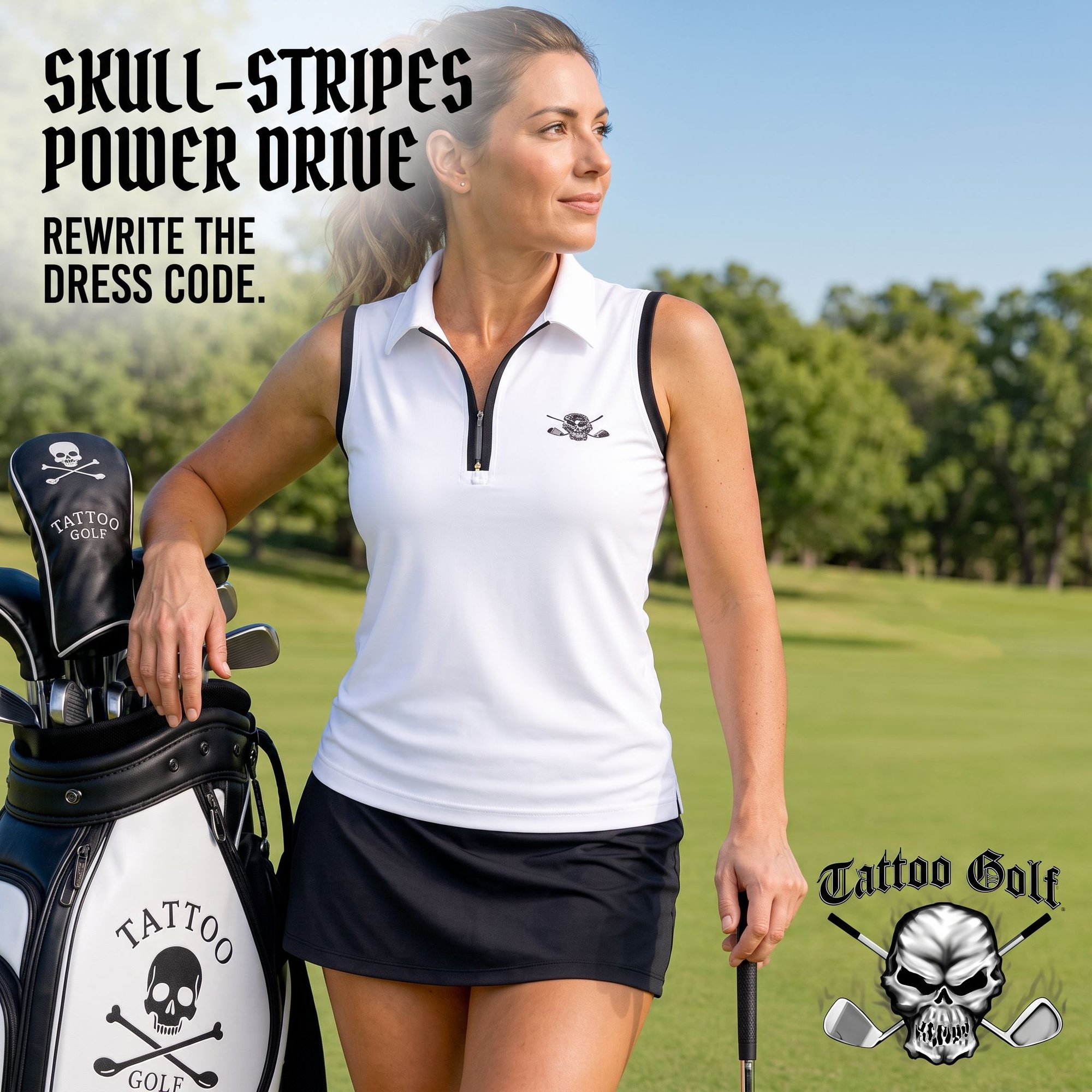
Resort and private-club examples
At a resort course, say a golfer arrives in a bold printed sleeveless collared shirt and neat shorts. If the policy allows sleeveless collared tops, the shorts meet its length requirement, and the graphics aren't prohibited, the outfit passes. Bright colors alone don't create a dress-code violation.
At a private club, say the published policy requires collared shirts and neat bottoms, with denim expressly excluded. A golfer arrives in a collarless tank and jeans. Staff refuse the outfit because it conflicts with those garment rules, not because the golfer lacks expensive clothing or a traditional color palette.
The useful response is to identify the exact conflict and change the relevant pieces. Swap the jeans for golf trousers or a skort, and add a collared top, and the same golfer walks through the same door.
The professional-event example
Professional competition adds a separate enforcement framework. In July 2017, the LPGA introduced restrictions covering plunging necklines, leggings unless beneath shorts or a skort, joggers, workout clothing, and jeans inside the ropes; the first violation carried a $1,000 fine, with penalties doubling for repeat violations, according to CBS News. The specifics echoed the collar, length, and coverage checks described in the tops and bottoms sections above, applied with event-level consequences.
How the same outfits fared at different venues
| Venue | Outfit | Verdict |
|---|---|---|
| Resort course | Bold printed sleeveless collared shirt with fitted shorts | Passes unless the print is offensive or the venue bans sleeveless tops, provided the shorts meet its policy |
| Private club | Collarless tank top with denim | Refused under the scenario's policy requiring collared tops with trousers or fitted shorts |
| Professional event under the historical LPGA policy | Plunging neckline, leggings alone, or jeans inside the ropes | Prohibited, with escalating financial penalties |
That 2017 policy has since been revised, so competitors should read their event's current player regulations rather than rely on historical wording.
The shared lesson is apply the policy for the place and activity you're attending. A televised tournament, resort round, and private-club invitation aren't interchangeable dress-code settings.
Confirm Each Course's Dress Code Before You Play
Dress requirements come from each venue's policy, not from a universal rule in the Rules of Golf. Clubs, courses, leagues, and tournament organizers set these requirements individually; Golf Lounge's dress-code guidance illustrates how a facility can permit finished sleeveless shirts while excluding bathing tops, offensive graphics, and non-golf footwear.
Local variation isn't new. A 1984 report described dress regulations at public and private courses, with stricter enforcement generally associated with more prestigious clubs, according to The Christian Science Monitor. That history explains why two neighboring venues can hold different expectations today. It tells you nothing about what your course requires this weekend, which is why the only reliable answer comes from the destination itself.
Verify the actual destination
Start by identifying what you're visiting: a private club, municipal or public course, standalone driving range, league match, or competition. Don't rank strictness by the name alone. A range attached to a private club may follow that club's policy, while a tournament held at a public course may add event-specific requirements on top of the everyday ones.
Then verify the details:
- Read the full published policy. Search the course website's visitor, guest-information, or dress-code pages. Read exceptions and restrictions, not just the opening sentence.
- Call the pro shop with specific questions. Ask whether your sleeveless top, shorts length, leggings combination, graphics, and shoes are permitted. If necessary, ask whether you can email a photograph.
- Separate course and clubhouse requirements. Check practice areas, dining rooms, shoe-changing arrangements, and any restrictions for guests who aren't playing.
- Clarify subjective wording. If the policy says an appropriate length without explaining it, ask staff what that means for the garment you intend to wear.
Objective questions are more useful than asking whether an outfit looks respectable. Ask about coverage, construction, length, and shoe type, rather than whether something suits a particular body shape.
Keep a phone checklist
Save a single line with your booking that runs through the checks from the earlier sections: collar style, sleeve permission, bottom length in motion, and permitted footwear. Then add two items those sections don't cover. Note any restrictions on graphics or wording, and note whether the clubhouse or dining room holds guests who aren't playing to a different standard.
Before leaving home: If the answers remain unclear, choose a collared performance polo, pressed trousers or conservative-length shorts or skort, and golf-style shoes. Pack a spare compliant layer rather than relying on an exception.
The baseline outfit above passes at the large majority of venues, and the checklist closes the gap where it doesn't. Our ladies' range includes golf shirts, hats, accessories, outfits, and couples matching shirts. Visit Tattoo Golf to explore options for your next round, then compare your chosen outfit with the destination's dress code before you pack.


Share:
Aloha Cool-Stretch Men's Hawaiian Golf Shirt - Purple Guide