
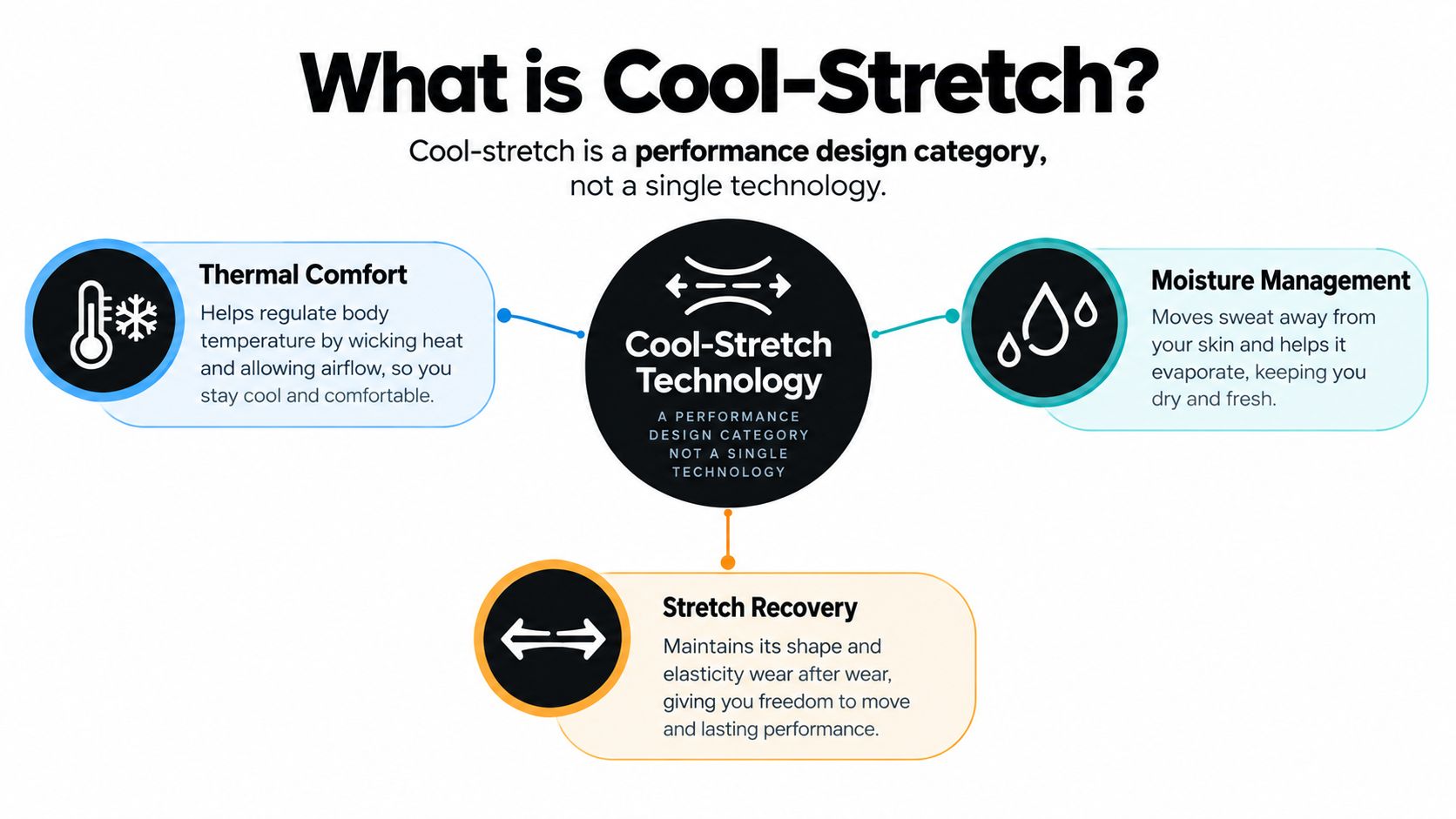
Most golfers shop for a cool-stretch golf shirt as if the label guarantees a single standard. It doesn't. The term points to a performance design category built around thermal comfort, moisture movement, and stretch for the swing, and the details inside that category can vary a lot from one shirt to the next.
That's why two shirts with the same marketing language can feel completely different on the course. One may manage sweat well but recover poorly after repeated swings. Another may stretch nicely but still trap heat if the knit, fit, or finishing is off.
Understanding What Cool-Stretch Means
A cool-stretch shirt is best understood as a system, not a fabric slogan. For golfers, that system has to manage sweat, keep air moving, and recover after repeated motion, because comfort changes once you start walking, rotating, and bending through a round. Textile research describes moisture management as the movement of liquid moisture from the skin, through clothing, and into the surrounding environment, and that process directly affects next-to-skin comfort research source%20183-188.pdf).
Why the label can mislead
The label can hide big differences in construction. Polyester is common in sportswear because of its moisture-transmission characteristics, but the knit and yarn setup matter just as much as fiber choice. Research on polyester-cotton plated knits found that trans-planar wicking increased when the inner and outer layers used yarns with a greater difference in linear density. That is a real performance difference, even when two shirts list similar materials.
Stretch follows the same pattern. It can come from elastane, often in small percentages, or from knitted construction that lets the fabric extend and recover. A 2023 study of stretch and moisture-management textiles reported strong performance from a fabric containing 56% polyamide, 39% polypropylene, and 5% elastane, while other tested fabrics used 2% or 6% elastane research source.
Practical rule: a cool-stretch tag tells you the shirt belongs in a performance category, not that it follows one universal recipe.
That is the buying filter I use. Check fiber percentages, knit geometry, yarn fineness, and finishing. Each one changes drying, breathability, and recovery. A shirt can feel fine on the hanger and still behave very differently once it is wet, warmed up, and under swing tension.
The Performance Technologies Behind Cool-Stretch Shirts
The performance equation starts with moisture transport. If sweat stays on the skin, the shirt will feel clammy no matter how soft it is. Wicking moves that liquid into the fabric structure, but the cooling effect only shows up once that moisture can evaporate.
Moisture management and drying
That distinction matters. Wicking is not cooling by itself, it's the setup for cooling. A shirt that moves sweat quickly but dries slowly may still feel heavy by the middle of the round, especially if the collar, placket, or underarm zones hold moisture. The shirt has to do both jobs, move liquid away and let it leave the fabric.
Stretch mechanics and swing freedom
Golf asks for repeated rotation, reach, and recovery. That's where stretch matters, because a shirt that fights the body creates friction and heat. A good golf polo extends enough across the shoulders and torso to let the swing happen naturally, then returns to shape without bagging out or twisting at the seams.
Knit structure and real-world comfort
Knit construction changes airflow and hand feel. A tighter structure can help with shape retention, while a more open structure may feel airier but can lose polish or dry differently when conditions change. If you want a deeper look at how a performance polo is put together, this performance polo breakdown is a useful companion read.
Practical rule: if a shirt stretches well but feels muggy after a few holes, the cooling claim is incomplete.
The best shirts balance movement, moisture transfer, and recovery. That's why you should treat the label as a starting point, then ask how the garment behaves when you're swinging, sweating, and walking.
How Different Fabrics Perform in Varied Conditions
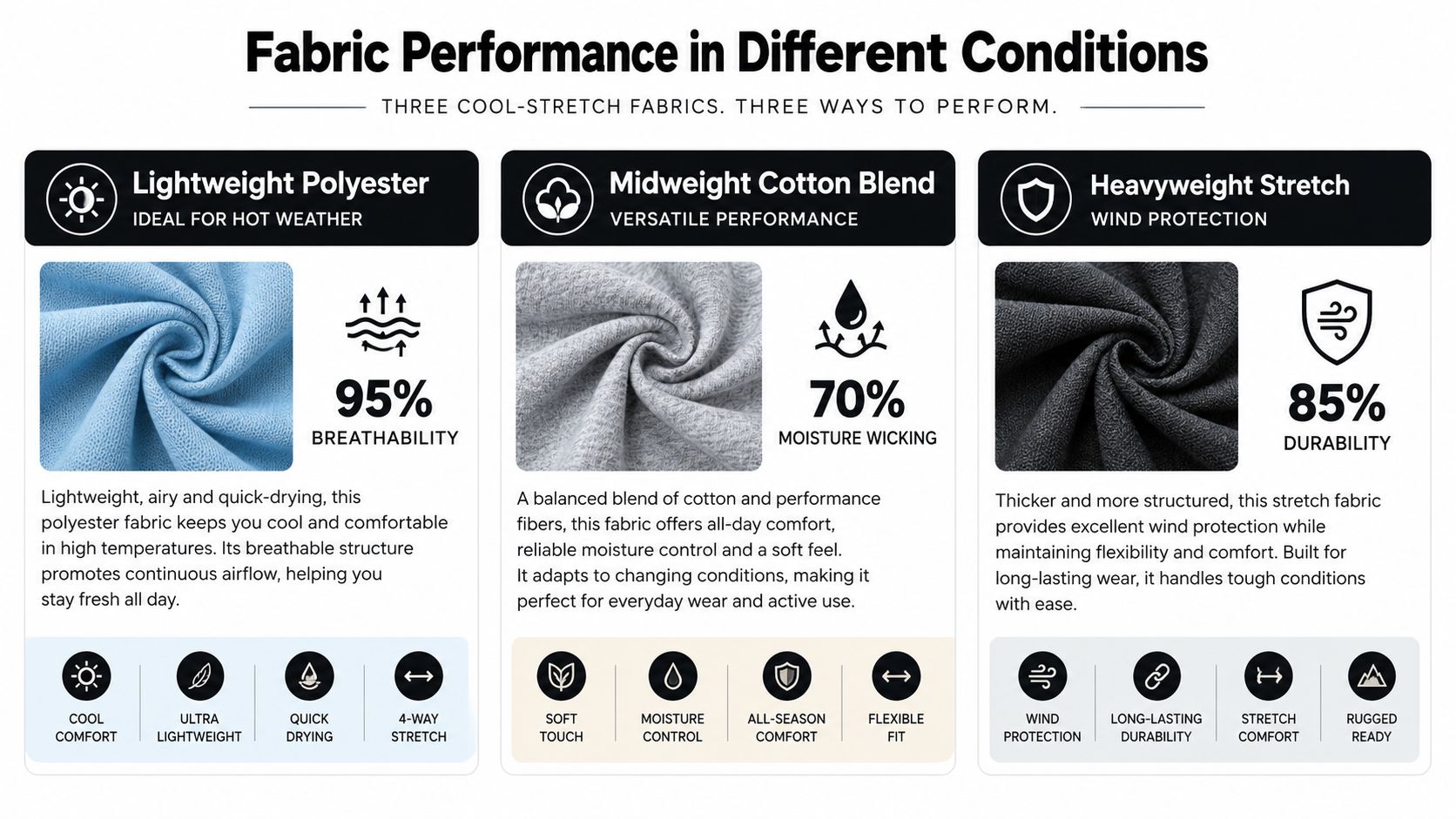
Different cool-stretch constructions shine in different weather. A lightweight polyester polo can feel ideal on a hot, dry day because it moves moisture efficiently and dries quickly. In humid weather, though, the same shirt may not feel as crisp if the air doesn't support evaporation.
Match the fabric to the round
A midweight blend can be more forgiving when temperatures shift, especially if you're playing early, finishing late, or dealing with a breeze that changes hole to hole. Heavier stretch fabrics usually trade some airy feel for structure, drape, and resistance to wear. That can be the better choice when the day demands more polish than max ventilation.
The practical takeaway is simple. Lightweight helps most when heat is the main issue. Midweight works when you want a little more versatility. Heavier stretch makes more sense when structure, coverage, or durability matter more than a barely-there feel.
A shirt that performs well in one setting can disappoint in another if you judge it by the wrong standard. That's why the question isn't “Which fabric is best?” It's “Which fabric matches my climate, my pace of play, and how much I move through the swing?”
If you want a plain-language explainer on fabric behavior, this moisture-wicking fabric guide is worth reading alongside product specs.
Practical rule: humid golf magnifies the difference between “moves sweat” and “feels cool.”
So the right construction depends on your round. Dry heat rewards faster evaporation. Mixed conditions reward better shape retention. Heavy play, cart paths, and repeated laundry cycles reward sturdier fabrics that don't lose their recovery quickly.
Evaluating Shirt Quality Beyond the Label
The tag won't tell you enough. A shirt can claim comfort and still have weak seams, a sloppy collar, or prints that crack after a few washes. I always look at the garment itself, because the construction usually tells the truth faster than the marketing.
What to check before you buy
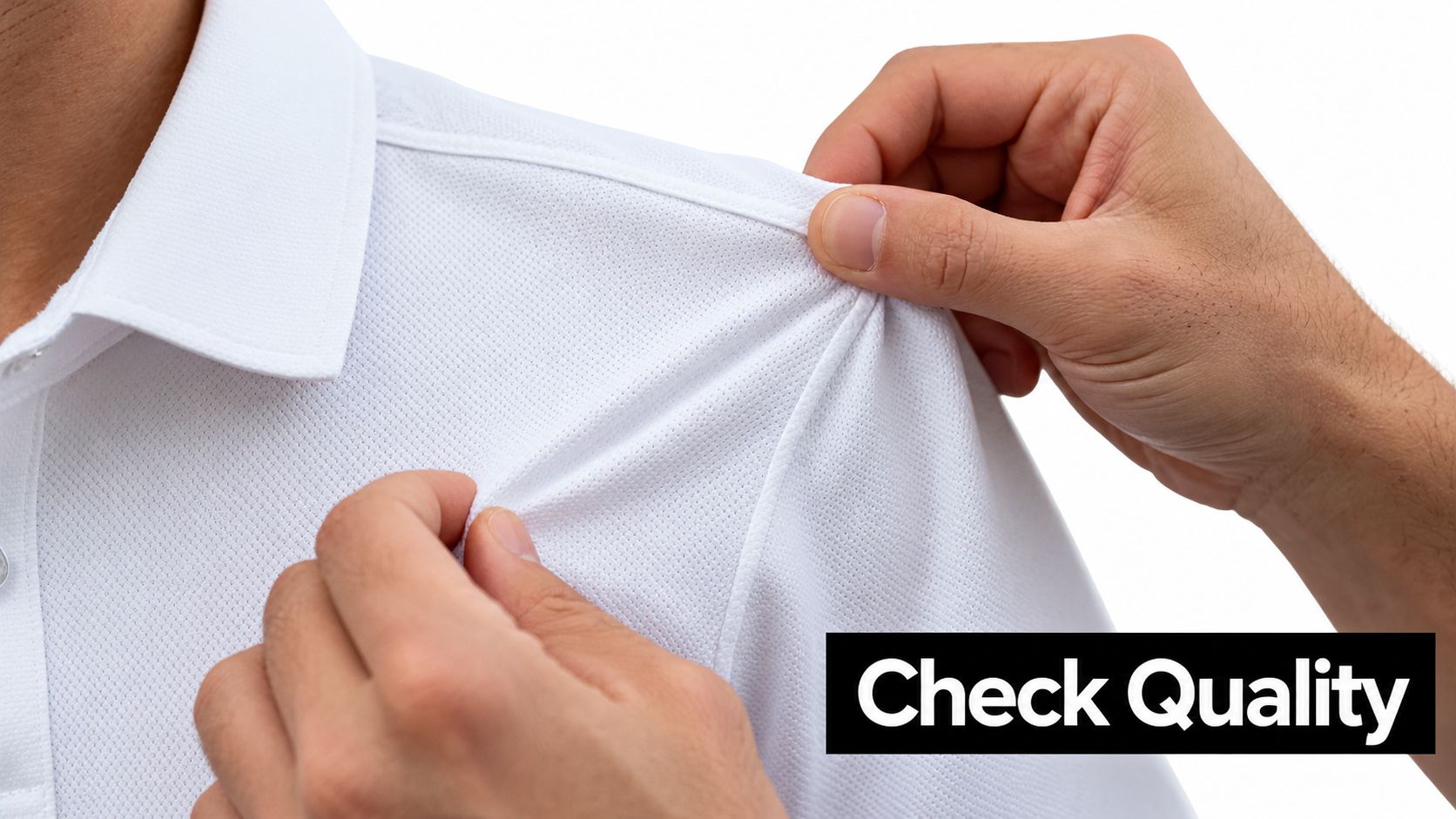
Start with the seams. Flat, clean stitching usually signals better build quality than bulky joins that can rub during a swing. Then inspect the collar and placket, because those areas take the most visible abuse and are the first places cheap construction starts to look tired.
A quick in-store test helps a lot.
- Raise both arms: the hem shouldn't bind hard at the torso or ride up awkwardly.
- Rotate your shoulders: the shirt should move with you instead of pulling across the back.
- Grab the fabric and release it: good recovery means it returns close to shape instead of staying stretched.
- Check the collar edge: it should hold form rather than curling or collapsing.
- Look closely at print areas: sublimated or well-set graphics should appear integrated into the fabric, not sitting on top in a way that feels brittle.
A shirt that looks sharp on a hanger can still fail the swing test in ten seconds.
For purchase decisions, don't stop at the base fabric. ASTM textile standards separate methods for moisture content, liquid-moisture management, wicking, drying, and stretch testing, and the practical lesson is clear, finished-garment performance matters more than lab-sounding claims alone ASTM textile standards. That's especially true when seams, prints, collars, and laundering can all change how a shirt behaves.
If a shirt passes the movement test, holds its shape, and feels clean at the collar, you're looking at a much more reliable buy.
Care Requirements and Environmental Considerations
Performance shirts don't stay performance shirts by accident. Heat, friction, and poor laundering can reduce stretch recovery, soften collars, and dull moisture handling over time. The care routine matters because the garment's structure is doing real work every time you wear it.
Wash with performance in mind
The easiest way to keep a cool-stretch shirt working is to treat it gently. Cold, mild cycles, lower agitation, and full loads are safer choices than aggressive washing. I'd also avoid unnecessary tumble-drying when possible, because repeated heat can be rough on stretch fibers and printed surfaces.
That care advice isn't just about appearance. A peer-reviewed study of 37 apparel textiles found microfiber release ranging from 9.6 mg to 1,240 mg per kilogram of textile per wash, and mechanically treated polyester released about six times more fibers than tested woven nylon samples PLoS ONE study. The point isn't to scare golfers away from synthetics, it's to show that washing choices have real consequences.
Performance trade-offs you can't ignore
Synthetic shirts can last well, but they aren't maintenance-free. Repeated abrasion, softeners, and high heat can affect both feel and function. A shirt that used to recover nicely may start feeling flatter or rougher as pilling builds up and fibers fatigue.
The smart approach is balance. Wash only when needed, keep the cycle gentle, and think about how often you're exposing the garment to heat and friction. If a shirt is part of your regular rotation, care habits influence lifespan as much as the original fabric choice.
Tattoo Golf's care guidance fits that reality well, because print-heavy performance apparel needs both visual protection and fabric protection.
Practical rule: a technical shirt that's washed hard will usually perform worse, even if the fabric was good to begin with.
That's the genuine environmental angle too. The longer a shirt keeps its shape and function, the less often it needs replacing. Good care won't erase microfiber shedding, but it can reduce waste from premature wear-out.
Finding Your Style and Performance Match
The right cool-stretch shirt does two jobs at once. It handles heat and movement, and it still looks like something you want to wear for 18 holes and after the round. That matters more than most golfers admit, because if you like the shirt, you'll wear it more often and treat it better.
Pick for your game, not the label
Some players need maximum cooling because they walk in hot weather. Others need better recovery because their swing loads the shoulders hard. Some want a cleaner look for club settings, while others prefer bold prints that stand out on purpose. The shirt should fit the way you play, not the way a product page imagines you play.
Brands like Tattoo Golf build cool-stretch shirts with bold prints and performance fabric, which makes sense for golfers who want technical comfort without a conservative look. That's one option among several, but the idea is useful across the category: the best shirt combines stretch, moisture handling, and personal style without forcing a compromise that feels fake.
Style isn't separate from performance when you wear the shirt for hours.
If you're deciding today, use a simple filter. Pick the shirt that moves well at the shoulders, keeps the collar clean, and fits your climate. Then choose the design you'll reach for again, because repeat wear is the true test.
If you want cool-stretch golf shirts that pair bold graphics with performance fabric, take a look at Tattoo Golf. Their lineup is built for golfers who want stretch, comfort, and a more expressive look on the course. Visit the site and compare the styles against the conditions you play in.


Share:
How to Build a Matching Men’s Golf Outfit