
4-way stretch shorts move with you in every direction, up-down and side-to-side, unlike 2-way stretch that only gives sideways, making them essential for the rotational demands of a golf swing. The catch is that two pairs with the same label can feel nothing alike, because the label doesn't tell you how the fabric recovers, how the waistband behaves, or how the short holds up after repeated movement.
The first time a pair of shorts feels perfect in the parking lot and tight by the sixth hole, you learn the hard lesson. The club wraps around, your hips open, your knees flex, and if the fabric fights back, the round gets less comfortable fast. That's why the key question isn't whether a short stretches, it's how it stretches, how it rebounds, and whether it keeps doing both after a full day of golf.
Why Your Swing Demands More Than Basic Stretch
The failure usually shows up in motion, not on the hanger. A short can feel fine during a standing fit check, then pinch at the waistband when you sit in the cart, pull across the seat during a squat, or bind when you turn through impact. If you've ever adjusted your shorts before a tee shot, you already know the problem.
Golf motion asks for freedom in more than one direction
A golf swing loads the body in a way that ordinary leisurewear doesn't. Your knees flex, your hips rotate, your torso coils and unwinds, and you still need enough room to walk, crouch, and sit between shots. A fabric that only gives across one axis can feel decent until the swing asks for something diagonal, twisted, or compressed.
That's where 4-way stretch earns its keep. It's a construction characteristic, not a standalone fiber, and it's built to extend and recover in both the lengthwise and crosswise directions. In practice, that means the short is less likely to fight your body when the body is doing several things at once. The internal link on comfort and mobility fits here well, because the same issue shows up in a lot of athletic shorts, not just golf gear, and the practical breakdown in why stretch golf shorts make every round more comfortable matches what golfers notice on course.
Practical rule: If a short only feels comfortable when you're standing still, it's not ready for a golf swing.
A lot of golfers blame fit when the actual issue is structure. The short may be cut correctly, but if the fabric can't move and recover with the motion pattern, the garment will still feel restrictive. That's why “stretchy” isn't enough as a buying filter.
A golf short should help, not negotiate with you
Good performance shorts should disappear once the round starts. You shouldn't be thinking about seam tension during the takeaway or seat pull when you bend to read a putt. If the garment constantly asks for adjustment, it's interrupting the rhythm of the round.
The best test is simple. Move like you play. Rotate, squat, sit, walk, and reach, then notice where the fabric resists first. The first point of resistance is usually the weak point in the design.
The Science Behind 4-Way Stretch Technology
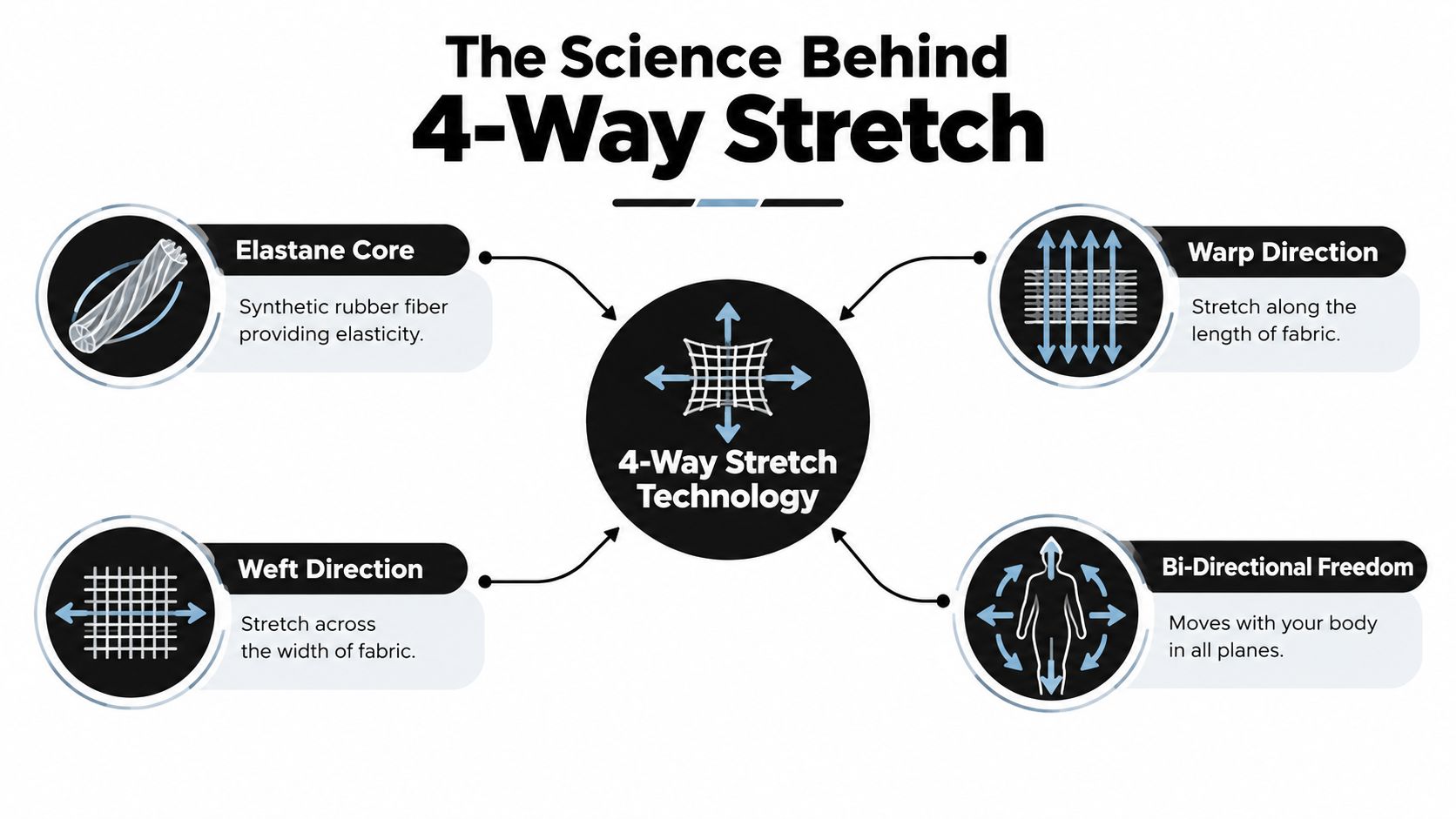
The material story starts with elastane, also called spandex or Lycra. It's the part of the fabric that behaves like a coiled spring, extending under load and then pulling back toward its original shape when the tension comes off. That spring-like behavior is why a blended performance short can feel supportive instead of floppy.
Stretch and recovery are not the same thing
A fabric can stretch well and still recover poorly. That's the trap shoppers miss most often. Stretch tells you how far the textile can elongate, but recovery tells you how well it returns after the load is gone. If recovery is weak, the short may look fine before your round and bag out by the end of it.
Technical guidance on four-way-stretch sportswear points to blends that often use 15% to 25% spandex, with elongation of at least 150% and recovery of at least 95% in both principal directions, though those are performance targets rather than universal specifications, and actual results vary by construction and testing method RedColorTex guide. That matters because the same label can hide very different behavior on the body. One short may rebound sharply, another may relax too much after repeated wear.
Higher elastane content can increase extensibility, but more isn't automatically better. Too much elastic content can reduce structural stability and change how the fabric behaves under repeated motion. For golf shorts, that balance matters because you want shape retention through the seat and knees without turning the garment into a rigid shell.
Practical rule: Strong recovery is what keeps shorts from looking tired halfway through the round.
Why the blend matters as much as the label
Four-way stretch is usually built by combining a base textile, often polyester or nylon, with elastane. That blend gives the fabric movement plus strength, abrasion resistance, and washability. The result is better than just making a garment feel loose, because the short can move and then return.
A useful way to think about it is this. The base fabric gives the short its body, and the elastane gives it the ability to yield and recover. If either part is off, the finished garment feels wrong even if the product page sounds right.
For broader performance-wear context, wearable tech for sports clubs shows the same principle in another form, where useful gear depends on measured behavior rather than marketing language. Clothing works the same way. What's built into the material matters more than what's printed on the hangtag.
4-Way Stretch vs 2-Way Stretch The Golf Test
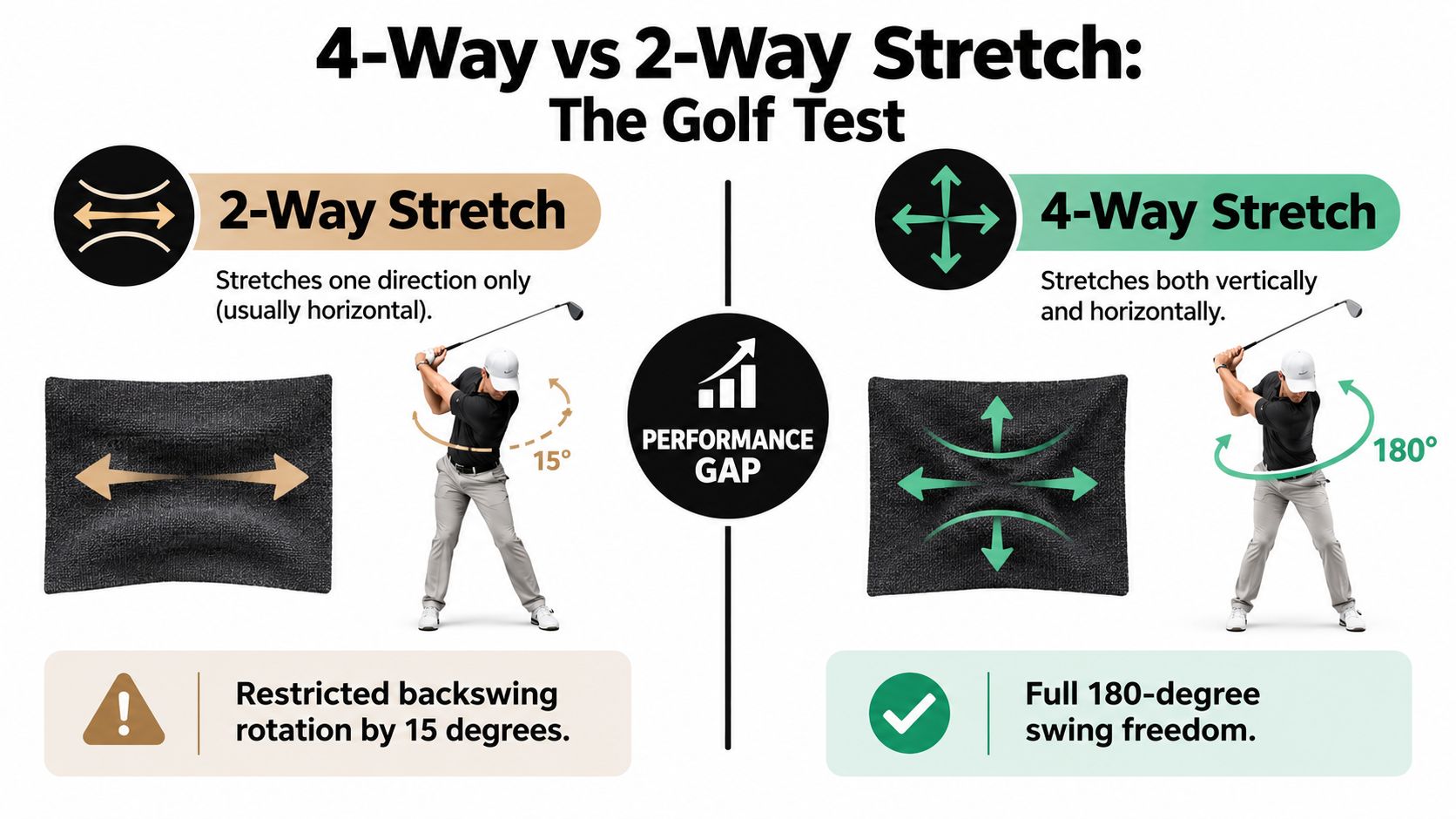
The difference shows up fast once you start moving like a golfer. A two-way stretch short usually gives in one main direction, so it may feel fine during a casual walk but resist when your body rotates or compresses from another angle. A four-way stretch short responds across both axes, which is why it tends to feel freer when the swing starts loading the fabric from several directions at once.
The swing exposes weak fabric faster than a mirror fit check
The simplest difference is motion range. If you only stand and tug at the waistband, both fabrics can look acceptable. Once you add knee flexion, hip rotation, and torso twist, the two-way short starts to show its limits. The result isn't just discomfort, it's lost freedom through the exact positions golfers use over and over.
A fabric-specification source notes that true four-way stretch should be assessed as a bidirectional property rather than as a promise printed on the package, and it points buyers toward separate warp- and weft-direction results under a defined load and recovery period Fibtex PDF. That's the technical version of what players feel on the course. The short either moves with the body or gets in the way.
| Movement Plane | 2-Way Stretch Response | 4-Way Stretch Response |
|---|---|---|
| Knee flexion | Feels fine until the fabric tightens at the seat or thigh | Moves with the bend and rebounds cleanly |
| Hip rotation | Often resists the turn during the backswing | Follows the turn with less pull |
| Torso twist | Can feel boxed in when the body coils | Gives across both directions of motion |
Seated comfort tells the truth too
Golf isn't played only while standing. You sit in the cart, crouch over putts, bend to tee the ball, and sometimes ride a range session harder than the first tee. A short that handles standing movement but digs into the waist when seated is a short that hasn't really passed the golf test.
The question to ask is blunt. Does the short keep its shape while you move, or does it start negotiating with your body after repeated motion? If it resists any part of your swing or your stance, you're feeling the limit of the construction, not your own flexibility.
How to Test Stretch and Recovery Yourself
You don't need a lab to spot the difference between genuine performance fabric and clever labeling. You need a few minutes, your own body, and a willingness to test the short the way you'll typically wear it. That's where most shoppers get more useful information than they'd ever get from a product page.
Use your hands first
Pull the fabric up and down, then side to side. In true four-way stretch, both directions should feel meaningfully responsive, not just one. Then release it and watch what happens next, because recovery is the part that usually separates good fabric from disappointing fabric.
If it rebounds slowly or stays visibly distorted, don't assume it will improve after a few wears. It usually goes the other direction. A short that drifts out of shape early rarely gets better after repeated use.
Test the body positions that matter on course
Sit down and pay attention to waistband pressure. A good golf short should leave room without sliding around, and it shouldn't pinch once your hips flex in a seated position. Then do a half-squat and a gentle twist, because those two motions reveal whether the seat and thigh are cut to move or just cut to look athletic.
If a short feels great in a standing mirror but wrong when you sit or squat, trust the seated and squatting feel.
You can also compare the garment on a hanger against the garment on your body. The hanger never reveals waistband tension, seat pull, or how the pocket openings behave when you rotate. Your body does.
For a quick field test, use this simple sequence:
- Pull both axes: Check up-down stretch and side-to-side stretch separately.
- Release and watch: See how quickly the fabric returns to its original shape.
- Sit for a minute: Notice whether the waistband digs in or expands comfortably.
- Half-squat twice: Watch the seat and thighs for pull lines or resistance.
- Rotate as if swinging: Feel whether the fabric follows the turn or fights it.
Beyond Stretch Fit, Features, and Function
Stretch solves only part of the problem. The rest comes from how the short handles sweat, how the waistband sits, where the pockets sit, and whether the overall cut supports golf instead of just athletic styling. A great short does several jobs at once without making any of them obvious.
Moisture management should be tested, not assumed
Moisture-wicking claims should be treated carefully. Fiber content alone doesn't prove a short manages sweat well, and a soft hand feel doesn't guarantee liquid transport. Standardized testing such as AATCC TM195 measures how liquid moves across the fabric surface, through the fabric, and to the lower side using controlled sensors and a conductive solution AATCC TM195 overview.
That matters in golf because sweat shows up where friction is already a problem, especially at the waistband, seat, and upper thigh. If a short traps moisture there, it can feel hotter and rub more during a long round. The better test is simple, compare how a fabric handles liquid after laundering instead of trusting a generic moisture-wicking claim.
Pocket layout and waistband design affect playability
A short can have excellent fabric and still fail if the details are wrong. Bulky pocket bags can shift awkwardly during the swing, and a waistband that lacks structure can move too much when you walk or crouch. Secure closures and clean pocket placement matter because they keep the garment from becoming a distraction.
Inseam length is more personal than many shoppers want to admit. Some golfers want more coverage, others want less bulk, and course dress expectations can still influence the choice. The best length is the one that lets you move freely without making you think about the hem every time you bend.
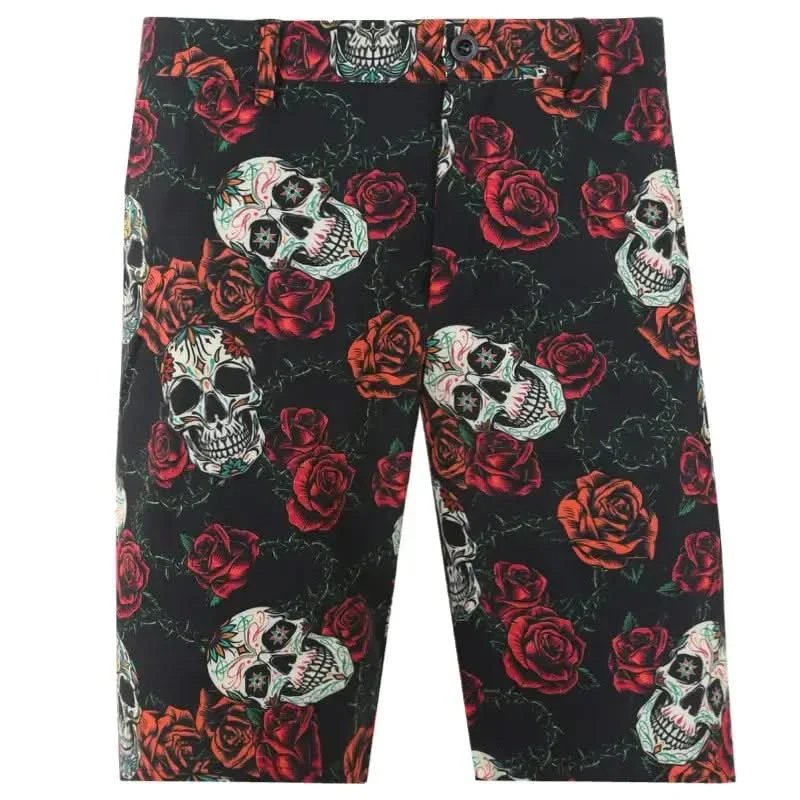
The internal guide on how to choose golf shorts that fit and move with you matches that reality well, because fit is a combination of fabric behavior and patterning, not just size on the tag. That's also why bold style and technical performance don't have to clash. Golfers can want personality, but the short still has to work first.
Care Instructions That Preserve Performance
A good pair of 4-way stretch shorts can feel dialed in on day one and sloppy after a few bad washes. Heat, aggressive spinning, and rough laundry habits wear down elastane recovery, so the short may still hang fine in the closet while feeling looser on the course.
Wash them like performance gear, not old gym clothes
Cool water and a shorter cycle do less damage than a harsh wash. Skip fabric softener when the label says not to use it, since residue can change how the fabric handles sweat and recovery.
Air drying is the safer default. High heat is harder on elastane, so if you use a dryer, keep it light and follow the care tag closely. For the full washing, drying, and storage routine we recommend, see our care info for your Tattoo Golf clothing guide.
The point is simple. Gentle care usually keeps the fit closer to how the short felt out of the package, and that saves you from replacing pairs sooner than you should.
Microfiber release is part of the care conversation
Laundry also has an environmental cost. A 2025 household laundering study reported an average release of 5,849,943 microfibers per liter across three wash trials involving 30 households laundering study. The same review identifies machine washing and tumble drying as major routes for textile microfiber release, and notes that spandex-containing fabrics can be prone to pilling and fiber debris.
That does not make technical shorts a bad choice. It means the care routine matters. Cooler water, shorter cycles, and less unnecessary heat help reduce wear and can extend the life of the short.
Care rule: A performance short washed gently will usually hold its shape longer than one treated like disposable clothing.
Frequently Asked Questions About 4-Way Stretch Shorts
Will 4-way stretch shorts lose their shape?
They can, if the blend is weak, the recovery is poor, or the care routine is rough. Good recovery is what helps the short spring back after sitting, squatting, and swinging. If the fabric stays stretched out after normal wear, that's a sign the construction isn't strong enough for golf.
Should I size up if I want more comfort?
Not automatically. A better fit in a well-made short is usually more reliable than a larger size in a short that already has weak recovery. If the waistband feels tight only when seated or during a squat, the issue may be patterning or fabric behavior, not just size.
Are 4-way stretch golf shorts appropriate for dressier courses?
Yes, if the cut is clean and the colorway is appropriate. Performance fabric doesn't have to look casual in a sloppy way. What matters is whether the short keeps a sharp silhouette while still letting you swing freely.
Can I wear them off the course without looking like I'm still at the range?
Absolutely, if the design is restrained and the fit is sharp. The best pairs work because they don't scream for attention, even when they're built for movement. The modern edge is having performance fabric that still looks intentional outside golf.
Are premium shorts always better?
Not always, but better materials, better recovery, and better patterning usually justify the higher price when they're done right. What you're paying for is less compromise. The best shorts feel better, hold their shape longer, and stay useful after more wear.
What if I want performance and personality together?
That's the sweet spot. A lot of golfers want technical fabric without looking like they borrowed plain training gear from a gym bag. Bold design works best when the stretch, recovery, and fit are already solved.
If you want shorts that bring serious mobility without giving up style, take a look at Tattoo Golf. The right pair should move cleanly, recover well, and still look like you meant to wear something with attitude.

Share:
What Is the Difference Between a Golf Polo and a Regular Polo?