
The core difference is functional engineering, not just the collar, golf polos are built for stretch, moisture management, and outdoor movement, while regular polos lean toward casual appearance and everyday wear. A good golf polo is about how the shirt performs when you're swinging, sweating, and staying out for hours, not just how it looks on the hanger.
Redefining the Golf Polo Beyond the Collar
A collar doesn't make a shirt a golf shirt. The actual distinction is whether the garment is built to move with the body, shed heat, and stay acceptable at the course, because swing mobility, climate comfort, and dress-code flexibility all matter at the same time.
Most golfers think in a simple binary, golf shirt or regular polo. That's too crude. A regular polo can be perfectly fine for casual wear, but on the course it may prioritize cotton hand-feel, simple styling, or lower cost, while a golf polo is usually engineered around movement and moisture control, with features like stretch fibers and a longer rear hem to help the shirt stay tucked.
Practical rule: if the shirt feels good standing still but binds when you rotate your shoulders, it's not really doing golf-duty.
That three-way trade-off is the right way to buy. If you need full-swing motion, dry comfort in heat, and enough polish for the venue, the shirt has to balance all three. Miss one, and you'll notice it fast, either in the swing, in the humidity, or at the first tee check-in.
The Evolution of Course-Ready Performance Wear
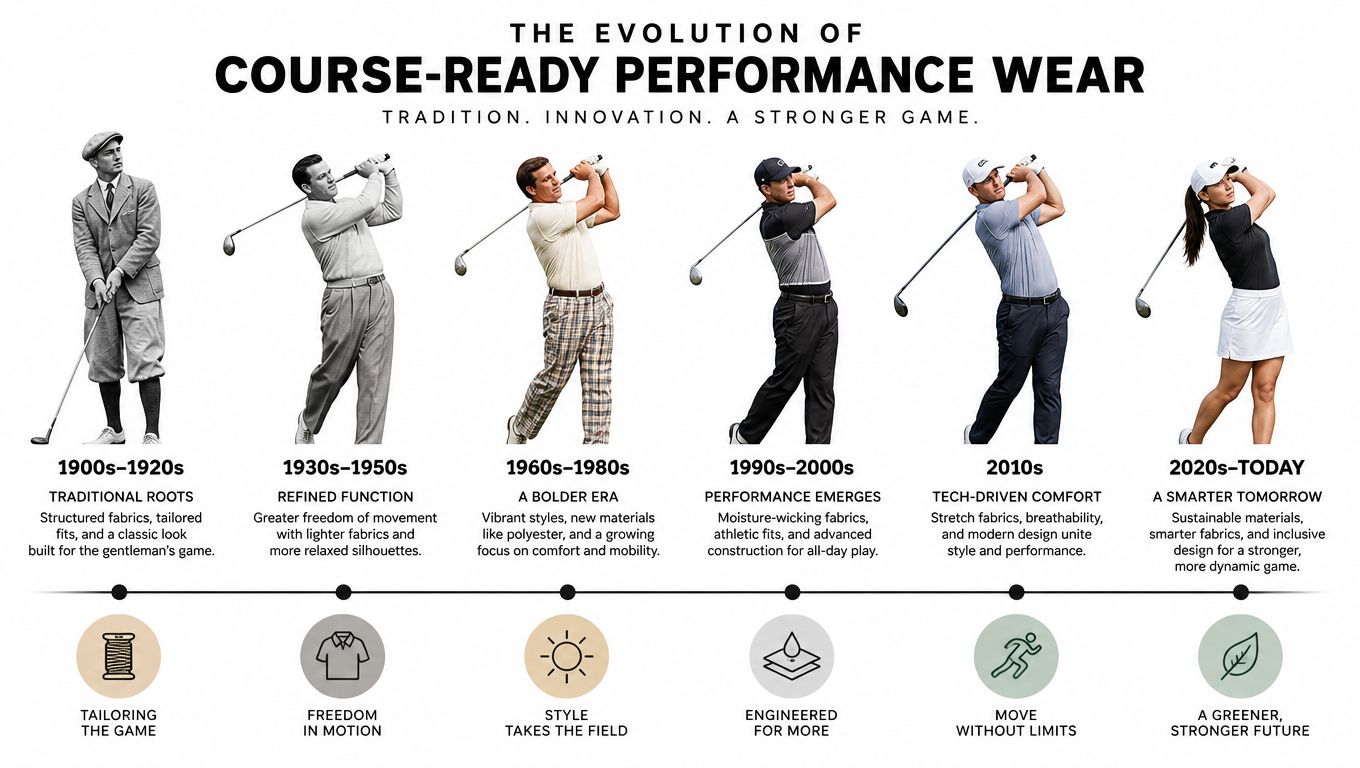
The modern golf polo didn't appear because someone wanted another collar. It evolved as golf adopted casual athletic clothing over time, with short-sleeved versions already in use by polo players in British India by 1859, and the style later reaching Great Britain in the 1920s. As golf absorbed tennis shirts in the latter half of the twentieth century, the sport settled on a cleaner, more functional coursewear standard.
Why the category became distinct
That history matters because it explains why a golf shirt is more than a regular polo with a sporty label. In a round of golf, the body repeats the same rotational movements for hours, so apparel had to adapt. Golf-oriented shirts began to emphasize stretch, breathability, moisture control, and a secure tucked-in fit, while ordinary polos could stay focused on versatility and daily wear.
The scale of the market shows why the category stayed distinct. U.S. imports total approximately 595 million polo shirts annually, valued at $2.7 billion, and golf shirts average about $50 at retail. Those figures point to a big category, but also to a premium attached to course-specific construction.
What manufacturers had to solve
A golf polo has to behave like athletic clothing and still pass as polished enough for the course. That's where product development gets more technical, because collar recovery, placket stability, hem shape, and body drape all affect whether the shirt looks right after nine holes.
For teams building assortments or private-label runs, tools that help streamline outdoor gear development can be useful because they keep fit, fabric, and construction decisions aligned early. That matters more than people think when a shirt needs to work for movement, weather, and venue standards in one product.
Comparing Fabric Systems and Moisture Management
The biggest mistake is thinking cotton equals casual and polyester equals performance. Real comfort depends on the whole fabric system, not just the fiber name, because yarn construction, fabric weight, airflow, fit, and finishing treatments all affect how the shirt behaves during play.
Retail data from the Cotton Incorporated Retail Monitor found that 63% of golf shirts offered in stores included moisture-wicking features, while 81% of consumers identified cotton as their favorite fabric overall source. That tension is exactly why the category is so mixed. People like cotton, but the course often rewards faster drying, better airflow, and more forgiving stretch.
Fabric Performance Comparison
| Fabric Blend | Best Climate | Stretch & Mobility | Moisture Management |
|---|---|---|---|
| Cotton-rich knit | Dry, moderate conditions | Comfortable, but usually less dynamic unless engineered | Can feel soft, but typically slower to dry |
| Polyester or polyester-elastane | Humid, high-sweat rounds | Usually stronger for rotation and recovery | Often better at moving moisture away from the skin |
| Cotton-poly blend | Mixed conditions | Depends on construction and elastane content | Sits between softness and drying speed |
The smartest choice is climate-specific. A lightweight cotton polo can feel cooler in dry heat, while a polyester-elastane build can handle humid rounds better because synthetic fabrics generally dry faster and airflow helps drying performance. The shirt's density matters too, because a tight, poorly ventilated polyester piece can feel worse in heat than a lighter, better-designed cotton blend.
For a deeper look at material trade-offs, choosing fabric for custom shirts is worth reading if you're comparing hand-feel, durability, and performance. And if you want a brand-specific example of how those choices show up in golf apparel, see the performance polo shirt discussion for a practical product framing.
Breathability isn't an abstract feature, it's the difference between a shirt that disappears on the range and one that starts clinging by the back nine.
Navigating Dress Codes and Club Acceptability
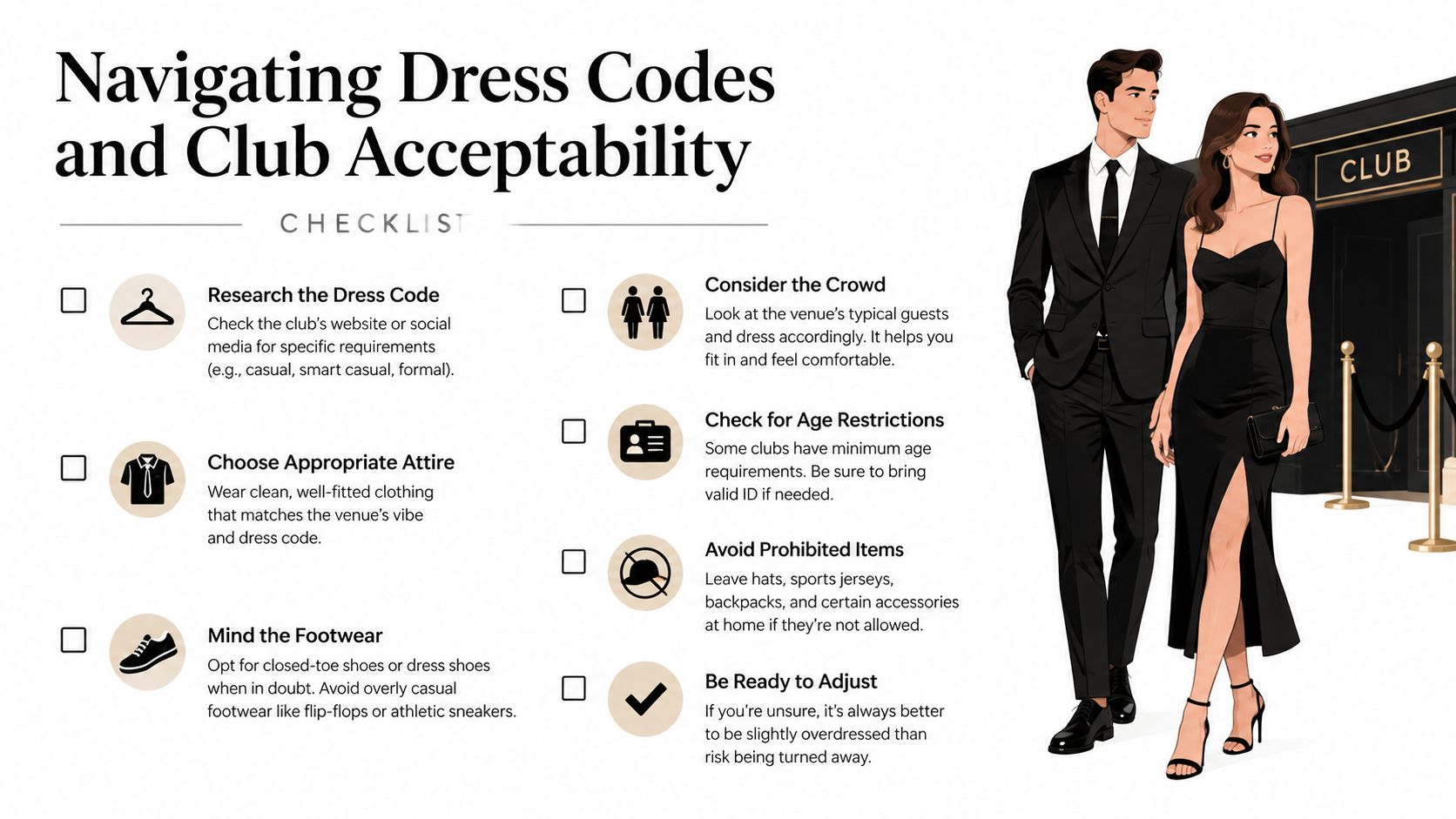
A shirt can be technically perfect and still get challenged at the first tee. A 2025 survey of 3,250 club golfers found that nearly 72% considered dress codes important or very important, which tells you the rulebook still matters even when the fabric is right.
Check the policy before you buy
The practical move is simple. Read the course's written dress code before you shop, especially for leagues, guest rounds, and competitive events. Some venues care about collar shape, sleeve length, logos, graphics, shirt length, or whether the shirt is tucked in, and those rules can vary a lot from one club to the next.
That's why a regular polo can be acceptable in one setting and a highly engineered golf polo can still be rejected in another. A shirt with bold art, large logos, or an unconventional silhouette might work perfectly at a relaxed public course and fail at a traditional club.
Use the three-part test
Before you decide, ask three questions.
- Can I swing freely? If the shoulders bind, the shirt loses the main job.
- Will it stay comfortable in my climate? Heat and humidity expose weak fabric choices fast.
- Does the venue allow it? No amount of performance helps if the dress code says no.
For a simple reference on venue expectations, the golf dress code explained guide is a useful companion when you're sorting out what's acceptable where you play.
Merging Rebellious Aesthetics with Elite Tech
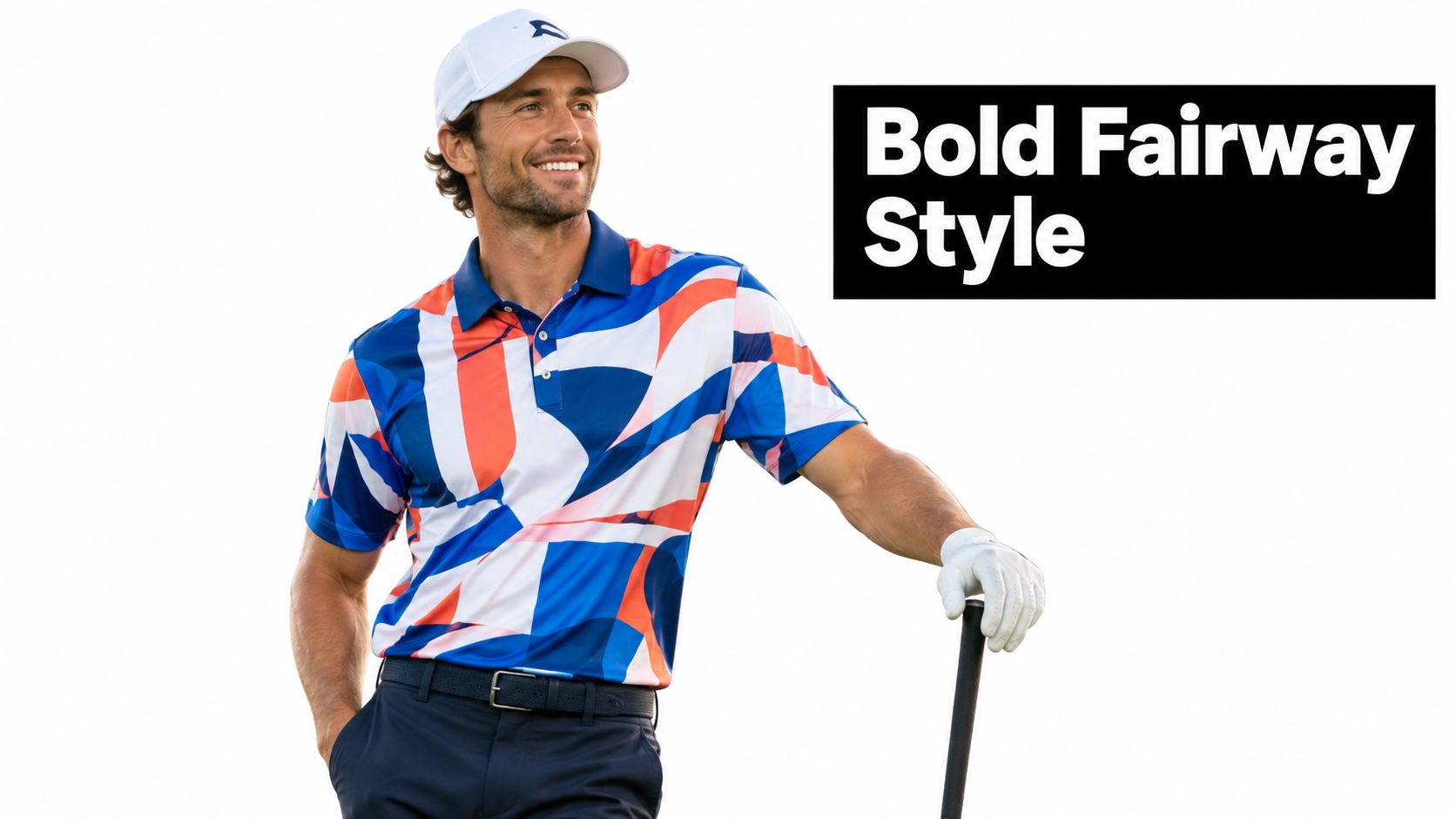
Performance gear doesn't have to look polite. Modern golf apparel can carry bold prints, sharp colors, and graphic motifs while still delivering the stretch and moisture control players expect on the course.
That's the shift in the category. The old idea that a golf polo must be solid, muted, and country-club safe is fading, because expressive shirts can still be built on technical fabrics that move well and dry quickly. High-impact patterns don't cancel performance if the construction is right.
Style that still plays well
The best expressive polos do two jobs at once. They make a statement visually, and they stay practical when the round gets sweaty or the temperature climbs. That means the print sits on top of a real performance base, not on top of a fashion-only garment pretending to be athletic.
Bold golf style fits naturally here. A tropical print, skull graphic, or bright pattern can look sharp with course-ready outerwear in the morning and still hold its own at the 19th hole. If the fabric stretches, breathes, and recovers well, the shirt earns its place in the bag.
A brand example in context
One option in this space is Tattoo Golf, which pairs performance fabrics with unapologetic graphics and course-ready construction. The point isn't that every golfer should dress loud, it's that style and function no longer have to live in separate closets.
If you like your kit to reflect some personality, the right shirt should let you do that without sacrificing mobility. That's the modern version of golf apparel, and it's a lot more interesting than another plain collar.
Protecting Your Investment with Proper Care
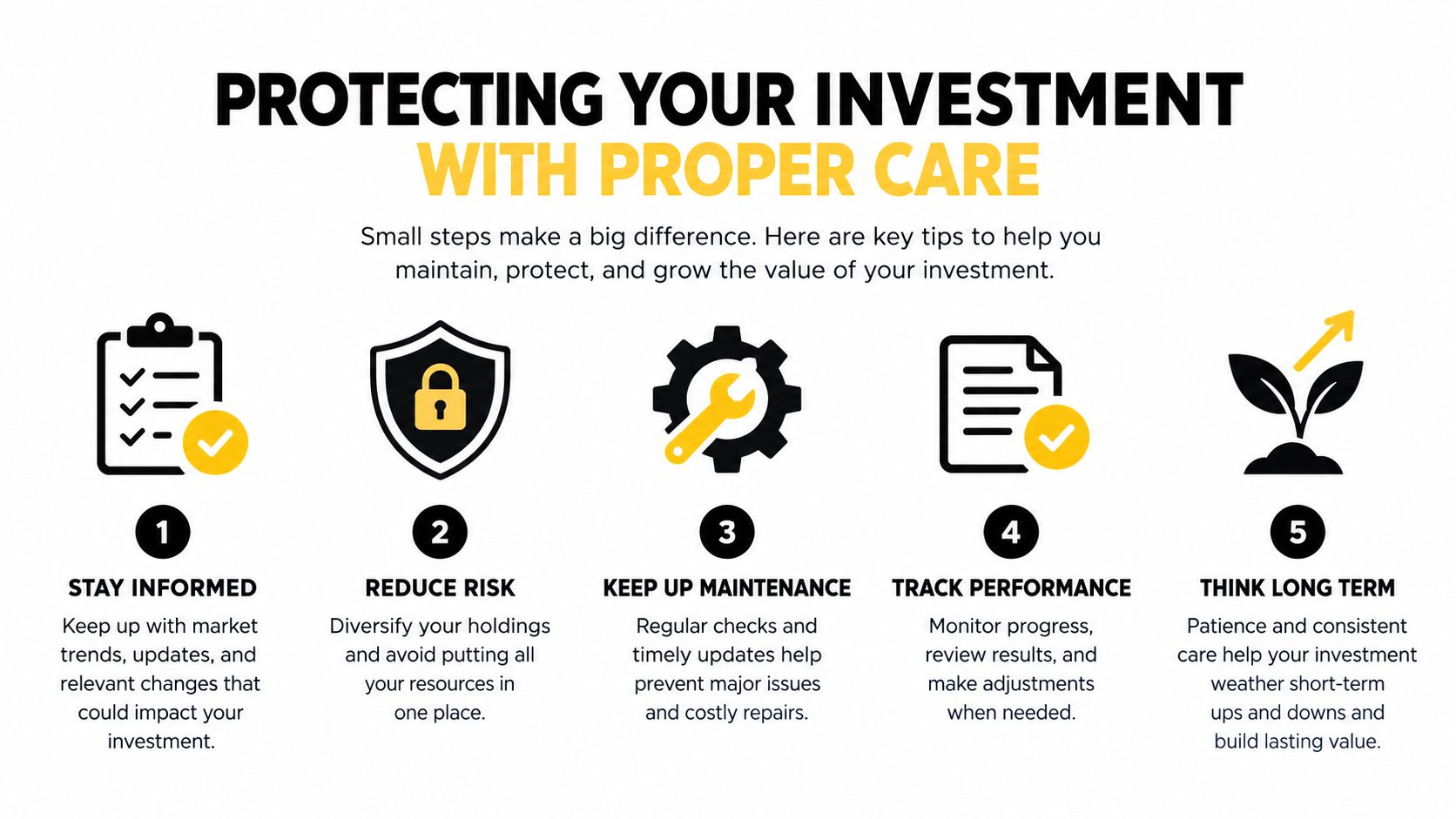
Technical fabrics don't stay technical by accident. Sportswear research indicates that moisture-wicking performance can decline with abrasion and repeated laundering, so washing habits matter as much as the original fabric blend.
Wash for function, not just cleanliness
Use the care label first. That sounds basic, but it's the difference between keeping the wicking finish intact and slowly wearing it down. Hot water, harsh agitation, and aggressive detergents can shorten the life of stretch fibers and dull the surface of bold prints.
Drying changes how the shirt wears
Air drying is usually the safer option for performance polos, especially if the shirt depends on moisture-management finishes. High heat can be rough on elastane and can also make graphics age badly, so a gentler drying method protects both feel and appearance.
- Turn it inside out: This helps reduce abrasion on prints and reduces visible wear.
- Use mild detergent: Strong cleaners can be too aggressive for technical finishes.
- Skip overloading the washer: Shirts need room to move without rubbing excessively.
- Store it clean and dry: Moisture left in a gym bag or trunk can leave the shirt smelling off fast.
For shirt-specific care guidance, the care info for your Tattoo Golf clothing page is a practical reference point if you want to keep the fabric, color, and fit working the way they should.
Building a Versatile and Expressive Golf Wardrobe
A smart golf wardrobe isn't built around one perfect shirt. It's built around a few reliable polos that cover different temperatures, dress codes, and moods without making you compromise on swing comfort.
The buying logic is straightforward. Keep one eye on fabric performance, another on climate, and a third on where you play. A shirt that handles humid summer rounds may not be the same shirt you'd choose for a cooler morning or a stricter private club, and that's fine.
What to prioritize
- Mobility first: If you can't rotate freely, the shirt fails before style even enters the conversation.
- Climate fit second: Choose lighter or more breathable builds for sweat-heavy rounds, and don't assume one fiber always wins.
- Dress-code flexibility third: A shirt that works at your usual course is better than one that only looks good online.
That's also why it helps to browse a collection like men's golf polos with a clear sense of what you need, not just what looks sharp. The right purchase is the one that fits your swing, your weather, and your venue.
The best golf shirt is the one you reach for without thinking. It should feel good on the range, survive a long round, and still look like you chose it on purpose.
Tattoo Golf builds polos for players who want real course performance with more attitude than the average pro-shop rack. If you want shirts that combine stretch, moisture-wicking comfort, and bolder graphics without losing the golf-ready feel, visit Tattoo Golf and take a look at the collection.
Share:
Golf Gift Ideas for Golfers Who Love Bold Style