

Most golf gift advice is too safe. It tells you to buy another plain polo, another neutral cap, another generic accessory, as if the golfer on your list wants to disappear into the range line. That misses the genuine shift in the game, because golf's audience is bigger, more varied, and more style-aware than the old country-club stereotype suggests, with 28.1 million Americans playing on-course in 2024 and 47.2 million participating across on-course and off-course formats like simulators and entertainment venues NGF participation data.
The smart move is to treat a bold golf gift like a wardrobe decision, not a novelty buy. A loud print only works when the fit, fabric, and course context make sense together. Pick that combination well and the gift gets worn, not buried in a drawer.
Why Bold Golf Style Makes a Better Gift Than You Think
A bold golf gift works because it solves two problems at once, style and utility. The golfer gets something that plays well on the course, and you get a present that doesn't look like every other safe purchase on the shelf. That matters more now, because golf participation keeps widening beyond the old traditional buyer profile, and giftable apparel has to serve players who want comfort, identity, and repeat wear.
The biggest mistake is assuming bold equals gimmick. It doesn't. A sharp print, a statement belt, or a loud hat can be the piece that pulls an entire outfit together, especially for golfers who already own plenty of basic gear. With 545 million rounds played in 2024 and rounds above 500 million for the fifth straight year NGF participation data, the right apparel isn't a one-off joke gift, it's equipment for a lot of actual use.
Practical rule: if the item can't survive a swing, a long walk, and a clubhouse setting, it's decoration, not a golf gift.
That's why bold style is a stronger gifting lane than people think. It gives you room to be memorable without drifting into costume territory. The best pieces look intentional, not noisy. They work because they're built to be worn, then worn again, then grabbed on the way out the door because they still make sense.
For buyers, the question isn't “Will they wear something bold?” The question instead is, “Can I choose one that fits their routine, their course, and their personality?” If the answer is yes, bold style becomes an upgrade, not a risk.
The Design Language of a Retro Golf Visor
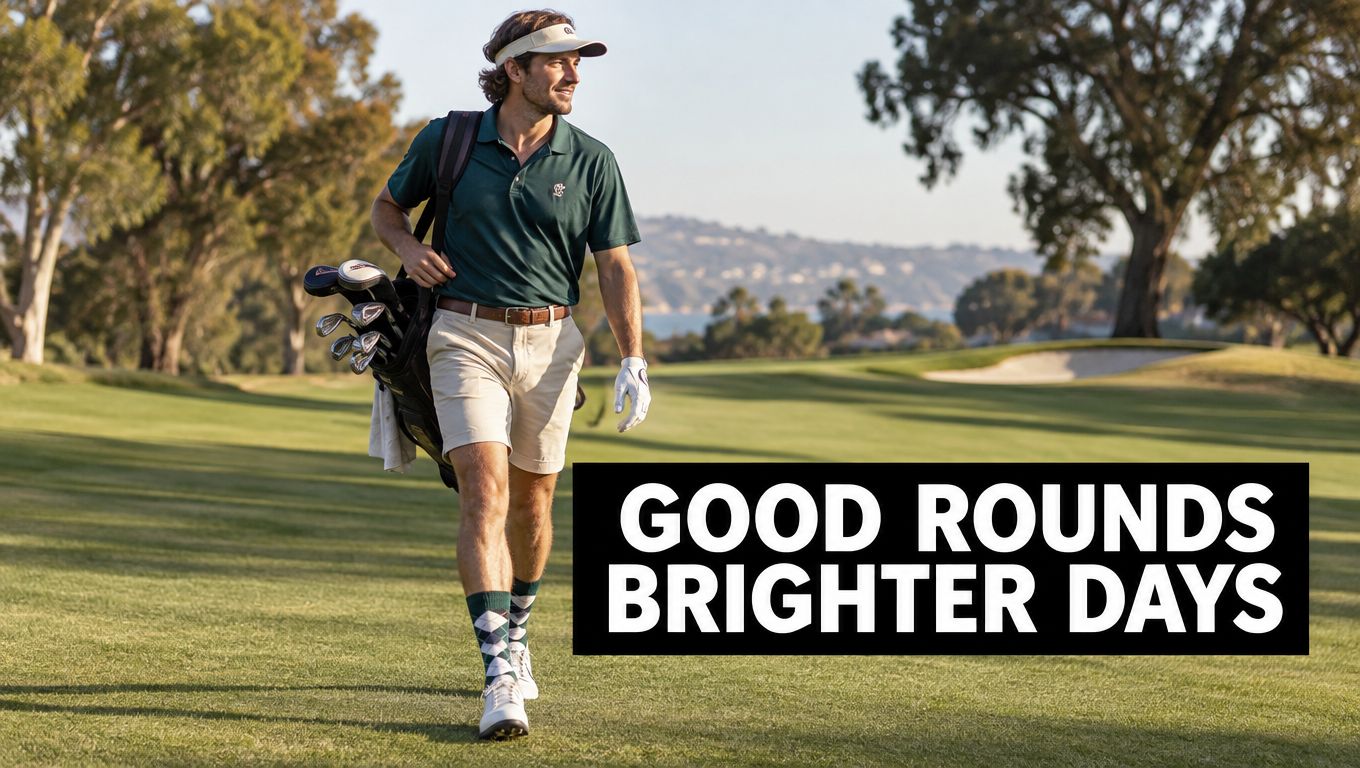
A true retro golf visor is defined by attitude. The open crown matters, but the appeal comes from a shape that feels pulled from vintage sport culture, with a curved brim that throws shade cleanly and a structure that stays sharp from the first tee to the clubhouse.
Start with the brim. Retro visors look strongest when the bill has a natural curve instead of a flat, modern athletic profile. That curve gives the piece a relaxed, classic feel, closer to a throwback tennis visor or old-school resort hat than a stripped-down running accessory. The crown should sit cleanly and hold its shape, because a visor that collapses onto the forehead looks cheap fast.
The strap says plenty too. An adjustable tab feels more vintage, while a performance Velcro closure signals modern, function-first construction. Neither choice is wrong. What matters is whether the hardware matches the rest of the design. A bright tropical print paired with a rubbery athletic closure can look confused. The same print with a neat tab or clean band reads as intentional.
Color does the heavy lifting. Retro visors work best in saturated solids, golf-club greens, clean whites, navy, red, or punchy pattern blocking. Loud graphics can work, but they need restraint in placement. A small front logo or side mark looks sharper than oversized branding across the entire front panel.
Shop the visor as the finishing piece of the outfit, not the main event. The guide on building a complete bold golf look shows why the visor has to support the shirt, belt, and shorts instead of competing with them. Get that balance right and the gift feels confident, not costume-like.
A good retro visor looks like it belonged on the course ten years ago and still belongs there now.
Retro Visors vs Modern Caps
The choice between a retro visor and a modern cap comes down to how the golfer plays, not just how they dress. One silhouette gives more visual personality and ventilation. The other gives more coverage and less styling risk. For a gift, that difference matters more than logo hype.
| Dimension | Retro Visor | Modern Performance Cap |
|---|---|---|
| Sun coverage | Leaves the top of the head exposed, so it's lighter but less protective | Covers more of the scalp and usually feels safer in strong sun |
| Breathability | Very open, which helps when heat builds during a round | Usually breathable too, but still warmer than a visor |
| Hair and ponytail practicality | Better for tied-back hair and less pressure on the crown | Better for people who prefer all-around coverage, but can feel tighter with thicker hair |
| Dress code flexibility | Can look stylish and relaxed, but may feel too casual at conservative clubs | Usually easier to fit into stricter golf settings |
| Visual impact | Reads bolder and more vintage-inspired | Reads cleaner, sportier, and more universal |
A visor is the better gift when the golfer already likes statement clothing and tends to play in social settings, simulator venues, resort rounds, or casual weekends. It gives the outfit that unmistakable retro nod without asking the rest of the look to do too much. It's especially strong when the recipient likes bold shirts, patterned shorts, or a louder belt.
A cap is the safer pick when the golfer spends time at traditional clubs, plays long sunny rounds, or prefers a lower-risk silhouette. It also works better for people who want sun coverage over style signaling. That's not boring. It's practical.
The dress-code issue is real. Some clubs are more forgiving than others, and that's where gifting can go wrong. If you're buying for someone whose golf life moves between private tees and public courses, a clean cap is more versatile, while a visor is more personality-forward.
The best answer is often not either-or. A visor can be the statement piece and a cap can be the fallback. If the golfer already owns one, buy the other only if it fills a different role in their rotation. That's how you turn a headwear gift into a usable system instead of another stray accessory.
Styling Bold Golf Gifts Into Real Outfits
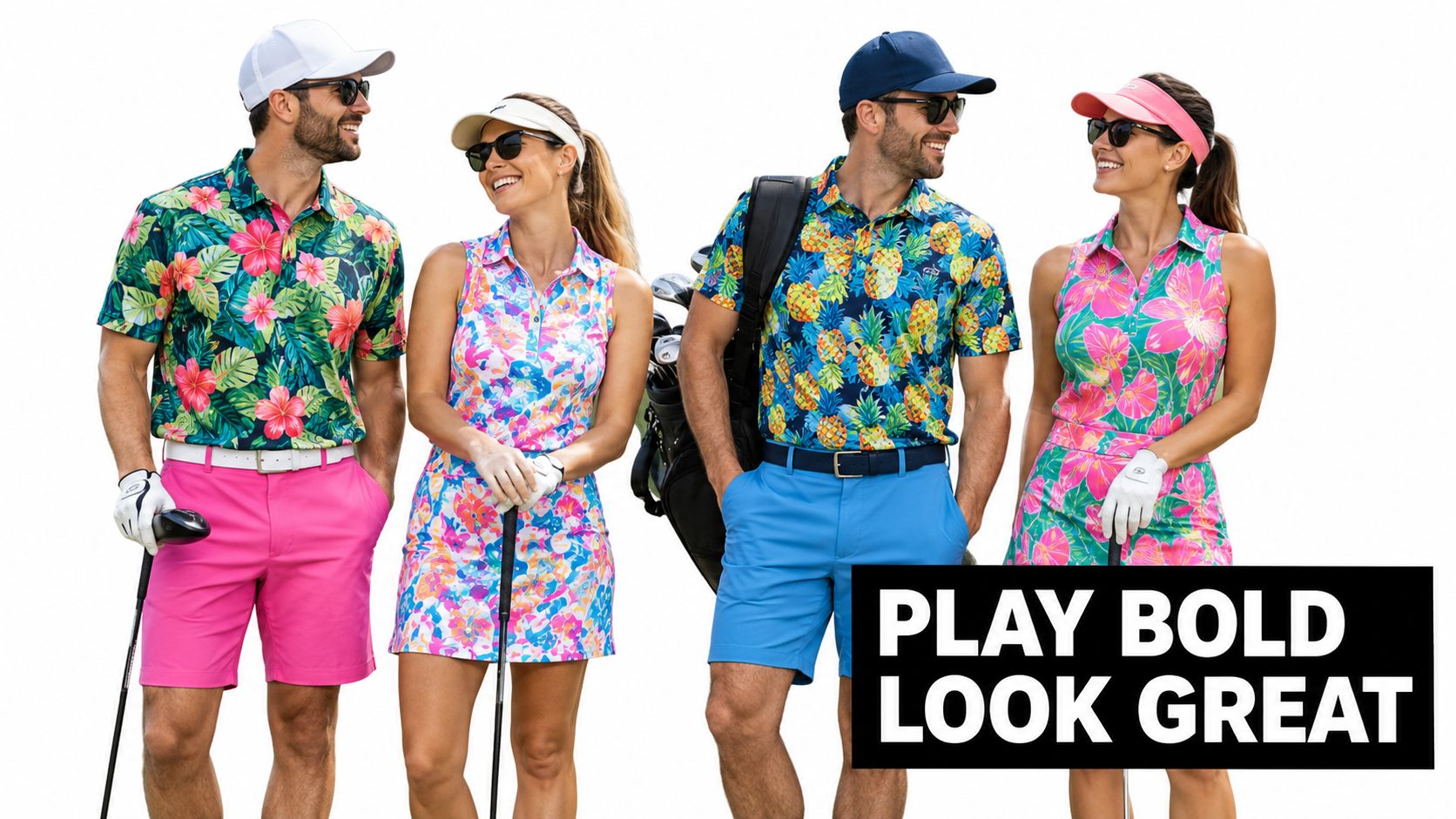
Start with one statement piece and build around it. A loud shirt, calm shorts, and one sharp accessory read as confident because the outfit has structure. Printed polos work best when the rest of the look stays quiet enough for the print to do the talking.
A couples' matching look requires restraint. The goal is coordination, not duplication. If one person wears a stronger print, the other should pull from the same color family instead of wearing the same pattern. Shared color keeps the pairing intentional, while different graphics stop it from looking like a costume.
Style rule: pick one hero piece per outfit, then let everything else support it.
Group or league themes can handle more personality, but they still need a clear plan. Use the same pattern family or color lane, then vary the silhouettes. One golfer can wear a loud polo, another a patterned visor or hat, and the rest can echo the palette through accessories. That gives the group a unified look without flattening everyone into the same uniform.
how to build a complete golf outfit from shirt to hat follows the right logic, because the outfit only feels finished when the hat, belt, and shirt work together. Shorts matter just as much. If the shirt is busy, keep the shorts clean. If the print is more restrained, let the shorts carry a little more color.
Accessories keep a bold look grounded. A patterned belt gives the shirt a base. A simple glove clears visual clutter. A hat or visor should either match the print language or intentionally contrast it, never land halfway between the two.
The best bold outfits aren't loud across the board, they're intentional in every detail.
Performance Fabrics Behind the Loud Prints
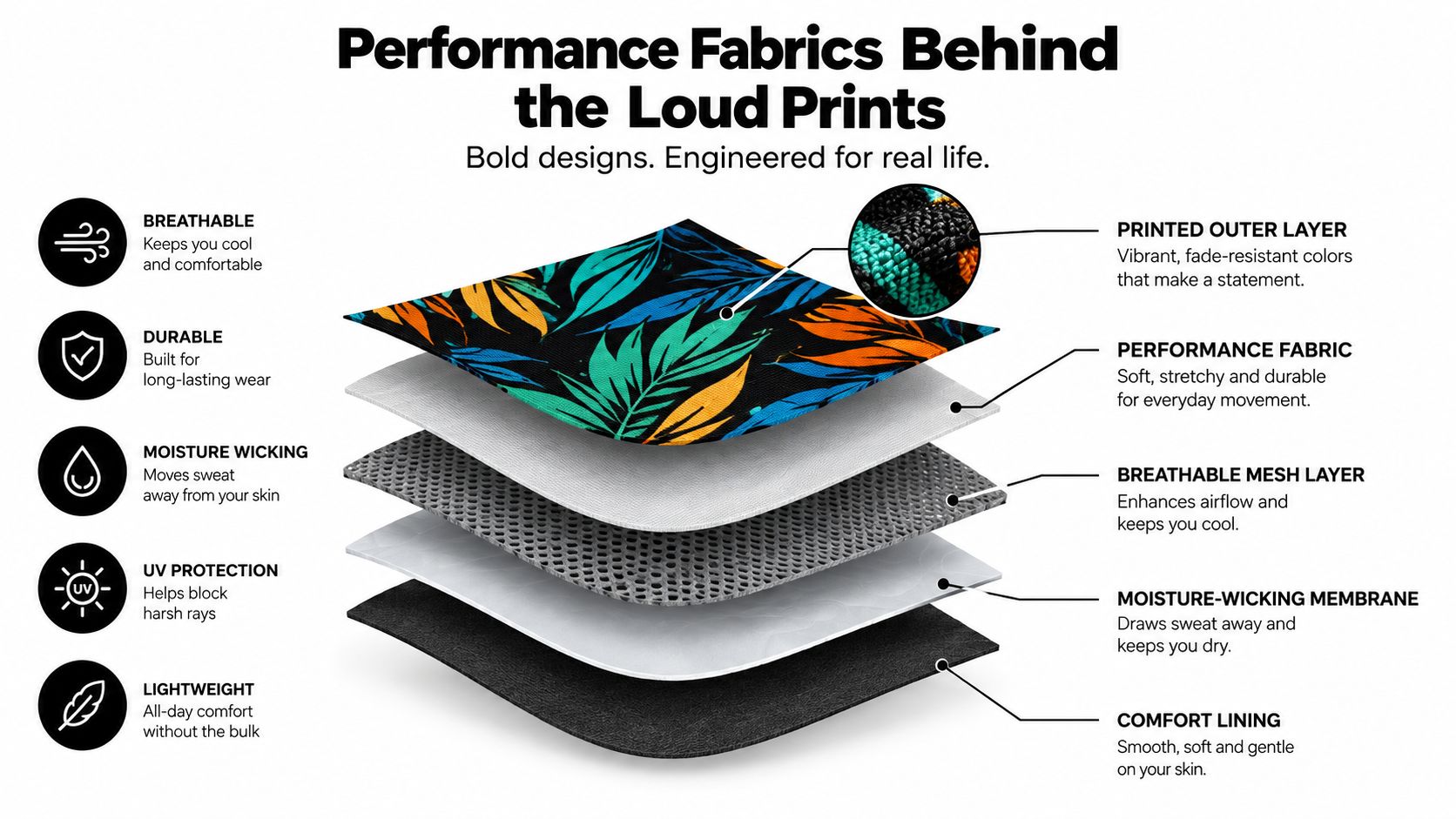
A loud print still has to earn its place on the course. If the fabric traps heat, sticks to the skin, or cuts movement, the shirt fails no matter how good it looks on the rack. Prioritize stretch, moisture management, quick-dry behavior, breathability, and UV protection.
Read the tag like someone who has worn this stuff in real heat. 4-way stretch means the garment is built for torso rotation and shoulder turn, which matters on every full swing. Moisture-wicking and quick-dry claims matter because they keep sweat from sitting on the skin and turning the round heavy. Breathability helps the shirt dump heat, and that matters on long, sunny rounds more than a graphic ever will.
understanding how moisture-wicking fabric works helps separate real golf wear from loud clothing that only looks athletic. If a shirt moves moisture away from the body and dries fast, it is doing part of the job already. If it only looks flashy, it is just a print with sleeves.
Sun protection deserves real attention. A UPF assessment of golf-apparel items found that UPF labeling was uncommon and that exposed areas like the neck, shoulders, and arms were often still undercovered. A bold shirt's value comes from verified sun protection, not just visual impact.
Movement changes coverage too. Stretch can open up gaps, and perspiration can affect how fabric handles ultraviolet exposure. A technical polo or shirt with stated UPF, plus a protective hat, gives better course-ready value than a fashion-only piece with no performance details.
The same logic applies even if a product page is thin on lab language. Breathable, moisture-moving materials help keep the shirt comfortable when the pace slows. A dense but flexible knit supports swing motion while still holding shape. If a brand talks only about graphics, treat it as lifestyle apparel, not serious golf wear.
Tattoo Golf is one brand that pairs bold looks with performance fabrics. The buying rule stays simple. Check the technical claims first, then decide whether the print earns the price.
How to Pick the Right Bold Golf Gift Every Time
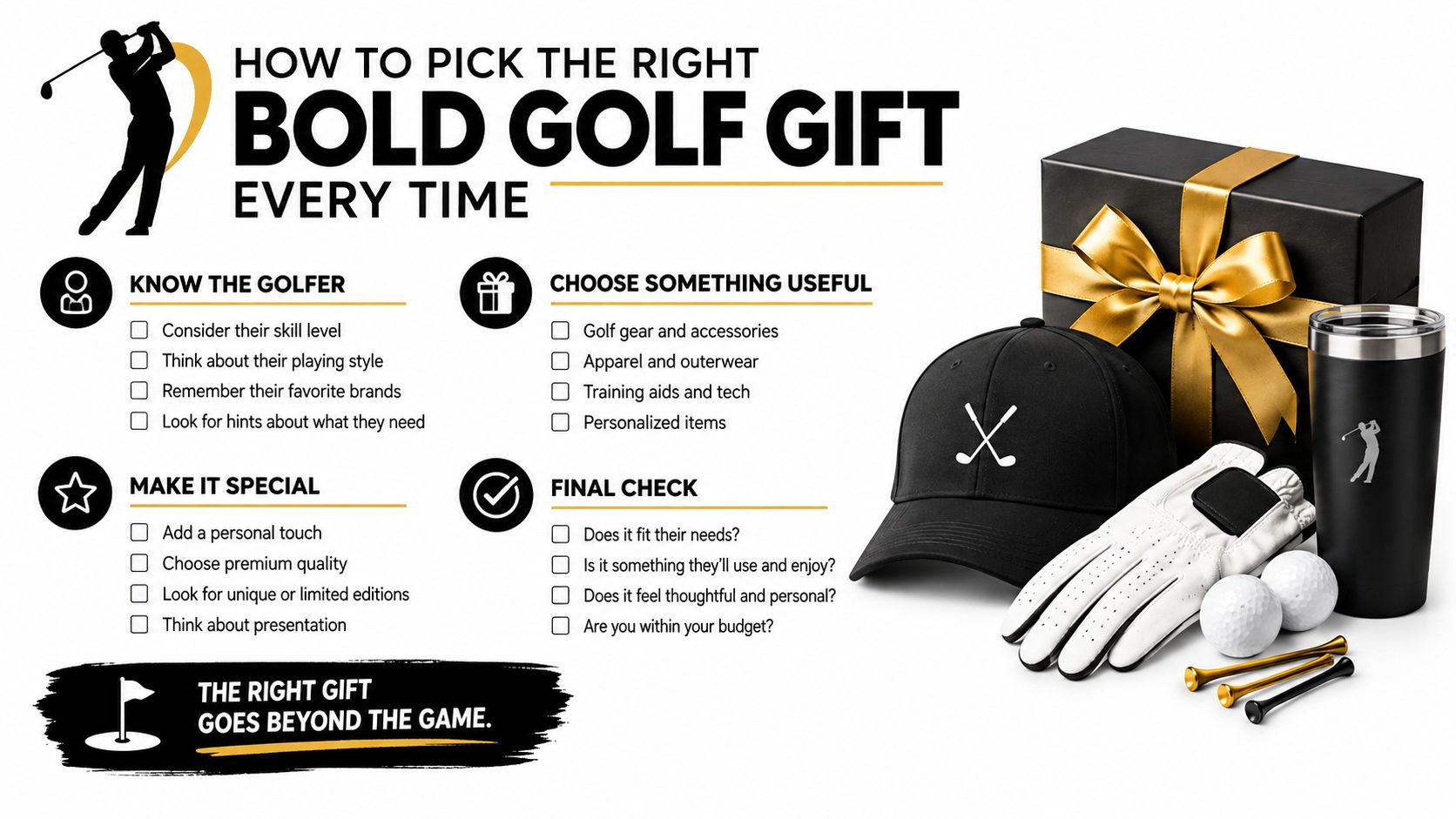
The safest bold gift is the one that fits the golfer's reality. Start with fit uncertainty. If you don't know measurements, buy pieces with forgiving sizing, clear return policies, or a category that doesn't depend on exact fit, like a visor, belt, headcover, or accessory. That's the easiest way to avoid a gift that looks great in the cart and never leaves the closet.
Then judge the dress-code risk. Private clubs and conservative rounds call for subtler statements, while public courses, resort play, simulators, and 19th-hole settings give you more freedom. If the recipient moves between those worlds, lean toward a piece that can be paired with quiet basics instead of a full head-to-toe statement.
A quick checklist helps:
- If you don't know the size, choose flexible categories. Belts, hats, visors, gloves, and accessories are safer than pants or fitted outerwear.
- If the golfer plays conservative courses, choose restrained prints. Use bold color in one item, not three.
- If the golfer likes social rounds, coordinate the look. Matching shirts, hats, or accessories feel deliberate.
- If the recipient cares about sun exposure, look for UPF and coverage. The tag should say it clearly, not imply it.
- If you want the gift worn often, prioritize easy care. Washability, stretch recovery, and durable printing matter more than novelty.
Buying test: if the piece can't survive regular rounds and normal laundry, it's the wrong gift.
Care is part of the gift too. Bold apparel ages better when the print stays sharp, the fabric keeps its shape, and the garment doesn't demand special handling every time it's washed. That's why durable construction and easy exchange policies matter. A novelty item disappears. A wardrobe-builder keeps working.
For shoppers who want a coordinated kit instead of a random single item, use one bold piece as the anchor and build around it with neutral basics. That's the difference between a usable golf gift and a one-round joke.
Matching the Gift to the Golfer You Know
The trend-forward regular can wear a louder shirt, a retro visor, or a coordinated set more than once. The long-time traditionalist usually does better with a bold accessory, a cleaner cap, or one print in a familiar color family. A couple or foursome can go further, because coordinated pieces turn the gift into an event instead of a solo purchase.
Fit, not volume, is the key test. Bold golf gifts work when they're chosen as part of a wardrobe, not as a random splash of color. The right pick matches the golfer's course life, their sun exposure, and how much visual risk they'll embrace.
A good bold gift still has to survive real rounds and repeat use. For shoppers who want a coordinated kit instead of a single loud piece, start with one anchor item and build around it with neutral basics. That is the difference between a golf gift that gets worn and one that gets tossed in a drawer.
If you want bold golf gifts that still feel course-ready, explore Tattoo Golf for performance apparel, hats, belts, and accessories built around loud style and real wear.

Share:
How to Choose Golf Shorts That Fit and Move with You