
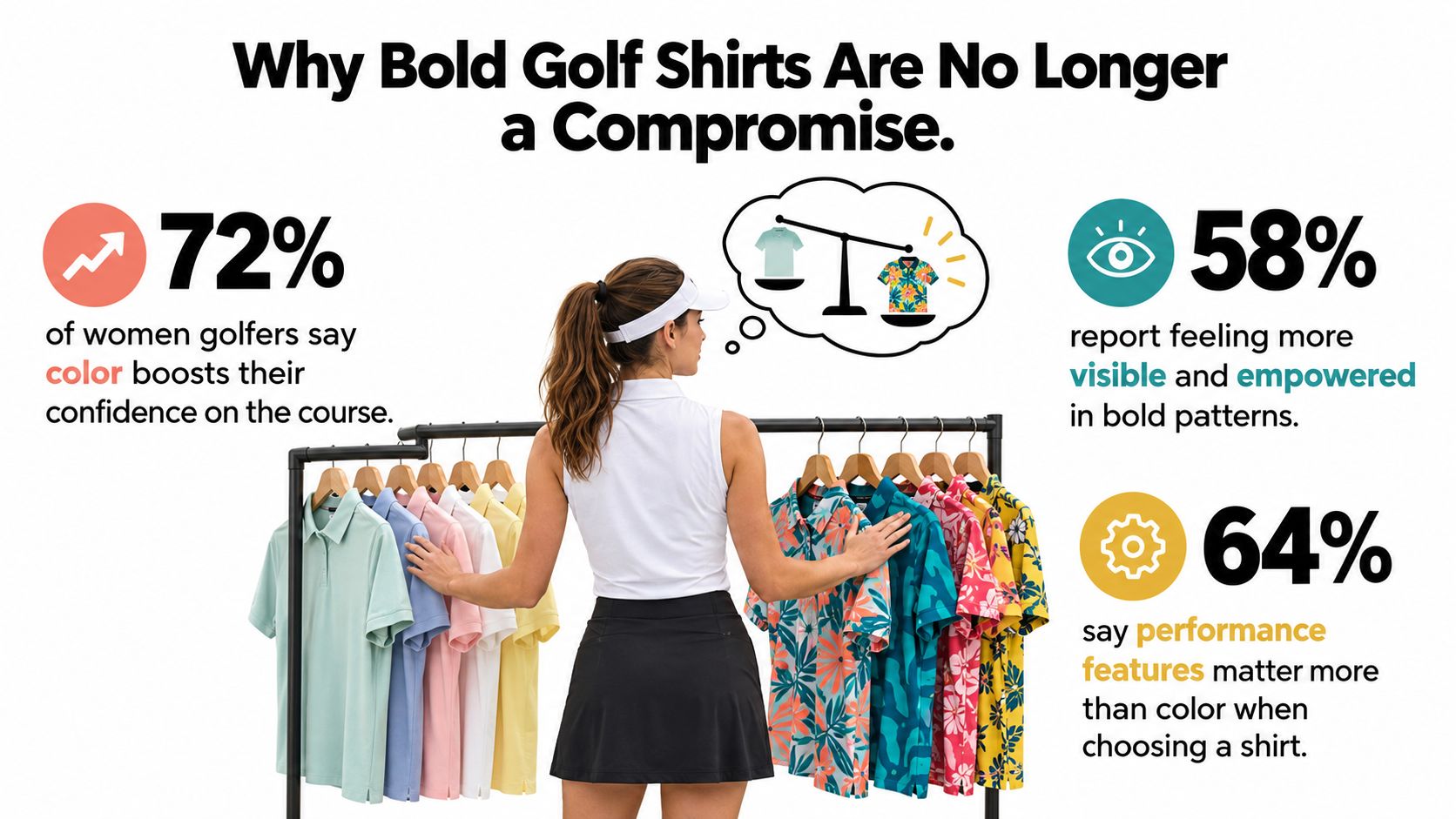
You're standing in front of a rack of women's golf polos, one hand near a dependable pastel, the other reaching toward a vivid print that feels much more like you. The safe option seems easier to style, but the bold shirt may be the one that makes you look forward to teeing off. The question isn't whether you can wear a statement shirt on the course. It's whether that shirt can handle your swing, the weather, the dress code, and the rest of your wardrobe.
The best bold women's golf shirts balance three things: technical performance, women-specific fit, and visual identity. Use those lenses together and a bright pattern becomes more than decoration. It becomes a practical part of your golf wardrobe.
Why Bold Golf Shirts Are No Longer a Compromise
In the United States, 28.1 million people played golf on a course in 2024, and women and girls represented 28% of that population, the highest proportion recorded according to National Golf Foundation data reported by The R&A. The female on-course golfer population reached nearly 7.9 million, also an all-time high.
Those figures change how a golf shirt should be judged. Since 2019, women and girls have generated approximately 60% of the net increase in green-grass golfers, adding about 2.3 million participants, according to the same R&A participation report. New golfers, league players, competitive athletes, occasional players, and social groups may want different silhouettes, levels of coverage, and color palettes. A bold shirt therefore serves a wider range of players, rather than representing a narrow style choice.
Judge the shirt, not just the print
Treat the print as one design layer, then test the garment underneath it. The shirt needs enough stretch for rotation, moisture management for walking, breathability for changing conditions, and a cut that stays comfortable at address. A plain white polo can fail those tests, while a vivid tropical print can pass them. Color cannot confirm performance, so read the fabric specifications separately.
The R&A reports that women represented 31% of adult golf participation across its nine largest markets, while women accounted for 50% of participation in alternative formats beyond traditional nine- and 18-hole golf. These figures support a practical conclusion: a modern golf shirt should suit different ways of playing, from a formal competitive round to a shorter or more social format.
Practical rule: Choose the shirt that supports your movement first, then choose the level of visual impact that feels like you.
Use three checks before buying. Does the shirt perform through a round? Does its women-specific cut move with your body? Does the color or pattern express your personality while remaining easy to coordinate? A shirt that passes all three tests turns bold styling into a considered performance choice.
The Three Lenses That Define a Great Golf Shirt
A useful shopping method starts before you compare colors. Evaluate every shirt through performance, fit, and style. A product that succeeds in only one category often creates a different problem: technical fabric in an awkward cut, a flattering shape that restricts your backswing, or an exciting print that becomes difficult to coordinate.
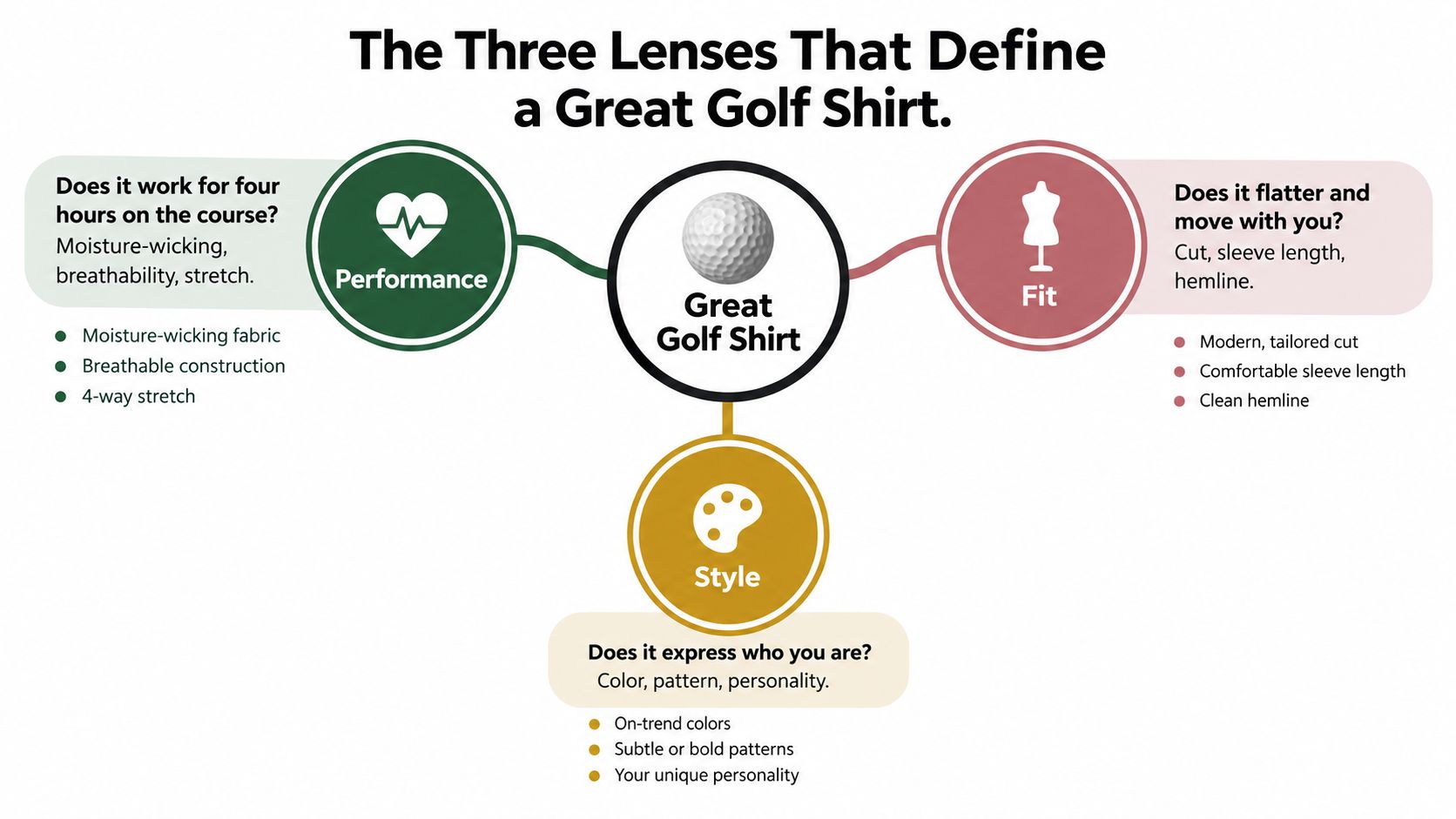
Lens one is performance
Start with what the shirt does during movement and weather changes. Look for a fabric construction that supports moisture transport, breathability, stretch, and drying speed. These features matter during a walking round, a warm practice session, or a cool morning when you add and remove layers.
A colorful print doesn't prove that the textile wicks sweat. Read the product specifications separately. You want evidence about the fabric and finish, not an assumption based on how athletic the garment looks.
Lens two is women-specific fit
A women's golf shirt should accommodate the bust, shoulders, waist, and hip movement without forcing you into either a shapeless cut or an overly tight one. The correct size lets you raise your arms, rotate your torso, and settle into golf posture without the hem pulling upward or the upper back tightening.
Fit also affects confidence. If you keep tugging at the shirt before every shot, the problem isn't your swing routine. The garment is asking for attention it shouldn't need.
Lens three is visual identity
Style includes more than a bright color. It can come from a graphic, a contrast collar, a coordinated pair of pieces, a strong neckline, or a print that reflects your interests. The right statement feels intentional because the rest of the outfit gives it room.
Use the three lenses in order. First confirm that the shirt can perform. Then test its movement and proportions. Finally decide whether the design earns a place in your wardrobe.
Reading Fabric Labels Like a Course Designer
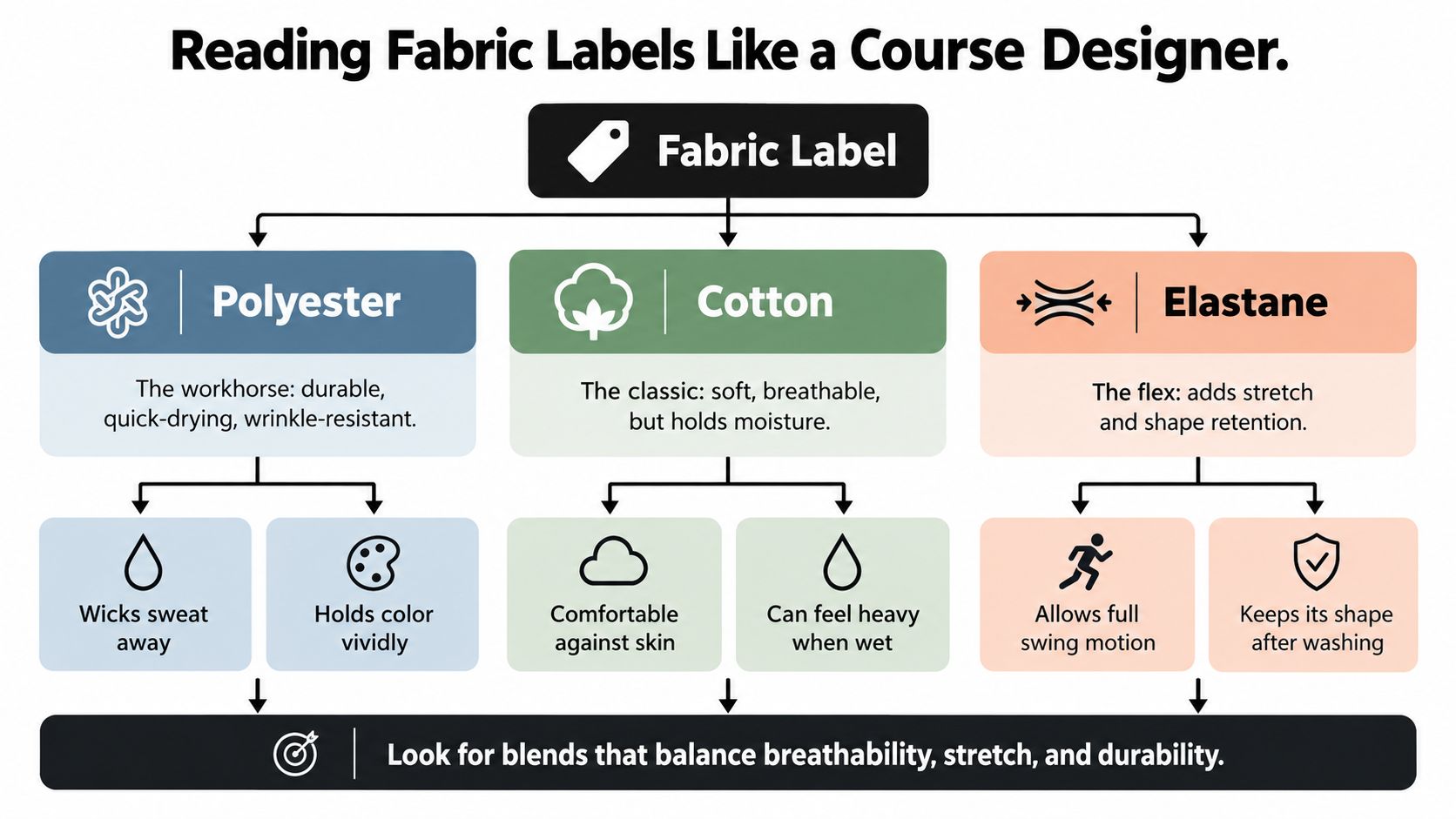
A fiber label tells you what the shirt is made from, but it doesn't tell the whole performance story. Knit structure, fabric thickness, air permeability, finishing, and seam placement all affect how the garment feels during a round. Polyester-rich textiles generally absorb less moisture than cotton, but a lightweight knit and a dense, heavy knit can behave very differently even when they share the same main fiber.
Translate each material into course use
Polyester is common in golf apparel because it can dry quickly, hold color, and resist wrinkling. It still needs a suitable knit and finish to move sweat effectively. A thin, breathable polyester polo may feel comfortable in heat, while a denser construction may offer more structure and coverage.
Cotton can feel soft against the skin and may suit a casual practice session or a cool, dry day. It tends to hold moisture, though, which can leave the shirt feeling heavier as the round continues.
Elastane, sometimes listed as spandex, adds stretch and helps the garment recover its shape. Four-way stretch can support torso rotation and arm movement, but more stretch isn't automatically better. If the shirt compresses across the bust or pulls at the shoulders, mobility suffers.
Look for product details that explain moisture management, quick-dry behavior, breathability, stretch direction, and care requirements. You can also learn more about the mechanics in this guide to what moisture-wicking fabric does.
Read construction beyond the fiber name
A smooth surface, flat seams, and a balanced drape can matter as much as the fiber blend. Flat-lock seams may reduce friction on a long walk. A stable collar can keep the shirt looking composed after repeated swings. A fabric with enough body may drape cleanly rather than cling to damp skin.
The same logic applies if you practice at home. A compact setup with artificial turf greens for golfers can help you test how a shirt behaves during repeated putting and movement without waiting for your next tee time.
A bold graphic tells you how the shirt looks. The fabric specification tells you how it works.
Before buying, ask what happens after several hours of wear. Will the shirt keep its shape? Will the print remain clear after washing? Will the material dry instead of staying clammy? Those answers come from construction details, not from the colorway.
Testing Fit in the Golf Posture Before You Buy
A shirt can fit well while you're standing still and fail as soon as you take the club back. Test it in the posture you'll use. If you're shopping online, repeat the process at home before removing tags.
Use the five-part movement test
- Raise both arms. Watch the hem. If it climbs sharply over your waist or exposes the base layer, the torso may be too short or the cut may not allow enough movement.
- Rotate your upper body. Keep your hips fairly still and turn as if you're making a backswing. Check whether the shoulder seam digs into your arm or the fabric pulls across your upper back.
- Reach forward. Extend both arms as if you're addressing the ball. Sleeves shouldn't twist uncomfortably, and the neckline shouldn't gape when your shoulders move.
- Check the bust and torso. The placket should lie flat without pulling. The fabric should skim rather than strain, especially if the shirt includes a strong print that can make tension lines more visible.
- Bend and walk. Take a few practice steps and hinge slightly from the hips. The hem should remain secure, and the shirt shouldn't bunch beneath a belt or waistband.
Sleeve length changes the visual balance of a bold print. A shorter sleeve can feel more athletic, while a longer sleeve may provide extra coverage and a calmer silhouette. A structured collar can also help a vivid design feel appropriate at clubs with clearer dress expectations.
For more options across traditional polos and contemporary shapes, browse the women's golf shirts collection. Compare the garment measurements with a shirt you already own and like, rather than relying on small, medium, or large alone.
If you prefer a relaxed drape, sizing up may work, but check that the shoulder seam doesn't drop so far that it restricts the swing. If you prefer a closer athletic fit, confirm that the fabric still allows a full turn. Your best size is the one that disappears when you move.
The Boldest Shirt Is Not Automatically the Safest
A saturated color or dark graphic can look substantial, but visual density doesn't guarantee ultraviolet protection. UPF is the measurable criterion. UPF 15 blocks about 93.3% of ultraviolet transmission, UPF 30 blocks 96.7%, and UPF 50+ blocks approximately 98%.
Check the fabric, not the shade
Dense, tightly woven or knitted fabric generally leaves less open space for UV to pass through. Darker or more saturated colors typically transmit less UV than pale shades, but a dark print on a loosely constructed shirt still isn't proof of a certified rating. A garment can look protective and provide uncertain coverage.
A 2025 analysis of 671 golf-apparel items found that UPF labeling appeared on only 7.1% to 16.7% of products, while women's tops received a mean coverage score of 3.69 on a seven-point scale. The findings are reported in the PubMed record for the study.
Build a practical sun checklist
Prioritize a stated UPF 30 or UPF 50+ rating, then inspect the areas that receive direct exposure during a round:
- Shoulders and upper back: Look for fabric that remains opaque when stretched across the swing.
- Neckline: A higher collar can cover more skin, especially when you're walking in open sun.
- Sleeves: Longer sleeves provide more coverage, while certified sleeves can supplement a short-sleeved shirt.
- Care instructions: Follow the label if the garment relies on a UV finish, because laundering may reduce its effectiveness over time.
- Exposed skin: Continue using sunscreen and consider a hat, since no shirt covers every area.
Stretch can change coverage. If the fabric becomes visibly thin or overly relaxed, replace it rather than treating the original rating as permanent protection.
Matching Silhouette to Statement
The same print can make a different impression depending on the neckline and placket. Choose the silhouette according to the setting, the level of visual noise you want, and how much structure you prefer around the shoulders and neck.
Button-placket polo
A traditional polo gives a bold print a familiar outline. A structured collar can help a multicolor design feel polished at a club with a conservative dress code, while the graphics provide personality without changing the basic shape. Tattoo Golf's women's catalog includes a multicolor tropical-print polo, an example of letting the artwork carry the visual impact while the polo silhouette stays recognizable.
This shape works well when you want the shirt to be the clear statement and the bottom to remain quiet. Pair it with solid shorts, a neutral skort, or plain golf pants. The collar also creates a useful visual break between a busy print and your face.
Quarter-zip hybrid
A quarter-zip changes the emphasis. The higher neckline and clean front can make a small chest logo the focal point, as with a white Tattoo Golf quarter-zip featuring a skull chest logo. The simpler base gives the emblem room to stand out, while the zip lets you adjust ventilation and styling during changing conditions.
Choose this silhouette when you want a cleaner, more modern line or when a concentrated logo feels better than an all-over print. It can also offer more neck coverage than an open polo, although you should still verify the garment's UPF rating rather than assuming the higher neckline provides certified protection.
The decision is straightforward. Select the polo when the pattern is the headline. Select the quarter-zip when the silhouette and one focused detail should lead.
Building a Wardrobe That Travels Beyond the Course
Boldness becomes more useful when you can wear a shirt repeatedly with different bottoms. The simplest styling rule is one statement, two neutrals. Let one printed or vividly colored item lead, then support it with two quiet elements such as black, white, navy, stone, or denim.
A tropical polo might pair with white shorts for a bright round, then with dark denim after the course. A black shirt with a graphic can work with a printed skort if the print includes black, or with a neutral bottom when you want the shirt to stand alone. The goal isn't to match every color exactly. It's to repeat one tone so the outfit looks connected.
Make coordination feel intentional
Matching polos can work well for couples, leagues, and event groups, especially when everyone shares a color family or motif. Keep the bottoms and accessories flexible so the look feels coordinated rather than uniform. A group might wear related Aloha or skull-inspired shirts while choosing individual shorts, skorts, hats, or shoes.
A wardrobe also needs pieces that suit your actual playing habits. If you play occasional rounds, choose a print that works with more than one neutral bottom. If you play in a league, a strong solid with a distinctive collar may earn more repeat wear than a highly specific novelty design.
For a fuller approach to combining statement pieces and dependable basics, use this guide to building a golf wardrobe with bold essentials.
Price matters, but so do comfort, fit, and versatility. Recent industry reporting identifies those qualities as leading purchase priorities, while 41% of surveyed women preferred modern athletic golf styles, according to Lightspeed's discussion of women's golf participation and retention. That supports a practical buying test: if you can't name several outfits and settings for a shirt, its novelty may not justify the space it takes in your closet.
Care, Longevity, and Your Final Decision Checklist
The way you wash a golf shirt affects its appearance and performance. Use a cold, gentle cycle when the care label permits, avoid bleach, and choose low heat or hang drying. High heat can stress stretch fibers, while bleach may affect color and printed graphics.
Turn printed shirts inside out before washing and avoid placing a hot iron directly over artwork. Store them folded or on suitable hangers so the collar and shoulder seams don't become distorted. If a shirt develops persistent odor, loses its shape, or becomes visibly thin and stretched, reassess it rather than relying on the original performance claims.
Pre-purchase decision checklist
| Lens | What to verify | Pass criterion |
|---|---|---|
| Performance | Fabric construction, moisture management, breathability, stretch, care details | The specifications match your climate and playing habits |
| Sun protection | Stated UPF rating, fabric density, shoulder and neckline coverage | A clear UPF rating supports the exposure you expect |
| Fit | Hem rise, shoulder movement, sleeve position, bust and torso comfort | You can complete the golf-posture test without pulling or binding |
| Silhouette | Polo or quarter-zip structure, collar height, visual balance | The shape suits the course setting and your preferred statement level |
| Style | Print, color, logo placement, compatibility with neutral bottoms | You can imagine wearing the shirt in several outfits |
| Value | Repeat-wear potential, durability, usefulness beyond one round | The shirt earns regular space in your wardrobe |
Keep the checklist with your phone when shopping online. Product photos show the design, but the fabric details, measurements, and care instructions determine whether that design will remain useful after the first impression.
A bold shirt succeeds when performance, fit, sun awareness, and self-expression work together. Don't choose between personality and readiness. Test both before you buy.
Tattoo Golf offers women's polos and golf shirts with expressive designs, including bold prints, skull motifs, and coordinated options that can be evaluated through the performance and fit criteria above. Visit Tattoo Golf to explore the collection and choose a statement piece for your next round.


Share:
7 Fall Golf Outfits to Layer for Cool, Wet Rounds