
You're standing on the first tee in heat that makes the air feel sticky, and your shorts are the first thing you notice if they're wrong. Too short looks like you raided the gym bag. Too long looks like you gave up before the round started. Men's Golf Shorts With a 9-inch Inseam sit right in the middle for a reason, they look clean, they move well, and they don't force you to explain your outfit to anyone.
The 9-inch inseam became the practical default because it lands just above the knee on many golfers, which gives you coverage without turning the shorts into baggage. Retail guidance repeatedly frames 8 to 9 inches as the most versatile range, and 9 inches as the classic golf-short length, while 7-inch cuts skew more athletic and 10.5-inch or 11-inch cuts read more conservative. That's the basic truth buyers keep relearning every summer.

Why the 9-inch Inseam Is the Modern Default
The cleanest way to think about a 9-inch golf short is this, it's the length that disappears. It doesn't pull focus, and that matters more than people admit. On course, you want the shorts to support your swing and your posture, not become a style argument before you've hit a shot.
The compromise most golfers actually want
A 9-inch inseam sits between the sharp, athletic feel of a 7-inch short and the heavier, more conservative look of an 11-inch short. That middle position is why it keeps winning shelf space. One major golf retailer says 8 to 9 inches is the most versatile range, and another describes 9-inch shorts as the classic fit that may sit slightly below the knee.
That's not just merchandising convenience. It's the actual state of golf dress codes and body types. A 9-inch short gives most players enough knee clearance to move naturally while still looking polished enough for stricter clubs. It also photographs well, which sounds minor until you see how a shorter cut or a longer cut changes the entire silhouette in a swing photo.
Practical rule: If you want one length that works across the widest range of courses, body types, and ages, start with 9 inches.
The reason this length feels so settled is historical as much as practical. Golf has always favored a neater, more polished line than running shorts or training shorts. That style expectation is exactly why 9 inches became the reference point in mainstream golf apparel rather than just another option in the rack.
The best default is the one you don't have to think about. Nine inches is that default for most golfers.
How 9 Inches Compares Across the Inseam Range
The golf-short rack looks different now, and that helps if you shop with a purpose. 9 inches is the middle lane, but the real choice is visual, not just technical. Editorial roundups now show 7-inch, 9-inch, 10-inch, and 11-inch options side by side, which mirrors how golfers buy shorts today (Forbes golf shorts roundup).
The range from athletic to conservative
A 7-inch short reads sharp and athletic. A 9-inch short reads balanced and course-ready. A 10-inch or 11-inch short moves into more conservative territory, which fits private-club settings, taller builds, or golfers who want extra coverage without looking oversized.
| Inseam | Look | Swing Mobility | Best For |
|---|---|---|---|
| 7-inch | Athletic, modern | High | Younger golfers, hotter weather, a sharper look |
| 8-inch | Slim athletic | High | Golfers who want a cleaner cut without going short |
| 9-inch | Versatile benchmark | High | Most golfers, most courses, most body types |
| 10-inch | Modern conservative | Moderate to high | Taller players, stricter venues, extra coverage |
| 11-inch | Classic, conservative | Moderate | Traditional clubs, maximum coverage needs |
Use the table, then choose by situation. If you want the cleanest silhouette with easy movement, 9 inches stays the safest buy. If you want a more assertive look, 7 inches does that job. If your course is strict, or you are tall enough that a shorter hem looks awkward when you sit in a cart, move to 10 or 11 inches.
That last point matters more than style purists admit. A taller golfer can make 9 inches look shorter in motion, especially when the hem rides higher while seated. A 10-inch short often solves that without turning conservative into sloppy.
For one pair that covers the widest range of rounds, 9 inches is still the cleanest answer. If you are choosing by appearance first, though, treat inseam length as a style decision, not a default setting.
Fabric and Construction That Actually Matter
Once you settle on 9 inches, fabric becomes the next filter, and it matters more than brand storytelling. The best-looking inseam can still fail if the short binds, sags, or loses shape halfway through the round. That's why the label alone doesn't tell you much.
What to look for before you click buy
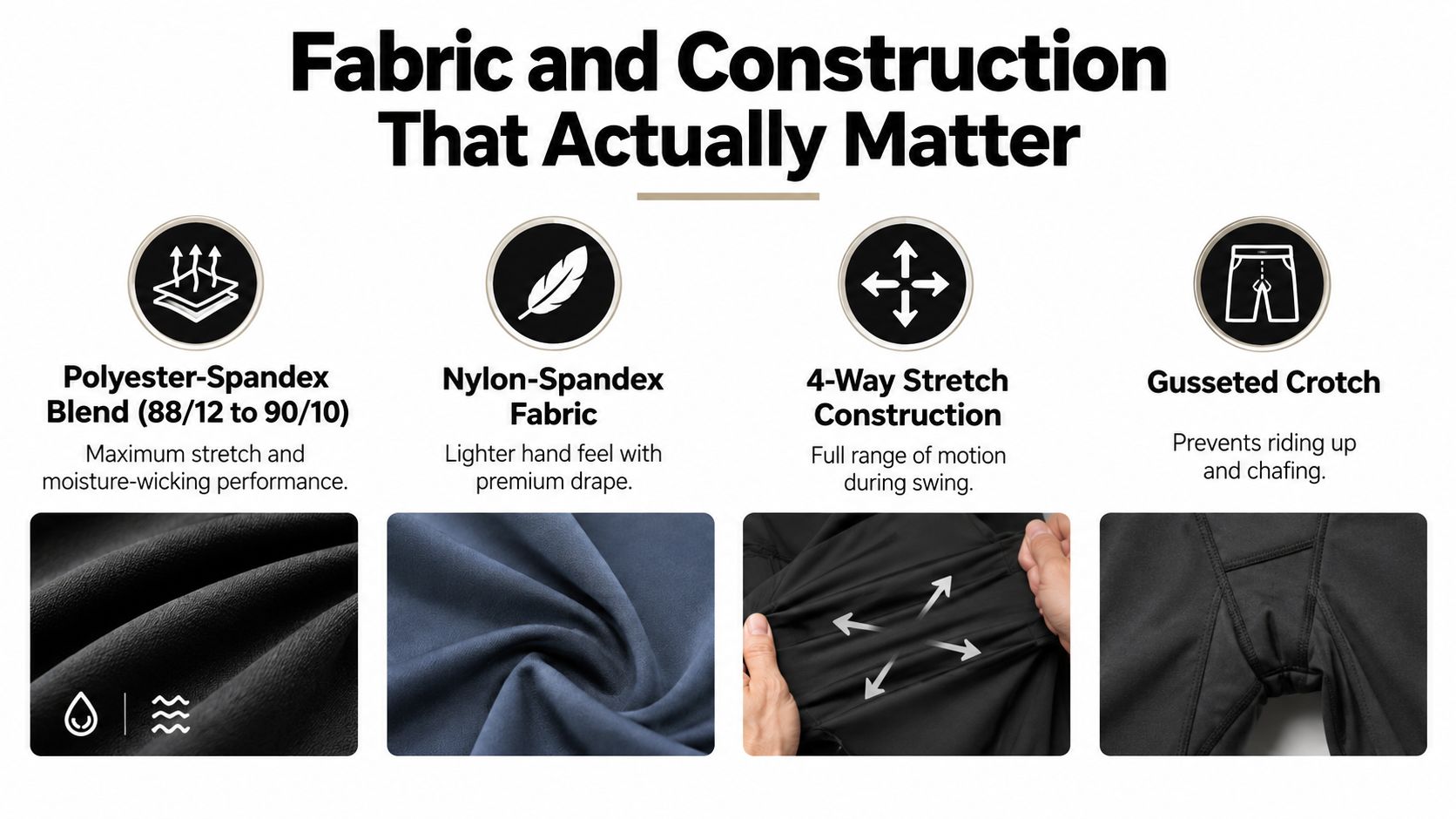
The safest fabrics are technical blends that stretch and recover well. Performance shorts often use polyester-spandex for strong stretch and moisture management, nylon-spandex for a lighter hand, or a woven stretch fabric that moves with the swing. A short that feels stiff in the fitting room usually feels worse after nine holes.
Moisture-wicking finishes also matter because golf is a long walk in shifting conditions. Look for UPF protection, quick-dry treatment, and a finish that won't turn clingy when you sweat. If the short claims antimicrobial support, that's useful too, but only if the rest of the construction is solid.
A good fabric can't fix a sloppy cut, but a solid cut can make mid-tier fabric look much better than you'd expect.
Construction details separate the decent shorts from the ones you keep reaching for. A gusseted crotch helps the swing feel unrestricted. Flatlock seams reduce chafe. A secure fly closure, whether zip, snap, or magnetic, keeps the waistband clean. Deep pockets help if you carry a glove, tees, or a rangefinder, and a proper scorecard pocket is a real convenience, not a gimmick.
Here's the simplest buyer check I use: stretch the waistband, tug the side seam, and make sure the hem feels finished, not lazy. Then grip the fabric in your fist and let it go. If it doesn't bounce back, don't buy it.
If you want a broader look at performance shorts as a category, this golf shorts guide from Tattoo Golf is useful context, especially if you're comparing technical shorts across different cuts.
Fit, Sizing, and How the Length Should Hit
The right inseam can still look wrong if the fit is off. That's why a 9-inch short needs to be judged on the body, not just on paper. The number on the tag is only useful if the waist, rise, and leg shape all cooperate.
Waist control first
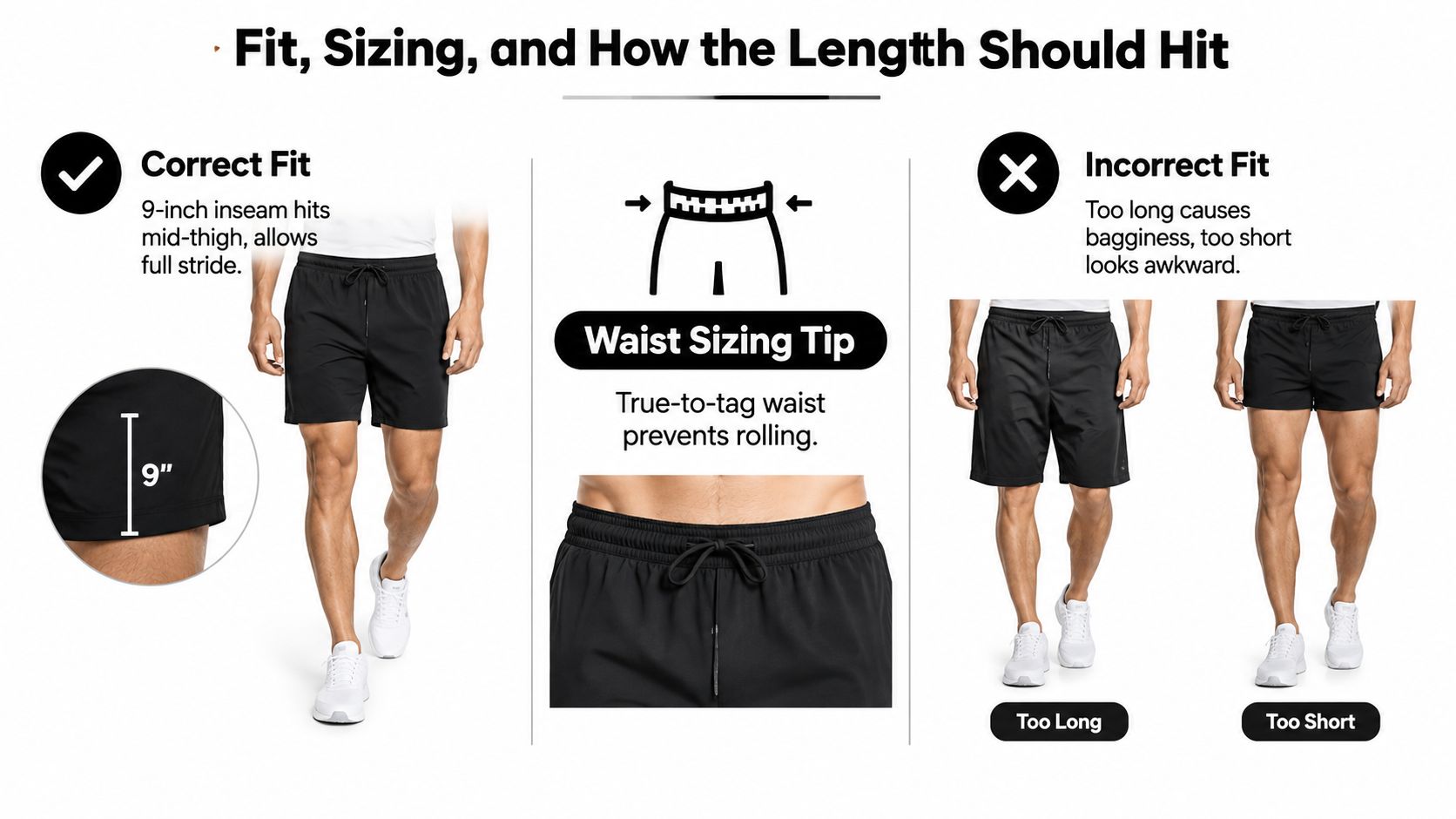
Start with the waistband. A true-to-tag waist is the easiest way to avoid rolling, shifting, and constant tugging during the swing. Elastic waists give more forgiveness, drawcords add adjustability, and belt loops give you the most traditional stability, especially if the short sits slightly looser through the waist.
The leg shape changes the story fast. A slim cut makes 9 inches feel cleaner and more modern. A straight cut gives the most balanced look for most golfers. A relaxed cut can make the same inseam look longer and heavier, which is why it's easy to get that dated, floppy feel even when the measurement is technically correct.
The hem should usually land a little above the kneecap, not dragging on it. If it lands too low, the short starts to feel sluggish. If it lands too high, the whole silhouette shifts into a more athletic lane. That's fine if that's what you want, but don't call it classic golf fit.
Fit check: sit, squat, and address the ball. If the waistband shifts or the thigh pulls, the cut is wrong even if the inseam number looks perfect.
If you're trying to avoid online returns, is a smart way to sanity-check waist and fit before ordering. It won't replace trying things on, but it will save you from obvious sizing mistakes.
For a deeper look at body shape and short fit, this Tattoo Golf fit guide is a good companion piece. It lines up with the same basic rule I'd give anyone shopping blind, the short has to move with you, not against you.
Outfit Pairings That Make 9-inch Shorts Pop
Nine-inch shorts are the best canvas in the drawer because they don't fight the rest of the outfit. They give you room to go louder up top or keep everything quiet and let texture do the work. That's why they're easier to style than shorter fashion shorts or longer traditional ones.
Solid shorts, louder polos
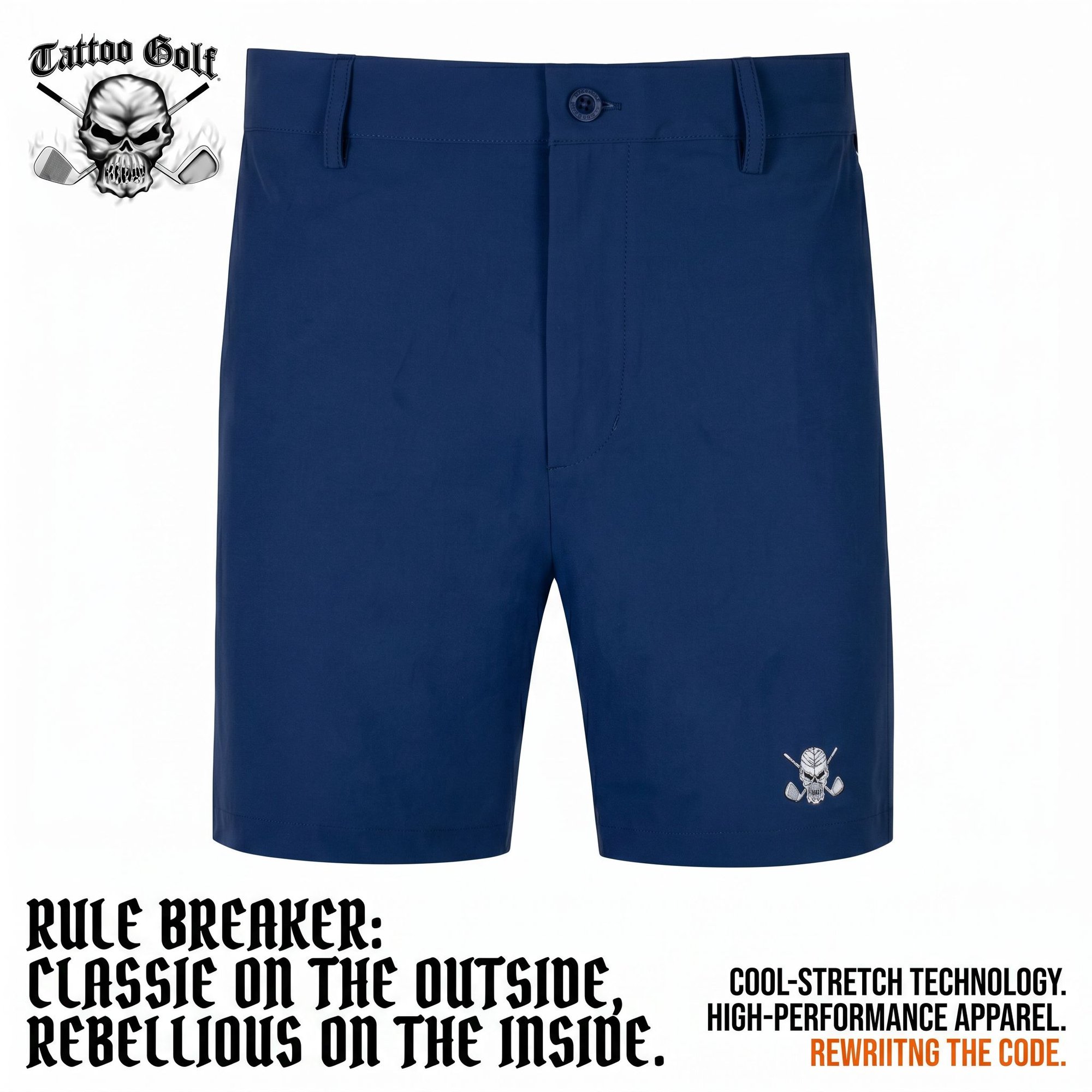
The safest move is a neutral 9-inch short with a printed polo. That keeps the outfit from getting noisy at the waist and lets the shirt carry the personality. If you wear a bold pattern on top, the short should usually stay quiet, navy, black, tan, gray, or a muted green.
Printed shorts work too, but only if the top calms them down. A tonal solid polo, matched belt, and simple shoe keep the look from tipping into costume territory. That's the same visual logic behind a lot of Tattoo Golf outfit pairings, where the louder art-forward tops are designed to sit over shorts instead of competing with them. Their polo shirt collection gives you a sense of how the top half can carry the design while the short stays anchored.
A monochrome outfit can work just as well if you break it with texture. Tonal belt, tonal shoe, tonal hat, then a short in the same color family. The point isn't sameness, it's control. You want the eye to move cleanly from top to bottom.
For another reference on coordinated golf styling, is useful because it shows how brands keep shorts flexible inside a bigger outfit system. The main lesson is simple, don't let shorts and shirt fight for attention at the same time.
Bold prints are fair game on the course, but they still need discipline. If the short is loud, keep the shirt quiet. If the shirt is loud, keep the short simple. That's the formula.
Care and Maintenance for Performance Shorts
Performance shorts only stay sharp if you treat the fabric like performance fabric. Hot water, heavy detergent, and high heat drying break down stretch and finishes faster than most golfers realize. The care routine is simple, and it works.
Wash them like technical gear
Use cold water on a gentle cycle. Skip fabric softener because it can interfere with moisture-wicking finishes. Choose a mild, bleach-free detergent and wash the shorts with similar synthetic fabrics so they don't get beat up by rougher cotton pieces.
Drying is where many owners wreck a good pair. Tumble low or hang-dry. High heat is hard on spandex, and it can fade prints and weaken the shape around the waistband and hem. If you want the shorts to hold their line, keep the dryer mild or skip it altogether.
Stains from grass, sunscreen, and sweat need pre-treatment before the wash. Don't scrub aggressively, just treat the spot and let the detergent do the work. After the shorts are clean, check for pilling, loose threads, or color fade before you put them away.
Storage matters more than people think. Hanging helps the shorts keep their shape, especially if the waistband has stretch. Rotation matters too, because wearing the same pair every round beats up the elastic faster. If stretch recovery starts to fade, it's time to retire the pair.
Your 9-inch Inseam Buying Checklist
A good 9-inch golf short doesn't need a lot of gimmicks. It needs the right inseam, the right fabric, and a cut that sits where it should. If you're shopping fast, use this as your filter.
- Confirm the inseam is exactly 9 inches: Not 8.5, not 10, and not “roughly knee length.” The measurement should be clear.
- Choose a four-way stretch woven fabric: If it won't move with your stride, it won't work on the course.
- Look for moisture management and UPF: Those finishes help the shorts hold up in heat and sun.
- Check for a gusseted crotch: That's one of the simplest signs the short was designed for movement.
- Inspect pocket security: A zip or secure side pocket is useful, especially if you carry small accessories.
- Make sure the waistband holds shape: You want stability without relying on a belt to do all the work.
If you're deciding between 9 and 11 inches, choose 9 when you want a cleaner, more modern look, and choose 11 only when the course vibe, modesty expectations, or venue rules call for more coverage. If you want a more athletic, shorter look, go 7 inches instead. That's the honest split.
My advice is blunt. Buy 9-inch shorts if you want the most balanced option for mobility, coverage, and everyday versatility. Choose 7-inch shorts when you want a sharper, more athletic cut, and move to 11-inch shorts only when tradition or course rules demand it.
Tattoo Golf builds golf apparel for players who want performance without dressing like everyone else, and the brand's shorts, polos, hats, and belts make that 9-inch decision easier to style. If you want a course-ready look with personality, visit Tattoo Golf and build an outfit around the length that fits your game.
Share:
Camo Golf Outfits: Finding Your Perfect Golf Size
What to Wear to a Golf Tournament: The Ultimate Guide