
You've made the drive, checked the tournament schedule, and packed the outfit that looked sharp at home. Then you reach the clubhouse and notice the signs, the polished shoes, and the spectators dressed for a long day outdoors. Suddenly, what to wear to a golf tournament feels less obvious. The right choice has to handle walking, weather, venue etiquette, and personal style without crossing a dress-code line.
The safest approach is polished country-club casual with modern performance details. Start with a collared polo or neat golf shirt, fitted shorts or lightweight trousers, and clean closed-toe walking shoes. Then use fabric, color, layering, and a well-chosen leather belt to make the outfit personal rather than generic.
Arriving at the Course - Why Your Outfit Matters
You arrive early, ticket ready, and head toward the clubhouse before following the gallery toward the first tee. A spectator in jeans and flip-flops turns back after reading the venue guidance, while another visitor adjusts a tucked-in polo and walks through without hesitation. Neither outfit affects the golf, but one creates friction before the day has even started.
That's why tournament clothing carries more weight than ordinary weekend golf attire. A tournament may involve course access, hospitality areas, a pro shop, a clubhouse, and long stretches of walking over uneven ground. Your outfit has to work across all of those settings, not just look acceptable in a parking-lot mirror.
The safest starting point
The Florida State Golf Association's spectator policy provides a useful baseline. It excludes blue jeans, T-shirts, tank tops, short-shorts, and flip-flops at its functions, and asks gentlemen to remove hats when entering the clubhouse, pro shop, or grill. The association's spectator policies show how comfort and etiquette operate together.
For most tournament days, build around:
- A collared polo or neat golf shirt: It works on the course and remains presentable near formal facilities.
- Well-fitted shorts or lightweight trousers: Choose clean lines, a proper waistband, and enough room to walk comfortably.
- Closed-toe walking shoes: Stable soles matter more than flashy styling when you're covering grass, paths, and slopes.
- A light outer layer: Wind and rain can change the experience quickly, so pack something compact rather than relying on the morning forecast.
Practical rule: Dress for the strictest place you expect to enter, not the most relaxed place you'll visit.
That rule also protects your confidence. You won't spend the day wondering whether security, a marshal, or a clubhouse attendant will challenge your clothing. Instead, you can focus on the competition, the atmosphere, and the practical demands of being outside for hours.
Decoding Golf Tournament Dress Codes
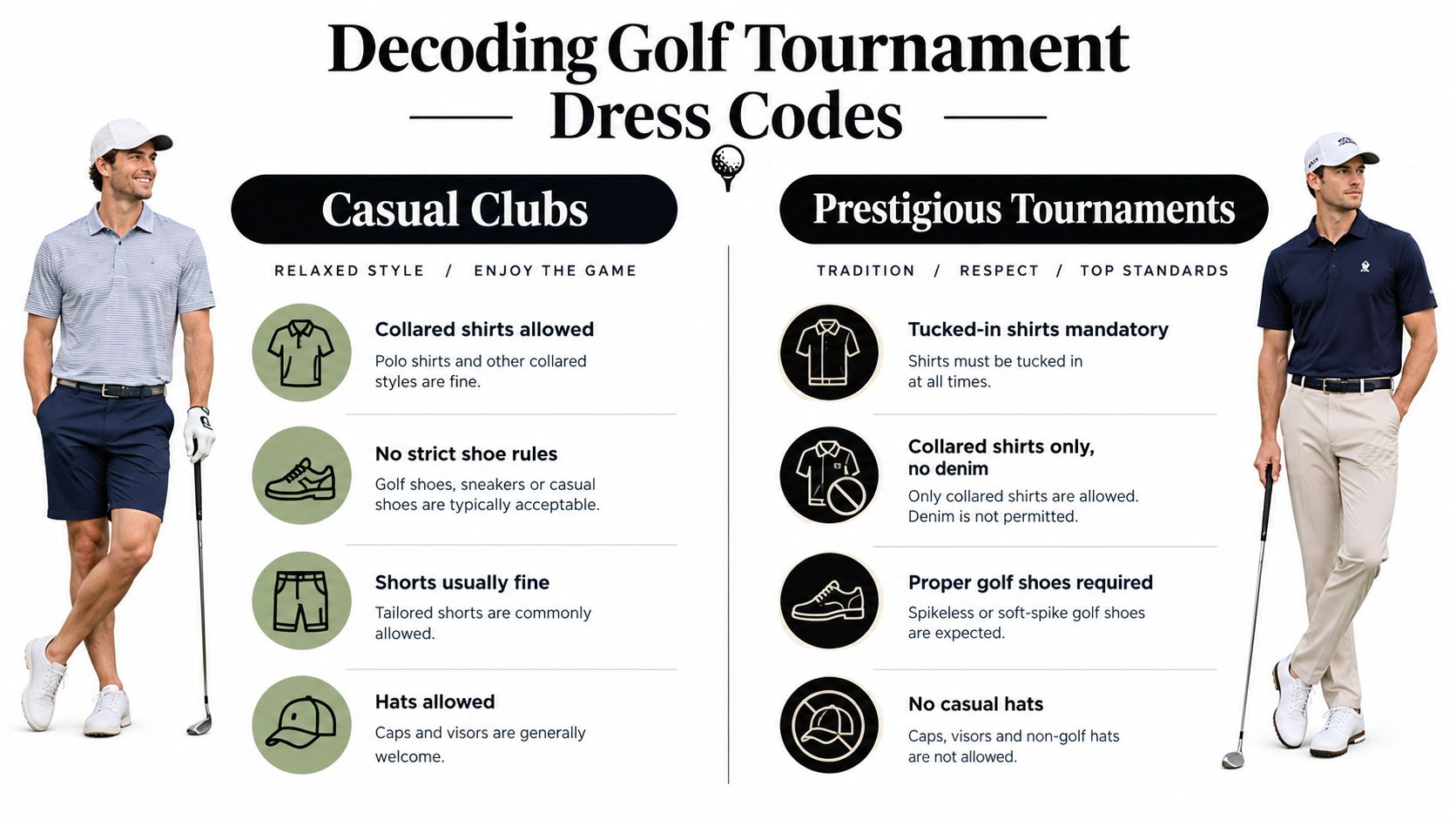
Golf dress codes have two very different consequences depending on whether you're watching or competing. A spectator may be asked to change or denied access to a particular facility, while a player can face a direct competition penalty. The Carolinas Golf Association manual specifies collared shirts or mock turtlenecks, requires men's shirts to be tucked in, and prohibits tank tops, T-shirts, jeans, sweatpants, yoga pants, cargo pants, and short-shorts. It also says a competitor who fails to conform may be asked to change before tee time and can be disqualified. The Carolinas Golf Association tournament manual makes the operational risk clear.
What the rules usually target
The most consistent restrictions concern clothing that reads as beachwear, gymwear, or casual streetwear. Denim, graphic T-shirts, tank tops, short-shorts, flip-flops, and cargo-style bottoms create the greatest risk because they conflict with the visual standard many golf venues maintain.
A collared shirt is usually the safest upper-body choice, but don't assume every polo is automatically acceptable. Oversized cuts, untucked hems, large slogans, and visibly worn fabric can look wrong even when the garment technically has a collar. For players, follow the event's written requirements rather than relying on what spectators are wearing.
Optional style versus non-negotiable basics
Some choices remain flexible. You can usually vary color, pattern, sleeve length, belt finish, hat design, and layering while retaining a polished appearance. The boundary appears when personal expression replaces structure, such as athletic shorts with drawstrings, beach sandals, or an untucked oversized tee.
If you're unsure about a venue's expectations, confirm the policy before booking travel or tickets. A golf club booking platform can help you identify the venue and its facilities, but the tournament organizer's own instructions should control your final decision. For a plain-language review of common restrictions, consult this golf dress code guide.
The practical formula is simple: meet the dress code with the silhouette, then express yourself through controlled details. A vivid polo, refined belt, patterned cap, or carefully chosen layer can look distinctive without making the outfit look careless.
Choosing the Perfect Leather Golf Belt
A belt is small, but it sits at the visual center of a golf outfit. It connects the shirt and trousers, frames the waist, and gives the whole look a deliberate finish. That makes it a particularly useful style anchor when you're working within traditional tournament rules.
Start with the leather and construction
Look for leather with a clean surface, firm edges, and stitching that remains even around the buckle and keeper. Full-grain and carefully finished genuine leather can provide the traditional appearance many tournament outfits need, while a softer construction may feel more comfortable during a long day of movement. The belt shouldn't curl sharply, crack around the holes, or feel flimsy when you pull it through the loops.
Color sets the tone. Black leather works with darker trousers and creates a sharper evening transition. Brown leather sits naturally with beige, stone, olive, and navy. A braided or textured finish can add personality, but keep the overall shape neat if you'll be near a clubhouse.
For broader guidance on how leather accessories age and coordinate with other wardrobe pieces, offer useful material and care principles that also apply to belts.
Choose the buckle for the setting
A restrained metal buckle is the safest choice for a formal tournament. Brushed silver looks modern without shouting, while warm brass or antique finishes pair well with brown leather and earth tones. Oversized logos and novelty hardware can distract from an otherwise polished outfit.
Measure your current belt from the buckle fold to the hole you use most often, then compare that measurement with the new belt's sizing guide. Don't just order your trouser waist size, because belt sizing conventions vary. You want the buckle to close comfortably at the middle adjustment point, leaving room for normal movement and a tucked polo.
Keep the belt comfortable
A leather belt should hold the trousers securely without pressing into your abdomen when you sit, bend, or walk uphill. If you're competing rather than spectating, test the belt during practice. A stiff edge that feels harmless in the store can become irritating after repeated posture changes.
Use the golf belts collection and buying guidance to compare construction, buckle systems, and styling options. Keep leather dry when possible, wipe away moisture after the event, and store the belt flat or loosely rolled. Avoid leaving it compressed under heavy gear, which can distort the leather and buckle.
Ratchet vs. Traditional Buckles - Which Is Better?
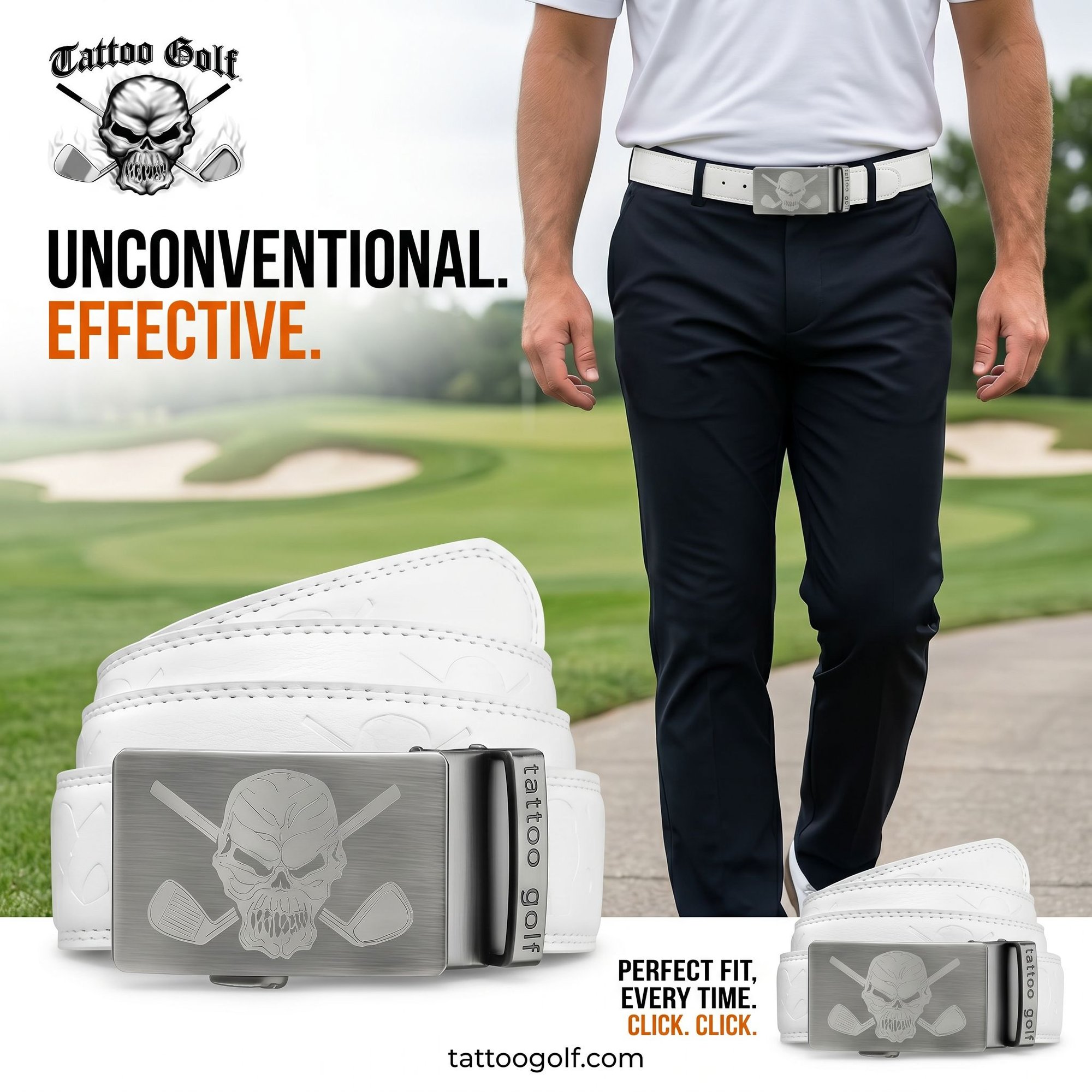
The buckle changes how a belt feels during a tournament, especially when you're walking, sitting, and adjusting layers throughout the day. Neither system is universally correct. The better choice depends on whether you prioritize fine adjustment, classic appearance, or the venue's level of formality.
| Feature | Ratchet Belt | Traditional Buckle Belt |
|---|---|---|
| Adjustment | Offers incremental fitting through a track system | Uses fixed holes for broader adjustment steps |
| Appearance | Clean, contemporary, often lower-profile | Familiar, classic, and easy to dress up |
| Comfort | Can provide precise tension changes during the day | Simple and dependable when the fit is already right |
| Maintenance | Track and clasp need to stay free of debris | Fewer moving parts and straightforward care |
| Tournament setting | Works well when the design is restrained | Usually the safest traditional choice |
| Personal style | Supports modern finishes and distinctive details | Lets leather color and buckle shape lead |
Where ratchet belts earn their place
A ratchet mechanism lets you fine-tune tension rather than choosing between two nearby holes. That can help when your outfit changes from a tucked polo to a light sweater, or when comfort matters during a long walking day. The clean look also suits contemporary performance clothing.
The trade-off is mechanical complexity. A damaged track or obstructed clasp can be more difficult to deal with than a standard hole-and-prong system, and some designs look too casual or technical for a strict clubhouse.
Why traditional buckles remain reliable
Traditional buckles have the visual language of classic golf clothing. A smooth leather strap with a modest metal frame pairs naturally with well-fitted trousers, a tucked shirt, and a cardigan or lightweight jacket. They're easy to understand, easy to replace, and less likely to attract attention for the wrong reason.
Their limitation is fit precision. The spacing between holes may leave you choosing between slightly loose and slightly tight, especially after a meal or a change in layers. For many spectators, that isn't a serious problem. For players who want continuous adjustment, a ratchet system may feel more practical.
Style decision: Choose the buckle that disappears into the outfit unless the buckle itself is the detail you want people to notice.
Performance Fabrics for All-Day Comfort
A tournament outfit can satisfy every dress-code rule and still fail if the fabric traps heat, holds sweat, or restricts movement. Golf clothing has to support walking, standing, bending, sitting, and repeated posture changes. Silhouette creates the polished appearance, but fabric determines whether you can maintain it.
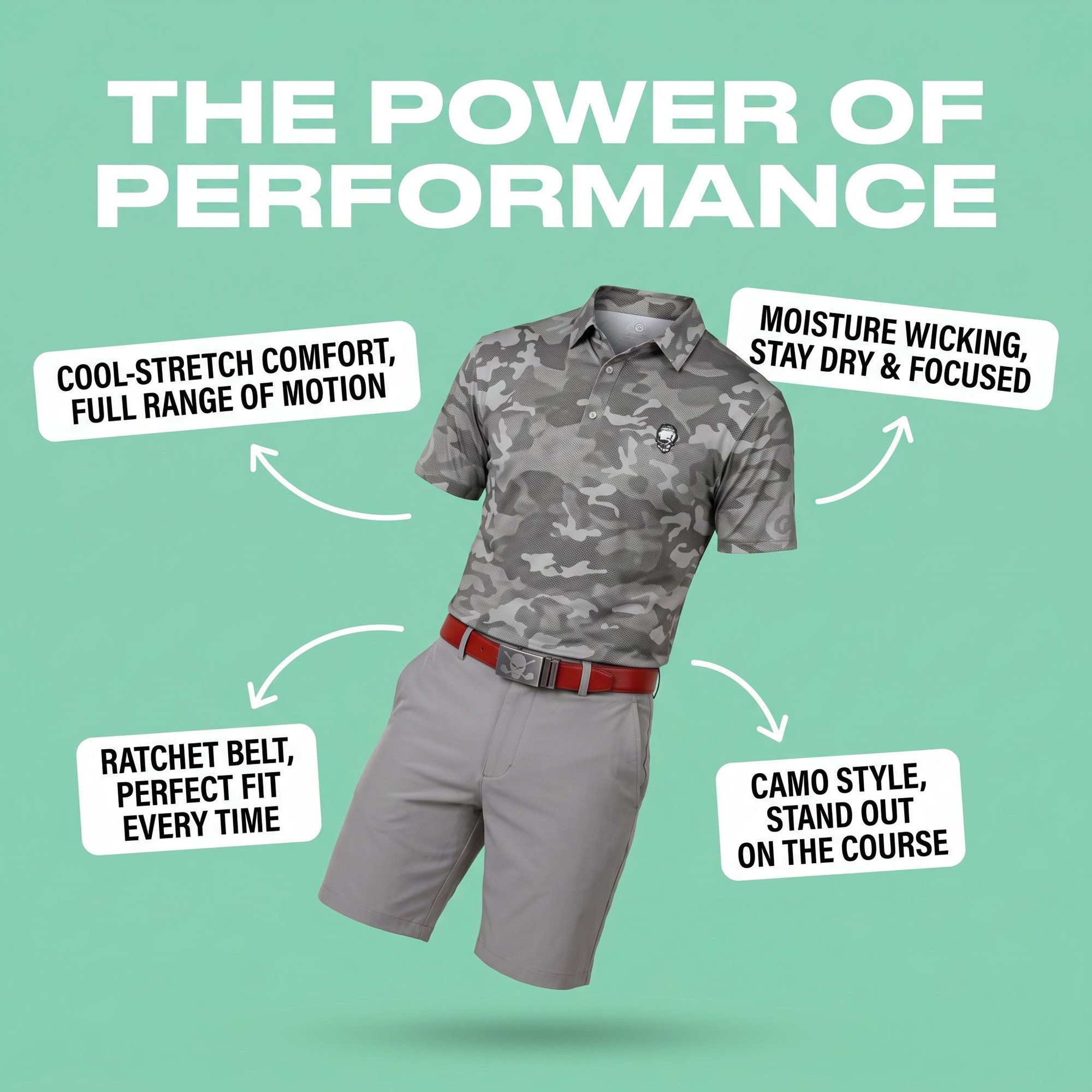
Expert apparel guidance favors moisture-wicking, lightweight, breathable, and stretch materials for golf tournament wear. These fabrics move sweat away from the skin, limit heat retention, and preserve range of motion, while four-way stretch and quick-dry construction help clothing stay comfortable and presentable through the day.
Match the fabric to the conditions
For warm weather, choose a breathable polo with a light hand feel and enough stretch across the shoulders. Lightweight trousers can be more comfortable than shorts when the wind picks up, while a compact waterproof shell gives you protection without forcing you into a heavy outfit.
Rain changes the packing strategy. A waterproof jacket, rain trousers, and rain gloves can preserve comfort when conditions turn wet. A hat with a practical brim helps with both sun and precipitation, but remember that clubhouse etiquette may require removing it indoors.
Keep performance details visually quiet
The best technical garments don't have to look technical. A matte finish, clean collar, restrained branding, and precise hem can make a quick-dry polo look appropriate beside traditional cotton clothing. Avoid fabric that clings, shines excessively, or resembles gymwear when the tournament expects country-club presentation.
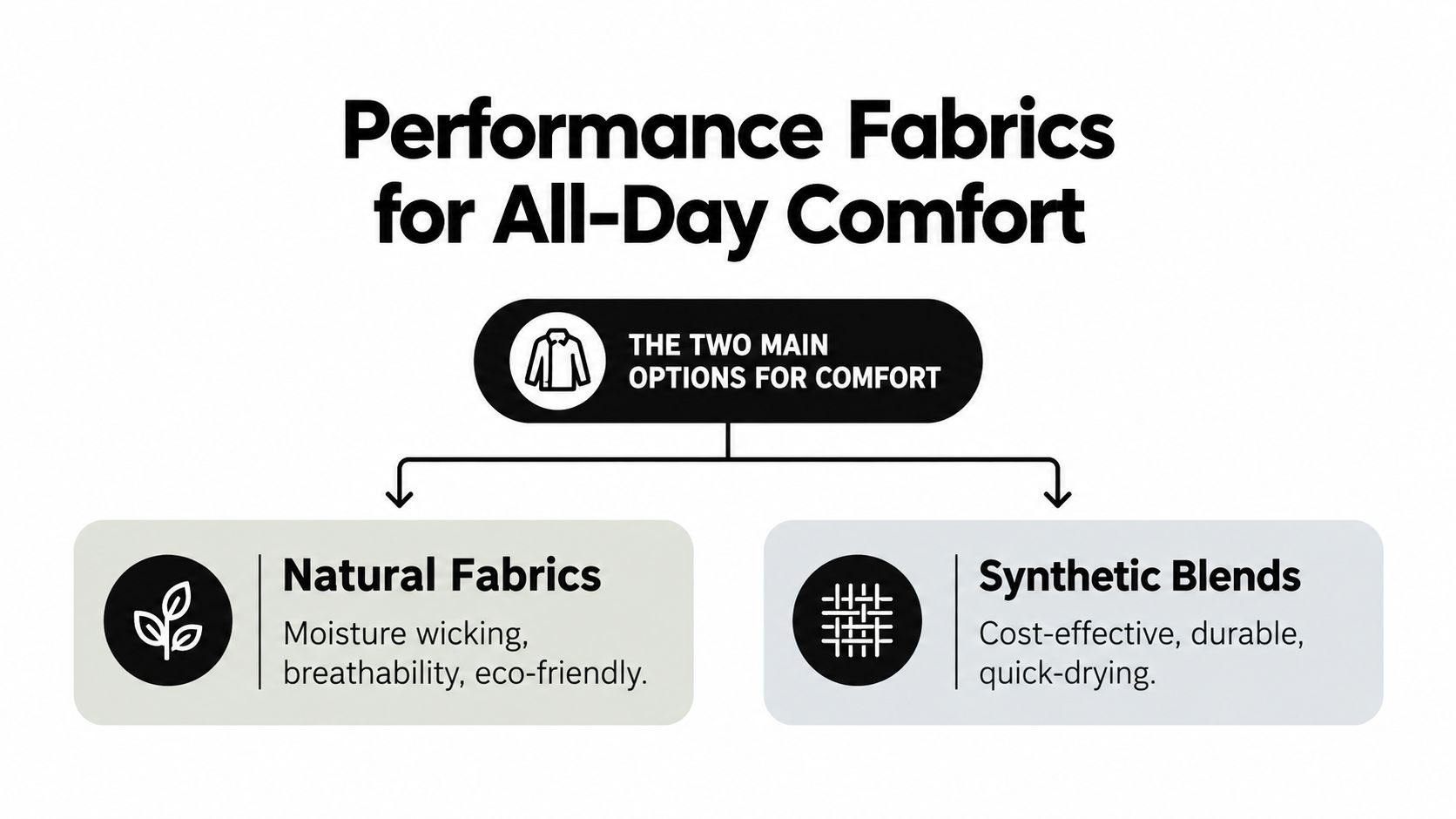
Natural fibers and synthetic blends each have a place, so compare their behavior rather than choosing by label alone. This provides useful context for judging breathability, structure, and climate suitability across formal materials. You can also review this moisture-wicking fabric explanation when evaluating how a polo handles perspiration.
A strong tournament outfit often combines a structured outer appearance with flexible performance underneath. That combination lets you walk comfortably without looking as though you came straight from the gym.
Expressing Personal Style with Bold Golf Fashion
Traditional golf clothing gives you a framework, not a requirement to look interchangeable. The tension between etiquette and modern performance style is real, especially for younger and more fashion-conscious golfers who want expressive colors, patterns, or athletic details. The answer isn't to ignore the rules. It's to decide where personality can safely enter the outfit.
Start with one dominant statement. A saturated polo, graphic but orderly print, or distinctive cap can carry the look while well-fitted bottoms and clean shoes keep it grounded. If the shirt already has high visual energy, choose a solid short or trouser and let the leather belt provide a quieter point of structure.
Use the event as your style filter
A casual spectator day gives you more room to experiment than a competition governed by a strict manual. A polished performance hoodie may work at an informal gallery setting, but it can be unsuitable where the club requires a collared top. Loud colors may be perfectly acceptable in one tournament and feel out of place at another.
That's why personal style should follow the event hierarchy:
- Competition first: Read the player rules and treat them as binding.
- Venue second: Consider clubhouse, hospitality, and dining requirements.
- Expression third: Add color, pattern, accessories, or coordinated pieces inside those boundaries.
The modern direction of golf fashion supports performance over obvious brand signaling. A moisture-wicking polo with four-way stretch can look traditional from a distance while delivering the mobility and drying performance associated with athletic apparel. That's a better compromise than wearing a conservative shirt that becomes uncomfortable halfway through the day.
Make bold clothing look intentional
Coordination does most of the work. Match a hat detail to the belt hardware, repeat a color from the polo in the shoes or socks, or use a neutral trouser to give a dramatic print room to breathe. Keep graphics deliberate rather than stacking multiple competing motifs.
Tattoo Golf offers performance polos, shorts, trousers, hats, belts, and themed collections with high-impact prints, giving golfers one example of how expressive design can sit inside a course-ready outfit. The principle applies beyond any single label: personality works best when the fit, fabric, and finishing pieces remain disciplined.
Final Tips for Nailing Your Tournament Outfit
The morning of the tournament, a golfer lays out a breathable polo, tailored trousers, closed-toe walking shoes, and a brown leather belt with a restrained buckle. A lightweight waterproof layer goes into the bag, while the hat stays on for the walk to the first tee and comes off before entering the clubhouse. The outfit looks distinctive because of its color and texture, not because it ignores the venue.
Before you leave, run through this practical check:
- Read the event rules: Separate spectator guidance from player requirements, especially if you're competing.
- Build around the collar: A polo or neat golf shirt is the most reliable foundation.
- Reject risky casual pieces: Leave denim, graphic T-shirts, tank tops, flip-flops, and beachwear-style items at home.
- Test the shoes: Wear footwear you can walk in comfortably on grass, paths, and uneven ground.
- Choose the belt deliberately: Match leather color to your shoes and keep the buckle proportional.
- Pack for changing weather: Add a breathable layer, waterproof protection, or rain gloves when conditions may shift.
- Add one clear style signal: Use a bold polo, patterned cap, vivid color, or textured belt, not every statement piece at once.
The finished look should let you move easily, enter the appropriate spaces, and feel like yourself. If you're debating between two outfits, choose the one that would still look composed after a long walk, a weather change, and an unexpected clubhouse stop.
Tattoo Golf offers performance golf polos, shorts, pants, hats, belts, outerwear, and accessories that combine stretch, moisture management, and expressive prints. Explore Tattoo Golf to build a tournament outfit that respects the setting while giving your personal style room to show.
Share:
Men’s Golf Shorts with a 9-inch Inseam
Are Bold Golf Shirts Allowed at Country Clubs? Rules