
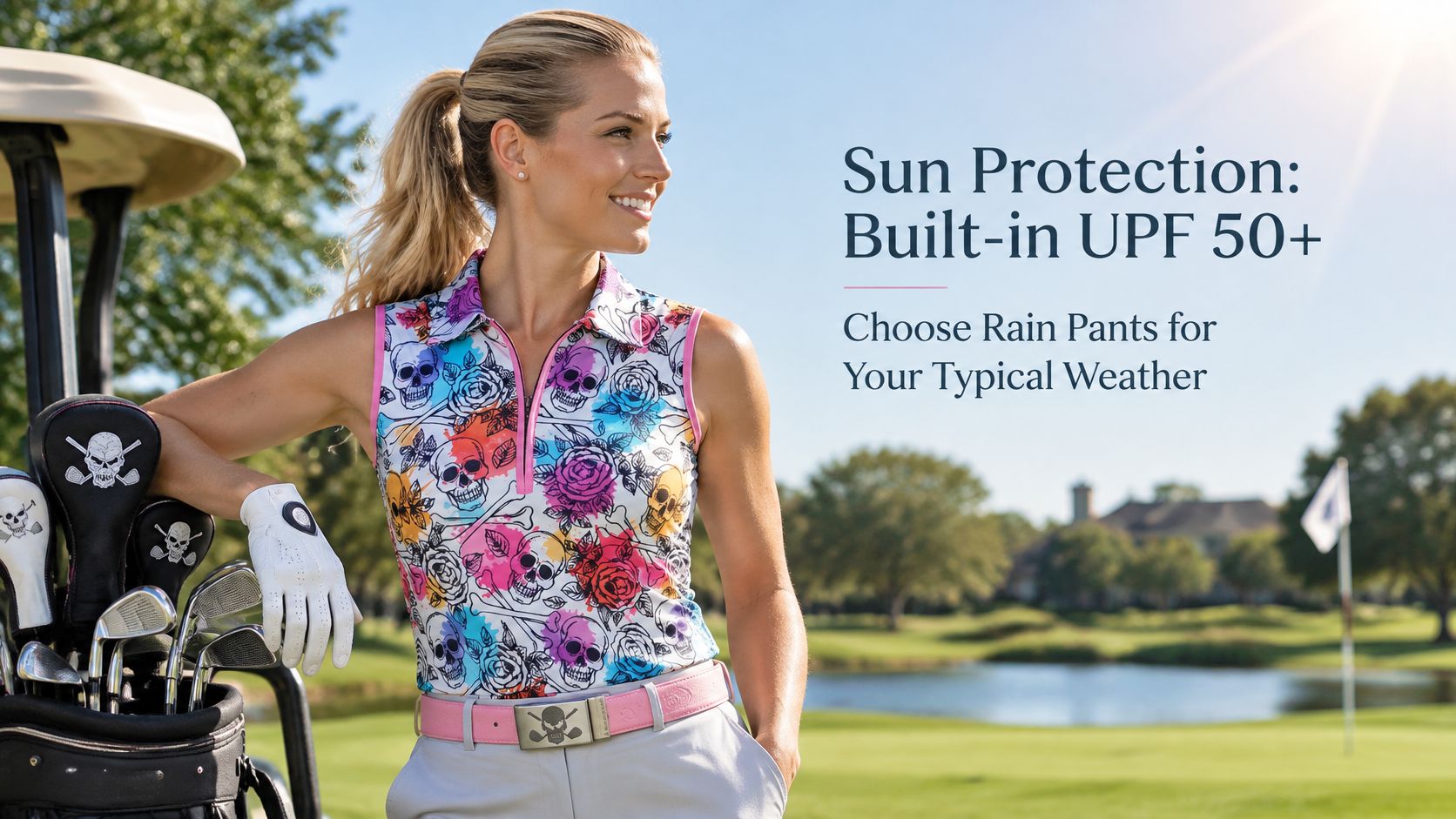
You're standing on the third tee in waterproof pants you pulled on for a shower that has already passed, the sun is breaking through, and your legs feel sealed inside warm, damp fabric. The product page promised waterproofing, breathability, four-way stretch, and Sun Protection: Built-In UPF 50+, but it didn't tell you which claim matters first, or what happens to that sun rating once the pants are wet and pulled tight in a squat. That's the buying trap here. Rain pants earn their place by keeping rain out without trapping sweat, and by letting you swing without binding. UPF is useful on dry, sunny holes, but it's a secondary filter, not the reason to buy one shell over another.
Rain Pants Benchmarks at a Glance
Start with numbers, not reviews. Six checks will cut a long shortlist to two or three credible candidates.
| Feature | Benchmark | What It Protects Against | How to Verify |
|---|---|---|---|
| Water resistance (hydrostatic head) | 10,000 mm for steady rain, 20,000 mm or more for storms | Water passing through the fabric | A stated figure tied to AATCC 127 or ISO 811 |
| Breathability (MVTR) | 8,000 g/m²/24h or more | Sweat condensing inside the pant | Stated g/m²/24h figure on the product page |
| Seam construction | Fully taped seams, taped crotch at minimum | Water entering through stitching | Taped seams listed in the product details |
| Stretch | 4-way stretch | Fabric binding during the swing | Deep squat test in the fitting room |
| Built-in UPF rating | 50+ tested to a named standard | UV on exposed skin on dry, sunny holes | Named standard such as AS/NZS 4399 or EN 13758-1 |
| Packed weight | Under about 350 g for a shell | Extra weight in the bag and on walks | Listed weight for your size |
Why these benchmarks filter well
Hydrostatic head tells you how much water pressure the fabric resists before liquid passes through. A bigger figure helps in sustained rain, but it doesn't rescue untaped stitching, so I'd rank seam construction beside the membrane rather than below it. The crotch and seat take pressure when you squat, sit on a wet cart seat, and walk, and those are common leak points.
MVTR is the moisture vapour transmission rate. It indicates how readily sweat vapour can move outward. You won't get perfect lab conditions on course, but a missing MVTR figure is a warning sign because you've got no basis for comparison.
Write this down first. Record hydrostatic head, MVTR, seam taping, stretch direction, UPF test standard, and weight for every candidate before you read impressions or star ratings.
Packed weight sounds minor until you carry a bag for 18 holes. A light shell also takes less pocket space, which makes you more likely to bring it on doubtful days. UPF belongs on the sheet only with its test method attached. A bare "50+" label is incomplete information, while a named standard gives you something verifiable.
How Waterproofing Really Works
Think of a rain pant as a tent, with the face fabric as the roof, the seams as doors and windows, and the membrane as the inner sheet keeping rain out. If any one of the three fails, you're wet, even if the other two perform well.
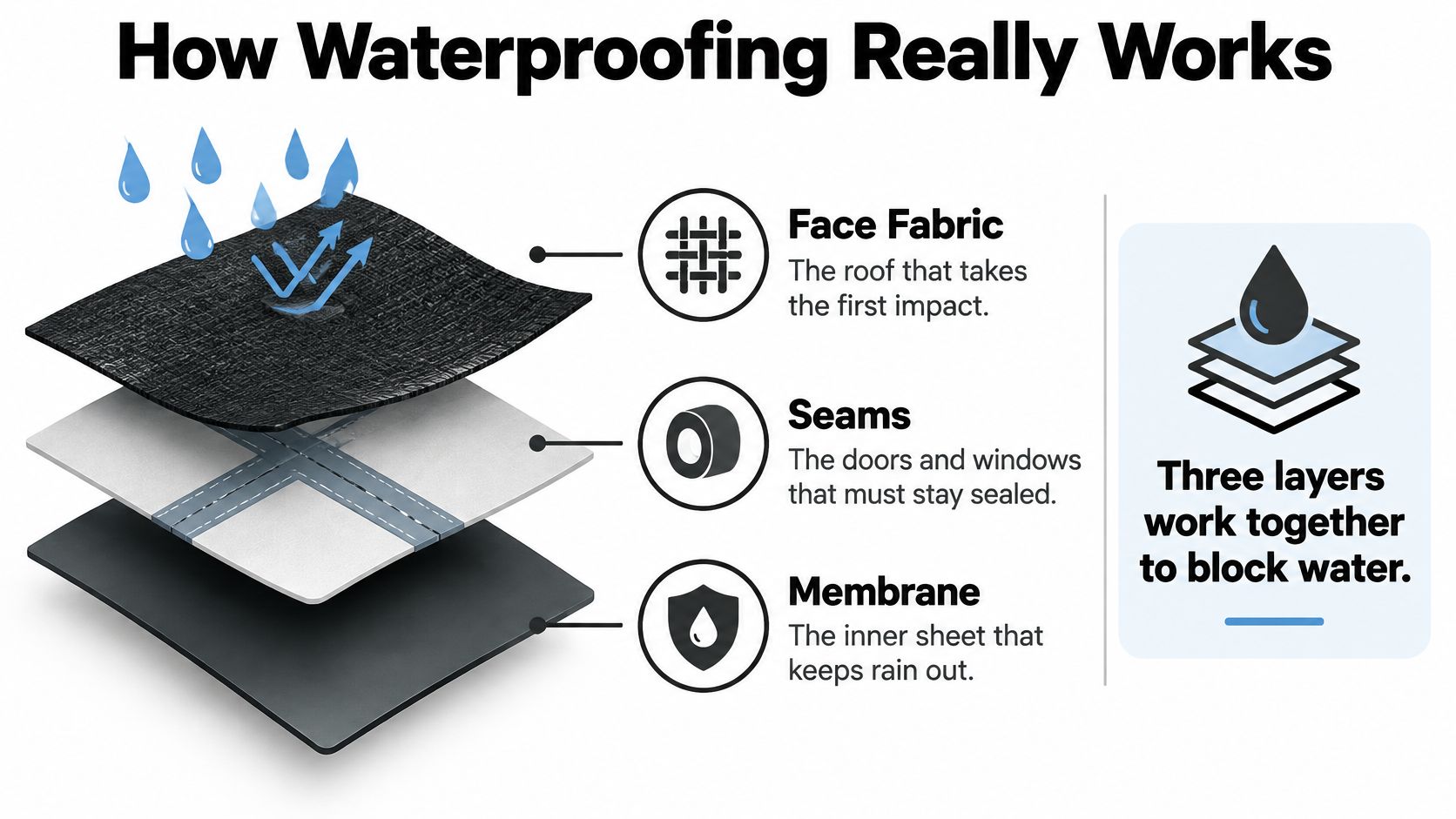
The three jobs
- Durable water repellent finish: This outer treatment makes rain bead and roll off the face fabric. It's a first line of defence, not the waterproof barrier itself.
- Membrane or laminate: Usually ePTFE or polyurethane, this layer blocks liquid water while allowing some water vapour to escape.
- Taped seams: Heat-applied tape covers needle holes at the crotch, seat, waistband, and leg joins, where stitched construction would otherwise let water in.
Use this hydrostatic head ladder as a buying guide: about 5,000 mm suits light showers, 10,000 to 15,000 mm suits steady rain, and 20,000 mm or more is the sensible storm range. Don't chase the highest figure in isolation. A 20,000 mm fabric with a poorly sealed crotch can leak sooner in use than a lower-rated pant that's fully taped, because water enters at the weakest opening, not through an average of the garment.
The same construction logic applies when you build a matched wet-weather top, and practical rain jacket guidance for branded uniforms is useful background on shells that have to keep crews dry through a full shift outdoors. On the course, overlap between jacket hem and waistband matters just as much, since rain runs down the jacket and onto the seat.
Test the finish at home
DWR wears down with washing, abrasion, and sun. You'll see the symptom as wetting out, where the outer face darkens and holds water instead of beading. The membrane may still block rain, but the saturated face feels clammy and slows vapour transfer.
Spray the knee with a misting bottle. Tight beads that roll away mean the finish is working. A flat, soaking patch means it's time to clean the garment properly and re-treat it with a wash-in or spray-on reproofer made for waterproof breathable clothing. Follow the product's heat instructions, because many finishes need gentle tumble drying to reactivate.
The common mistake is buying the word waterproof and never checking the coating again. I'd inspect beading before any trip where rain is likely, rather than discovering a tired finish on the first fairway.
Breathability on Long, Wet Rounds
Wet legs don't always mean rain got in. If sweat vapour can't escape fast enough, it condenses on the inside of the pant, and your base layer feels soaked even under an intact membrane.
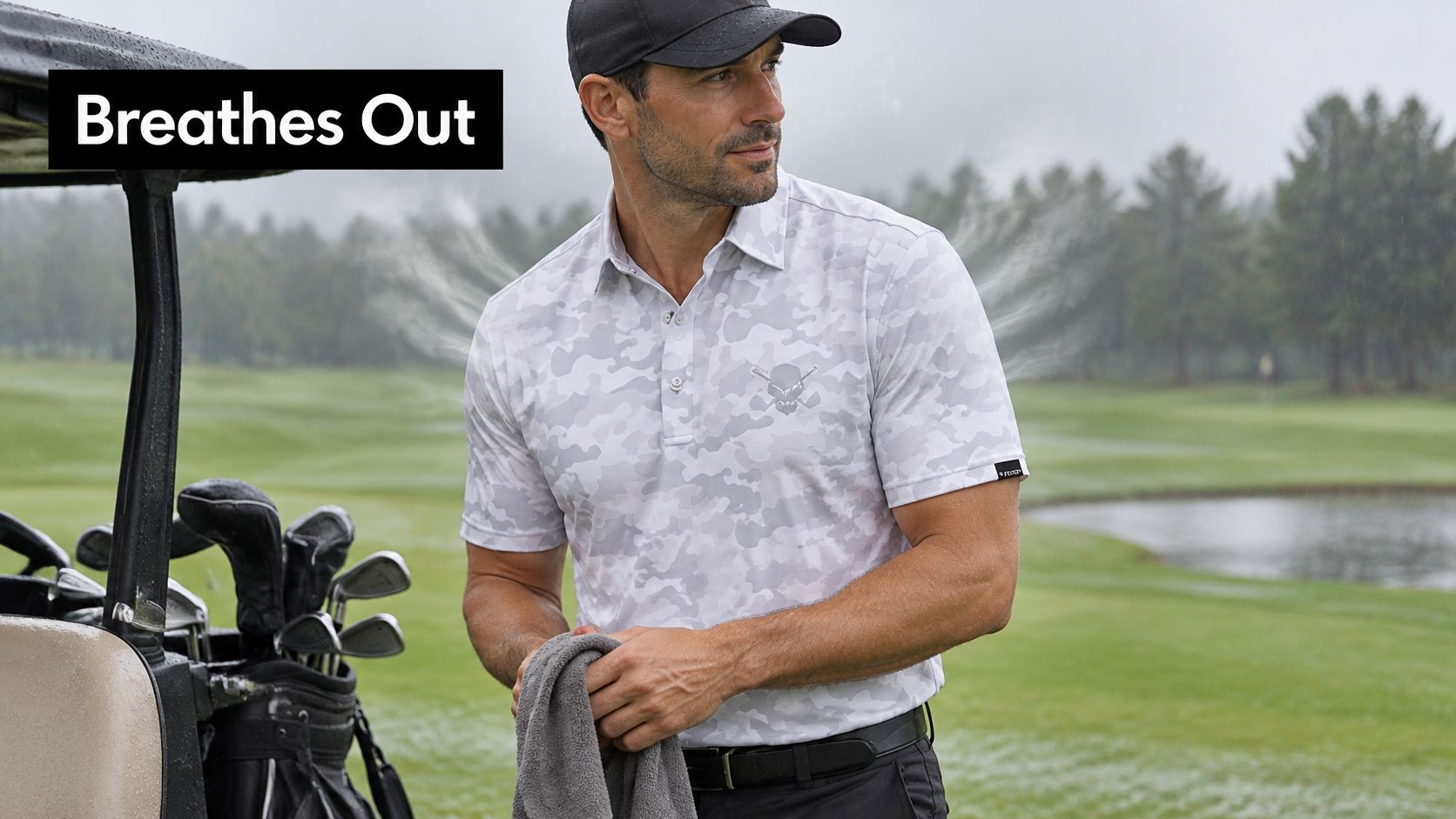
It's the lunch-box problem. A sealed box traps steam from warm food, while a vented box lets steam leave. Your legs produce heat and moisture as you walk, climb, and swing, and the membrane has to move that vapour outward against cool, damp air.
Reading MVTR without overtrusting it
MVTR is expressed in g/m²/24h. As a practical banding, about 5,000 suits low output and short showers, 8,000 to 10,000 suits most walking rounds, and 10,000 or more is the safer target for hot, humid play. Treat the number as a comparison tool, not a promise, because test methods and conditions differ between brands.
There's a trade-off you can't design away. More breathable constructions often use thinner membranes or more open face fabrics, which can reduce durability or water resistance. A storm pant built for cold rain will rarely feel as airy as a thin warm-climate shell.
Features that help you dump heat
- Full-length leg zips: You can pull the pants on over shoes and open the lower leg for airflow between showers.
- Mesh-lined thigh panels: These reduce the sticky feel of laminate against skin or a base layer.
- Lighter face fabric: It holds less water when the DWR is working and dries faster.
- Drop-back waist: Extra rear coverage helps when you bend, without needing a higher, warmer front.
A saturated outer face also throttles breathability in a long downpour, because vapour reaches a waterlogged layer and stalls. That's why a healthy DWR finish matters for comfort as well as appearance.
In humid regions where showers are intense but brief, I'd choose a thin, vented shell and accept less storm protection. Carry it, use it for the worst twenty minutes, then take it off. If sweat is your bigger problem on most rounds, put breathability first and buy water resistance second.
Fit and Stretch for a Full Swing
Fit decides whether a technically good shell works on your body. Buy by measurements and movement, not by the size you wear in regular trousers.
- Measure waist, widest hip, and inseam. Rain pants often use elastic or drawcord waists, so your usual waist size alone won't predict room through the seat.
- Choose by hip and thigh first. Adjust the waist with tabs, a drawcord, or a belt afterward, because a tight thigh will restrict every squat.
- Sit down and check the rise. The waistband should stay near your navel line without digging in front or dropping at the back.
- Check length over your golf shoes. Aim for the hem to cover the top of the shoe with a small break, so rain sheds past the opening rather than into it.
- Squat fully, lunge, and make a half swing. Reject anything that pulls hard across the thigh, binds behind the knee, or hikes the hem up over the shoe.
This sequence pairs well with broader guidance on golf pants that fit and perform, especially if you're comparing a shell you wear over trousers with a pant meant to be worn on its own.
Stretch helps, tightness hurts
Four-way stretch moves lengthwise and crosswise, which is what you want through rotation, a wide stance, and reading a putt. But stretch isn't a substitute for enough cloth. A pant that's strained across the seat puts the fabric under constant tension, stresses seam tape, and can pull yarns apart.
That last point affects sun protection directly. The Skin Cancer Foundation guidance on UPF clothing cautions that stretched or wet clothing can lose protective ability. The practical lesson is simple: don't buy a size that only works because the fabric is stretched to its limit.
A shell that needs maximum stretch just to let you squat is the wrong size, however good it looks standing still.
For a concrete stretch comparison in regular golf clothing, the Camo Cool-Stretch Men's Golf Shirt & Golf Pants (Orange/Black) uses an 8 oz, 92% Polyester / 8% Spandex blend with four-way flexibility. That kind of spandex content gives easy movement, but you'd still judge a rain shell by pattern room and seam placement first.
Avoid the opposite error, too. Baggy legs flap in wind, catch on cart edges, and drag through wet grass. If you'll add a thick base layer in winter, look for extra thigh room without jumping so far up that the waist and hem swim. Do the final try-on in your playing shoes, and wear your rain jacket if they'll be used together.
What Built-in UPF 50+ Does in Rain Pants
UPF 50+ doesn't mean complete protection, and in rain pants it doesn't even mean protection under the conditions you'll most often wear them. It's a tested fabric figure, useful within limits.
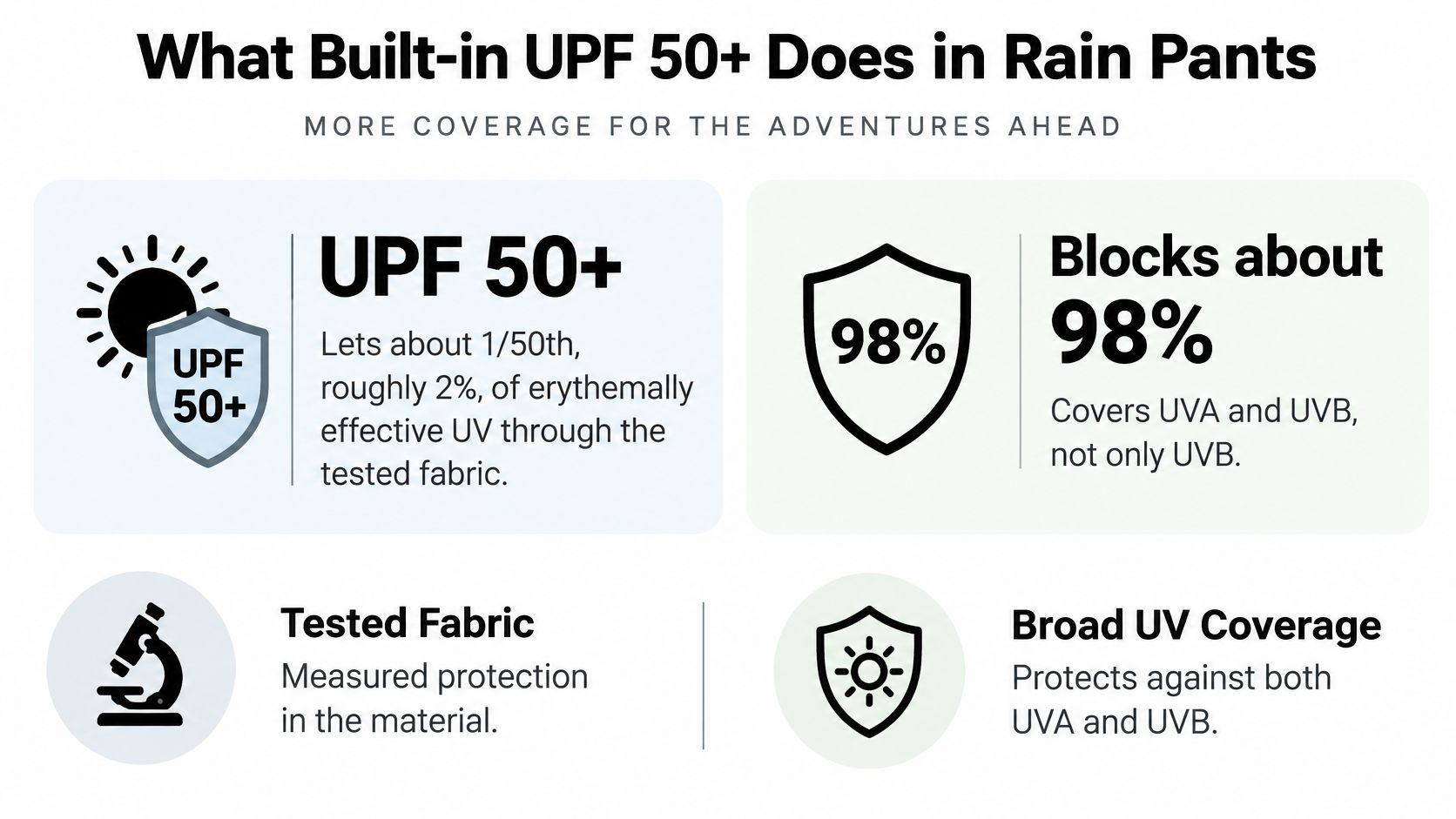
According to Hohenstein's UV protection testing guidance, a UPF 50 fabric allows approximately 1/50th, or about 2%, of erythemally effective UV radiation to reach the skin, so it blocks roughly 98%. The rating covers both UVA and UVB, rather than only the UVB exposure typically emphasized by sunscreen SPF labels.
| UPF Rating | UV Blocked | UV Reaching Skin |
|---|---|---|
| UPF 15 | 93.3% | 6.7% |
| UPF 30 | 96.7% | 3.3% |
| UPF 50+ | 98% | 2% or less |
The three standards you'll see are AS/NZS 4399, EN 13758-1, and AATCC TM 183. They measure UV transmission spectroscopically, but their conditions and labelling rules aren't identical, so ask which one was used.
Where rain pants change the picture
You'll usually wear these pants wet, in cloud, or over another layer. In those situations waterproofing and coverage do the heavy lifting. UPF matters most when the rain stops, the sun comes out, and the shell is your only leg covering for the remaining holes.
Wetness and tension can both reduce the tested performance. Moisture can alter how light passes through a textile, and a strained fit opens spaces between yarns. Your face, neck, forearms, and hands also remain outside the garment, so use the advice in this guide to golf hats for style, sun protection, and comfort and cover exposed skin separately. If you're comparing products for those uncovered areas, choosing between Japanese sunscreen formulas gives useful context on textures golfers may be more willing to reapply.
Durability is not guaranteed by the label, either. In a study of UV-protective shirts reported in Anais Brasileiros de Dermatologia, most retained low UV transmittance after 50 wash cycles, but one product failed to maintain UPF 50 or higher throughout follow-up.
My rule is to ask for the named standard and whether testing followed laundering or conditioning. On a hot, sunny day, a lightweight UPF short will serve you better than staying in a rain shell for its label.
Comfort Details That Matter Between Holes
Comfort failures in rain pants are rarely dramatic. They're small irritations repeated while walking, waiting, bending, and sitting, until you can't wait to take the pants off.
Annoyances you'll notice most often
Fabric noise comes first. Stiff laminates rustle as your legs pass each other and can intrude on your backswing routine. Walk and swing in the store on a hard floor, where the sound is easiest to judge. Softer face fabrics with a brushed or quieter hand feel better over a full round.
Pocket access is next. Side pockets should open while your jacket is zipped and you're wearing a glove. You need quick room for tees, a ball marker, and ideally a scorecard without rain funnelling into the opening. Pass-through pockets suit overtrousers, while sealed internal pockets suit pants worn alone.
Waistband behaviour matters every time you bend for a ball or tee. Look for belt loops or adjustable tabs and a rear rise that doesn't pull down. Elastic alone can creep under a jacket, and a drawcord knot can dig in when you rotate.
Heat, friction, and layering
A heavy shell in warm, humid weather feels punishing even if its MVTR figure looks respectable. Choose a lighter face fabric for warm rain and save thicker builds for cold wind. An insulated lining suits winter golf, but a thin shell over a base layer covers more spring and autumn conditions and lets you regulate temperature.
Reinforced knees and seat panels earn their weight if you kneel to read putts or slide in and out of a cart. Check that reinforcement doesn't create a stiff plate behind the knee. Smooth internal finishes also matter over a base layer, because a tacky laminate grabs leggings and twists as you walk.
Finish with three store tests. Reach into a pocket with your jacket zipped, listen through a full practice swing, and pull the ankle opening over your shoe to confirm the leg zip and cuff clear it. If any test requires a struggle in a dry fitting room, it'll be worse in rain with cold hands.
Choose Rain Pants for Your Typical Weather
Buy for the round you play. Ask how hard it rains, how cold it gets, and whether humidity or wind dominates.
| Typical Weather | Breathability Priority | Best Pant Style |
|---|---|---|
| Light showers, mild temperatures | Medium | Packable shell, light weight |
| Steady rain, 10 to 15°C | High | Taped seams, 4-way stretch, full-length leg zips |
| Storm or all-day rain, cold | Medium, worn over a base layer | Heavier shell with storm flap or light insulation |
| Humid heat with afternoon showers | Very high | Thin, vented, quick-dry shell |
- Note your typical rain, temperature, and humidity. Be honest about whether you walk or ride.
- Find the matching weather row. Let that set your construction before you compare brands.
- Check the benchmark figures. Confirm water resistance, breathability, seam taping, and stretch on each product page.
- Run the movement checks. Squat, lunge, swing, and verify hem length over your shoes.
- Assess UPF last. Value it if dry sun often follows showers, and confirm the named test standard.
- Size over your base layer. Buy the fit you'll wear in the worst expected conditions, not the neatest fit in the shop.
For unpredictable shoulder-season golf, I'd take a mid-range shell around 10,000 mm with 8,000 g/m²/24h or more and keep a packable backup in the bag. Our broader fall golf outfits guidance can help you plan the layers around it. Compare two or three finalists against the figures you recorded, and let fit break any tie.
At Tattoo Golf, you'll find bold performance apparel built around four-way stretch, moisture control, and UPF 50+ Cool-Stretch fabric for rounds where the weather won't sit still. Use the benchmarks and fit checks above to choose your rain layer with confidence, then visit Tattoo Golf to build the rest of a kit that looks as committed as your swing.

Share:
Best Stretch Golf Shorts: How to Choose the Right Pair