

You've dressed for a mild morning, but the first exposed fairway tells a different story. Wind gets through your polo, your shoulders tighten while you wait, and by the next tee you're wishing you'd packed something warmer.
Take a look at our new VIP Polo Collection with that round in mind. A stretch polo can give you a comfortable foundation and room to swing, but it isn't winter insulation. The useful question is what goes underneath it, what goes over it, and what you can remove when walking starts to warm you up.
Layer Stacks for Each Cold-Weather Temperature
Say the forecast shows a 45°F morning, but the feels-like reading is 38°F when you arrive. Wearing a polo alone might feel reasonable beside the clubhouse; out on an open fairway, you could be shivering before the sixth hole.
Dress for exposure, not just the thermometer. The hourly feels-like forecast is a starting point, not a personal comfort guarantee. A sheltered course, an exposed links layout, walking, and riding in a cart all call for different adjustments.
Choose a starting stack
The bands below are an illustrative packing framework, not measured comfort limits. Move toward the warmer stack if you run cold, expect long waits, or will spend much of the round riding.
Layer stack by feels-like temperature
| Feels like | Base layer | Mid layer | Outer layer | Extras |
|---|---|---|---|---|
| Above 60°F (16°C) | Cool-stretch polo | None needed | None, sun protection only | Sunscreen and cap |
| 50-60°F (10-16°C) | Cool-stretch polo | Light quarter-zip or vest | Optional windbreaker | Rain jacket in the bag |
| 40-50°F (4-10°C) | Thermal top under the polo | Quarter-zip fleece | Wind shell | Beanie and light gloves |
| 30-40°F (-1-4°C) | Thermal top under the polo | Mid-weight fleece or insulated vest | Waterproof shell | Insulated gloves and neck gaiter |
| Below 30°F (-1°C) | Thermal top under the polo | Mid-weight fleece | Insulated waterproof jacket | Hand warmers, wool socks and rain gear |
At the mild end, start with the polo and assess the breeze. As conditions cool, a vest preserves arm movement, while a quarter-zip adds sleeve coverage. Once you need a thermal underneath, check that the polo still sits freely across your shoulders.
For colder outings, fleece supplies insulation and a shell limits exposure. Waterproof protection earns its place in wet weather, but it can feel clammy during a brisk walk. Strong wind is a reason to add a wind-blocking layer, not another porous sweater.
Practical rule: Choose removable layers with accessible zippers and roomy sleeves. You shouldn't need to untuck and rebuild your whole outfit beside a tee.
Keep the rain jacket packed even on clear mornings. For outfit combinations beyond winter, use these men's golf outfit ideas for every season.
Pack a drink as deliberately as your clothing. The NZ Supps guide to winter electrolytes offers additional context for cold-weather hydration; carrying electrolytes doesn't mean every casual round requires them.
Before choosing your stack, check hourly wind speed and precipitation chance through your expected finish, not just at tee time.
Choosing Fabrics for Cold-Weather Golf Layers
On a foggy morning, the problem isn't just whether a shirt feels warm when you put it on. It's whether the fabric remains comfortable after you've walked uphill, perspired, and stopped beside a green.
Start with the polo you already own. Read the care label rather than judging by softness: a cotton-rich shirt and a polyester stretch knit can feel similar indoors but behave differently once damp.
Golf layer fabrics compared
| Fabric | Warmth when damp | Stretch through swing | Best layer use |
|---|---|---|---|
| Cotton | Poor; retains moisture and feels cold against skin | Limited without added stretch yarn | Avoid for cold rounds |
| Polyester and spandex blend | Limited insulation; dries readily | High in a stretch-knit construction | Polo and light mid layers |
| Merino wool | Retains useful insulation when damp | Moderate in a flexible knit | Next-to-skin thermal layer |
| Brushed fleece | Useful insulation, but needs wind protection | Moderate; check shoulder freedom | Insulating mid layer |
| Softshell | Limits wind exposure; insulation depends on lining | Good in stretch models | Outer layer in dry, windy conditions |
| Waterproof membrane shell | Excludes rain; an uninsulated shell adds little warmth | Choose stretch panels or an articulated cut | Outer layer in rain or sleet |
Match the fabric to its job
A polo's sporting purpose has always involved movement and ventilation: Lacoste's history of the polo dates René Lacoste's short-sleeved design to 1933. That heritage explains the format, but a collar doesn't make a shirt warm.
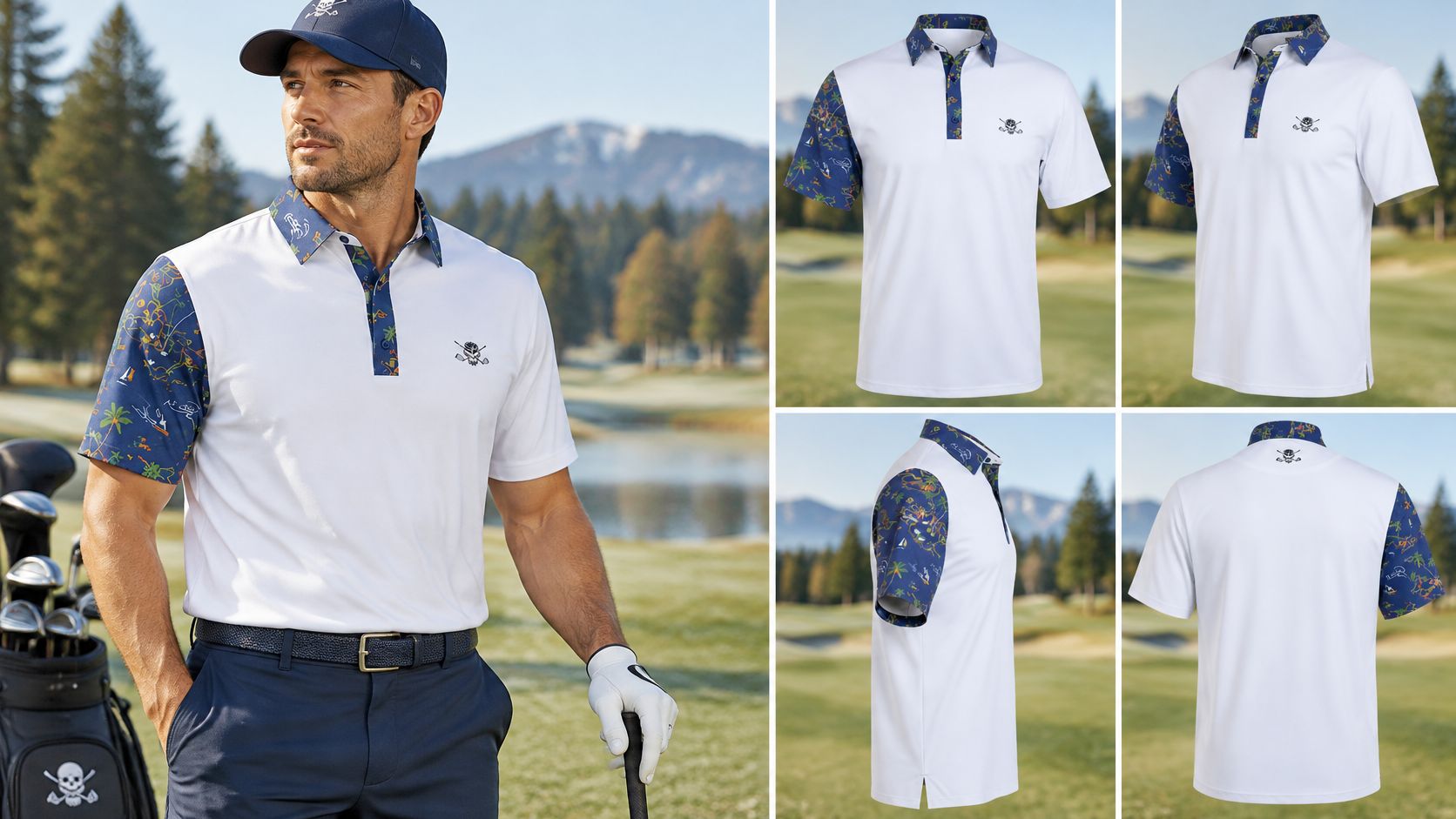
One option is the VIP Cool-Stretch Men's Golf Shirt - White/Ocean Blue, with a white body, Ocean Blue floral accents, and skull-and-clubs embroidery. Its polyester-and-spandex stretch fabric and quick-dry moisture management suit the polo's role in a layered outfit; it isn't an insulated garment.
Merino works well underneath when you want a soft thermal layer without a bulky sleeve. Fleece belongs above it, where its loft can hold warm air without being crushed by an overly tight shell.
A softshell is often more comfortable than waterproof outerwear during dry, active play. In persistent rain, choose the waterproof shell and use its vents before sweat collects inside.
For a closer explanation of moisture transport, see what moisture-wicking fabric does. Wicking moves moisture; it doesn't eliminate sweat or compensate for excessive insulation.
Judge fabrics by their performance when damp, not by how cosy they feel in the changing room.
How to Warm Up Before the First Tee
Cold stiffness makes an unrestricted turn harder to find. Trying to force your normal driving distance before your hips and shoulders move comfortably is a poor way to discover that your outfit is too tight.
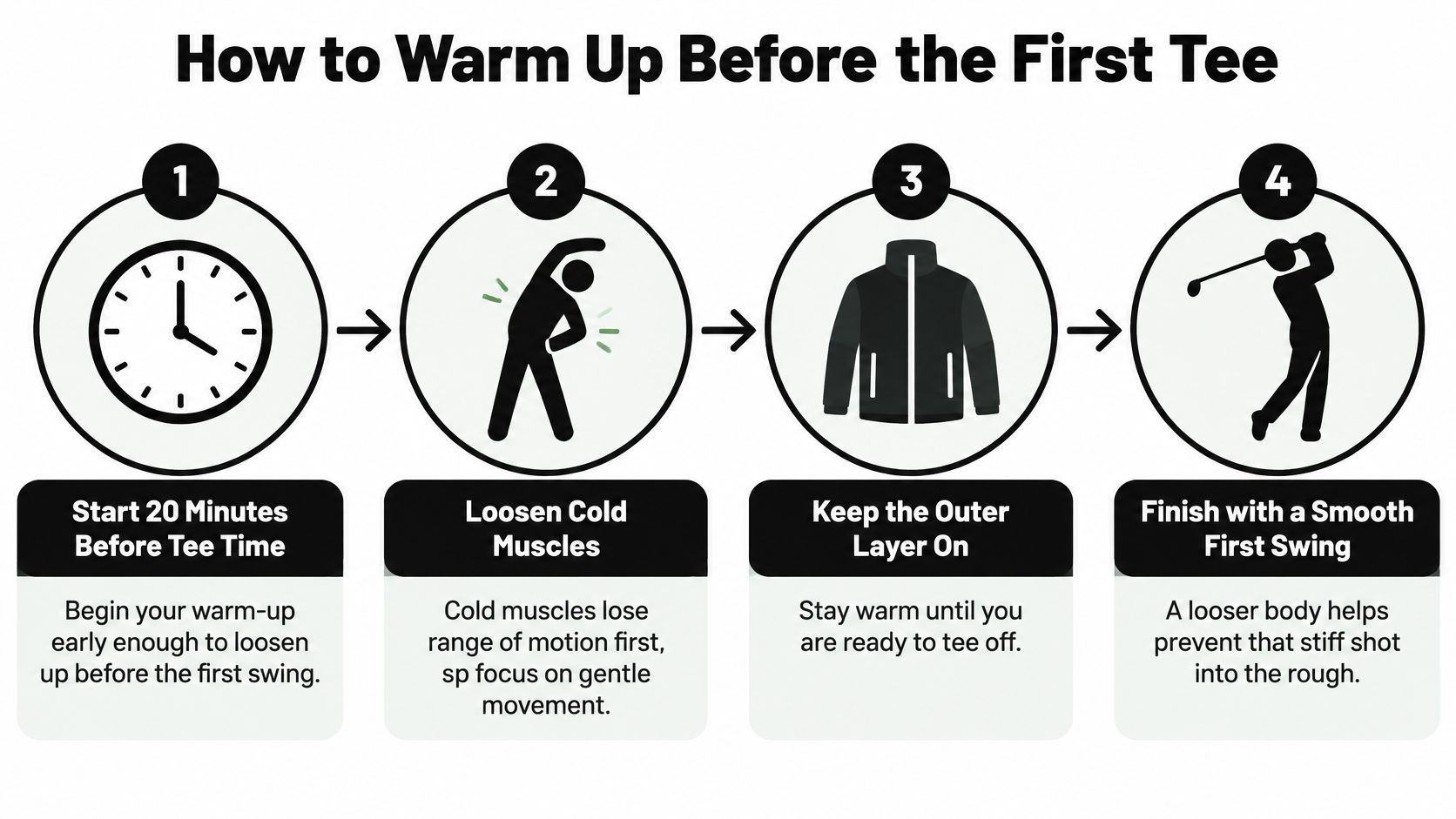
Leave enough time for a short walk, controlled mobility work, and progressive swings. Keep your outer layer on for the gentle movement, then remove it only if it restricts your practice swings or you start getting too warm.
The sequence below gives you a practical progression rather than a bucket-of-balls endurance test.
Build movement before speed
- Start with purposeful walking. Walk briskly around the practice area or use a stationary bike if the facility has one. You want to feel comfortably warm, not sweaty; standing beside the range heater doesn't prepare your legs for walking or turning.
- Mobilise your shoulders and hips. Use controlled arm circles, hip hinges, and gentle torso rotations. Keep the motion comfortable instead of bouncing into a deep stretch or twisting hard against a fixed lower body.
- Make slow wedge half-swings. Begin with a narrow, relaxed motion and let the turn expand naturally. The common mistake is treating the first practice swing like a distance test.
- Progress to controlled mid-iron shots. Build toward a three-quarter motion at an effort that lets you finish balanced. If your sleeves pull or your jacket catches beneath your arms, adjust the clothing before adding speed.
- Check your hands. Open and close your fingers, then hold the club lightly and make a small rehearsal swing. Don't compensate for cold fingers by squeezing harder; warm them and reassess your grip.
- Reset before walking to the tee. Replace any layer you removed, check that your glove is dry, and put your warmers where you can reach them. Avoid finishing the warm-up and then standing exposed while the group ahead clears.
Adapt to the practice facilities
A covered range can help you rehearse without getting soaked, but shelter can hide how cold the course will feel. Step outside before deciding which layer to leave in the bag.
If you're organising winter practice for a group, comparing golf event options with PSW Events can help you weigh a simulator session against a driving-range outing. An indoor session still benefits from gentle movement before full swings.
The useful sign isn't how many balls you've hit. It's whether your first full rehearsal swing feels smooth rather than forced. Pain, dizziness, or persistent numbness calls for stopping, not a longer warm-up.
Course-Play Adjustments on Cold Days
The ball is often the first surprise. A cold round can produce shorter carries and a firmer impact sensation, so don't assume the club that worked during a warm afternoon will clear the same bunker today.
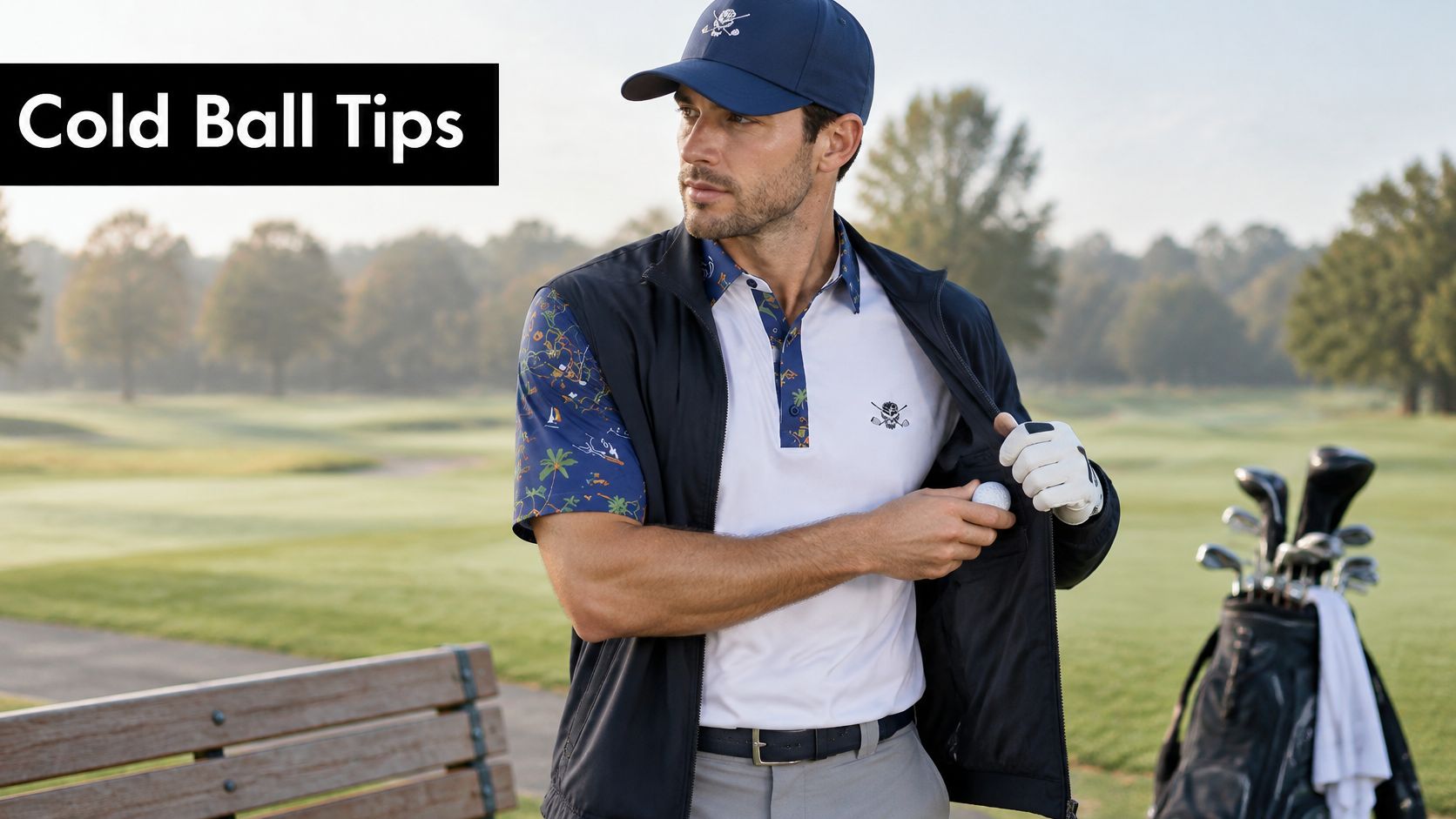
Keep spare balls in an ordinary inside pocket rather than leaving everything exposed in the cart bag. Don't put a ball against a hand warmer or use a heating device, and don't treat pocket storage as a guaranteed distance fix.
Adjust the shot before forcing the swing
Start conservatively with approach clubs and watch the result of well-struck shots. Separate a genuine carry change from a mishit, an uphill landing area, or a headwind before changing your whole distance plan.
Choose enough club to make a smooth swing. Trying to recover distance with a sudden transition usually makes contact less predictable, particularly when your clothing or stiffness limits rotation.
Keep a dry towel sheltered beneath the bag cover. Wipe the grip before addressing the ball, and exchange a soaked glove for a dry spare before you lose a secure hold.
Shed layers before you sweat
Use the walk between holes to assess your chest and back. If you're becoming hot, unzip first; if that isn't enough, stop somewhere safe and remove the shell before continuing.
By the turn, decide whether the insulation still belongs on your body or in the bag. If the wind remains sharp, keep the wind shell and remove the fleece beneath it rather than automatically discarding the outermost layer.
Put protection back on before a long tee wait. Don't wait until you're shivering, and don't try to pull off a jacket while walking with a club in hand.
Check whether the outfit is welcome
Stretch and wicking don't establish dress-code compliance. The National Golf Foundation's dress-code report says more than 55% of responding head professionals and general managers consider a dress code necessary or important most or all of the time.
Before visiting a private club or competition, ask specifically about graphics, untucked hems, quarter-zips, and vests. A conventional collar helps create a traditional appearance, but it isn't blanket permission for every print.
A layer that breaks the club's rules can cost you access to the round, not merely a few uncomfortable holes.
Keep the on-course adjustments simple:
- Club selection: Use actual carry and contact, not your warm-weather expectations.
- Grip security: Replace wet gloves and shelter the towel.
- Layer changes: Vent during movement and cover up before waiting.
- Venue approval: Confirm unfamiliar clothing before arriving at check-in.
Gear and Pre-Round Checklist for Cold Rounds
Cold fingers, damp feet, and exposed ears can make a round miserable even when your torso feels comfortable. Don't solve every comfort problem by adding another jacket.
Use the following triggers as an illustrative packing checklist, not medical or universal temperature limits. Your circulation, footwear fit, pace of play, and exposure matter more than a rigid cutoff.
Cold-weather golf gear by use
| Gear | Use it when | Watch for |
|---|---|---|
| Thermal beanie or cap liner | Below 50°F in this example checklist | Keep it snug so it doesn't slip over the eyes |
| Winter golf glove | Below 50°F in this example checklist | Wear on the front hand; carry a dry spare |
| Hand warmers | Below 40°F in this example checklist | Place in pockets or compatible glove pockets, not against the grip |
| Merino or wool socks | Below 50°F in this example checklist | Choose a thickness that fits without bunching in the shoe |
| Waterproof golf shoes | Wet turf, or frosted conditions once the course permits play | Check tread; don't assume golf shoes make icy grass safe |
| Neck gaiter or buff | Wind above 10 mph in this example checklist | Pull it up on the walk and lower it for the swing |
| Packable rain jacket | Any precipitation in the forecast | Keep it accessible even if the morning starts clear |
Pack for comfort without restricting movement
For a right-handed golfer, the front-hand glove goes on the left hand. Between shots, insulated mittens can be more useful than trying to swing in a glove so thick that you can't feel the handle.
Follow the warmer's instructions and keep it off bare skin unless the product specifically permits contact. Don't wedge a packet into the palm of your playing glove: it changes how you hold the club.
Choose socks alongside your shoes, not separately. A thick wool sock squeezed into a close-fitting shoe can create pressure and leave less room to move your toes; take a thinner dry spare instead of forcing the fit.
Waterproof shoes won't make frozen paths safe. Respect frost delays and course closures, and avoid icy slopes rather than testing your spikes on them.
Run the pre-round sequence the night before
- Check the hourly conditions. Look at feels-like temperature, wind, and precipitation across the whole playing window. Add travel and waiting time so you aren't dressed only for the warmest stretch.
- Lay out the complete outfit. Choose the stack for the coldest exposed part of the outing, then make a practice backswing while wearing it. Check shoulder rotation, sleeve tension, and whether the hem rides up.
- Resolve venue questions. Save the club's clothing guidance or get clarification from the golf shop before packing. Include a restrained alternative if approval for a bold print remains uncertain.
- Load the small essentials. Put the spare glove and socks in a dry pouch, protect your towel, and place the rain jacket where you can reach it without emptying the bag. This golf jacket guide can help you assess an outer layer alongside your existing clothing.
- Choose the polo by fit. Try it over the thermal you intend to wear, not just against bare skin. For men's or ladies' cuts, use garment measurements and check shoulder freedom, chest comfort, sleeve openings, and hem coverage rather than assuming equivalent size labels fit alike.
Leave room in the bag for the clothing you expect to remove. A carefully planned outfit becomes inconvenient quickly if the only storage space is already full.
Match the stack to feels-like conditions, confirm the dress code, and pack an extra removable layer rather than relying on the polo for warmth.
Tattoo Golf offers men's and ladies' polos, outerwear, and accessories for building a golf outfit around expressive prints and stretch fabrics. Visit Tattoo Golf to browse the VIP Polo Collection, check the fit details, and choose a polo that works with the winter layers you already own.


Share:
Genuine Leather Belt for Golfers: Types, Fit and Care