
You're on the 14th tee, humidity is sitting on your shoulders, and your backswing tells you everything about your trousers. They either rotate with your hips or pull across the seat and make you shorten the turn. That's the true test for stretch golf pants, not how far you can tug the fabric in a shop. Judge them by recovery over 18 holes and after washing, because a pair that stretches easily but doesn't come back will sag at the waist, bag at the knees, and lose the clean line you paid for.
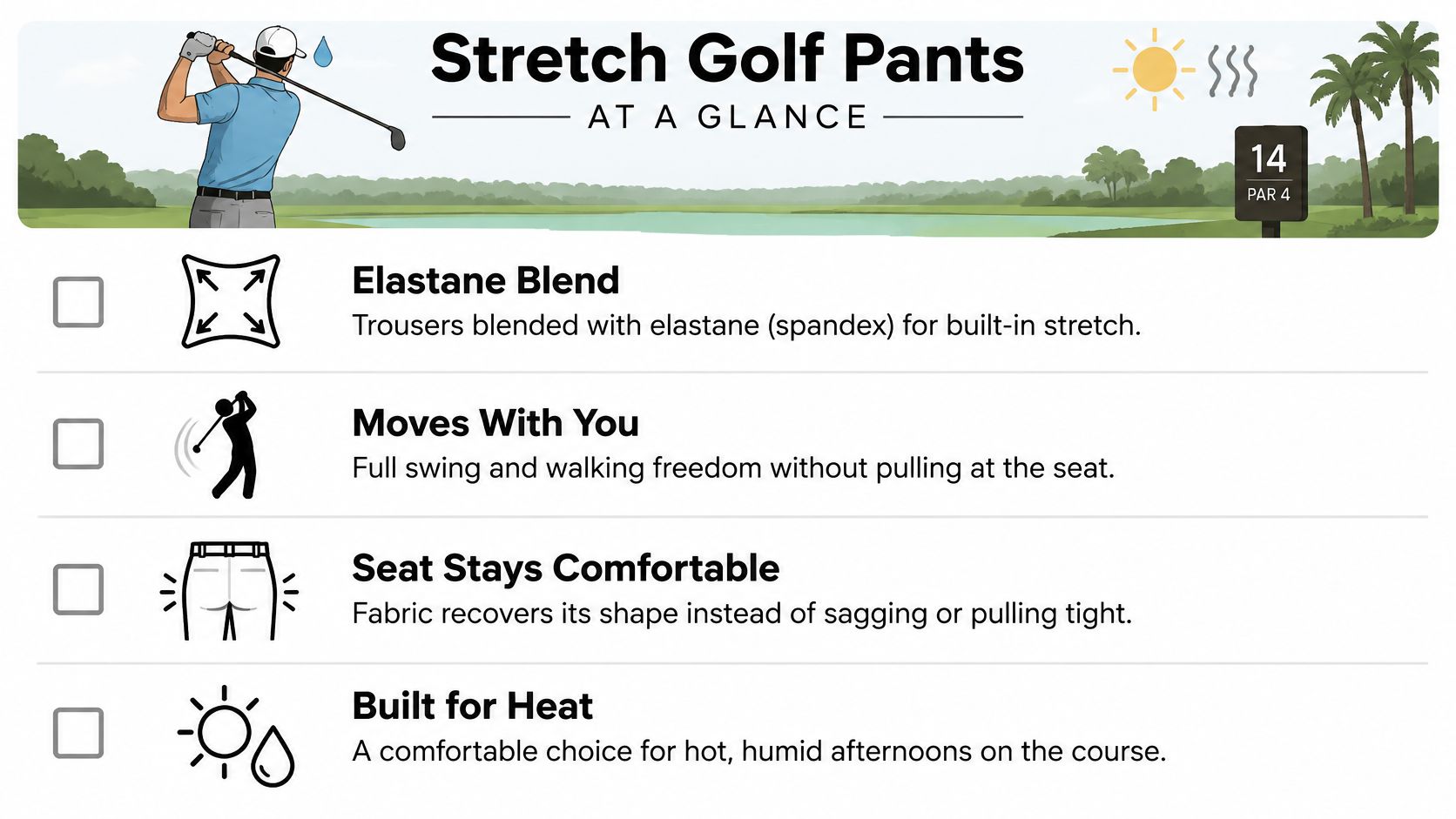
Stretch Golf Pants at a Glance
Stretch golf pants blend elastane, also called spandex, into a woven or knit base. The fabric should flex as you set up, turn your hips, walk, and sit, then return to shape rather than stay pulled out.
A golf trouser also needs to work beyond the swing: it should meet the course dress code, carry tees and a scorecard, and feel comfortable in warm weather. Use product specifications as a starting point, then check the fit and fabric recovery yourself.
Stretch Golf Pants Buying Criteria at a Glance
| Criterion | What to look for | Red flag |
|---|---|---|
| Stretch construction | 4-way stretch with elastane named in the fabric | “Stretch” claimed with no direction or fiber stated |
| Fabric weight | Check the listed weight and how the fabric feels when you bend and sit | Fabric so thin that the seat shows in sunlight |
| Moisture management | Wicking fabric that dries quickly | Cotton-heavy blend that stays wet |
| Sun protection | A stated UPF rating if you want built-in sun protection | No UPF rating when that feature matters to you |
| Waistband | Stretch waistband with a zip fly | Non-stretch band that gaps when you bend |
| Pockets | Two front slash pockets and two rear pockets, one with a button | Shallow pockets that cannot hold a scorecard and tees |
Do a 60-second check before buying. Gently pull the waistband, release it, and see whether it returns to shape. Squat as if reading a putt, sit down, then stand without adjusting the seat. If the pants need a hitch to stay in place, the fit or recovery may not hold up through a round. Maximum stretch is not automatically better: fabric that gives too much can lose structure and let pocket contents shift.
A good pair feels secure without a belt doing all the work.
How 4-Way Stretch Works in the Fabric
Think of a rubber band woven into a net. The net is the woven or knitted structure, and it shapes how the fabric moves. The rubber band is the elastane, and it brings the fabric back after you've stretched it. 4-way stretch means the fabric gives lengthwise and widthwise, so the leg can also move diagonally when your hips rotate and your knee flexes.
That diagonal movement matters in golf. You set up with deep hip flexion, rotate through the swing, walk up slopes, and sit with the seat and knees under compression. A fabric that only gives across the thigh may feel fine standing still, then bind when you turn and bend at the same time.
The Three Numbers That Matter
A meaningful specification reports three things. Don't accept a headline stretch percentage on its own.
- Elongation under a defined load: How far the fabric stretches when a set force is applied, measured separately lengthwise and widthwise.
- Recovery after relaxation: How much of that stretch comes back after the fabric rests for a set period.
- Growth after repeated cycles: How much permanent length remains after the fabric has been stretched again and again.
One textile reference describes high-performing stretch fabrics as recovering close to 100% and limiting growth to roughly 5% or less, although those values depend on fabric composition, test direction, load, and laundering history, according to a textile guide to understanding fabrics. Use that as a benchmark for questions, not as a promise every pant will hit.
What Poor Recovery Looks Like by the Back Nine
Low recovery shows up in familiar places. The waistband sags and starts to rely on your belt. The knees bag after you've crouched over putts. The seat grows, then the fabric bunches and paradoxically feels tighter when you rotate because it's no longer sitting where the pattern intended.
High recovery keeps the original fit in place. You don't need to size up just to get room for the swing, and pockets stay flat instead of flaring open.
Practical rule: I'd take moderate stretch with strong recovery over extreme stretch that stays stretched.
That's the trade-off many product pages skip. Maximum stretch isn't automatically better. Too much elastane or a loose construction can feel great for the first minute, then reduce structure, pocket stability, and the polished trouser line you want in the clubhouse. The pocket bags show, tees shift around, and the front crease disappears. Buy usable stretch that returns, not the stretchiest fabric on the rack.
Moisture-Wicking Versus Drying Speed
A clammy seat by the eighth hole usually isn't a wicking failure. It's a drying failure. Sweat management has two jobs, and a fabric can do the first one well while failing the second.
First, the fabric moves liquid off your skin and spreads it across a wider surface. Second, that liquid has to evaporate. If the fabric holds onto water, your thighs stay damp, the pants cling when you walk, and you feel chilled when you stop in shade.
Terms Worth Asking About
You don't need a lab coat, but you should know what a serious spec includes. Look for face-side and back-side spreading, absorption rate, one-way transport, drying time, and water-vapor resistance. Low vapor resistance plus fast drying is the combination that stays comfortable while walking.
The standard method is the AATCC 195 Moisture Management Tester procedure, which measures how liquid spreads and moves through a fabric, while related testing can quantify wicking and drying time at approximately body temperature, as described in a journal article on moisture management testing. If a brand can't name a test method, treat "moisture-wicking" as a general description rather than measured performance. For a plain-language primer before you compare labels, read this explanation of moisture-wicking fabric.
Stretch changes the result, too. When fabric stretches, its pores change shape and contact pressure against your skin changes. A swatch tested flat and relaxed may behave differently pulled across your seat in a swing, so results measured in both relaxed and extended states tell you more than an unstretched test alone.
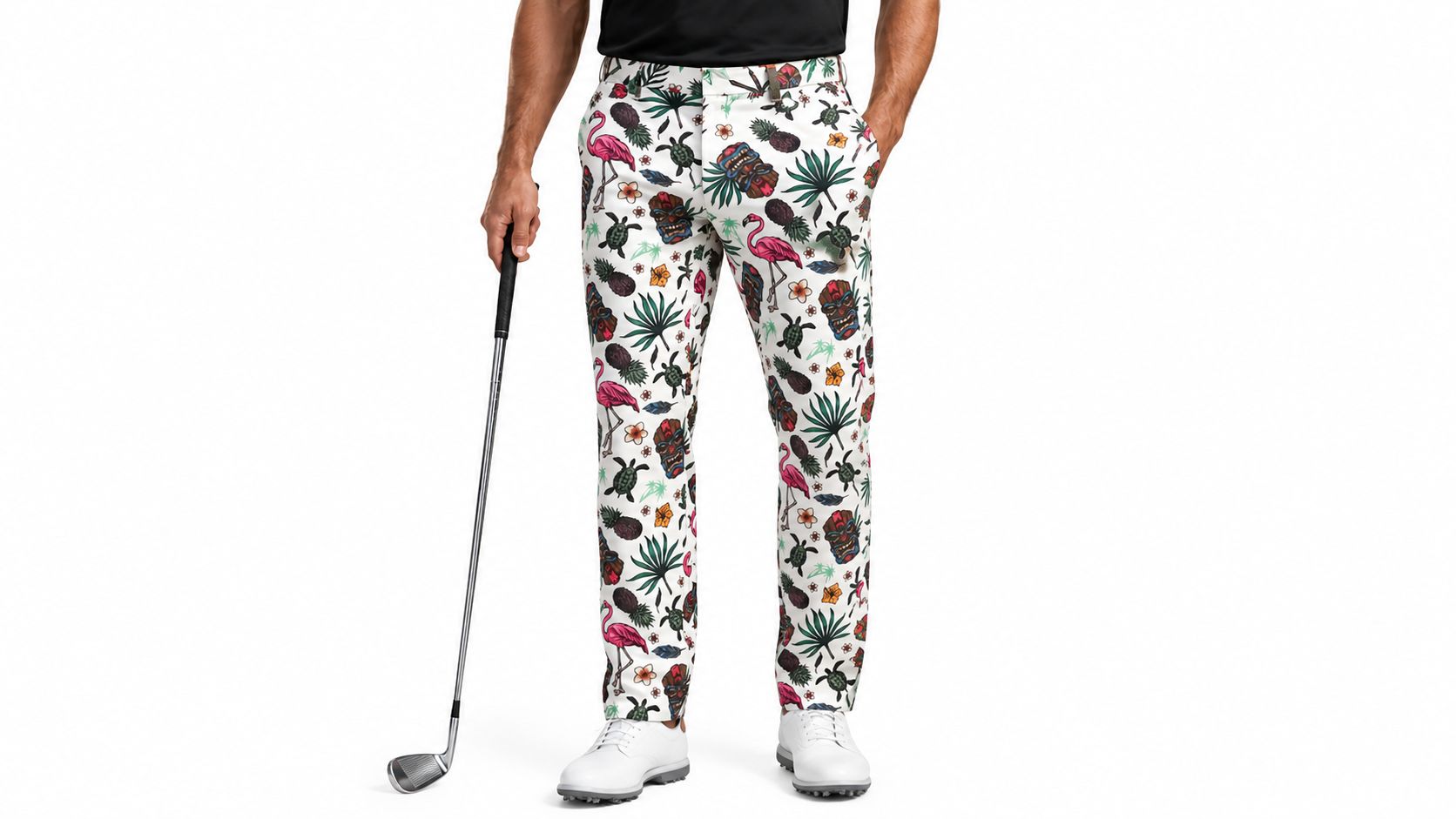
The Aloha Hawaiian Cool-Stretch Men's Golf Pants (Tiki) give you a concrete example of how these claims should be listed. They're specified as 11 oz, 92% Polyester / 8% Spandex with moisture-wicking where sweat is pulled off the skin and cools as it dries, plus an anti-odor treatment. That anti-odor point matters because damp performance clothing left in a bag develops odor fast. The same hygiene logic applies across sports, which is why guidance on how often to clean hockey equipment is a useful reminder to air and wash gear promptly rather than letting sweat sit.
Before you buy, ask three questions. What test method was used? How was the sample conditioned? Was it stretched before testing? A seller who can answer those is selling measured performance, not adjectives.
Fit and Sizing from Waist, Seat and Inseam
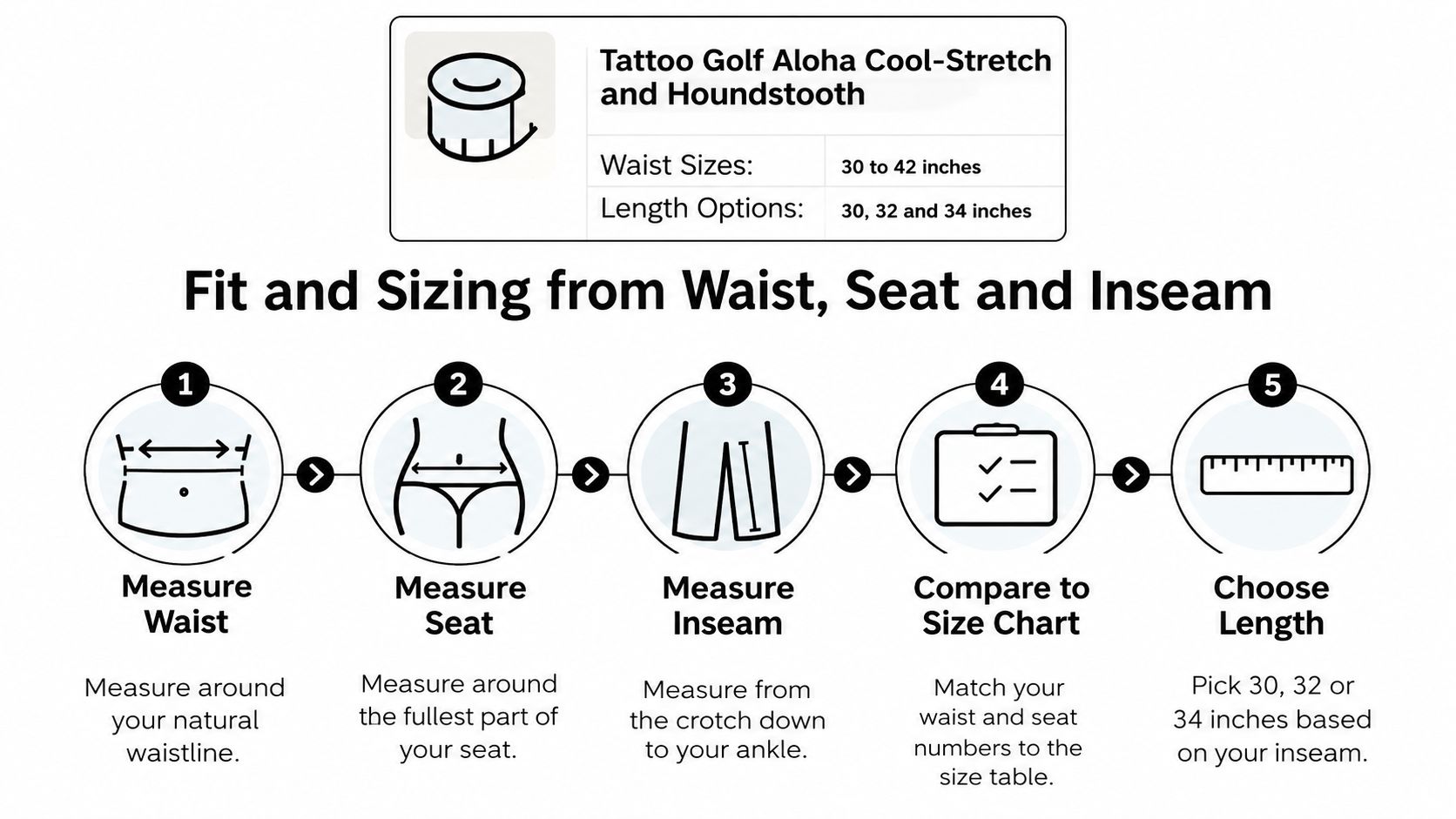
Choose a size from your measurements, not from the label on your jeans. Tattoo Golf's Aloha pant catalog lists 18 variants, with sizes and lengths that can vary by style. Check the individual product's size chart before ordering; a stretch waistband may feel forgiving at the waist while a tight seat still restricts your swing.
Five Measurements in Order
- Measure your waist at the belt line. Keep the tape level and relaxed, rather than pulling it tight over a shirt. This measurement helps you choose a waistband that stays in place as you turn.
- Measure your seat at its widest point, about 4 inches below the waist. Give this measurement particular weight: a close seat can pull across the hips on a backswing, and stretch cannot add room to the pattern.
- Measure your thigh about 1 inch below the crotch. Compare it with the size chart to judge whether the leg will skim your thigh or cling.
- Measure the inseam on trousers that already fit, from crotch seam to hem with the leg laid flat. Aim for a light break over your golf shoe, without fabric pooling at the hem or riding up at address.
- Check the brand's detailed size chart on tattoogolf.com and compare your measurements. If your waist and seat point to different sizes, prioritize the seat and thigh. A little extra waist ease is easier to manage than a seat that strains across the hips.
Fit needs differ across golfers. The U.S. had 28.1 million on-course golfers in 2024, with women representing 28%, according to National Golf Foundation reporting on growing and diversifying participation. A single assumed rise, seat shape, or thigh proportion will not suit everyone, so use your measurements and the style-specific chart rather than relying on a general guess.
Consider how the trousers sit when you bend and turn. A close fit through the seat and thigh looks clean, but the fabric should not pull the front pockets open during rotation. Rise affects where the waistband rests when you bend, while pocket placement can press a scorecard against your hip when seated.
Recovery matters after a full round and after washing. If the waist or seat relaxes enough that the pants sag, sizing down may not solve the problem. A smaller size can create tension across the seat and make the pockets flare; choose a cut that holds its shape without being stretched taut.
Once the size looks right on paper, check that the fabric moves freely through the hips and thighs and that the waistband remains comfortable as you change posture. If the seat pulls or the pockets gape, try another size or cut. A stable fit should move with you without relying on maximum stretch.
Matching Pants to Climate and Keeping the Stretch
A pair that works on a mild course may feel clammy in humid heat or cling after a wet round. Choose by conditions: weight affects coverage and warmth, breathability helps with airflow, and UPF indicates sun protection. Check each separately.
Fabric Priorities by Playing Climate
| Condition | Priority in the fabric | Watch for |
|---|---|---|
| Hot and humid | Fast drying and moisture transport | A clammy seat and thighs if the fabric dries slowly |
| Dry and hot | UPF 50+ and lighter colors | Dark colors that feel hotter in direct sun |
| Cool mornings | A slightly denser weave for opacity and wind resistance | Too much warmth once the day warms up |
| Wet or rainy | A water-resistant shell or separate rain layer | Stretch fabric that soaks through and stays heavy |
Golfers play in varied conditions. 48.1 million Americans participated in golf in some form in 2025, while global participation outside the United States and Mexico reached 112.2 million adults and juniors, according to National Golf Foundation golf industry research. A useful pair for dry heat may be the wrong choice for wind or rain.
Care That Protects Elastane
Use the garment's care instructions as your guide, and consult detailed care guidance for Tattoo Golf clothing before changing how you wash or dry it.
- Machine wash cold with like colors: Cold water is gentler on elastane and printed color.
- Tumble dry low: High heat shortens the life of stretch fibers.
- Do not bleach: Bleach can affect color and elastic recovery.
- Warm iron only if needed: Keep the iron away from printed or embroidered areas.
Heat, chlorine, UV exposure, and aggressive laundering wear down elastane over time. After pool or sea exposure on a golf trip, rinse the pants. At home, take sweaty pants out of your bag promptly, hang or lay them flat to air, then wash them cold.
A denser weave can add something a weight label cannot show: opacity at the knee when you bend. It can also help the pants hold their shape and resist cool-morning wind. Check coverage in a squat, especially in bright light, rather than relying on fabric weight alone. Stretch that gives too much can lose its structure, leaving the knee baggy and pockets prone to flaring. Recovery after wear and washing matters more than a headline stretch claim.
For steady rain, use a waterproof layer over your regular pants or choose rain pants. Stretch trousers are not a substitute. Judge a rain layer by its waterproof and breathability specifications, not by how much the fabric stretches.
Styling Stretch Pants for the Course and the 19th Hole
A patterned pant can work through a full round and into the clubhouse when the rest of the outfit stays simple. Apply the one statement piece rule: pair a tiki or Hawaiian print with a solid polo in white, navy, or black. With houndstooth, choose a plain shirt in a color already present in the pattern. For more combinations, use this guide to matching golf pants with shirts and hats.
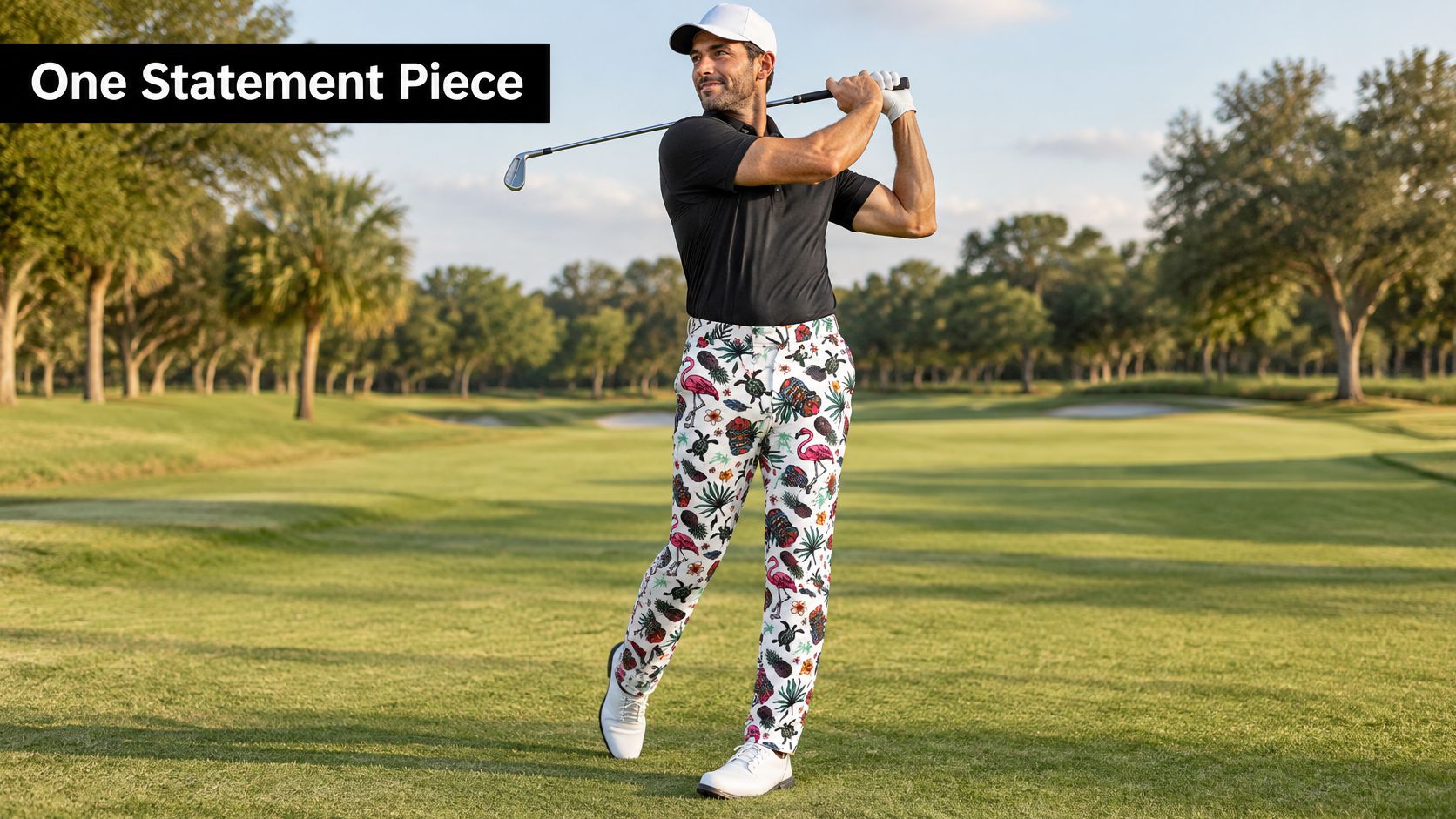
Aloha Tiki is one example of a bold all-over print; the same pairing rule works with any patterned golf pant. Keep the shirt quiet, and check that the pattern suits the club's dress code rather than relying on the cut to make a loud print appropriate.
Shifting to the 19th Hole
After a round, keep the pants and change the top. A clean solid knit or light layer works better than a bold or sweat-marked polo for lunch or drinks. Brush grass and dust from your shoes, and untuck a shirt only if its hem is designed to sit that way. For example, after walking the course in a printed pant and plain polo, a clean knit gives the outfit a quieter finish without requiring a full change.
One print, one solid partner, clean shoes. That formula covers almost every course and clubhouse you'll walk into.
Three practical rules keep the outfit in bounds:
- Check the club dress code before the round: Guest days and private clubs may restrict prints, so confirm what is acceptable before you arrive.
- Match hem length to your shoes: The pant should break lightly over the shoes you play in, not the trainers you wore to the shop.
- Never stack two busy patterns: A printed pant and printed polo compete. Choose one pattern and keep the other piece plain.
Stretch should make sitting and standing comfortable without letting the trousers lose their shape. A waistband with some give helps at lunch, while a seat that recovers keeps the fit looking intentional after the round. Too much stretch without recovery can leave the seat looking slack and pockets pulling out of place, so judge the fabric by how it holds its shape, not just how far it gives.
Confirm Your Size Before Your Next Round
Choose pants for the rounds you play most often. The right priorities depend on your routine, the course, and how you want the fabric to hold up over time.
Walkers on hot, humid courses should prioritize a breathable weave and quick drying. A lighter color can suit sunny days; if you play in direct midday sun, check whether the pants carry a UPF 50+ rating. Choose a fit that skims the thigh rather than clinging when the fabric is damp.
Competitive players who play weekly need stretch that keeps its shape through regular wear and washing. A structured stretch waistband and fabric with reliable recovery matter more than maximum initial give. Too much stretch can leave the fabric looking slack and pockets sitting poorly, so judge the fit by its structure as well as its comfort.
Clubhouse-heavy golfers and event players should look for a straight fit, pockets that lie flat, and a print appropriate for the courses they visit. A bold pattern can suit a scramble or themed outing; for a guest day at a conservative club, choose a quieter option.
Your One Next Step
Use the fit checks in the sizing section to choose a size, paying particular attention to how the seat and pockets sit. A comfortable waist alone does not guarantee a balanced fit through the rest of the pants.
If you are considering the Aloha Cool-Stretch Tiki pant or the Houndstooth ProCool pant, check each pair's current fabric, waistband, pocket design, and size chart against your needs. Do not assume a particular print or product name guarantees the right fit. Apply the same checks to any pair you are considering.
After the first few washes, check whether the pants still feel comfortable and hold their shape during ordinary movement. Look for knees that stay bagged, a waistband that needs constant hitching, or pockets that sag when loaded. Those are signs the fabric may have lost too much structure; sizing down is unlikely to fix poor recovery.
If you want stretch golf pants with 4-way stretch, moisture-wicking fabric, and options that include UPF 50+, browse the pants and matching tops at Tattoo Golf. Check the size chart before ordering, and choose a fit you can comfortably wear through the 18th tee.

Share:
Windproof Golf Vest Guide: Materials, Fit and Layering