
You're standing in front of the closet, it's humid, and the cotton polo you usually reach for already feels like a bad idea. The newer shirt with stretch, lighter knit, and a cleaner shape keeps catching your eye, because you know the round will be better if your top doesn't fight you by the third hole. A women's performance polo is built for that exact moment, for sweat, sun, motion, and the small confidence boost that comes from liking how you look over a belt.
Why the Women's Performance Polo Has Earned Its Spot in Your Bag
The reason this shirt keeps winning isn't hype, it's practicality. A women's performance polo uses synthetic fibers and a golf-friendly cut to handle heat and movement better than a traditional cotton polo, which is why it has become a go-to piece for real rounds, not just range photos. Women's golf itself has grown into a broad audience, with more than 8.1 million female on-course golfers in the United States in 2025 and women representing 28% of all on-course golfers, both record levels, while globally women account for 23% of adult registered golfers worldwide and at least 25% in 42 markets according to the participation reporting cited by the National Golf Foundation and The R&A (NGF female golf participation report).
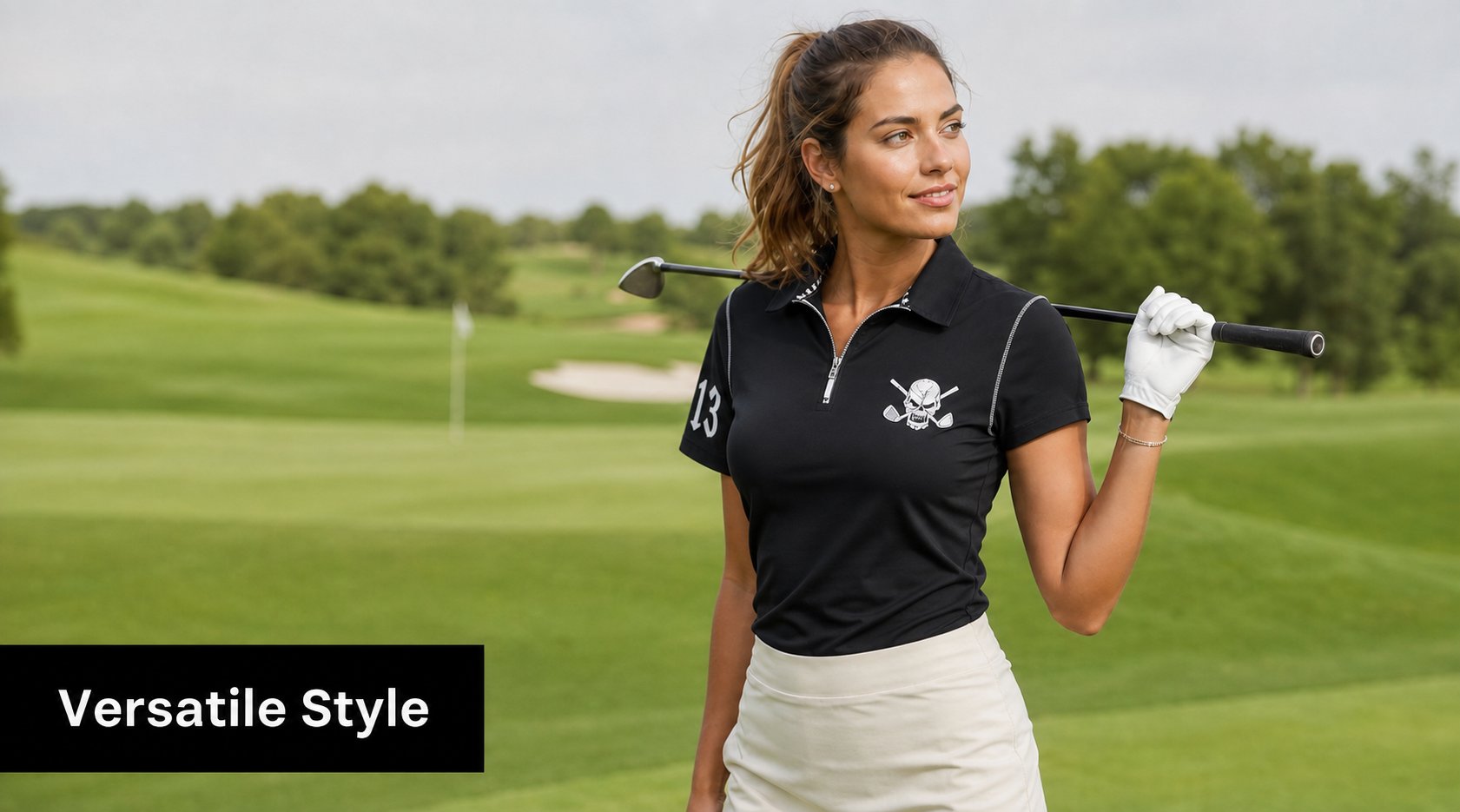
What actually makes it different
Most women's performance polos are built from polyester-spandex or nylon-spandex knits because those fibers move perspiration away from the skin and let it evaporate faster. That helps the shirt feel less clingy, especially when you've still got a full back nine in front of you. Many strong golf-ready constructions sit in a 4-way stretch blend, and the reference guidance points to fabric ratios around 83/17 for a balance of recovery, shape retention, and mobility (Rhoback product guidance).
The other clue is in the hand feel. A lighter knit, often in the rough 150 to 180 gsm range based on the brief's guidance, tends to drape well without feeling heavy when the sun turns up. That's why a performance polo isn't just a “sporty top”, it's everyday golf gear that tries to solve three problems at once, sweat, motion, and polish.
The Fabric Tech That Actually Does the Work
A good women's performance polo doesn't feel technical in the annoying sense. It feels easy, because the fabric is doing background work while you're thinking about your alignment and whether the breeze just changed sides.
The parts you feel on the course
Moisture-wicking is the first feature most players notice, even if they don't call it that. The yarn structure helps pull sweat off the skin and spread it across the fabric surface so it dries faster, which means the shirt stays closer to your body instead of turning into a damp layer halfway through the round. That's why the same polo can feel fine on the range and then feel suddenly heavy once you've walked a full stretch of sun.
4-way stretch is the second piece of the puzzle. It matters most on the backswing, because the shirt needs to move with your shoulders and ribs without tugging at the placket or riding up at the waist. When the blend includes spandex, the fabric can recover after movement instead of staying stretched out and looking tired by the last hole.
Practical rule: if a polo feels great standing still but tight when you raise your arms, it's not a golf shirt yet, it's just a shirt with golf colors.
Why knit structure and weight matter
Breathability comes from more than buzzwords. A smoother or micro-piqué knit, side vents, or a looser airflow-friendly construction can help warm air escape faster, while cotton-heavy fabrics tend to hold water longer and feel colder when they're wet. The brief's guidance points to lightweight knits under about 180 gsm because lighter fabric mass and better airflow support quicker evaporation and better comfort in hot weather.
That's also why “performance” isn't one feature. It's the combination of fabric choice, knit structure, stretch, and drying behavior. In plain English, the right shirt should feel cooler, dry faster, and stop making you think about it once the round starts.
The term moisture-wicking fabric gets explained clearly in this moisture-wicking fabric guide, and the core idea is simple, sweat should leave your skin quickly and disappear into the shirt instead of hanging around.
Sleeves, Cuts, and Collars for Every Round
Sleeve choice sounds like a style decision, but it's really a climate and comfort decision first. The right cut can make a hot round feel manageable, while the wrong one can turn every swing into a small negotiation with the fabric.
Match the sleeve to the weather and the course
Sleeveless works best when humidity is high and you want as little fabric as possible around the shoulders. It's also the easiest choice for players who feel crowded in the upper back during the swing. A sleeveless cut can look cleaner under a visor or sun hat, too, which is why some hot-weather players build their warmest-round wardrobe around that silhouette.
Short-sleeve polos are the versatile default. They're the easiest answer when the morning starts cool and the afternoon gets bright, or when a club dress code leans more traditional. If you're unsure, short-sleeve is usually the least risky purchase because it can move from tee time to errands without looking too athletic.
Cap-sleeve or hybrid shapes sit between the two. They give a bit more shoulder coverage without the same restriction a fuller sleeve can create, which helps if you prefer a softer line over the upper arm.
Collar and hem choices change the feel
A self-fabric knit collar tends to feel softer and lay flatter, while a more structured collar looks crisper but can feel stiff if you're sensitive around the neck. Zip or snap plackets can also help you vent heat faster than a button front, especially on the first few holes when you're still warming up.
Hem shape matters more than people think. A straight hem reads clean untucked, a curved hem often looks smoother when partially tucked, and a drop-tail offers a little more coverage in the back if you hate adjusting your shirt after every swing. If you play in a stricter club environment, the collar and hem are the two details most likely to decide whether the shirt feels polished or casual.
How a Women's Performance Polo Should Actually Fit
Fit is where performance fabric either earns its keep or wastes it. A stretchy shirt can hide a lot, but not everything, and the wrong cut still shows up in the mirror and in the swing.
Start with the shoulders and bust
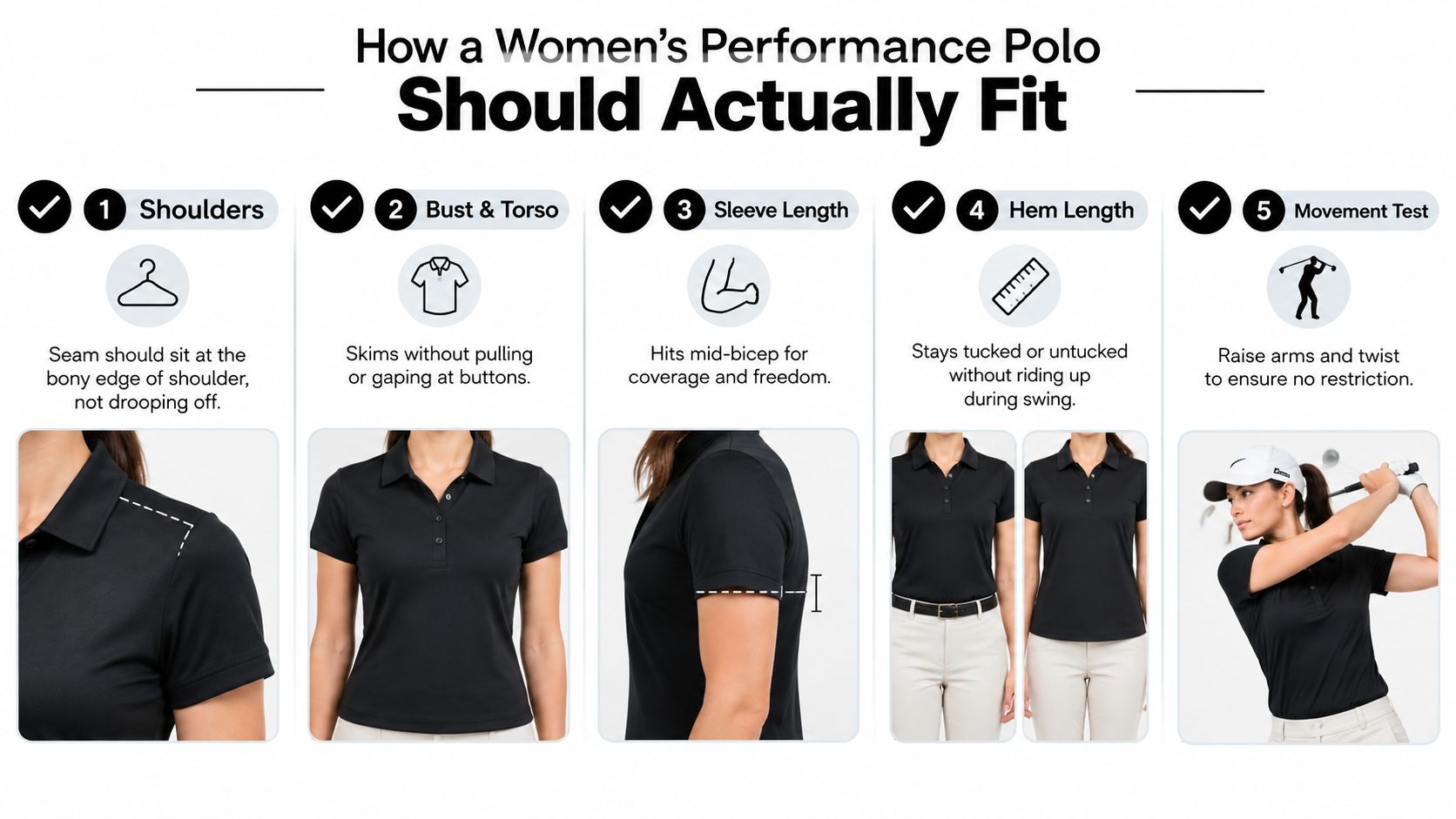
The shoulder seam should sit at the bony edge of the shoulder, not droop down the arm. If it falls too far off the shoulder, the shirt usually looks borrowed, and it can also shift when you rotate through the swing. At the bust, the fabric should skim without pulling across the button placket or gaping in motion.
Then check waist, hip, and sleeve balance
A lot of women want to know whether a polo should be fitted or relaxed. The honest answer is that it depends on the body and the climate, but the most useful fit is usually shaped without being tight. Pear and apple shapes often feel best with a little ease through the midsection, while hourglass builds may prefer shaped seams that follow the waist without clinging.
Sleeve cap depth matters more for broader shoulders, because a deeper cap can stop the sleeve from cutting in when you set the club. Hem coverage matters if you plan to wear it untucked, and placket length matters more for longer torsos than most size charts admit.
If the shirt lets you raise your arms, twist, and finish a backswing without the chest tightening, you're probably in the right neighborhood.
The women's golf tops guide is useful for seeing how different top styles behave in a golf context, especially when you're comparing silhouette and function rather than just buying the size you always buy.
For a concrete example, the Women's Sleeveless Golf Polo & Golf Visor (Black/Pink) uses a sleeveless zipper polo and a women's cut designed for hot rounds, with a true-to-size fit and a clean silhouette that stays course-appropriate. That kind of construction is a good reference point if you're trying to picture how a more athletic cut can still look put together.
Style Ideas and Coordinated Collections Worth a Second Look
A performance polo doesn't have to act like a uniform piece. Once the fabric and fit are right, it becomes the anchor that makes the rest of the outfit easier.
Classic, themed, and paired looks
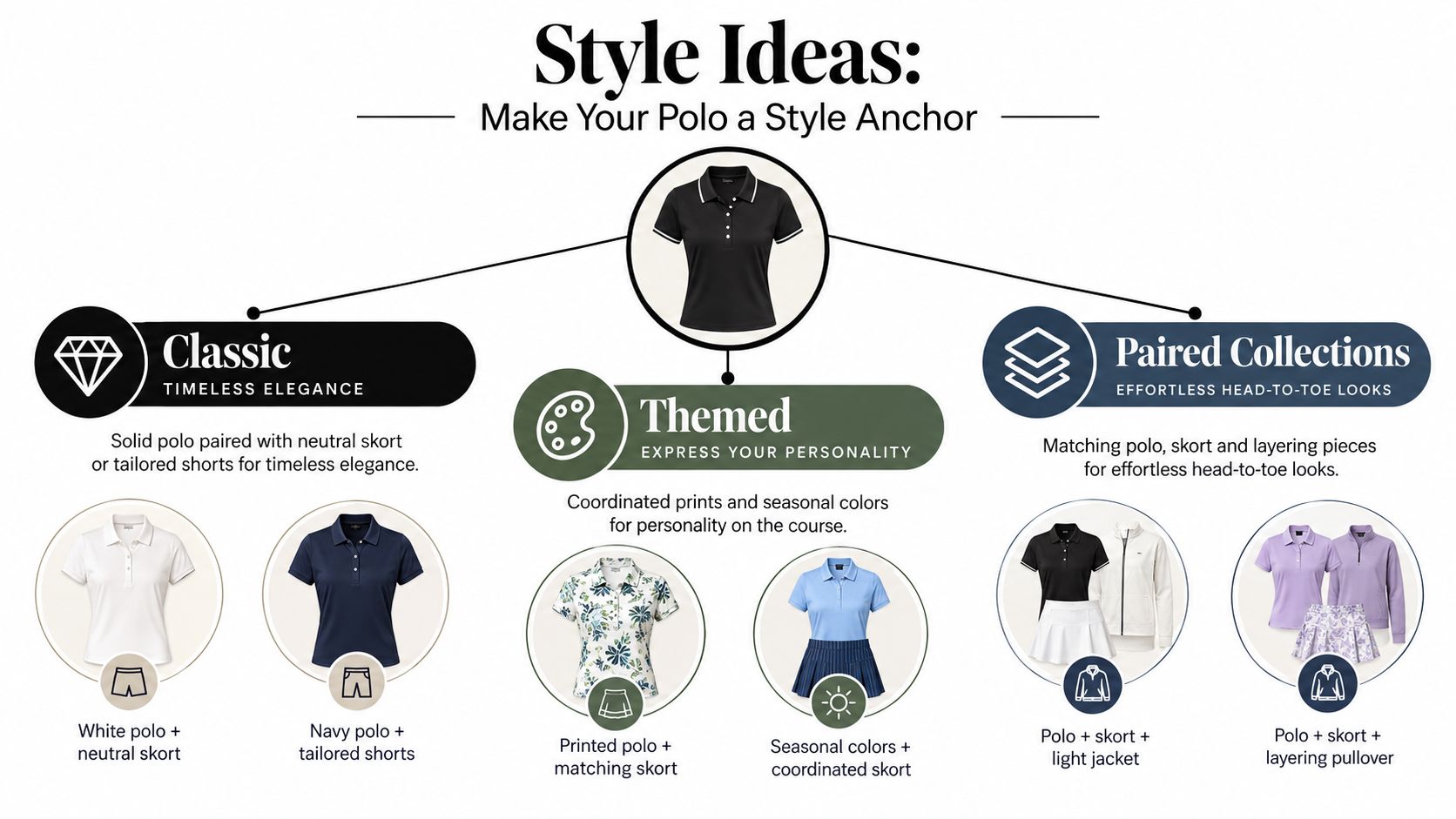
Classic styling is the most useful place to start. A solid polo with a neutral skort or trouser gives you a repeatable outfit formula that never feels overthought. It's the easiest route when you want one top to work across multiple courses and multiple weather patterns.
Themed collections let you lean into personality without giving up performance. Tattoo Golf's golf outfit ideas for women show how a themed line can move from playful to polished when the colors stay coordinated and the base pieces stay course-ready. A tropical print, for example, usually lands best when the bottom stays quiet and the polo gets the attention.
Paired looks are the sweet spot for couples or duos who like a little coordination without looking overly matched. One person can wear a patterned top while the other keeps a solid in the same color family, or both can wear complementary solids that share one clear color note.
What makes the outfit work
The rule is simple. Let one piece lead, keep the others supportive, and don't overcomplicate the collar line. If the polo has a strong print, the bottoms should calm the whole look down. If the polo is solid, the accessories can carry a little more personality.
Tattoo Golf's Aloha and Cocktail collections fit neatly into that logic because they give you color and theme without forcing the whole outfit to shout at once. That matters on the course and after the round, since the same shirt can still look intentional when you head to lunch or meet friends later.
Care and Wash Steps That Keep the Tech Alive
Performance fabric only stays performance fabric if you wash it like one. Heat, residue, and rough handling can slowly undo the stretch and wicking that made the shirt worth buying in the first place.
The simple routine
Turn the polo inside out before washing so prints, snaps, and surface texture take less abrasion. Use cold water on a gentle cycle with similar colors, and skip fabric softener because it can coat the fibers and interfere with moisture movement. A mild detergent is usually enough, and you don't need heavy perfume to get a golf shirt clean.
Drying matters just as much as washing. Tumble dry low or hang dry flat, because high heat can weaken spandex elasticity and warp the collar over time. Avoid chlorine bleach, skip ironing directly on logos or heat-transfer graphics, and reshape the collar while the shirt is still slightly damp.
Fold it if you can. Hanging knits for long stretches can stretch the shoulders in a way you won't notice until the shirt starts looking tired on body.
Storage is part of care too. A folded performance polo usually keeps its shape better than one left hanging in a crowded closet. If you've spent money on a shirt that manages sweat and keeps its shape, the washing routine is what protects that value.
What to Check Before You Click Buy
A lot of women's golf tops look similar online. The difference shows up in the details, and that's where you separate a real performance shirt from a marketing promise.
The buying checklist that matters
- Fabric composition: Look for a polyester-spandex or similar synthetic blend, because that's the backbone of most real performance knits.
- Stretch recovery: Pull the fabric gently across the grain and vertically. It should spring back without staying distorted.
- Knit weight and feel: In warm climates, a lighter fabric usually feels better than a heavy one, especially if you play multiple rounds a week.
- Construction details: Flat seams under the arms and at the shoulder reduce chafing through a full round.
- Climate features: If you play under intense sun, confirm UPF information instead of assuming the shirt has it.
- Care instructions: A trustworthy shirt will tell you how to wash it without vague wording.
- Fit notes: Look for actual fit guidance, not just a generic size chart.
The word “performance” by itself doesn't tell you much. Quick-dry, moisture-wicking, 4-way stretch, and clear care instructions are more useful than a stylish product title with no substance. If a brand is specific about composition and construction, that's usually a better sign than glossy copy.
Putting It All Together for Your Next Round
The right women's performance polo comes down to four choices that work together. First, pick a fabric weight that matches your climate, because hot, humid rounds need a different feel than cool mornings. Second, choose a fit that respects your shoulders, bust, and torso so the shirt moves with your swing instead of against it.
Third, decide how much sleeve and collar structure your course dress code requires. Fourth, choose a style direction that feels like you, whether that's a clean solid, a themed collection, or a coordinated look that makes getting dressed easier. If you care for the shirt properly, the stretch, wicking, and shape hold up much longer than they would with casual treatment.
Tattoo Golf makes women's performance pieces with the same mix of stretch, moisture management, and attitude that this topic calls for, including sleeveless and layered options for hotter rounds and cooler mornings. If you want gear that can handle the course and still look sharp after the round, visit Tattoo Golf and see how the polos, coordinated collections, and women's fits line up with the way you play.


Share:
Can You Wear a Hawaiian Shirt to Play Golf? a Style Guide
Wild Golf Shirts for Men: A Practical Style Guide